

 Gold Member
 Business License
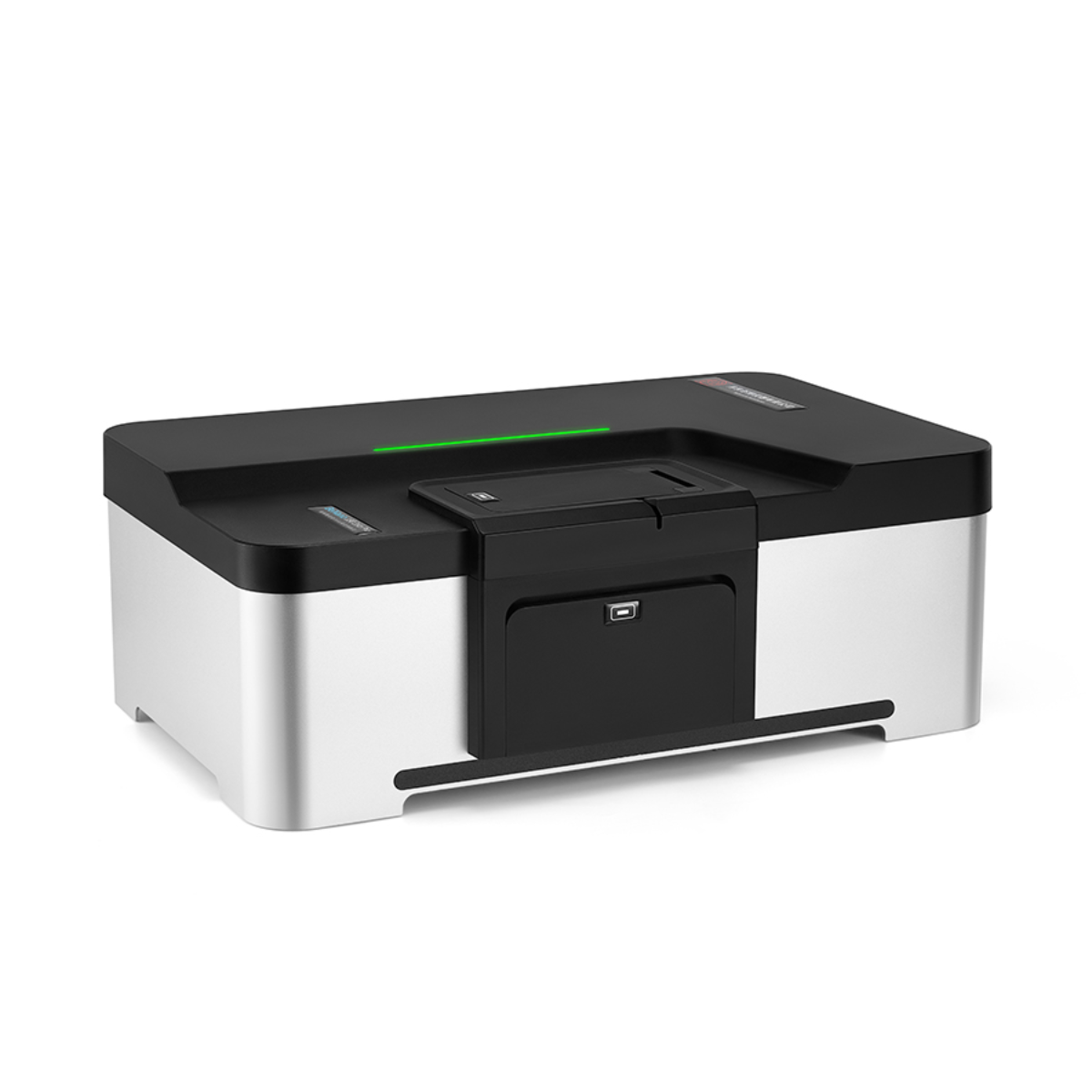
BeNano 90 Zeta Nanoparticle Size and Zeta Potential Analyzer
Product Details
Core Specifications
Applications
Detailed Description
Product introduction
The BeNano 90 Zeta nanoparticle size and Zeta potential analyzer is a BeNano 90 + BeNano Zeta two-in-one optical detection system. The system integrates dynamic light scattering DLS, electrophoretic light scattering ELS and static light scattering technology SLS, which can accurately detect the particle size and particle size distribution, Zeta potential, molecular weight information of polymer and protein systems and other parameters. It can be widely used in basic research and quality analysis and control in the fields of chemistry, chemical industry, biology, pharmaceuticals, food, materials and other fields.
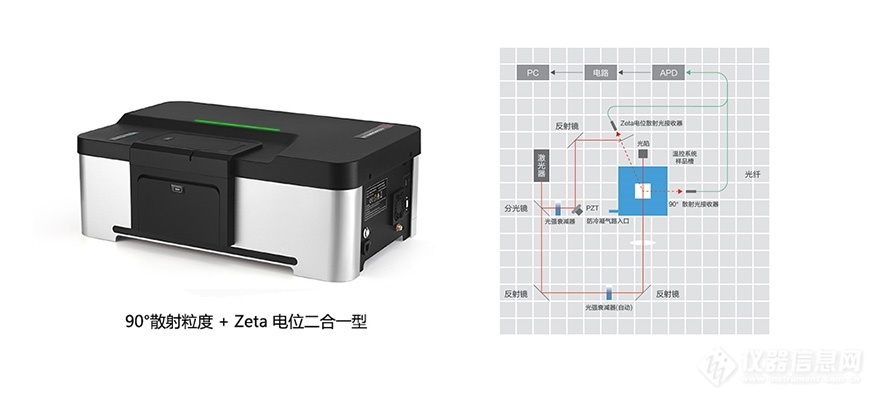
Basic performance indicators
1. Particle size detection
| Particle size range | 0.3 nm - 15 μm* |
| Minimum sample size | Minimum 3μL, regular 1ml (other volumes can be customized)* |
| Detection angle | 90°+11.2° |
| particle size algorithm | Cumulants, common mode, CONTIN, NNLS |
2. Zate potential test
| Zeta range | no practical limit |
| Principle | Phase Analysis Light Scattering PALS |
| Electrophoretic mobility range | > ±20 μ.cm/V.s |
| Conductivity range | 0 - ≥270 mS/cm * |
| Zeta test particle size range | 1 nm – >120 μm * |
3. Molecular weight test
| Molecular weight range | 342 Da – 2 x 10⁷ Da * |
4. Microrheology test
| Testing capabilities | Mean square displacement, complex modulus, elastic modulus, viscous modulus, creep compliance, complex viscosity |
5. Trend test
| temperature trend | Particle size and Zeta potential change trends with temperature, and automatically detect the temperature transition point Tm |
| time trend | The changing trend of particle size and Zeta potential over time |
| pH trend | Change trend of particle size and Zeta potential with pH value * |
6. System parameters
| Temperature control range | -15°C - 120°C |
| Condensation control | dry air or nitrogen |
| laser | High-performance solid-state laser, wavelength 671nm (different wavelength lasers are optional) |
| correlator | Fast, medium and slow multi-mode, fastest 25 ns sampling, up to 4000 channels, 1011Dynamic linear range |
| detector | APD |
| Light intensity control | 0.0001% -100%, automatic or manual control |
| *Depends on samples and options | |
Detection parameters
dynamic light scattering
●Hydrodynamic dimensions Dh
●Distribution coefficient PD.I
●Diffusion coefficient D
●Inter-particle interaction force factor kd
●Light intensity, volume, area and number distribution of the particle system
●Calculate molecular weight
●Solution viscosity and refractive index
●Rheological information G*, G‘, G″, η*, J
●Steady state and transient particle size distribution
electrophoretic light scattering
●Zeta potential and its distribution
●Electrophoretic mobility of charged particles
Trend test
●pH Titration of Zeta Potential and Particle Size
●Temperature trend test of particle size and Zeta potential
static light scattering
●Absolute molecular weight Mn, Mw, Mz
●molecular weight distribution
●Second virial coefficient A2
Optional accessories
● Dynamic and static flow patterns
BeNano dynamic and static flow mode (Flow Mode) connects nanoparticle size and Zeta potentiometers with a separate front end (FFF, GPC/SEC). The separation front end can separate samples according to size and flow out sequentially. By detecting the dynamic light scattering signal and static light scattering signal of each outflow component, and combining it with the differential refractive index RI or ultraviolet UV signal at the separation front end, high-resolution particle size distribution and molecular weight distribution information that is independent of calculation models can be obtained.
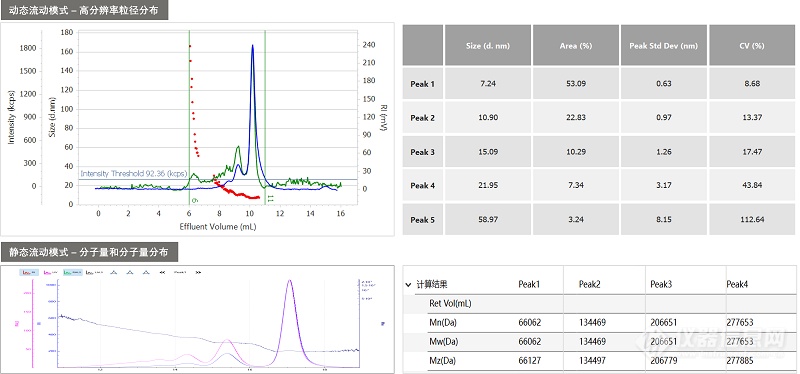
Baxter can also provide users with a complete set of gel permeation chromatography front-ends (3100 Series) with one-stop control through the powerful BeSEC software for static light scattering molecular weight testing.
● BAT-1 automatic titrator
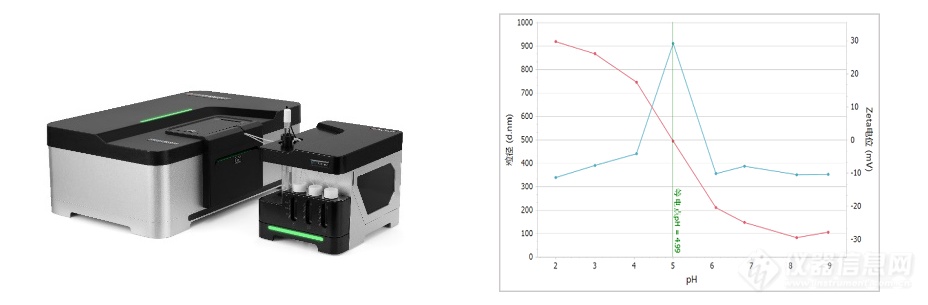
The zeta potential and particle size of the sample have a strong dependence on the dispersion medium environment, especially the environmental pH, which not only affects the size of the zeta potential, but also affects the charging sign of the particle system. The BAT-1 automatic titrator is used in conjunction with the BeNano series. It has three built-in high-precision titration pumps and a sample transfer pump. It has sample stirring capabilities and can perform automated acid-base titration tests on the particle size and Zeta potential of the sample. It has the characteristics of high testing efficiency, accurate quantification, good repeatability, and the results do not depend on the operator. Since the sample tube containing the sample is disposable, the risk of cross-contamination is avoided.
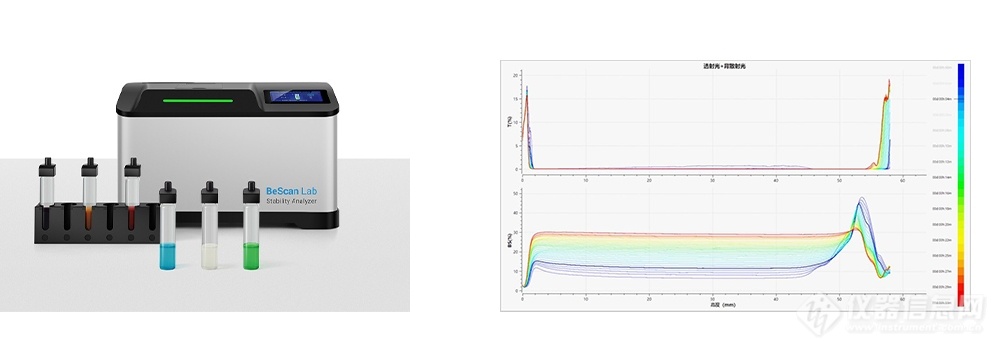
● BeScan Stability Analyzer
The BeScan stability analyzer is a sample stability analysis equipment based on the principle of multiple light scattering. It detects the instability changes of the sample with spatial distribution, time and temperature, and gives the instability index IUS, information such as particle migration speed and sample particle size change curve with time. BeScan's sensitive optical system can provide a sensitivity more than 200 times higher than that of the naked eye, and can better understand the microstructural changes of the sample, thereby greatly saving detection time and shortening the formula development cycle. BeScan is used in conjunction with BeNano to achieve quantitative IUSand Zeta potential information to study changes in samples and their causes.
● 0° photoelectric module
0°PD+CMOS module, dispersion refractive index, sedimentation method particle size and particle concentration testing.
Product Overview
BeNano 90 Zeta Nanoparticle Size and Zeta Potential Analyzer integrates dynamic light scattering, electrophoretic light scattering and static light scattering technology, which can accurately detect parameters such as particle size, Zeta potential and molecular weight. It is suitable for chemistry, biology, pharmaceutical and other fields. The equipment has a wide range of particle size and molecular weight testing and offers a variety of analysis algorithms and detection technologies.