Gold Member
 Business License
Mercury poisoning in young children after eating cod fish has attracted concern | How to prevent and control the mercury risk in aquatic products at the source?
Preface
Recently, the news that "young children suffered from mercury poisoning after eating silver cod" has triggered heated discussions across the Internet. Many parents have become anxious: Can deep-sea fish be eaten by their children? Which fish contain hidden dangers of excessive mercury? What harm does mercury pollution cause to children?
Affected by the bioaccumulation effect in the food chain, aquatic products, especially deep-sea fish, tend to accumulate mercury in the environment. As the main form of organic mercury, methylmercury is extremely harmful to human health, especially to infants and fetuses in the developing period.Methylmercury can pass through the placenta and damage the nervous system. Long-term intake by children may cause damage to cognitive, language, and motor development, and some of the damage may even be irreversible.Therefore, to supplement fish-related nutrition for infants and young children, in addition to selecting appropriate fish species and controlling the frequency of consumption, it is also important to give priority to regular and compliant special infant and young child complementary foods. my country has formulated more stringent mandatory safety standards for complementary foods for infants and young children aged 6-36 months. The total mercury limit for canned complementary foods for infants and young children is 0.02mg/kg, which is much stricter than the limit requirement of 0.5-1.7mg/kg for ordinary aquatic products.
Researcher Fang Haiqin from the National Food Safety Risk Assessment Center reminded: If you want to supplement fish nutrition for children, choosing the right fish species and controlling the frequency are key. At the same time, you must also rely on scientific testing methods to ensure the safety of food raw materials.
Accurate detection of mercury in food is an important line of defense in preventing and controlling the risk of mercury contamination. In the face of complex sample matrices such as aquatic products and complementary foods, traditional mercury detection methods often require complex pre-digestion treatment, which is not only time-consuming and consumes a lot of reagents,Boyd Instruments BDHg-60 direct injection mercury meter can realize direct injection of solid and liquid samples, efficiently complete the accurate determination of mercury content in food, and provide hard-core technical support for food safety monitoring.
Hardcore capabilities to unlock high-performance food mercury detection
The BDHg-60 direct injection mercury analyzer adopts the principle of electrothermal evaporation and cold atomic absorption. The sample is placed in a sample boat and sent to the catalytic combustion furnace. After drying, ashing and catalytic reduction, elemental mercury is obtained. After enrichment and analysis of gold amalgam, quantitative detection is completed using the characteristic absorption of mercury vapor at 253.7nm. There is no need for complex pre-treatment and digestion steps. Solid and liquid samples are directly injected for detection.
1. Ultra-high sensitivity, suitable for trace mercury detection:Detection limit ≤ 0.001ng, repeatability RSD ≤ 1% (1ng), linear correlation coefficient R ≥ 0.999; long and short double measurement cells are set up, taking into account the detection of high and low concentration samples, and can meet the testing of trace total mercury under strict limits in infant food, aquatic products, etc.
2. High-throughput automatic detection to reduce human errors:The built-in 60-bit solid-liquid automatic sampler supports batch testing and sample cycle testing capabilities; the balance weighing data can be directly read, and the PID controllable temperature system is suitable for fish, complementary foods, soil and other matrix samples, greatly improving detection efficiency.
3. Multiple technical support, data is stable and reliable:The secondary water removal device eliminates water vapor interference, and is equipped with a double-beam optical path and a mass flow meter to ensure the stability of the gas path. It has an automatic cleaning function for high-concentration samples to avoid cross-contamination. It is equipped with an exhaust gas adsorption device to ensure safe and environmentally friendly experiments.
4. Comply with industry standards and meet laboratory quality control:Compatible with HJ 923-2017, GB/T 13081-2022 and many other national and industry standards; the software supports real-time viewing and test log retention, and can view spectra and temperature control curves to meet data traceability requirements.
Test food related data
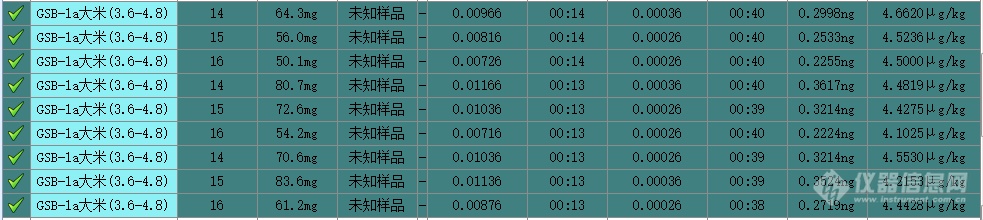
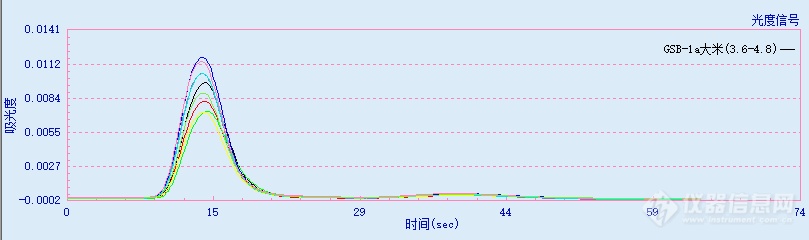
Protecting health on the table requires consumers to establish scientific dietary concepts and proactively avoid high-risk ingredients; it also requires relying on professional testing technology to build a solid defense line at the source.
Heavy metal pollution is invisible and intangible, and accurate quantification can only be achieved by relying on precision instruments.Boyd Instruments is deeply involved in the field of trace heavy metal detection. With the excellent detection performance of BDHg-60 direct injection mercury analyzer, it helps food inspection, disease control, and third-party laboratories complete the screening of mercury content in samples such as aquatic products and infant food supplements.Use reliable equipment to output true and accurate detection data to intercept heavy metal risks before the dining table.
Risk avoidance is done rationally and scientifically on the consumer side, and technical measures are used on the industrial side to control risks. Boyd Instruments insists on empowering food safety with technology and uses hard-core testing capabilities to protect the food safety of every child, making parents less worried and giving people more peace of mind.
View More from This Booth
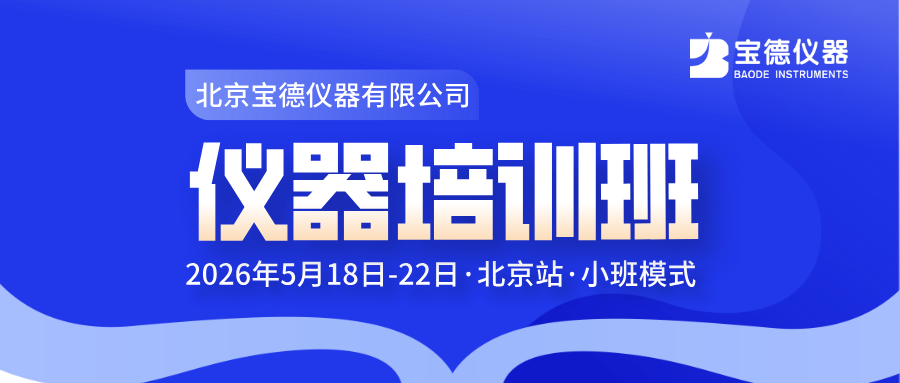
Training Notice | 2026 Instrument Training Course (Beijing Station)
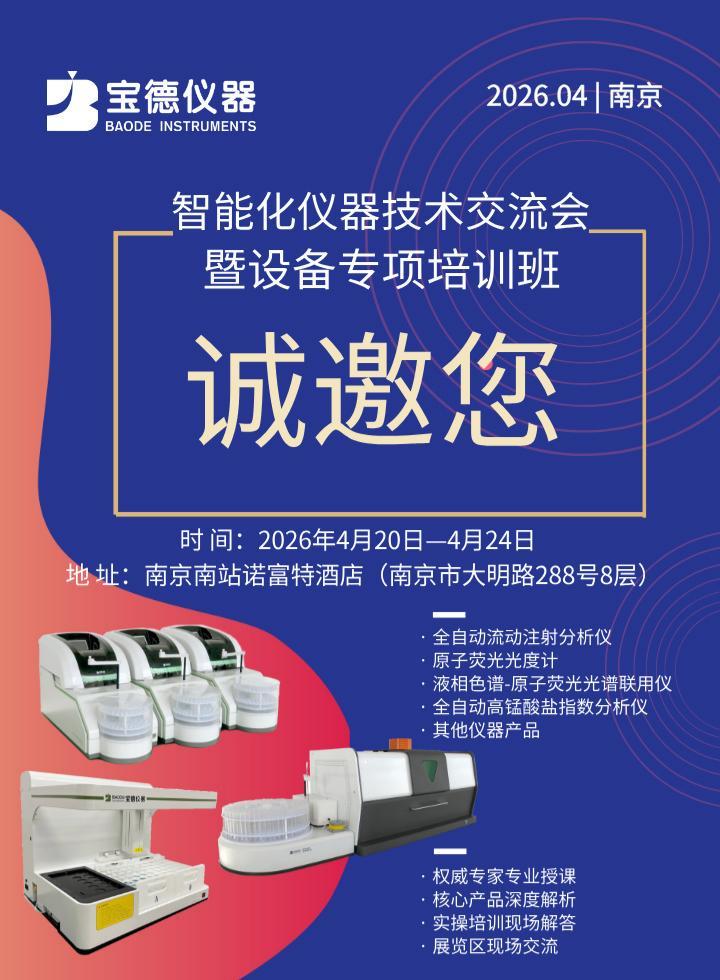
Beijing Baode Instrument Co., Ltd. Nanjing Station in 2026-Invitation letter to the Intelligent Instrument Technology Exchange Conference and Equipment Special Training Course

Facing opportunities and challenges, bravely exploring the pulse of the Middle East market-Boder Instruments debuted at ARABLAB, opening a new chapter of cooperation