Gold Member
 Business License
Latest data: Since 2026, Chinese tea has been blocked in Europe, America, Japan and South Korea due to pesticide residues! How to "help yourself" in pre-treatment?
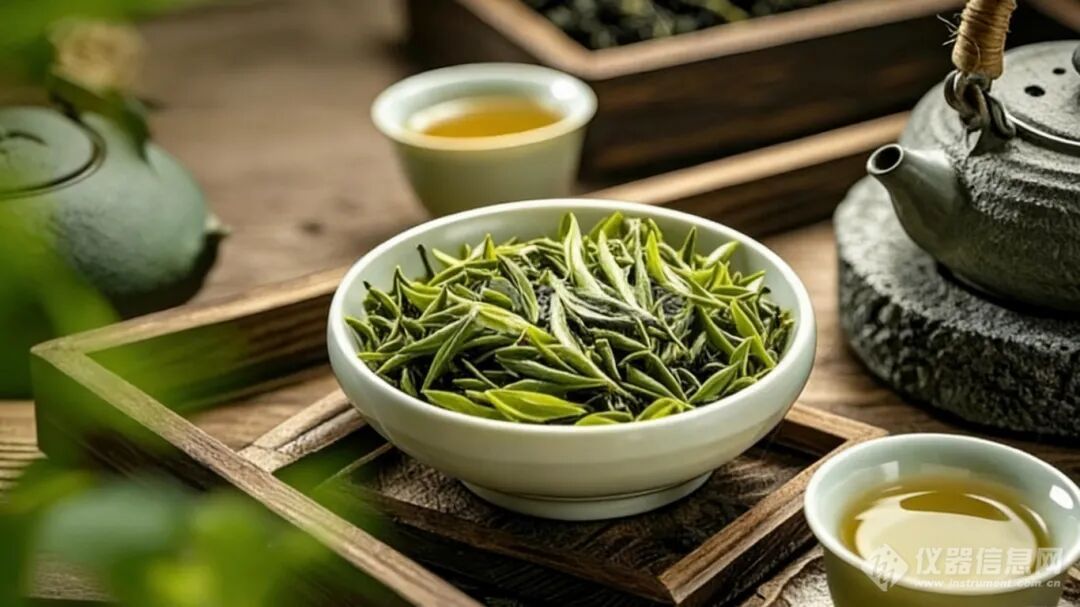
Tea is deeply loved as a daily drink. As the world's largest producer and consumer of tea, China's pesticide residue problem is directly related to consumer health and sustainable development of the industry.
January-May 2026, onlyEU RASFF systemIt was reported that many batches of Chinese tea leaves exceeded pesticide residue standards: Finland in FebruaryChlorpyrifos(0.028 mg/kg), Spanish dinotefuran in March, Dutch chlorpyrifos and other pesticide residues in April, German acetamiprid in May...A trace amount of residue can cause the entire container to be returned, causing heavy losses for the company.
Markets such as Japan and South Korea are also simultaneously strengthening inspections. In recent years, standards have continued to be tightened.And 2026 has become the most intensive year for regulatory enforcement.

When the global market simultaneously raises the threshold for "agricultural residues",The first step in testing - sample pre-processing, has become a key breakthrough point to avoid "misjudgment" and "return" from the source.
Experiment purpose
Customer demand: Four different types of tea samples (loose tea, tea bricks, tea cakes with/without packaging) need to be ground to meetGB 23200.13-2016 National Food Safety Standard Determination of 448 Pesticides and Related Chemical Residues in Tea Liquid Chromatography-Mass Spectrometry"Pre-processing requirements:
✅ Efficient and even grinding
✅ All samples passed 70-objective sieve
 🔧 Complex and diverse shapes and textures
Tea leaves vary in shape, from loose loose tea to tightly pressed tea bricks and tea cakes, and their physical states are very different. The texture also varies greatly depending on the type and age. Young leaves are brittle and brittle, while older leaves are thicker and tougher in fiber.
02🔧 Traditional grinding methods have inherent flawsThe traditional grinding method is prone to the following problems when faced with tightly pressed tea or coarse old tea leaves:
Problems include uneven grinding, substandard fineness, component loss caused by heating of the sample, and cross-contamination and yield loss caused by flying light powder.
Why choose a knife grinder?
Faced with such complex and diverse sample characteristics and stringent homogenization requirements of tea,Knife grinderpassThe high-speed rotating cutter head produces strong shearing and impact forces on the sample, achieve rapid crushing. Compared with other grinding methods, its core advantages are:
Efficient and flexible: Can directly process original samples of different shapes and sizes without excessive preprocessing.
Highly targeted: Particularly good at processing plant-based, fibrous, etc.tough material, easily deal with old leaves and tea stems.
Good controllability: By adjustingSpeed, time, cutter head typeParameters such as grinding fineness and temperature can be accurately controlled to avoid overheating of the sample and loss of active ingredients.
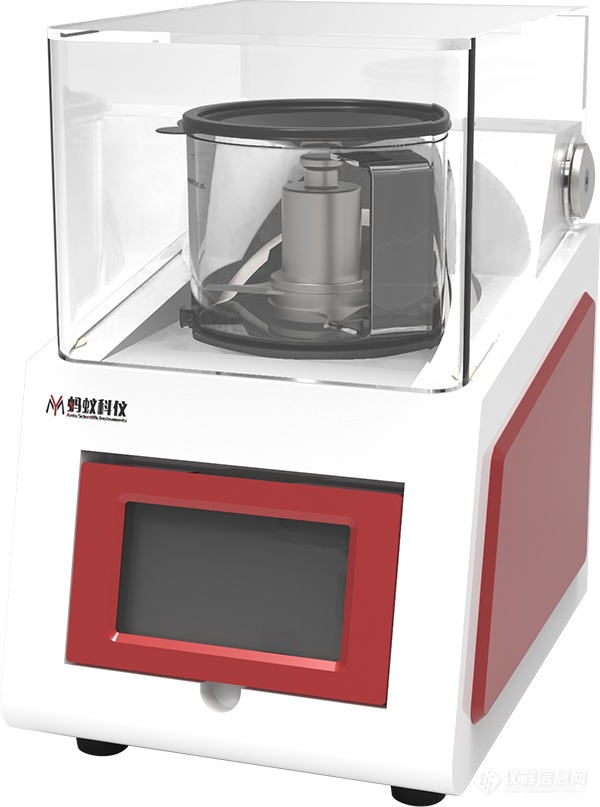
Technical points
| difficulty | AM600S solution |
|---|---|
| Various sample shapes: From fluffy loose tea to dense tea bricks, the hardness and toughness vary greatly. | Various accessories adaptation: One machine handles all types of tea. |
| High fineness requirements: All must pass through a 70-mesh sieve, otherwise the extraction efficiency and results will be affected. | High speed shearing and crushing: High speed, combined with sharp cutter head, achieves fine crushing. |
| Fiber toughness is difficult to handle: Old leaf tea stems have thick fiber, which is easy to twist and difficult to grind evenly. | Powerful power and smart mode: High-power motor combined with inching pre-crushing to effectively process high-fiber samples. |
| Prevent contamination and loss: Tea leaves have low density and are easy to fly, causing sample loss and cross-contamination. | Sealed design combined with gravity top cover: Increase the grinding pressure, effectively compact the sample, prevent splashing, ensure grinding uniformity, sample integrity and operational safety. |
Experimental plan
Packaged tea cakes need to completely remove the outer paper packaging, and carefully dismantle the tea bricks and tea cakes into small pieces (about 2-3 cm) with a tea needle
02Parameter settingsInstrument inching pre-crushing and grinding1min
03Start grindingPut the pretreated sample into the container and fill it no more than 2/3 of the container volume. Install the gravity top cover. Start the set program and the instrument automatically completes pre-crushing and fine grinding.
04resultuse70 target accurate screeningSieve the entire amount; take samples at multiple points up, down, left, right, and center and mix them as test samples. Sample homogeneityFully meet GB 23200.13-2016Require.
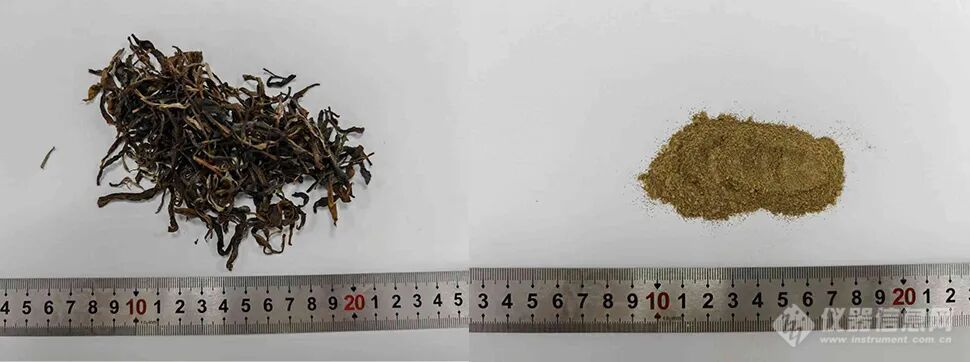
Comparison before and after grinding loose tea
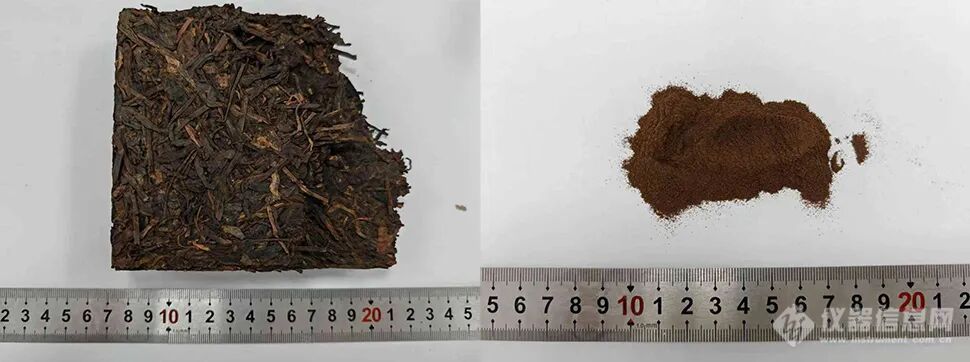
brick teaComparison before and after grinding
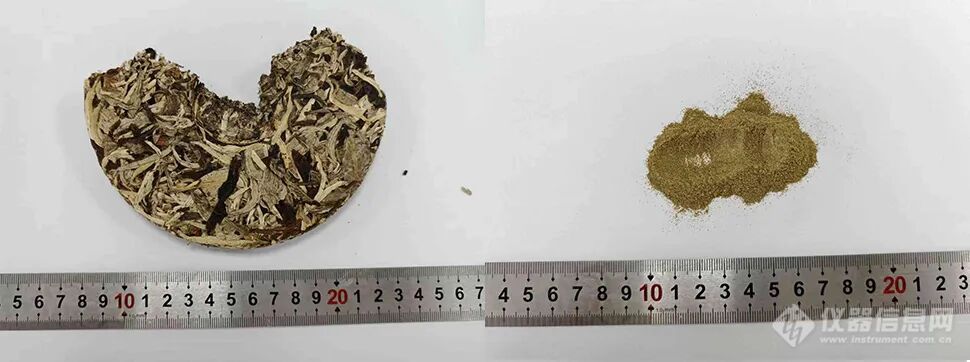
Unpackaged tea cakesComparison before and after grinding
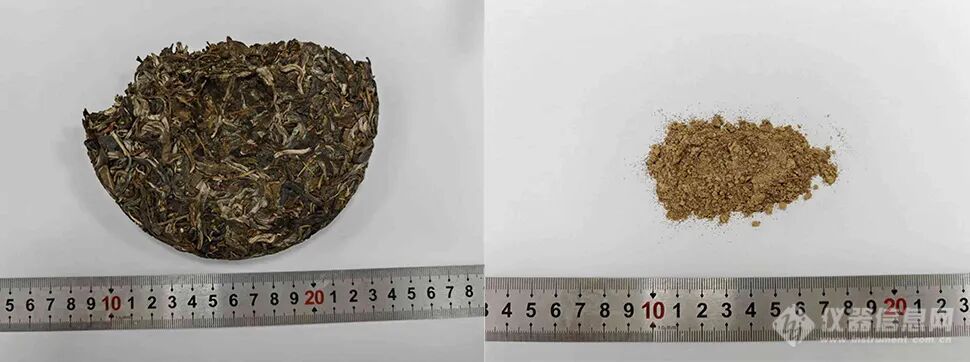
Packaged tea cakesComparison before and after grinding
Experimental conclusion
Faced with the complexity and diversity of tea samples, AM600S knife grinder relies on itsPowerful adaptability, efficient shearing and crushing capabilities and intelligent operation mode, successfully processed four types of tea leaves with different shapes into uniform powder that meets the national standard requirements at one time. ThatExcellent screening rate and reproducibility, significantly improving the efficiency and reliability of the pre-treatment process for tea pesticide residue detection, fromThe source ensures the accuracy of detection data。

Ant Keyi AM600S Knife Grinder, with professional shear grinding principles, intelligent operating modes and solutions optimized for tea characteristics, to ensure that data is obtained from the source.accuracyandreliability. It is not only an instrument, but also a powerful tool for laboratories to improve efficiency, for enterprises to cope with stringent standards, and for the industry to move towards green and sustainable development.
Choosing a professional sample pretreatment solution is a choice that instills confidence in your testing data and product safety.
Welcome to contact Ant Keyi to obtain detailed technical information of AM600S and exclusive application solutions for your specific samples!
View More from This Booth
Gained authoritative recognition again! Ant Keyi officially became a member of Zhongguancun Material Testing Technology Alliance (CSTM)
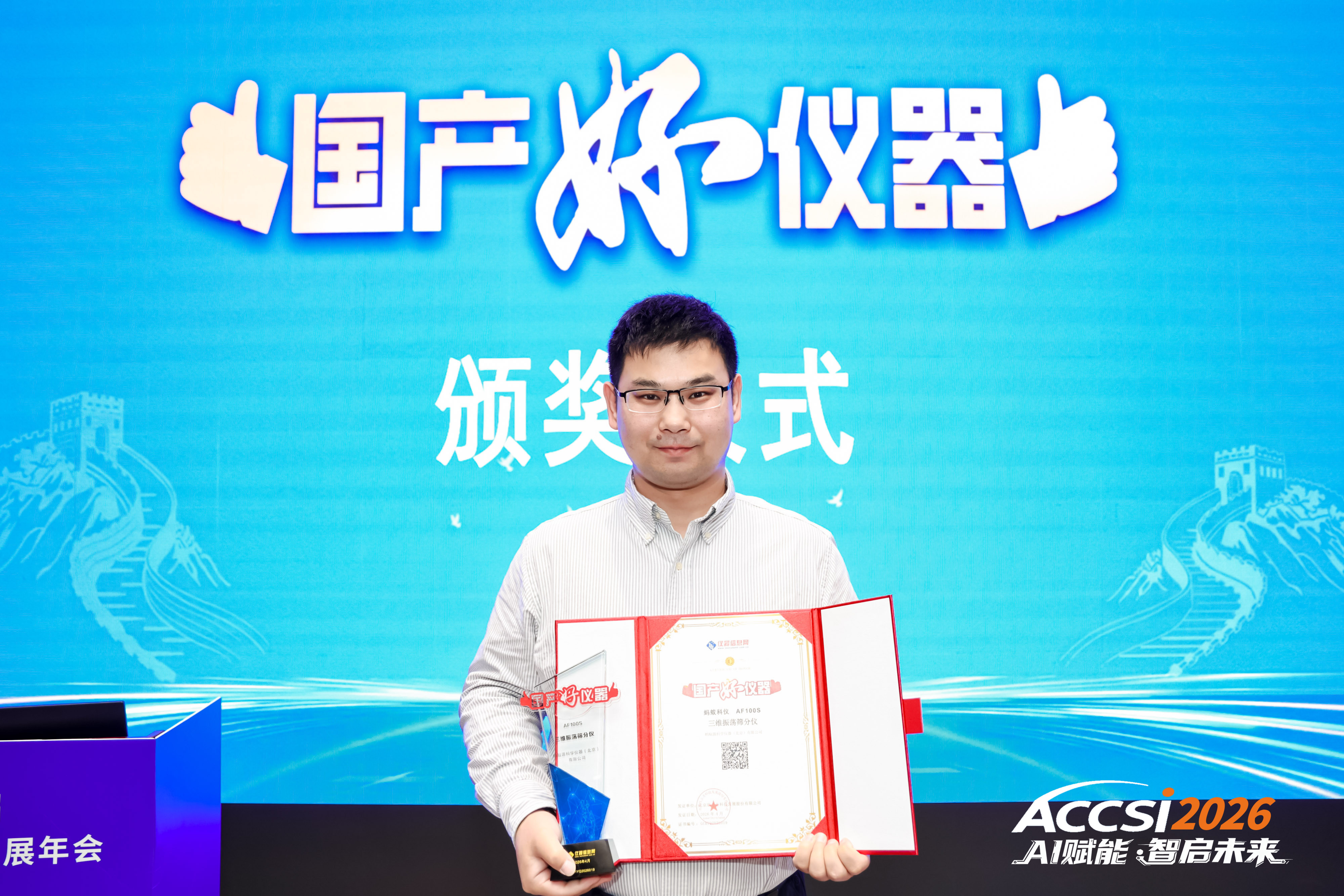
Ant Keyi AF100S three-dimensional oscillating sieve analyzer: Why did it win the title of “Good Domestic Instrument”?

The "Four Musketeers" of the Antko Ritual Knife Grinding Family: AM600S, AM610, AM630, AM670. How to choose? One article to understand!