 Gold Member
 Business License
User Express | Team of Professor Zhang Shaoguang of Tsinghua University: Clever use of FT-IR to understand the electronic effects of ligands - FOLI10 in dicationic carbene ligands
Keywords:FT-IR; CyNC; tetrylene; σ receptor capability; inert atmosphere glove box
01 Research background and ideas
In homogeneous transition metal catalysis, it is the metal center that actually participates in substrate activation and chemical bond transformation, but its reactivity and selectivity depend to a large extent on the surrounding coordination environment. Even if the same metal is used, simply changing the ligand may cause significant changes in catalytic activity, reaction selectivity and even reaction pathways.
From the perspective of ligand design, factors affecting the properties of metal centers can usually be summarized as stereoscopic effects and electronic effects. The steric effect mainly determines the spatial environment of the substrate close to the metal center; the electronic effect regulates the electron density of the metal center by donating or withdrawing electrons, thereby affecting the energy barriers of substrate coordination, activation, and different elementary steps in the catalytic cycle. Therefore, accurate evaluation of the electronic properties of ligands is a basic issue in the research of homogeneous catalysis and coordination chemistry.
For common L-type ligands, researchers usually focus on their electron-donating capabilities; this study focuses on a type of dicationic tetrylene ligands with obvious acceptor properties. This type of ligand can accept the electron density of the metal center as a Z-type ligand. Therefore, experimental evaluation of its σ receptor ability is an important basis for understanding and further regulating its electronic properties.
However, the "strength of the electron-attracting ability of the ligand" itself is not an experimental quantity that can be directly read. Structural parameters and theoretical calculations can provide important information, but establishing an intuitive and unified scale of experimental comparison for a range of ligands requires the selection of spectroscopic probes that are sufficiently sensitive to the electronic environment. Cyclohexyl isonitrile (CyNC) was selected as the infrared spectroscopy probe in this work. The C≡N bond of CyNC is very sensitive to electronic changes in the coordination environment; when the σ receptor ability of the tetrylene ligand changes, the electronic effect can be transferred to CyNC through the coordination skeleton, which is ultimately manifested as the movement of the C≡N stretching vibration peak ν (CN). From this, abstract "ligand electronic effects" can be converted into peak positions in FT-IR that can be directly read and compared.
In this case, INSA FOLI10 Fourier transform infrared spectrometer was used to test the Ge, Sn and Pb series double cationic tetrylene ligand systems, and the electronic effects and σ receptor capabilities of different ligands were evaluated by comparing the positions of ν (CN).
Since the organometallic complex under study is sensitive to air and moisture, the entire FOLI10 machine was placed in an inert atmosphere glove box. From sample weighing, solution preparation, KBr chip dropping and solvent evaporation, to sample loading and FT-IR spectrum collection, the entire process can be completed in the glove box, thereby minimizing the contact between the sample and air and moisture.
02 Instruments, reagents and samples
Main instruments and tools
This experiment mainly uses the following instruments and utensils:
(1) INSA FOLI10 Fourier transform infrared spectrometer
(2) Inert atmosphere glove box
(3) Vacuum oven
(4) KBr transmission film
(5) Analytical balance
(6) Dry sample bottles
(7) Dropping tool
(8) Dry tweezers, etc.
Among them, FOLI10 is placed directly inside the glove box and is used for infrared spectrum testing of air and moisture sensitive samples. After the sample is prepared in the glove box, it does not need to be sealed again and transferred outside the box. It can be directly loaded into the instrument to collect spectra, thereby reducing the chance of the sample coming into contact with air and moisture.
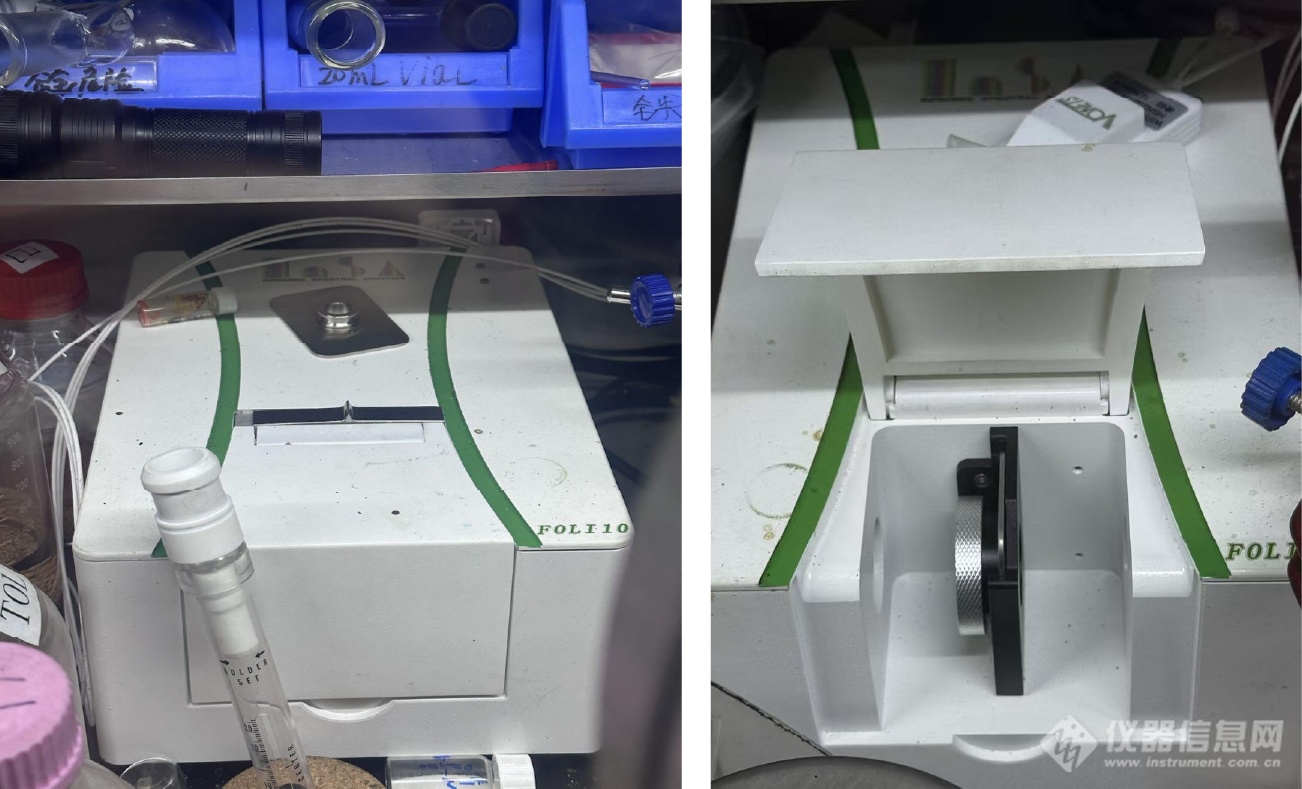
Figure 1 Actual photo of FOLI10 FT-IR in the glove box
Solvents and samples to be tested
The solvent is dried dichloromethane (DCM). The samples tested this time are mainly divided into two groups:
(1) The first group: three dicationic tetrylene ligand systems of Ge, Sn and Pb, used to compare the effects of changes in main group elements on the σ receptor ability of the ligands.
(2) The second group: Based on the Sn system, Mo(CO)5, W(CO)5 and Cr(CO)5 fragments were further introduced to investigate the fine adjustment of the electronic properties of tetrylene ligands by further coordination. ν(CN) = 2136 cm-1 for free CyNC, which is used as a reference value for subsequent comparisons.
03 Preparation before experiment
Since the complex to be tested is sensitive to air and moisture, the KBr tablets need to be fully dried before the formal experiment. The KBr sheets used in the experiment were dried in a vacuum oven in advance; after drying, they were placed in a glove box overnight and then transferred to the glove box for storage.
There are two considerations for this treatment: First, KBr itself is easy to absorb moisture, which will affect the infrared transmittance performance after getting wet; second, for air-sensitive organometallic complexes, moisture should be avoided from the KBr sheet.
The KBr sheets after being transferred to the glove box should remain transparent, with no obvious atomization or contamination on the surface. During operation, use dry tweezers to hold the edge of the KBr sheet to avoid direct contact with the central effective light-transmitting area. The DCM used in experiments also needs to be dried in advance. Therefore, everything from KBr tablets, solvents to samples to be tested should be kept as dry as possible and in an inert experimental environment before formal testing.
04 Sample solution preparation
All sample preparation procedures were completed in the glove box. Weigh about 6 mg of the complex to be tested, place it in a clean, dry sample bottle, and add about 0.5 mL of dried DCM. Gently shake the sample bottle to fully dissolve the complex and obtain a uniform sample solution to be tested.
Try to use the same sample volume, solvent volume and operation method for each series of compounds. Since the experiment ultimately needs to compare the changes in ν(CN) peak position between different samples, it is very important to keep the preparation conditions of the series of samples consistent.
This experiment did not use the common method of "mixing solid samples and KBr powder, grinding and pressing into tablets". Instead, the solution was dropped to form a solid thin layer for transmission testing. The sample preparation process is: DCM dissolves the sample → drops into the KBr sheet → DCM volatilizes → solid thin layer transmission test.
05 KBr tablet drop sample and solvent evaporation
Take a piece of KBr that has been dried in advance and place it flat in a clean area in the glove box. Use a dropper tool to absorb a small amount of the sample solution to be measured, and drop it into the effective light-transmitting area in the center of the KBr sheet.
It is not advisable to add too much solution when dropping the sample for the first time. After the dropwise addition is completed, allow the DCM to evaporate naturally in the glove box; after the solvent evaporates, decide whether to continue adding it based on the sample loading on the KBr chip. If you need to increase the sample amount, it is recommended to gradually adopt the method of "dropping a small amount → evaporating DCM → adding again".
Compared with adding a large amount of solution at one time, small and multiple drops make it easier to control the final solid layer thickness and reduce the local accumulation of the sample on the KBr chip. After the DCM is completely evaporated, the complex remains on the surface of the KBr sheet in the form of a solid thin layer, which can be directly used for FT-IR testing.
Since the liquid preparation, sample dropping and evaporation processes are all completed in an inert atmosphere, oxidation, hydrolysis or other changes of air-sensitive samples during the sample preparation process can be avoided as much as possible.
06 FT-IR test
The main test conditions of this experiment are as follows:
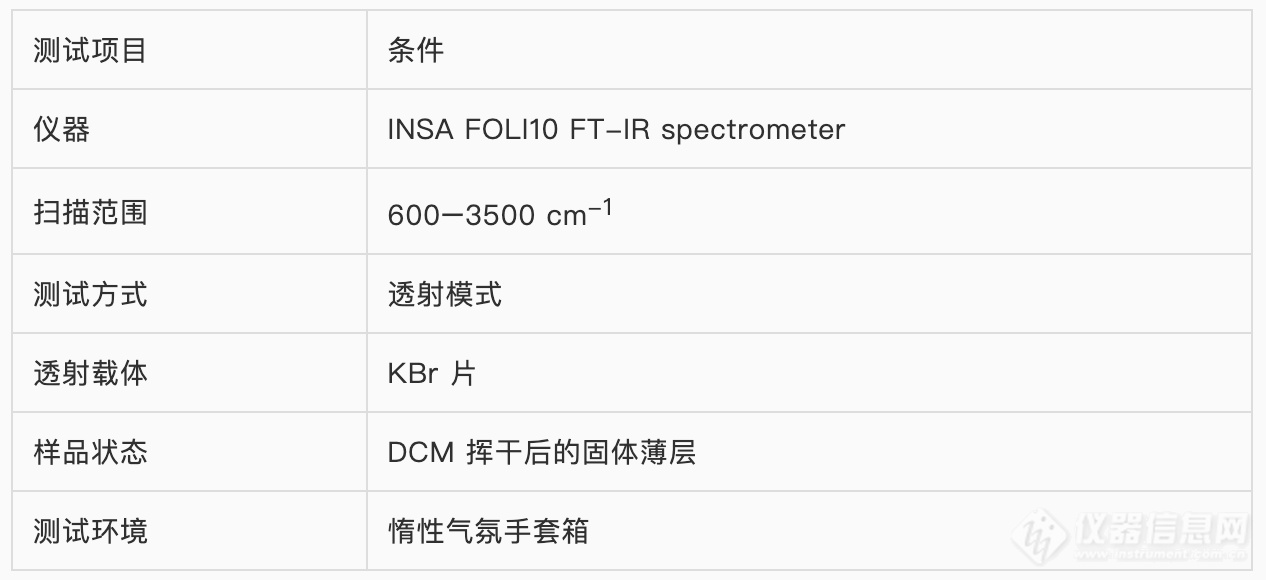
After confirming that the DCM is completely evaporated, install the KBr sheet directly to the FOLI10 transmission test position in the glove box. Collect background and sample spectra according to conventional procedures and save the complete 600–3500 cm-1Infrared data.
This experiment uses CyNC as the electronic effect probe, so we focus on observing the C≡N stretching vibration region based on the complete spectrum, and accurately record the ν(CN) peak positions of different samples. The main ν(CN) signal of this series of complexes is concentrated at about 2180–2220 cm-1area.
Different from conventional functional group qualitative analysis, this case does not focus on "whether there is a C≡N absorption peak", but the peak shift amount of the same ν(CN) characteristic peak in different ligand systems.
07Experimental results and discussion
The ν(CN) data obtained for different ligand systems are as follows:
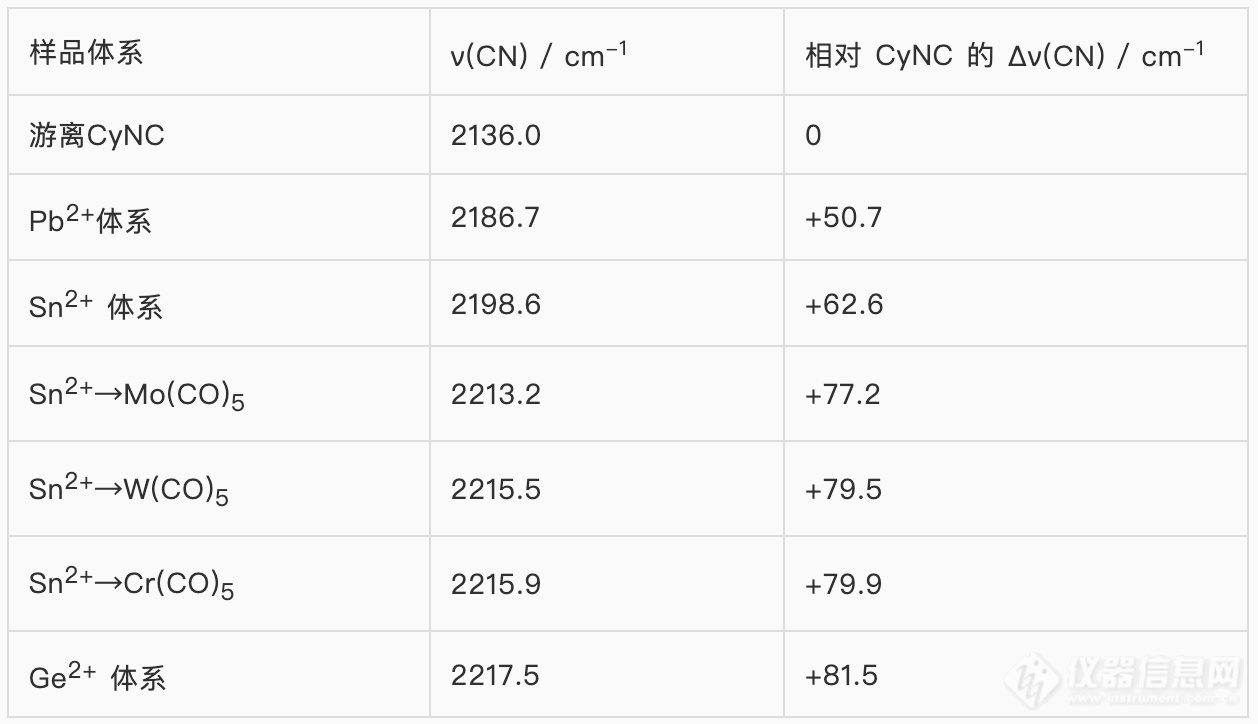
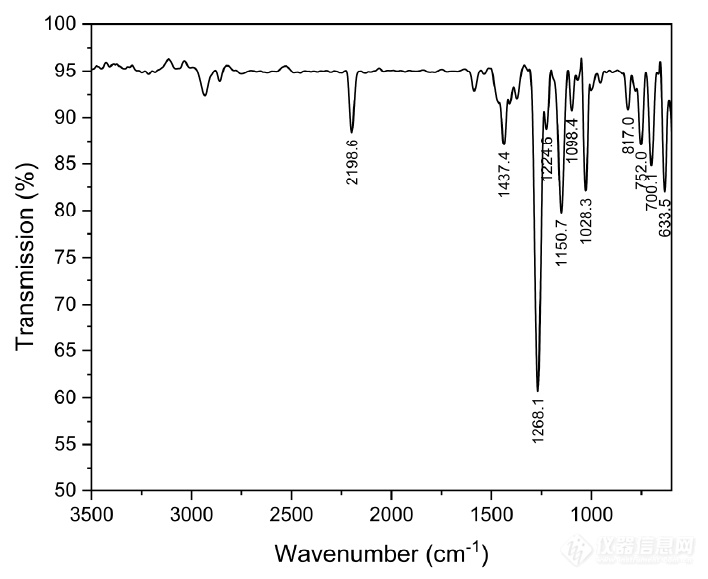
Figure 2 IR spectrum of SnPt complex
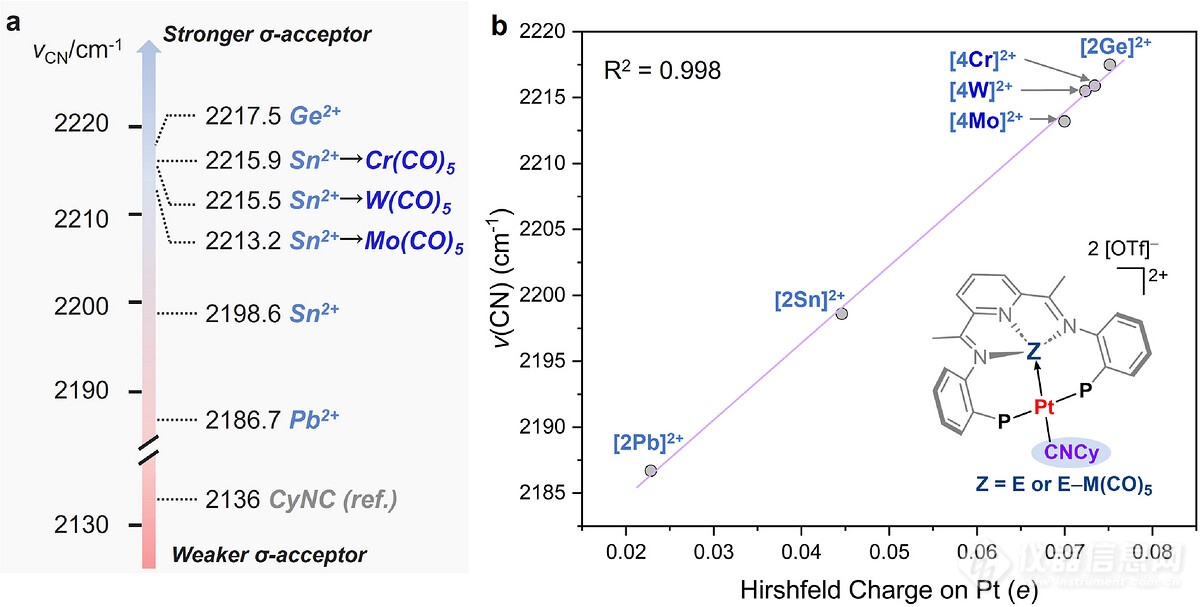
Figure 3 Different systems ν(CN) scale and its correlation analysis
First compare the three systems of Ge, Sn and Pb. The ν (CN) of free CyNC is 2136 cm⁻¹; in different tetrylen ligand systems, this characteristic peak undergoes an obvious blue shift. The ν(CN) of Pb, Sn and Ge systems are 2186.7, 2198.6 and 2217.5 cm respectively.-1。
σ receptor ability order: Ge²⁺ > Sn²⁺ > Pb²⁺
It can be seen that the σ receptor capabilities of the three dicationic tetrylene ligands are gradually weakened. The advantages of FT-IR spectroscopic probes are also reflected in this: the electronic properties of ligands that are originally difficult to observe directly can be converted into measurable, comparable, and sortable experimental results through the ν(CN) peak position.
When further examining the Sn system, it can be found that when the Sn end is coordinated with Mo(CO)₅, W(CO)₅ and Cr(CO)₅ respectively, ν(CN) is given by 2198.6 cm-1rose to 2213.2, 2215.5 and 2215.9 cm respectively-1. This shows that in addition to the large-scale adjustment of the electronic properties of the ligand through changes in Ge, Sn, and Pb elements, further coordination of the Sn end can also be used to achieve more precise regulation of the σ receptor capacity.
There is a good linear correlation between the experimentally obtained ν(CN) and the theoretically calculated Hirshfeld charge, R2 = 0.998. The high correlation between experiment and theory further demonstrates that ν(CN) can be used as an effective experimental probe for the electronic effects of this series of dicationic tetrylene ligands.
08 The significance of research on ligand electronic effects
In homogeneous catalysis, ligands are not just structural units "fixed" around the metal. Ligands can not only change the electronic state of the metal center through electronic effects, but also control the spatial manner in which the substrate approaches the metal center through steric effects. Both determine the reactivity and selectivity of the catalytic system.
Therefore, one of the important ideas in the design of modern homogeneous catalysts is to fine-tune the metal center by modifying the ligand structure in a targeted manner. A large number of studies in traditional ligand chemistry focus on electron-donating ligands such as phosphines and carbenes; in contrast, Z-type ligands that can accept metal electron density provide another control path.
The dicationic tetrylene studied in this work is a ligand with obvious σ receptor properties. If the ability of the σ receptor can be continuously changed by changing the Ge, Sn, and Pb elements or further coordination, it means that the reactivity of the entire catalytic system can be controlled by adjusting the electronic properties of the peripheral ligands without directly changing the catalytic metal itself.
Therefore, accurately evaluating the electronic effects of such ligands is not only a structural characterization issue in coordination chemistry, but also provides experimental basis for subsequent homogeneous catalyst design and electronic property control. In this case, the core role of FT-IR is to provide a simple and intuitive spectral ruler for the "ligand electronic effect".
09 Operation Precautions
KBr tablets should be fully dry
KBr easily absorbs moisture. This experiment adopts the processing flow of "vacuum oven drying → glove box overnight → transfer to glove box for use". For air-sensitive samples, this step not only affects the quality of infrared transmission, but also helps reduce the moisture brought in by KBr.
DCM should be dried
The compound to be tested is sensitive to air and moisture, so the sample should be prepared using dried DCM, and the solution preparation and dropping of the sample should be completed in the glove box.
Controlling the amount of sample loaded on the KBr chip
When using the solution dropping method, the larger the sample size, the better. If the sample layer formed after the solvent evaporates is too thick, the infrared transmission intensity will decrease, and some absorption peaks may even be too strong. Therefore, small amounts and multiple drops are more conducive to controlling the thickness of the sample layer.
Confirm that DCM is fully evaporated
After each drop of sample, you should wait for the DCM to fully evaporate before proceeding with the next drop of sample or direct testing. This can not only reduce the interference of residual solvent on the spectrum, but also help form a more stable solid sample layer.
10 Application value of FOLI10
This case study demonstrates that the uses of FT-IR are not limited to routine functional group identification. By introducing CyNC, a unified spectral probe, the abstract σ receptor capability can be converted into an easy-to-read ν(CN) peak position; the differences between the Ge, Sn, and Pb ligand systems and the fine adjustments brought about by further coordination can be directly reflected in the changes in the FT-IR peak position.
FOLI10 can be placed directly in the glove box and is particularly practical for the air-sensitive organometallic complexes involved in this study. From sample weighing, drying DCM preparation, KBr chip dropping and solvent evaporation, to final spectrum collection, the sample can always be in an inert environment and does not need to be transferred outside the glove box for FT-IR testing.
This testing method not only reduces the transfer steps of air-sensitive samples, but also reduces the additional uncertainty caused by short-term exposure of samples to water and oxygen. In actual operation, the key to obtaining reliable results does not necessarily lie in complex instrument parameters, but in the strict control of basic experimental details, such as whether the KBr sheet is fully dry, whether the DCM is dry and completely volatilized, whether the sample layer thickness is appropriate, and whether the preparation and testing conditions of different samples are consistent.
When these experimental details are well controlled, FT-IR can be further expanded from a routine structure identification tool to an effective means to study the electronic properties of ligands.
in conclusion
In this case, a series of air- and moisture-sensitive dicationic tetrylene ligand systems were tested using the FOLI10 FT-IR placed in an inert atmosphere glove box.
Dissolve about 6 mg of the sample in 0.5 mL of dry DCM, and use the KBr chip drop sample, the solvent is evaporated and then the transmission test method is used. The entire FT-IR test process can be completed under the condition that the sample is always in an inert environment.
Using ν(CN) of CyNC as a spectral probe, the experimental results show that the order of σ receptor ability of dicationic tetrylene ligands is Ge²⁺ > Sn²⁺ > Pb²⁺. After the Sn terminal is further coordinated, ν(CN) will also change regularly, indicating that the electronic effect of this type of ligand can be continuously regulated.
Therefore, FT-IR in this case is not only used to determine whether there are characteristic groups in the molecule, but more importantly, to convert the electronic effects of ligands and σ receptor capabilities that are difficult to directly observe into measurable and comparable spectral parameters. For homogeneous catalysis research, this method also provides an intuitive experimental basis for understanding how ligands regulate the catalytic system and further developing ligand design.
References
[1] Chen, Liuyang.; Zhang, Shaoguang. Dicationic Tetrylene Ligands Modulate Pt0 π-Acid Catalysis. Angewandte Chemie Novit, 2026, 2, e70024. DOI: 10.1002/anov.70024.
View More from This Booth

Good news! Yingsa Optics has officially joined the ranks of specialized and new "little giants", adding another milestone to its journey of full-stack self-research!
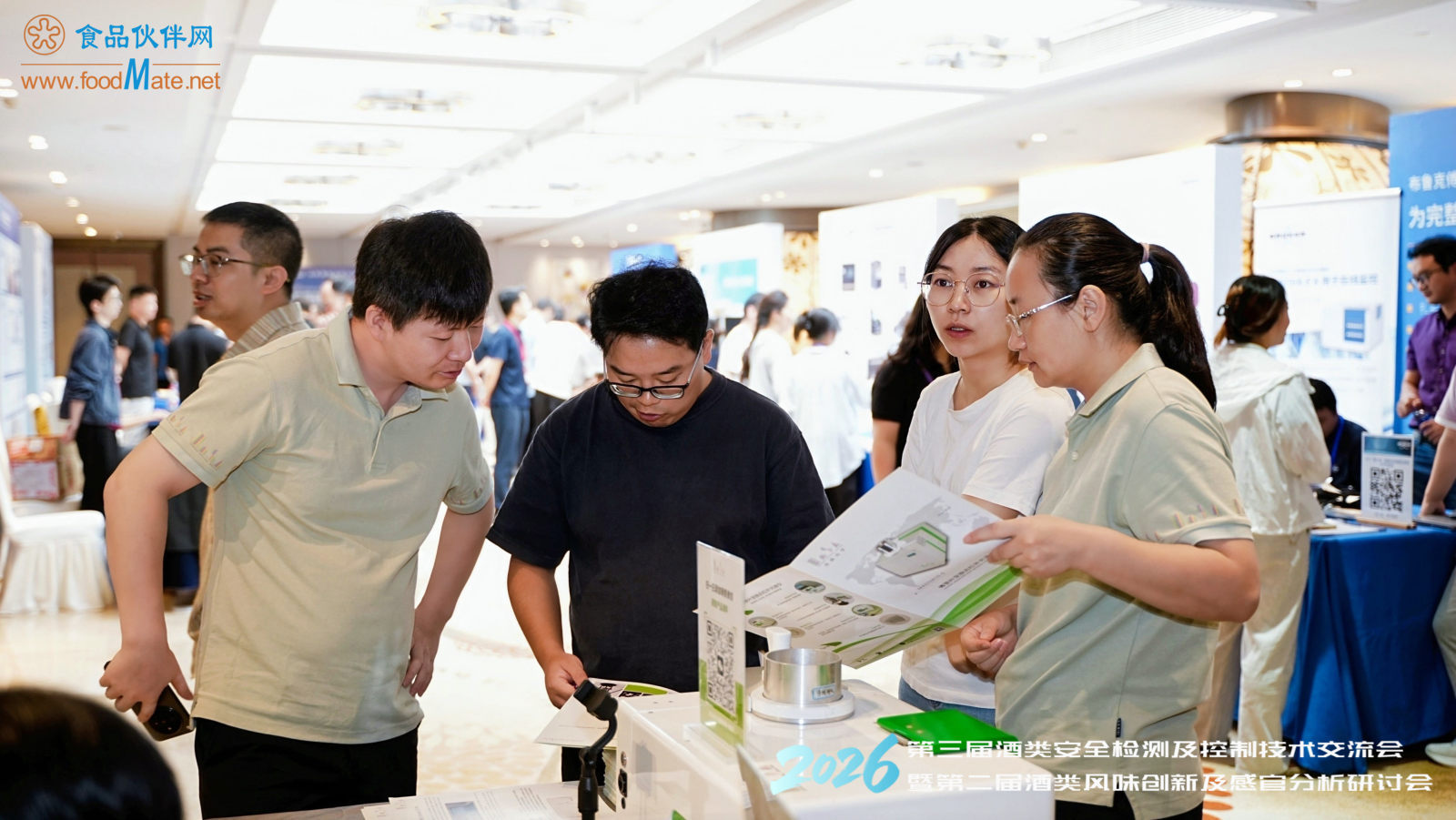
Exhibition Information | Yingsa Optical Appears at the 2026 Wine Safety Testing and Control Technology Exchange Conference to empower the quality upgrade of the wine testing industry
A new journey in the field of molecular spectroscopy in Shanghai - the Molecular Spectroscopy Professional Committee of the Shanghai Society of Chemistry and Chemical Engineering was officially establ