

 Gold Member
 Business License
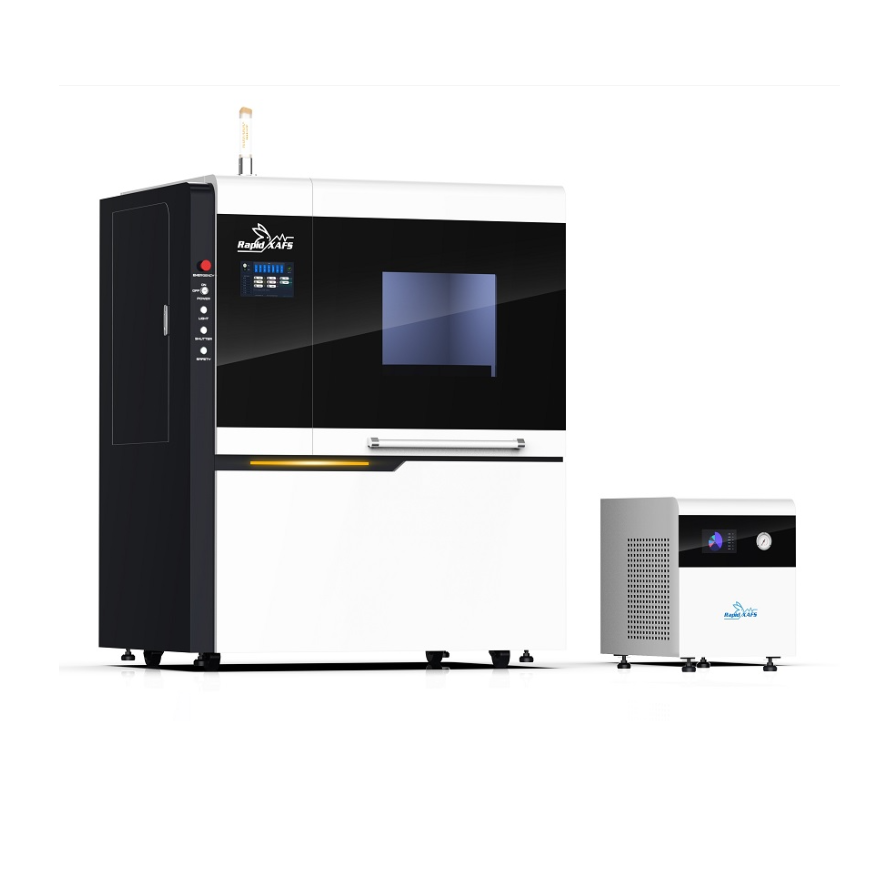
XAS, benchtop X-ray absorption fine structure spectrometer (XAFS)
Product Details
Core Specifications
Applications
Detailed Description
XAFS,XAS,Desktop X-ray absorption fine structure spectrometer RapidXAFS2M
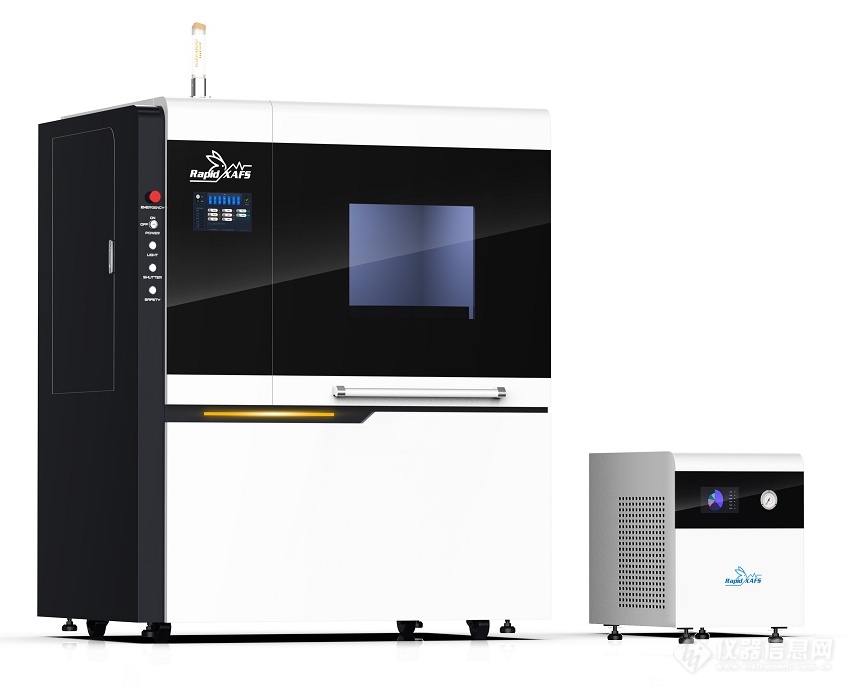
Product principle
RapidXAFS spectrometer uses Rowland circle structure and high-index surface crystal to perform monochromatic spectroscopy to achieve X-ray absorption/emission spectrum measurement. It is a powerful tool for studying the local atomic or electronic structure of materials and is widely used in popular fields such as catalysis, energy, and nanometers.
Performance features:
ØIt does not rely on long-range ordered structures and can be used for the study of amorphous materials;
ØWithout interference from other elements, different elements in the same material can be studied separately;
ØIt is not affected by the state of the sample and can measure solids (crystals, powders), liquids (solutions, molten states) and gases, etc.;
ØThere is no damage to the sample and in-situ testing can be carried out;
ØIt can obtain high-precision structural parameters such as coordination atomic species, coordination number, and atomic spacing. It is generally believed that the accuracy of atomic spacing can reach 0.01Å
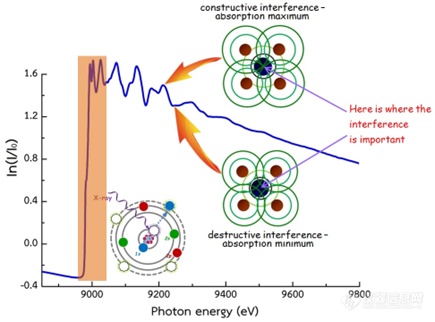
The XAFS spectrum mainly includes two parts: X-ray absorption near-edge structure (XANES) and extended X-ray absorption fine structure (EXAFS). The energy range of EXAFS is approximately 50 eV to 1000 eV after the absorption edge, which is the result of the single-electron single scattering effect of the inner photoelectrons excited by X-rays between the surrounding atoms and the absorbing atoms. XANES covers the range from about 10 eV before the absorption edge to about 50 eV after the absorption edge, which is mainly derived from the single electron multiple scattering effect of inner shell photoelectrons excited by X-rays between surrounding atoms and absorbing atoms.
Product advantages
Multifunctional:Provide scientific research-grade high-quality XAFS/XES spectra
high performance: Complete 1% content sample test within 1 hour(CN carrier)
High luminous flux:>2000,000 photons/sec@8Kev
Flexible configuration:The sample cell can be customized according to customer requirements to enable in-situ observation of the reaction process under high temperature, high pressure, low temperature and low pressure, and various atmospheric conditions.
Simple and easy to use:It only takes half a day of training to operate the machine
Autonomous and controllable:90% of components are independently controllable, with no policy risks
Low maintenance costs:No need for dedicated maintenance, operation, management, etc.
XAFS/XES data has become the “standard” for top journals, resulting in more and more research groups requiring XAFS testing. Adhering to the concept of bringing XAFS/XES into every laboratory, we launched a new X-ray absorption/emission spectrometer platform (RapidXAFS 1M).
RapidXAFS 2M has the following characteristics:
1.Provides XAFS testing without a synchrotron radiation source;
2.Desktop size, can be placed in the laboratory for use at any time, greatly saving waiting time for scientific research;
3.Achieve analysis of the local structure and valence state of catalysts;
4.Achieve in-situ observation of the reaction process under in-situ measurement (high temperature and high pressure, low temperature and low pressure, various atmosphere conditions), which is comparable to the high-performance version of static and normal pressure photoelectron spectroscopy;
Application areas
- New energy:
Fuel cell research, hydrogen storage material research, lithium-ion battery, carbon neutrality research.
Through XAFS/XES, the valence state, coordination environment and dynamic changes of the central atom during electrocatalytic, photocatalytic and thermocatalytic reactions can be obtained.
- catalytic:
Nanoparticle catalysis, single atom catalysis. Through XAFS/XES, the morphology of the catalyst on the carrier, the form of interaction with the carrier, changes during the catalytic process, etc., as well as the neighbor structure of elements with extremely low content are obtained.
- Materials Science:
Used for characterization of various materials, research on complex systems and disordered structural materials, radionuclide research
Research on the related properties of surface and interface materials, and research on the dynamic change process of materials.
- Biological macromolecules:
Used to study metals and their neighboring structures in metal-containing biological macromolecules, such as the analysis of substances
Research on metalloproteins that play an important role in life processes, etc.
- Environmental Science:
Widely used in the valence of elements in glass, soil, plastics, coal, chrome tanned leather and ultramafic rocks
Analysis of state and content; analysis of animal and plant tissues and other samples; detection of heavy metal pollution, etc.
Product Overview
RapidXAFS 2M is a desktop X-ray absorption fine structure spectrometer that uses Rowland circle structure and high-index face crystal for monochromatic spectroscopy. It can measure X-ray absorption near-edge structure (XANES) and extended X-ray absorption fine structure (EXAFS). It is suitable for the study of local atomic or electronic structure of a variety of materials. The equipment has the characteristics of high luminous flux, multi-function, and high precision. It can conduct non-destructive in-situ testing of samples in a variety of states, and supports customized sample cells to adapt to different experimental needs. It is suitable for research in many fields such as catalysis, energy, nanometers, materials science, biological macromolecules and environmental science.