Give the knob to AI and leave the judgment to you|Guoyi Quantum Electron Microscope AI Agent
New Product Updates
Oct 27, 2026

Recently, Tianlong Technology independently developedParainfluenza virus nucleic acid detection kit (fluorescence PCR method) (National Machinery Approval No. 20263401960)It was registered and approved by the State Food and Drug Administration and officially launched on the market. This product is used for the auxiliary diagnosis of human parainfluenza virus infection and will provide an efficient and reliable detection tool for medical institutions and public health institutions at all levels.
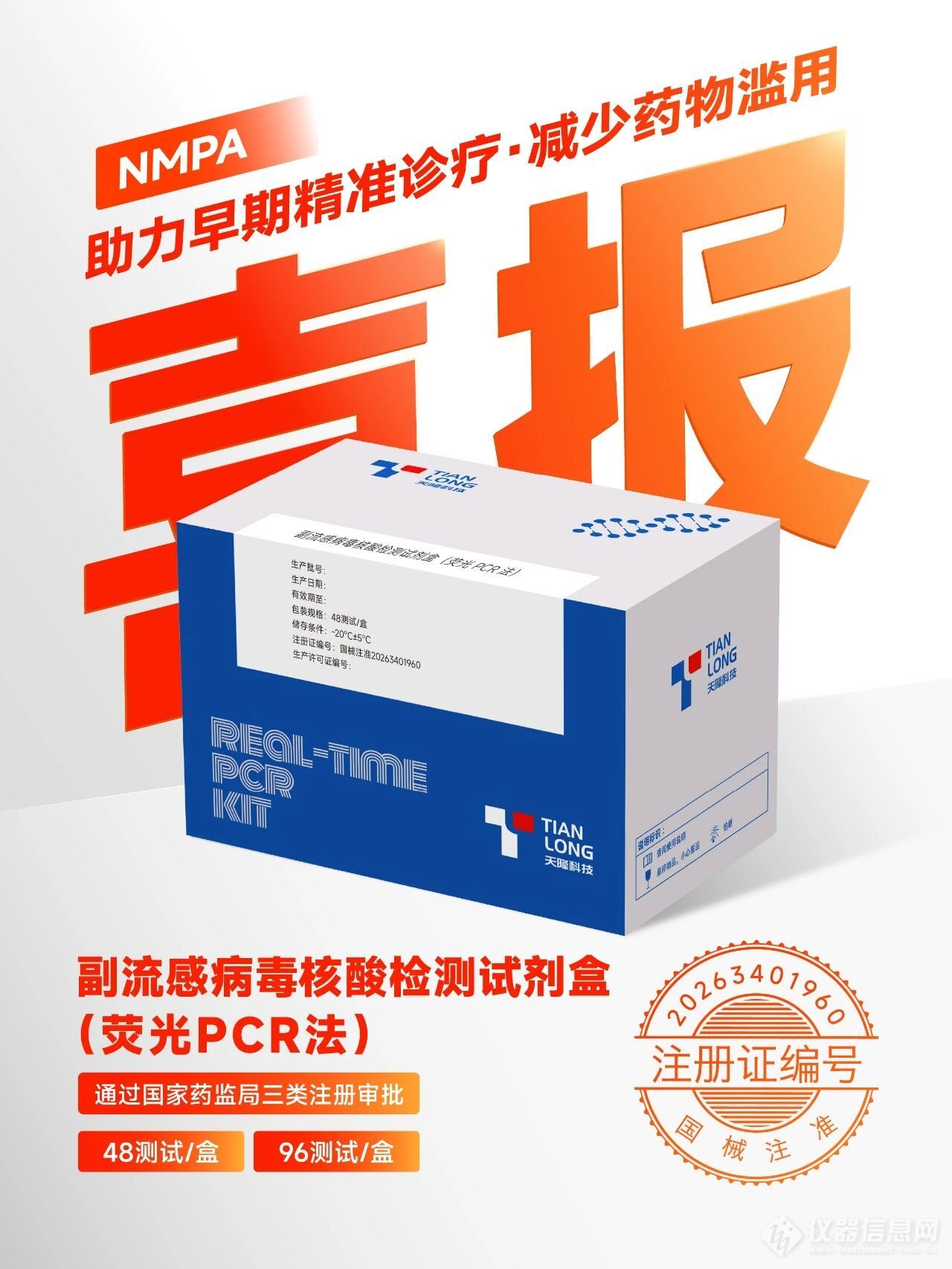
Tianlong parainfluenza virusAdvantages of detection reagents
Tianlong parainfluenza virus nucleic acid detection reagent is based on the fluorescent PCR technology platform.Type 1/2/3 nucleic acids that can accurately classify parainfluenza viruses, assisting in the precise diagnosis and treatment of respiratory tract infections and reducing drug abuse.
✅ High sensitivity:The lowest detection limit is as low as 200 copies/mL, effectively reducing the risk of missed diagnosis in low-load samples.
✅ One tube for multiple tests:Single tube simultaneous detectionparainfluenza virus 1/Type 2/3, quickly achieve infection risk stratification.
✅ Reliable results:The internal standard gene is monitored throughout the entire process to effectively avoid false negatives, and the UNG-dUTP anti-contamination system reduces false positives caused by PCR product residues.
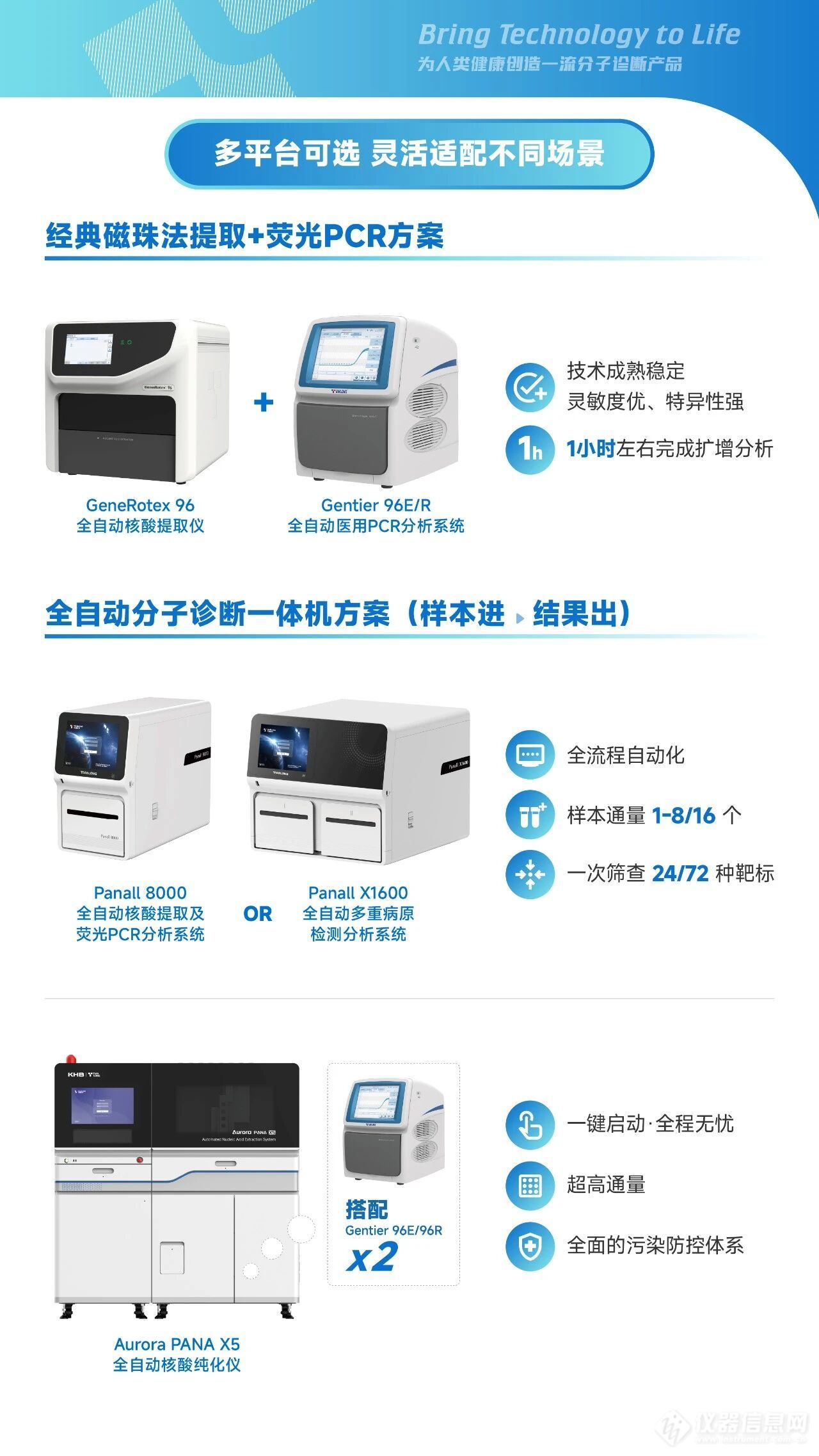
✅ Easy to operate:It can be used with Tianlong automated extraction and amplification detection equipment to complete the detection in about 1 hour, greatly improving detection efficiency.
Parainfluenza virus:
The "high-incidence culprit" of the respiratory tract that is easily overlooked
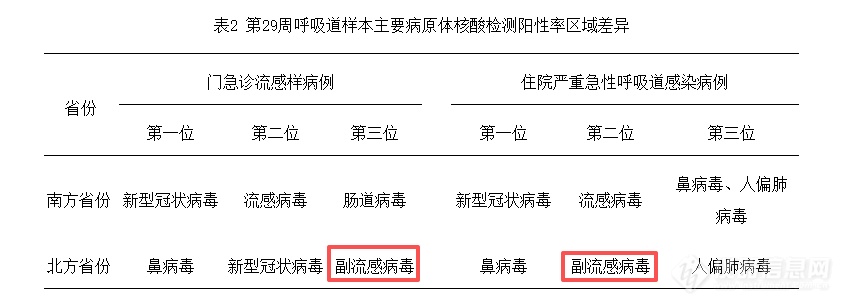
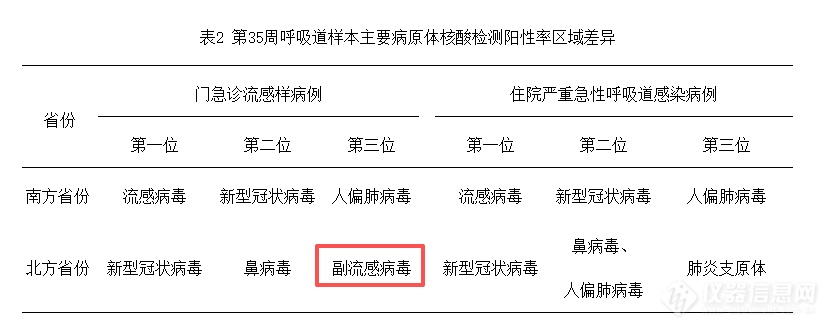
Influenza virus, Mycoplasma pneumoniae,respiratory syncytial virusare well-known respiratory pathogens, but in fact human parainfluenza virus (HPIV) is also one of the most common pathogens of respiratory infections.Studies show that at least 75% to 80% of children under 5 years old have been infected with HPIV[1], in the National Sentinel Surveillance Report of Acute Respiratory Infectious Diseases, HPIV is often among the top three pathogens in outpatient and emergency influenza-like cases or inpatient acute respiratory infection cases.[2]。
Parainfluenza virus is divided into four serotypes: HPIV-1, 2, 3, and 4. It is one of the core pathogenic viruses that cause respiratory tract infections, repeated coughing, and croup in children. It can also attack adults and people with low immunity. All ages are susceptible. Immunity after infection is not long-lasting, and it is extremely contagious and has the characteristics of repeated infections. Global epidemiological studies indicate that in children under 5 years of age, approximately 13% of acute respiratory infection (ARI) cases, 4% to 14% of acute lower respiratory tract infection (LRTI) hospitalizations, and 4% of LRTI-related deaths can be attributed to HPIVs infection[3]。

HPIV type 1/2:More susceptible to infection of the larynx and upper trachea, and acutelaryngotracheobronchitisrelated;
HPIV type 3:It is the most contagious, generally infects the distal airways, and is associated with bronchitis and pneumonia;
HPIV type 4:Common infection of the upper respiratory tract, usually mild symptoms[1]。
Authoritative guideline consensus recommendations:
Nucleic acid testing is an important diagnostic method
Respiratory tract mixed infections with multiple pathogens occur frequently, but parainfluenza virus is often ignored.Its early symptoms are highly overlapping with those of influenza and syncytial virus. It is difficult to distinguish clinically based on symptoms alone, and it is extremely prone to problems such as missed diagnosis, misdiagnosis, and blind medication.Rapid and accurate laboratory testing is an important prerequisite for achieving symptomatic treatment, rational use of drugs, and reducing severe disease.
Current laboratory testing methods for respiratory tract infections includeVirus isolation, antigen-antibody detection and nucleic acid detection, etc.[4]。
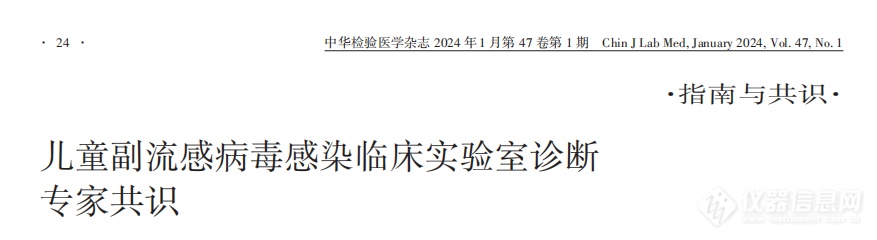
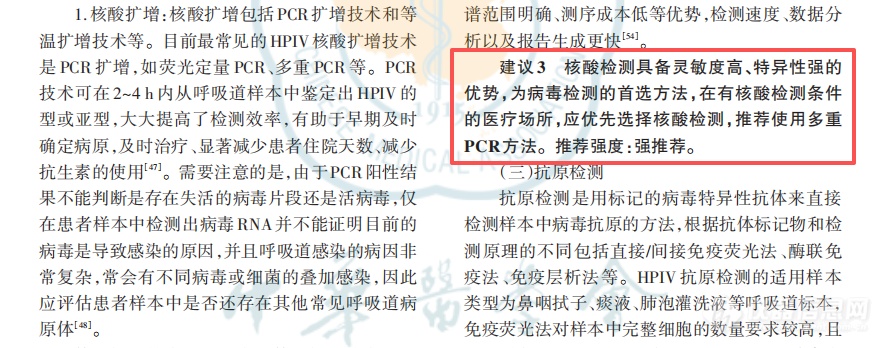
Among them, nucleic acid testing has the advantages of short window period, high sensitivity, and good specificity. It has become the first recommended detection method in many authoritative guidelines and expert consensus, such as "Expert Consensus on Clinical Laboratory Diagnosis of Parainfluenza Virus Infection in Children", "Expert Consensus on Etiological Diagnosis and Clinical Management of Acute Respiratory Infection in Children", "Expert Consensus on Clinical Diagnosis and Treatment of Respiratory Infections During Multiple Pathogen Epidemics"[1,4-7]。
Tianlong respiratory testing product matrix,
Build a fully closed loop for respiratory tract diagnosis
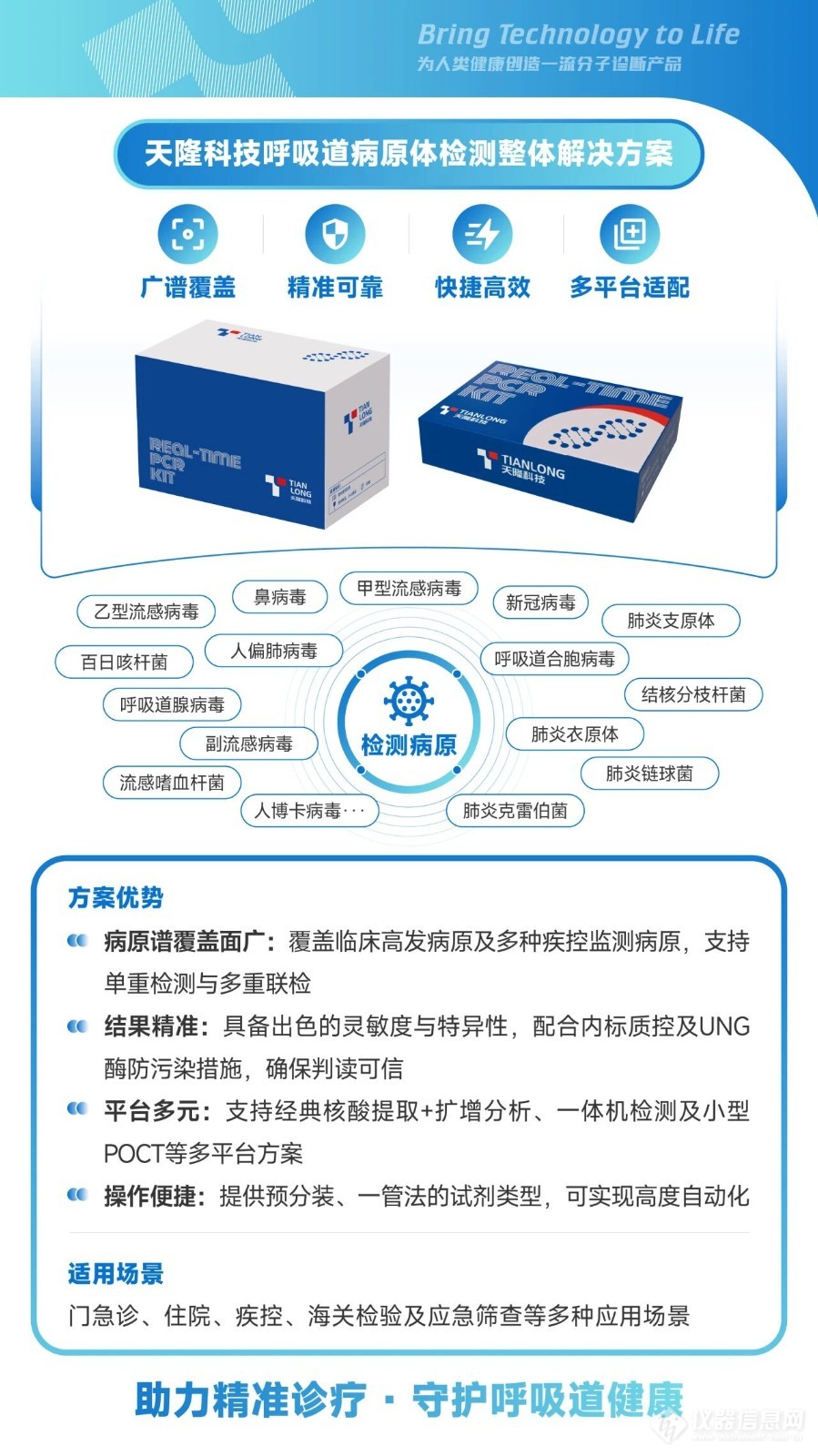
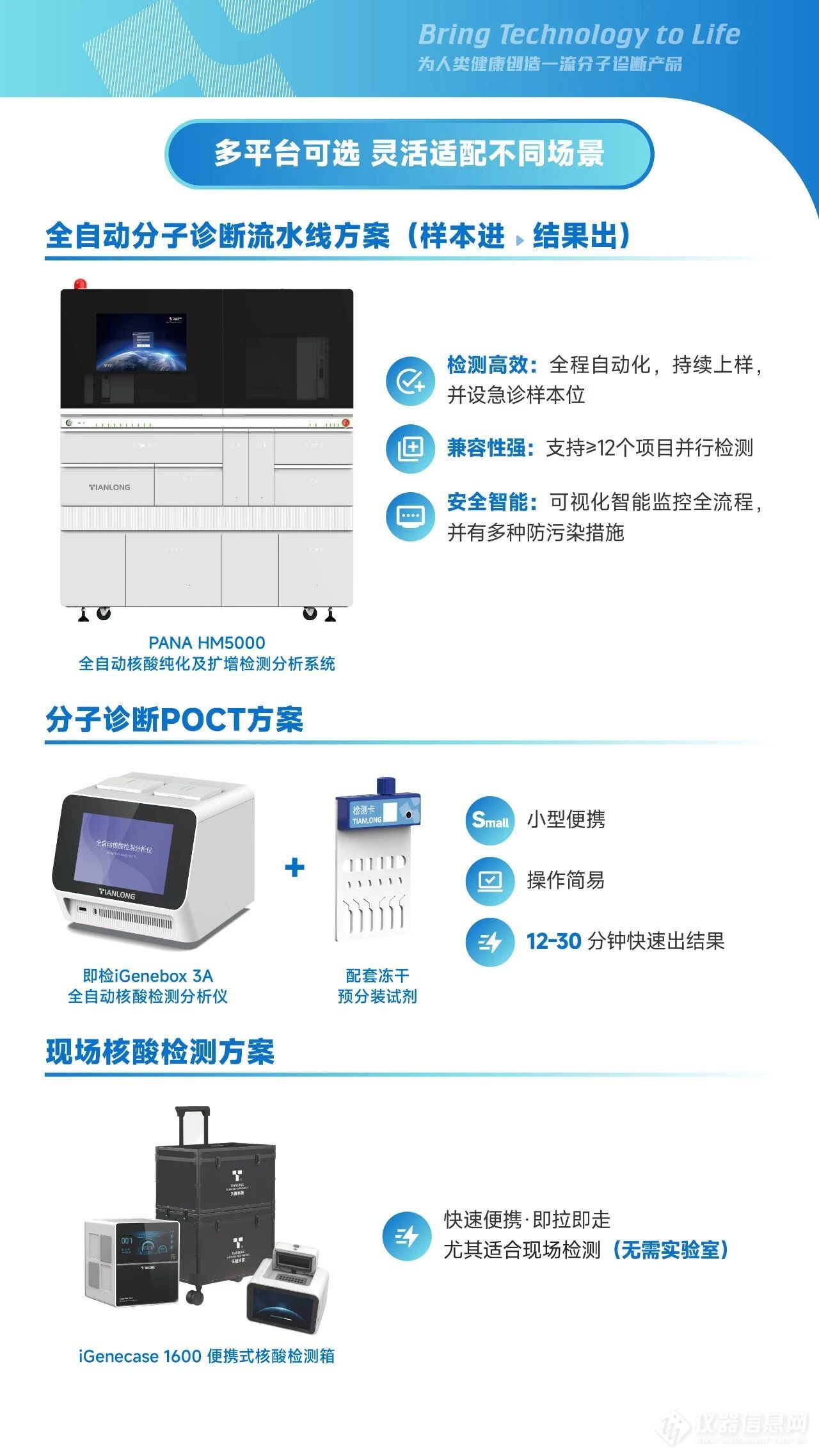
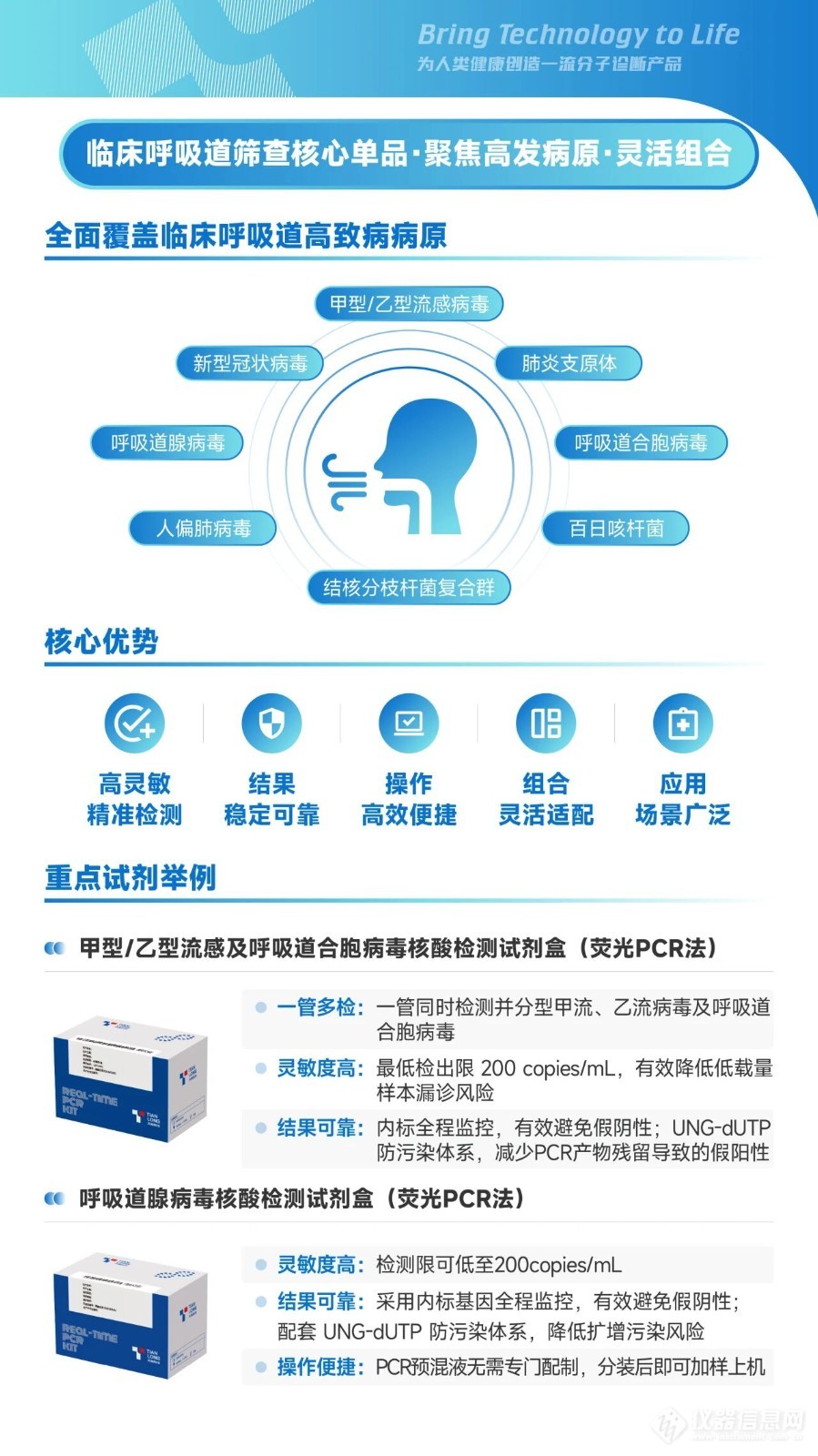
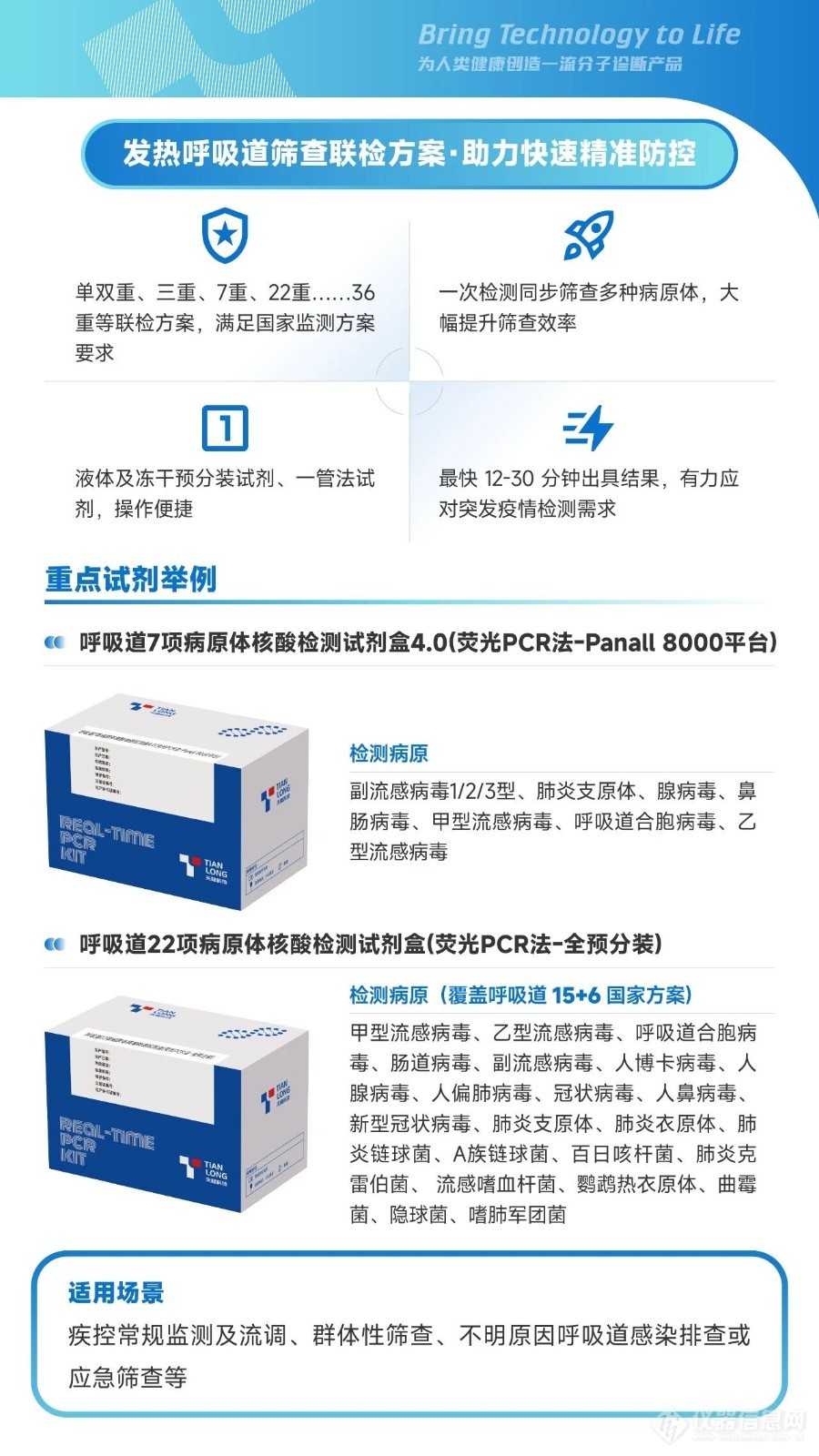
The new product has been certified and launched, further improving the company's overall solution for respiratory pathogen detection. Currently, Tianlong Technology has achievedA and B streams, respiratory syncytial virus, adenovirus, Mycoplasma pneumoniae, human metapneumovirus and other series of detection products for high-risk respiratory pathogens, forming a one-stop, systematic, all-scenario accurate diagnostic solution for respiratory infections.It can realize the flexible combination of triple inspection + multiple single inspections, meet the "minimum sufficient" principle of medical institutions, and comply with the latest inspection project guideline policy requirements.Whether it is outpatient and emergency fever screening, in-hospital severe acute respiratory infection case screening, primary medical institution testing, or disease control sentinel surveillance and other multiple scenarios, this solution can meet the testing needs.
References:
[1] National Clinical Research Center for Children's Health and Disease, Clinical Laboratory Group of the Pediatric Branch of the Chinese Medical Association. Expert consensus on clinical laboratory diagnosis of parainfluenza virus infection in children [J]. Chinese Journal of Laboratory Medicine, 2024, 47(1): 24-34.
[2] Official website of China Centers for Disease Control and Prevention
[3] Zhu Chunyu, Ding Hao, He Weiyan, et al. Meta-analysis of epidemic characteristics and disease burden of human parainfluenza virus-related acute respiratory infections in my country [J]. Acta Virologica Sinica, 2025, 41(6): 1775-1787.
[4] Expert consensus group on emergency diagnosis and treatment of acute respiratory viral infection in adults. Expert consensus on emergency diagnosis and treatment of acute respiratory viral infection in adults [J]. Chinese Journal of Emergency Medicine, 2021, 30(12): 1417.
[5] Respiratory Medicine Group of the Pediatric Branch of the Chinese Medical Association. Expert consensus on etiological diagnosis and clinical management of acute respiratory tract infections in children (2025 edition) [J]. Chinese Medical Journal, 2025, 105(46): 4225-4238.
[6] National Key Laboratory of Diagnosis and Treatment of Severe Infectious Diseases, National Clinical Research Center for Infectious Diseases. Expert consensus on clinical diagnosis and treatment of respiratory tract infections during multi-pathogen epidemics [J]. Chinese Journal of Clinical Infectious Diseases, 2023, 16(6): 1-13.
[7] Chinese Laboratory Medicine Training Project Expert Committee. Expert consensus on the clinical application of nucleic acid detection technology for pathogen diagnosis of adult respiratory tract infections [J]. Chinese Journal of Laboratory Medicine, 2023, 46(8): 789-797.



When you visit any website, it may store or retrieve information on your browser, mostly in the form of cookies. This information might be about you, your preferences or your device and is mostly used to make the site work as you expect it to. The information does not usually directly identify you, but it can give you a more personalized web experience. Because we respect your right to privacy, you can choose not to allow some types of cookies. Click on the different category headings to find out more and change our default settings. However, blocking some types of cookies may impact your experience of the site and the services we are able to offer.