The Changbai Mountains stretch for 1,300 kilometers between the 40th and 43rd degrees north latitude. The ginseng grown here is known as the "King of Herbs". In April, the snow melts, and the buds break through the ground; in May, the seedlings unfold their leaves, and umbels illuminate the forest floor; in July, the green fruits gradually turn vermilion, like hanging agate; in September, the deep roots are filled, ushering in the harvest season.
To truly understand the value of ginseng, we must accurately identify its authenticity.From wild ginseng to garden ginseng, from fresh ginseng to processed products, morphological identification is the key to judging its value.
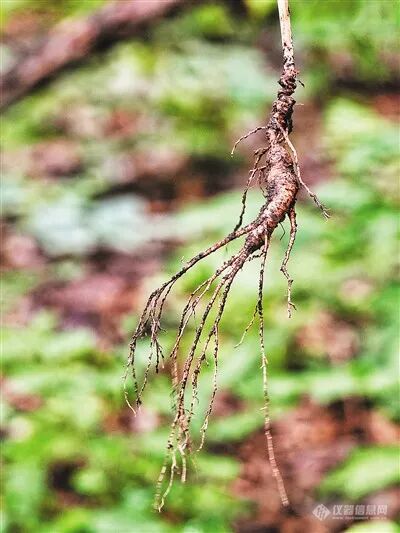
Ginseng that has just been "carried out" from the forest (Source: People's Daily Online)
Challenges faced by ginseng morphological identification and specimen management
Rare specimens such as wild ginseng and forest ginseng cannot be recovered, and physical specimens are difficult to preserve for a long time. Ginseng roots are rich in starch and sugar. Dried specimens are susceptible to insects and mildew, and the fibrous roots are fragile and easily broken; soaked specimens are prone to fading and deformation. Every time physical objects are retrieved, it is a consumption of non-renewable resources.
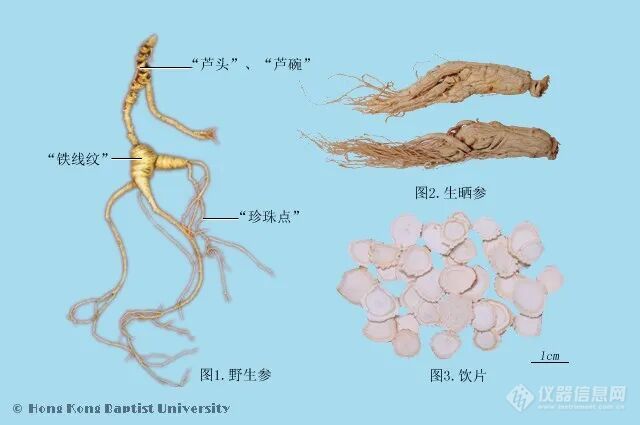
Pay attention to the identification of wild ginseng"Reed, cockroach, body, pattern, beard"Five-shaped characteristics.LuwanThe density and arrangement of the roots, the depth of the ring pattern, the insertion angle of the bones, and the spatial bifurcation of the fibrous roots—these key identification points all have three-dimensional spatial attributes. Traditional two-dimensional photos can only provide a fixed viewing angle and cannot present complete morphological information, affecting the accuracy of identification.
Schematic diagram of the identification characteristics and specifications of ginseng (Source: Hong Kong Baptist University Chinese Medicine Specimen Library)
the term | meaning |
Lutou | The short top part of the ginseng rhizome has horizontal wrinkles on it. |
Luwan | The sparse dimple-shaped stem marks on the reed heads are also called bowl-shaped stem marks. |
Iron line pattern | The tightly sunken and dark-colored ring pattern on the upper end of the main root is a typical feature of wild ginseng. |
pearl point | The ginseng whiskers are dotted with millet-like wart-like protrusions. |
The skill of “identifying ginseng at a glance” is based on decades of accumulated experience. How old is the reed bowl, whether the ring pattern is tight, and whether the body is graceful or not - these judgment criteria are highly dependent on personal experience and are difficult to teach systematically. Expert resources are scarce and the training cycle for appraisers is long, which has become a bottleneck restricting the development of the industry.
High-quality wild ginseng,Ginseng, garden ginseng control specimens, and common counterfeit specimens are scattered in different testing institutions, herbaria and drug testing laboratories. It is difficult for enterprises and regulators to obtain authoritative comparison samples, and identification experience cannot flow across regions.
Solution: Three-dimensional digital solution of Jie Laimei 3DDS system
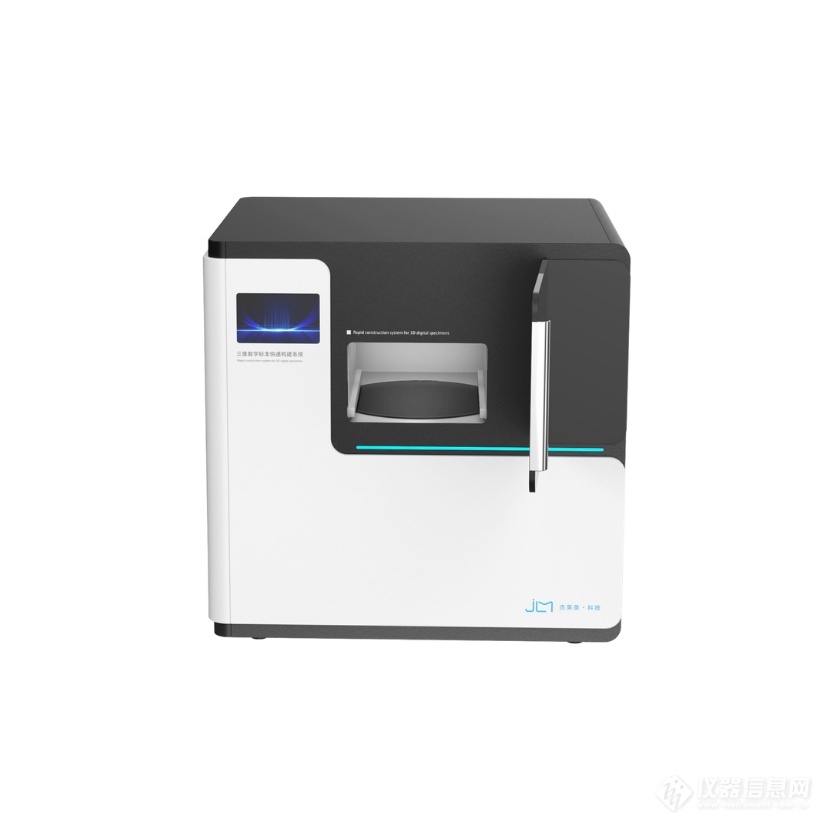
Faced with these challenges, Jie Laimei independently developed 3DDS3D digital specimenThe rapid construction of the system provides a practical solution for ginseng morphological identification and specimen digitization.
The system integrates high-precision optical imaging arrays and intelligent 3D reconstruction algorithms to simplify professional-level 3D modeling into"Place sample→Start with one click→View model"In three steps, a 720-degree high-fidelity color 3D model can be generated in about 15 minutes at the fastest.
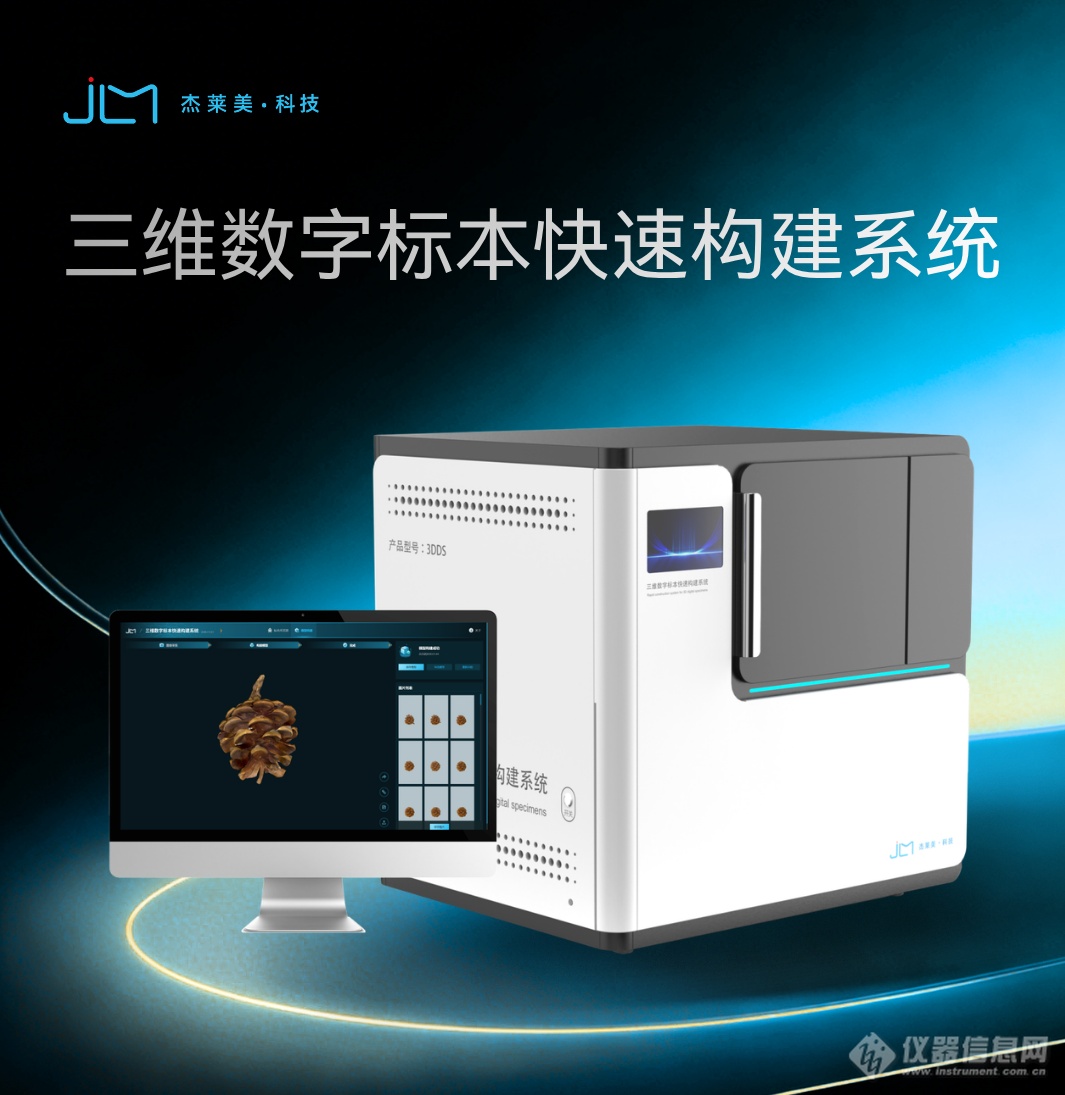
The system uses non-destructive optical scanning technology to complete data collection without touching the specimen, thus avoiding secondary damage to the physical object. The generated three-dimensional digital model can be permanently saved, infinitely copied, and recalled at any time, eliminating the troubles of moths, mildew, and fading. Every rare specimen has a digital twin that never fades.
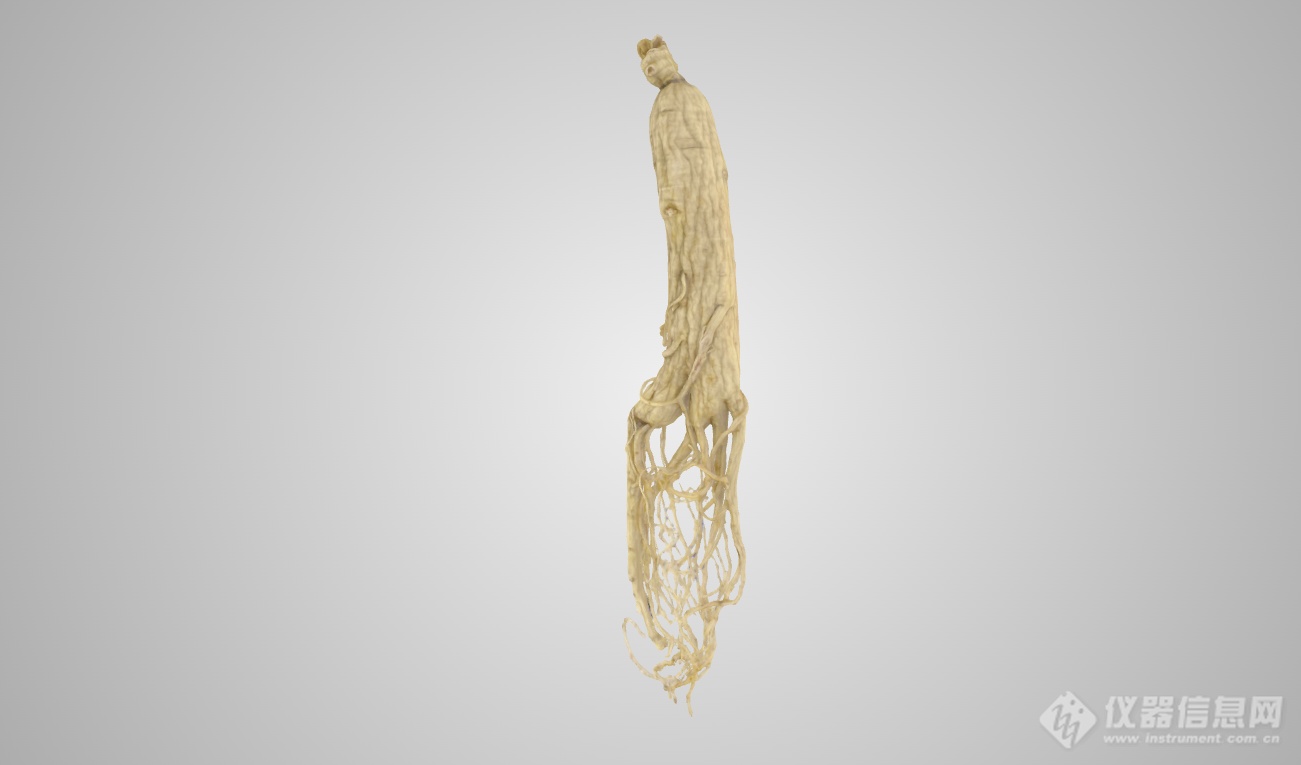
The 720° high-fidelity 3D model supports rotation, zooming and panning at any angle. The dense arrangement of reed bowls, the depth of the rings, the angle of the stems, and the spatial extension of the fibrous roots—these three-dimensional features that are difficult to capture in traditional two-dimensional photos are clearly visible in the three-dimensional model. Appraisers can compare the objects repeatedly from all angles as if they were holding real objects, which greatly improves the accuracy and efficiency of the appraisal.
The 3D digital model of ginseng generated by Jie Laimei 3DDS 3D digital specimen rapid construction system
Use standard reference materials that have been identified by experts3D scanning, and mark key information such as the number of reed bowls, ring pattern characteristics, and body type on the model to form a "digital standard reference library." Appraisers can quickly master the core essentials of five-shaped appraisal through online comparison and learning, shorten the training cycle, and make expert experience no longer limited to personal memory.
The system integrates the digital herbarium management module and integrates multi-dimensional data such as text descriptions, two-dimensional color pictures, three-dimensional models, and test reports to generate exclusive digital files for ginseng. Appraisal institutions and practitioners across the country can access and compare online, effectively alleviating the problem of uneven distribution of high-quality control specimens.
From snow lotus and cordyceps on the Qinghai-Tibet Plateau toGinseng from Changbai Mountain, from the giant African snail intercepted by customs to the precise identification of vector organisms, Jie Laimei3DDSThe rapid construction system of 3D digital specimens is developing with its“Lossless, efficient, high fidelity”The core competencies can play a valuable role in the vast field of biodiversity conservation.
Whether it isRaremoveLong-term preservation of plant germplasm resources、Quarantine and identification of alien species,stillDigital upgrade of biological specimen library、3D archive of archaeological artifacts in museums——This system can build digital twins for samples that will never fade, providing a solid data base for scientific research identification, resource protection, and science education.
If you are looking for unique germplasm resources such as ginseng,An efficient solution for the preservation of biological diversity resources and regional characteristic biological samples. Welcome to contact Jie Laimei to learn more about the rapid construction system of three-dimensional digital specimens~
3DDS three-dimensional digital specimen rapid construction system