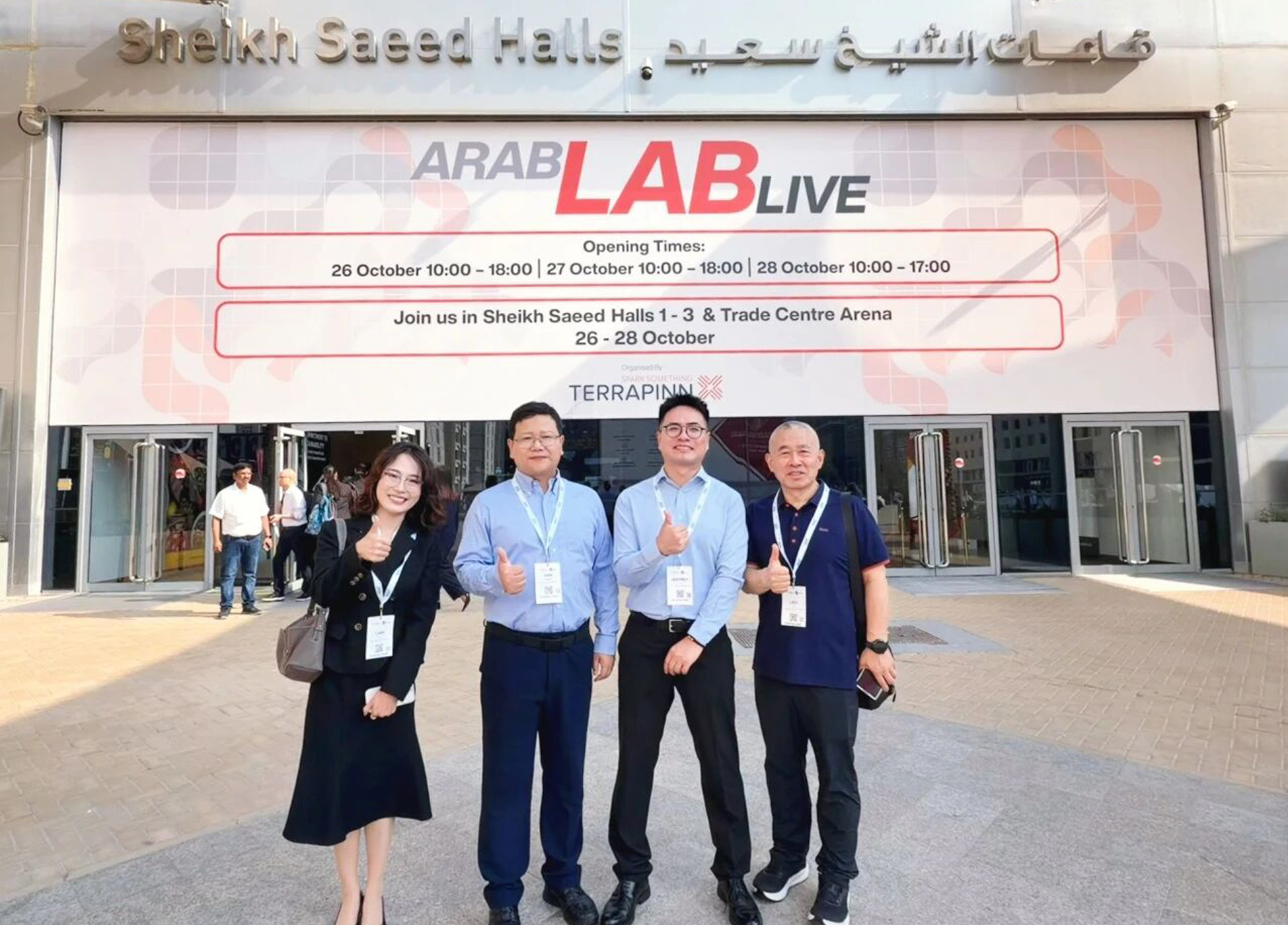
Being close to users continues from every meeting, Haineng goes to ARABLAB again
Company News
Oct 30, 2026

QR code+RFID+NFC, how can a label help laboratory asset management bid farewell to the manual era?
Laboratory instruments are never greeted in advance.
The HPLC pump pressure suddenly alarms, the centrifuge makes abnormal noises, and the incubator temperature curve is abnormal—these moments test not only the stability of the instrument itself, but also the efficiency of the entire laboratory operation and maintenance system.
In most laboratories, the "first minute of reporting for repair" is a panic.
Looking through the address book to find the supplier's phone number, recalling whether the instrument is still under warranty, or verbally describing to the maintenance technician that "there seems to be something wrong"... these inefficient actions are quietly eroding the laboratory's prime operating time.
What Ximai is doing is to turn this "first minute" into a digital closed loop that is evidence-based and fully visible.
The hardware core that carries this closed loop is an electronic tag that integrates a QR code, RFID chip, and NFC chip.
The trinity of electronic tags is a direct connection between each instrument and Ximai Butler Service
We configure this unique electronic label for every life science instrument included in Ximai's "Instrument Butler Service".
This is no ordinary sticker. Behind it is the Ximai Avanti system and SIM intelligent controlThe real-time linkage of the management platform is the entire life cycle archive of this instrument from installation, calibration, maintenance to decommissioning.
The QR code on the label allows any authorized person to instantly connect to the digital world of this instrument using their mobile phone. The RFID chips and NFC chips embedded inside the tags are ready for more professional scenarios - they are the key to truly improving the efficiency of laboratory asset management.
Three technologies, corresponding to three core scenarios
Scenario 1: Scan the QR code to report for repair—the "15-second channel" for the laboratory technician
When an instrument breaks down suddenly, the laboratory operator does not need any additional equipment. He only needs to take out his mobile phone and scan the QR code on the label to immediately start a repair conversation with Ximai.
Scan the code to identify. No manual input is required, the system automatically identifies the instrument model, factory number, laboratory, and associated compliance files. The fault description has also become simple, with a picture or a video, no need to think for a long time before typing, and it is more accurate - engineers can accurately determine the problem before setting off. From scanning the QR code to submitting, it takes no more than 15 seconds.
This is the most suitable scenario for QR codes: zero threshold, instant, and available to everyone.
Scenario 2: Batch inventory - "second-level asset inventory" for managers
There are hundreds of instruments in the laboratory that need to be inventoried regularly. In the past, this meant checking one by one, manually registering, and repeatedly confirming.
Now,Managers only need to hold the RFID reading and writing device, walk into the laboratory, and read the tag information of all instruments within a certain range at one time. There is no need to rummage through each instrument or touch the instruments, and the inventory of dozens or even hundreds of instruments can be completed in a few minutes.
This is the real value of RFID - contactless, long-distance, and batch processing. Every quarterly inventory and annual inventory is no longer a nightmare for the operation and maintenance team.
Scenario 3: Near-field traceability - "NFC touch and check" for review and dispatch
When an instrument needs to be seconded, transferred, or audited, the identity and compliance status of an instrument need to be quickly retrieved. Engineers or auditors can use an NFC-enabled device to tap the tag and instantly read the core file of the instrument.
This near-field communication method is stable and safe, and is suitable for precise information retrieval from a single instrument. It does not rely on the Internet or light to scan the QR code, and you can get it just by touching it.
After reporting for repair, the entire work order track is visible, saying goodbye to the anxiety of "I have called you three times and I still don’t know where it is."
This is the biggest black box in traditional repair reports: After submission, when will the maintenance technician leave? Where are you now? Is the problem solved? ——It’s all about waiting and urging.
The Afanti system digitizes the entire work order process:
Visualization of dispatch orders: After a repair report is submitted, the system automatically matches the most matching Cimai engineer in the area and pushes the work order in real time. The repair requester can simultaneously see the status updates of "Order Dispatched", "Engineer Received Order" and "Estimated Arrival Time".
Service records: During the maintenance process, key actions and accessory information are recorded through the system. The person in charge of the laboratory can accurately understand the maintenance situation without being present.
Closed-loop service: After the repair is completed, the report is automatically archived in the instrument's full life cycle file, associated with the calibration plan and verification cycle, and becomes an original voucher that can be retrieved at any time during the next compliance audit.
Why is “one item, one code” particularly important for life science laboratories?
The management of life science laboratories is not only an efficiency issue, but also a compliance issue.
GMP/GLP, CNAS, ISO 17025 and other systems have strict requirements on the traceability of instrument operation and maintenance. Every abnormality, every repair, and every re-activation of every instrument must have a complete chain of records. There are traces of key actions that can withstand scrutiny.
From the repair portal to asset management, one label connects multiple roles
For laboratory technicians, it is a convenient entrance to "scan the QR code to report for repair". The submission can be completed in 15 seconds. There is no need to explain to the maintenance technician "there is a line in the red box that is fluctuating".
For laboratory managers/QC managers, it is a window to understand the health status of all laboratory instruments. How many instruments are being repaired? What is the average response time? Which instruments have recurring problems? ——Data is accumulated in the Avanti system and SIM platform, becoming the basis for optimizing equipment management and budget planning.
For engineering and procurement departments, it is the underlying data source for instrument lifecycle costs. Combined with the rapid inventory capability of RFID, asset inventory is shortened from "days" to "minutes", and from "possible omissions" to "accurate to every device".
More professional and considerate - Ximai wants to give you not just tools, but butler-like companionship
The electronic tag of the Avanti system is technically a digital terminal that is a trinity of QR code + RFID + NFC.
But what Ximai wants to convey through it is a more considerate service concept.
The moment an instrument is labeled with the Ximai label, it has an online butler beside it. Whether it's scanning, sensing, or touching, no matter which method you choose to connect with us, we will respond as soon as possible.
If you have any problems with the instrument, please ask Ximai first.
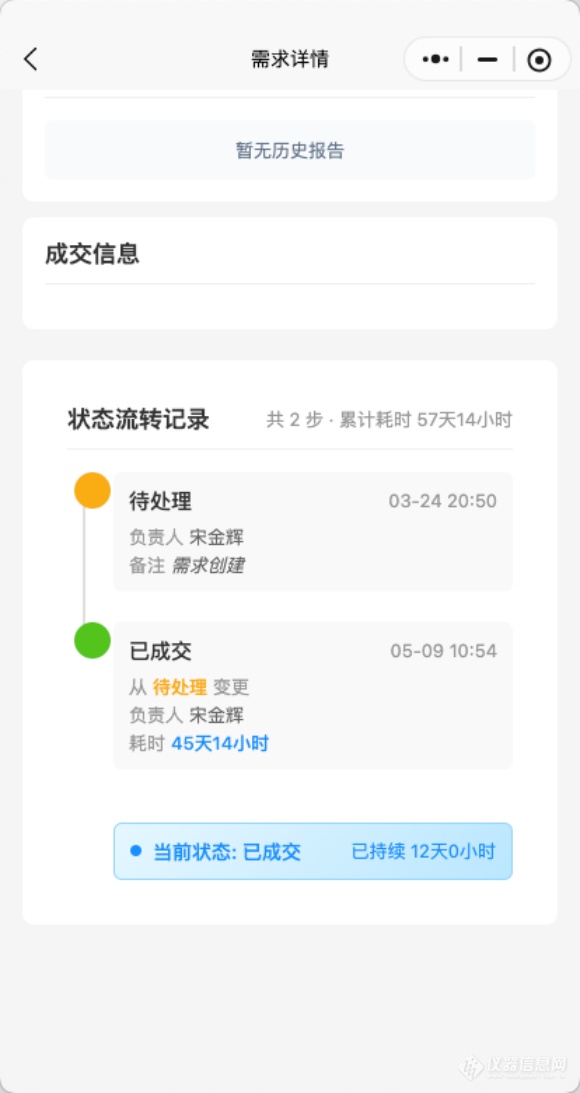
Mini program photos - showing maintenance status process:
About Dorning
DonningsonthingShanghai Duoning Biotechnology Co., Ltd. ("Doning Bio" for short) is a one-stop bioprocessing solutions provider, committed to providing comprehensive solutions for biopharmaceutical products from research and development to commercial production, including reagents and consumables, instrumentation, equipment and services. The company operates two business lines: bioprocessing solutions and laboratory products and services. It helps partners achieve efficient, stable, quality and cost-controllable drug development and production through a one-stop bioprocessing system.flowProcedure.
About Ximai


When you visit any website, it may store or retrieve information on your browser, mostly in the form of cookies. This information might be about you, your preferences or your device and is mostly used to make the site work as you expect it to. The information does not usually directly identify you, but it can give you a more personalized web experience. Because we respect your right to privacy, you can choose not to allow some types of cookies. Click on the different category headings to find out more and change our default settings. However, blocking some types of cookies may impact your experience of the site and the services we are able to offer.