
Being close to users continues from every meeting, Haineng goes to ARABLAB again
Company News
Oct 30, 2026


01 Automatic needle changemeaning
The probe isAtomic force microscope (AFM)Consumable components that need to be replaced frequently during use. On the one hand, this is because the tip of the needle will inevitably wear or become contaminated after repeated use. When the resolution drops to a level that seriously affects the image quality, the probe must be replaced. On the other hand, because there are various types of commercial probes and the characteristics of probes for different uses are different, when AFM switches modes or tests specific samples, an appropriate probe model must be selected.
At present, most laboratory-level AFM systems still use manual needle replacement. Users usually have to use tweezers to clamp the probe into a special probe holder and fix it, and then install the probe holder onto the AFM probe. After that, a series of laser adjustment operations are required. The process is relatively cumbersome and time-consuming, and it also places high demands on the user. In the past two decades, the semiconductor industry's continuous growth in demand for AFM measurement has promoted the maturity of fully automatic Inline-AFM. As one of the iconic technologies of this type of equipment, automatic needle exchange has gradually become known to industrial users.
Compared with traditional manual operation,The automatic needle changing system can automatically complete operations such as probe identification, pick and place, laser alignment, and cantilever tuning., no manual intervention is required during this process. This function helps lower the threshold for AFM use, improves equipment work efficiency, and also helps reduce the risk of probe damage caused by manual errors.
02 Difficulties in automatic needle exchange technology and existing implementation solutions
Although literally, automatic needle exchange is just an automated upgrade of the needle exchange operation, the engineering implementation is not easy. It involves both changes to the mechanical structure and the development of specialized algorithms. The most basic automatic needle changing function generally includes two steps: the pickup and placement of the probe and the alignment of the laser beam. Each step has certain technical difficulties.
(1) Probe picking and placing process
In the probe pick-and-place process, the system must first safely release the probe on the probe head to an empty space in the probe chamber, then pick up the designated numbered probe from the chamber and tighten it at the appropriate position at the bottom of the probe head. The difficulty in this process is that the probe is small and fragile. A special pick-and-place mechanism must be designed with precise force control and precise three-dimensional positioning capabilities. The probe must be reliably fixed to avoid uncontrolled displacement and needle drop accidents. When the action fails or the probe is damaged, the system should be able to independently determine abnormalities and trigger an alarm.
(2) Laser beam alignment
The alignment of the laser beam is divided into two steps: the alignment of the incident laser and the probe, and the alignment of the probe's reflected light and the photodetector. The first step is to accurately focus the laser beam on a designated area on the back of the probe cantilever. The difficulty lies in judging the relative position of the laser focal spot and the cantilever and adjusting the displacement with micron precision. After the laser and probe are aligned, the reflected light may deviate from the photodetector, causing the system to fail to work. The second step of alignment is to adjust the reflected light path to move the reflected light spot to the detector's bullseye. The introduction of the above-mentioned precision electric adjustment device will inevitably increase the complexity of the probe. Especially for the three-dimensional scanning probe, it must strictly limit the scanner load while meeting the optical path tracking and automatic adjustment requirements. This makes the optical-mechanical structure design of the probe extremely challenging.
In order to facilitate the access and placement of probes, a common practice in the industry is to pre-install the probes on larger special iron sheets, and load and release the probes by operating the iron sheets. There are two ways of fixing the iron piece on the probe head: magnetic suction and negative pressure adsorption. The former is relatively economical in cost, while the latter is more advantageous when measuring magnetic samples. The current mainstream laser beam alignment method is to use the precision motor built into the probe to adjust the angle of the reflector in the optical path. In recent years, academic circles have also proposed an adjustment-free solution. The basic idea is to create a pre-assembled needle platform with a simulated probe optical path, thereby constraining the sticking posture of the probe on the iron piece to ensure that the laser is exactly aligned when the iron piece is sucked to the fixed position at the bottom of the probe. This solution reduces the difficulty of probe design, but puts forward higher requirements for processing and assembly accuracy.
03 Fulisi’s automatic needle changing solution
The existing large sample stage models of FRIS adopt the probe scanning architecture. Based on the structural characteristics of the self-developed 3D scanning probe,Forex has developed automatic probe exchange technology APX (Automatic Probe Exchange) suitable for all its large sample stage AFM products.. Starting in 2024, this technology will be used as a standard configuration on AFM-Baritone, AFM-Tenor, AFM-Tuner and other machines, and has been delivered to multiple industrial customers and has passed a long-term stability verification.
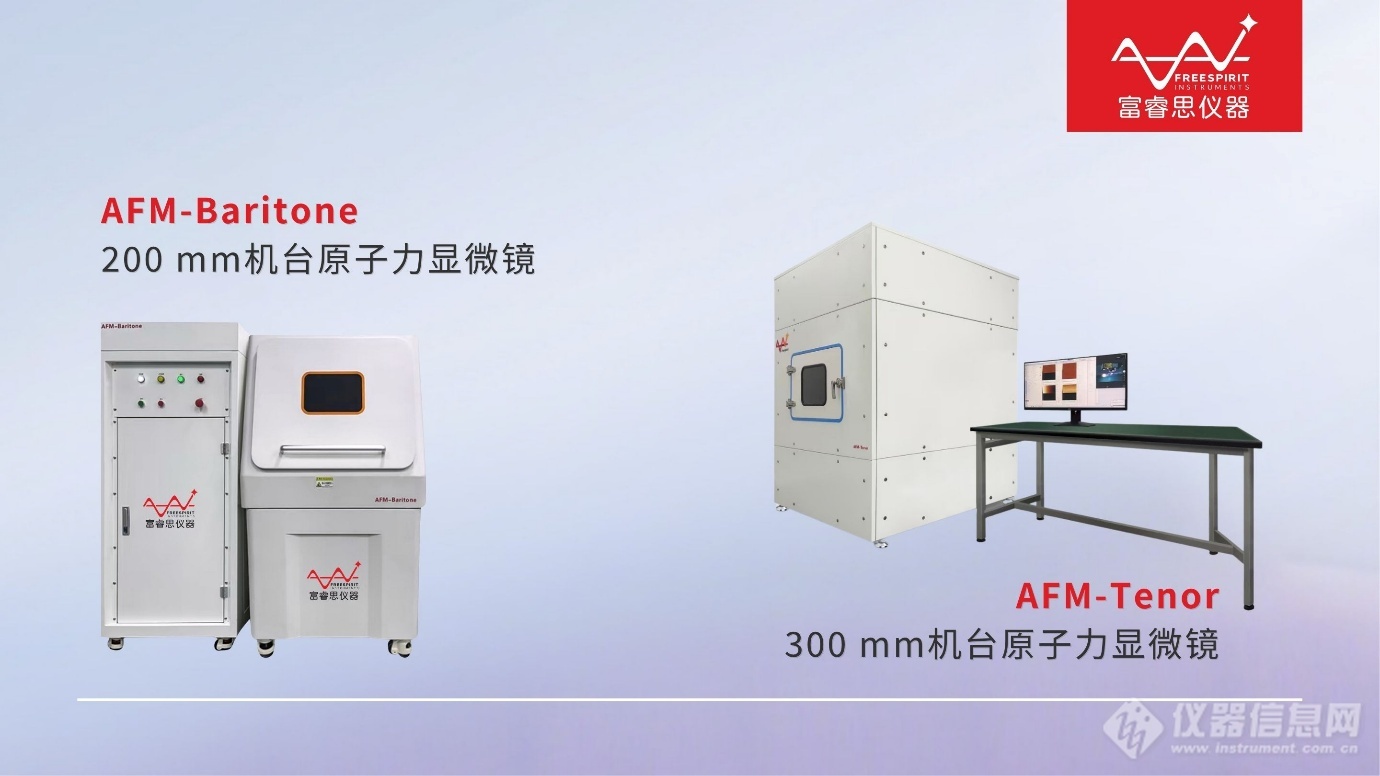
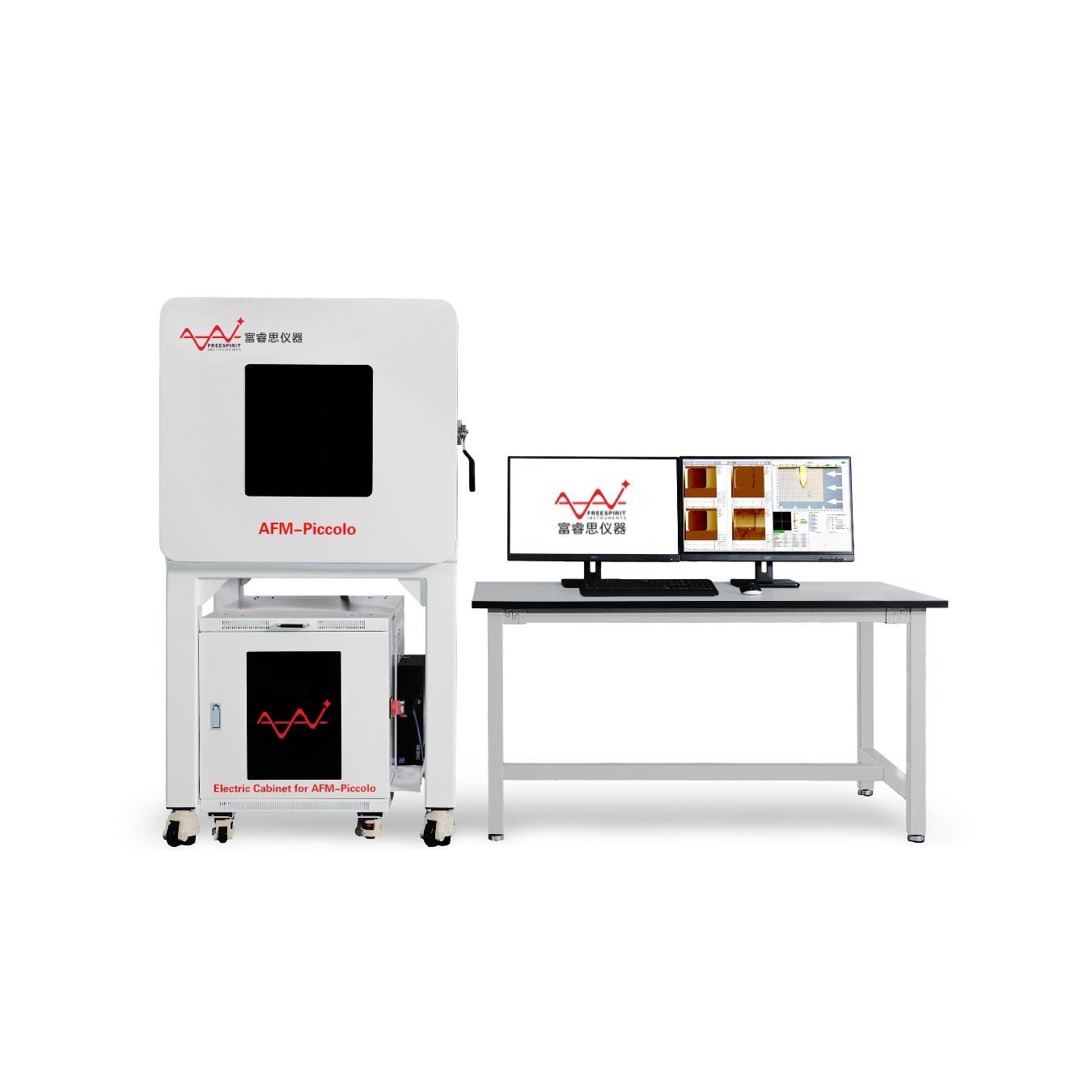
△Freesi large sample stage AFM
Foris's APX technology also uses probes pre-installed on the iron piece. The probe and needle changing station are magnetically fixed to the iron piece. Users can easily place the iron piece equipped with the probe on the needle position in the needle exchange table with the help of the special tool provided by Fores. The needle changing station of FRIS is installed in the corner of the sample stage. It comes with 4 needle positions as standard and can be expanded to more than 20 needle positions according to user needs.
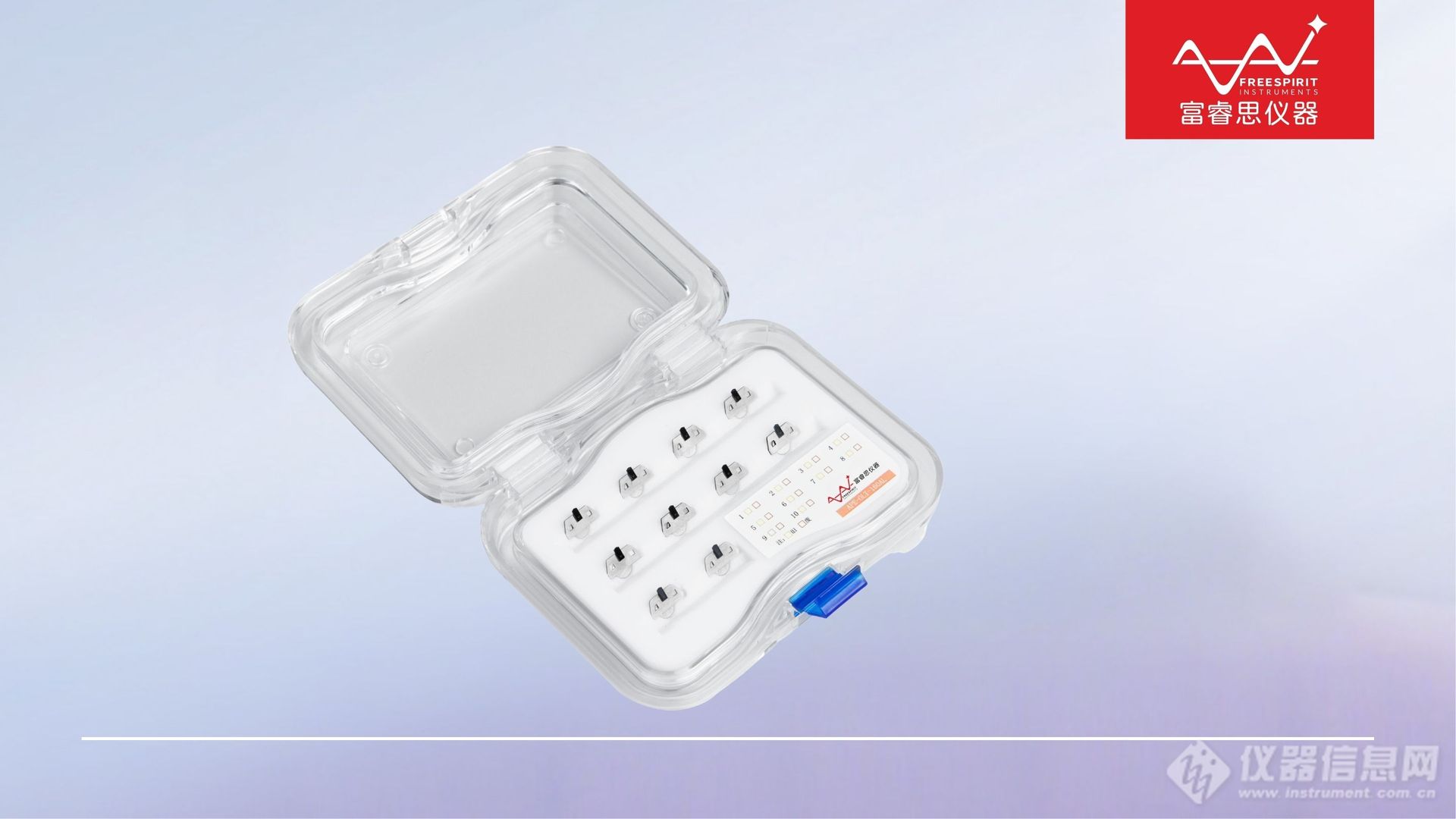
△Forisi APX special pre-installed probe
The APX needle application process is divided into the following three steps:
(1) The user selects the probe number to be used on the software interface, and the system automatically positions the probe above the corresponding needle position in the needle exchange station, and causes the probe cantilever beam to enter the field of view of the coaxial optical microscope that comes with the probe;
(2) The software starts the machine vision algorithm to automatically identify the cantilever beam outline. After confirming that the probe is intact, the electromagnet on the probe and the needle change table changes the magnetic force to transfer the iron piece from the needle change table to the bottom of the probe;
(3) The system performs closed-loop displacement adjustment of the motor based on the real-time optical image and photodetector signal, and successively completes the alignment of the laser and the cantilever beam and the zeroing of the reflected light on the photodetector. After the frequency sweep locks the resonance peak, it prompts that the needle is successfully applied.
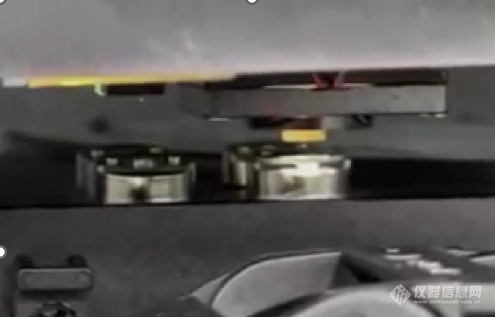
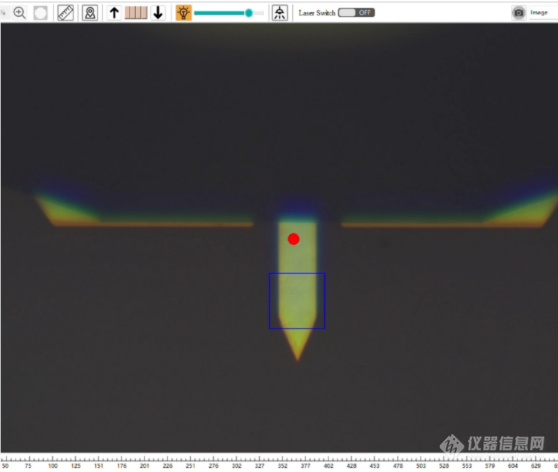
△Freesi APX automatic needle loading process
The above stitching steps can be executed automatically and continuously, or paused between steps for the user to check and confirm.To unload the needle, you only need to click the unload button on the interface, and the system will unload the iron piece to the original needle position continuously.In order to reduce the mechanical impact during the needle up and down process, Frees has specially developed a buffer technology that can significantly reduce the risk of cantilever beam damage. In order to reduce the impact of APX on the dynamic performance of the probe, Frees has also developed a lightweight fine-tuning mechanism to control the load of the scanner.
Currently, APX can complete a complete needle unloading and needle loading process within tens of seconds, with a one-time success rate higher than 95%. In the future, Fulisi will also enrich other automation functions related to APX, so please continue to pay attention.

About Fores Instruments
FreeSpirit Instruments was founded in 2021. It is a high-tech innovative enterprise focusing on the research and development and production of surface precision measurement equipment.
Based on independent research and development technology, the company has launched a variety of atomic force microscopes (AFM), white light profilometers (WLI), and atomic force microscope-white light profilometer combined systems (AFM-WLI) with core intellectual property rights, and has been successfully delivered to leading domestic universities, research institutes, and industrial enterprises.
Fores Instruments is committed to providing stable and reliable domestic precision measurement solutions for cutting-edge scientific research, semiconductor and new display fields.
Office distribution: Beijing, Shanghai, Tianjin, Suzhou, Chengdu




When you visit any website, it may store or retrieve information on your browser, mostly in the form of cookies. This information might be about you, your preferences or your device and is mostly used to make the site work as you expect it to. The information does not usually directly identify you, but it can give you a more personalized web experience. Because we respect your right to privacy, you can choose not to allow some types of cookies. Click on the different category headings to find out more and change our default settings. However, blocking some types of cookies may impact your experience of the site and the services we are able to offer.