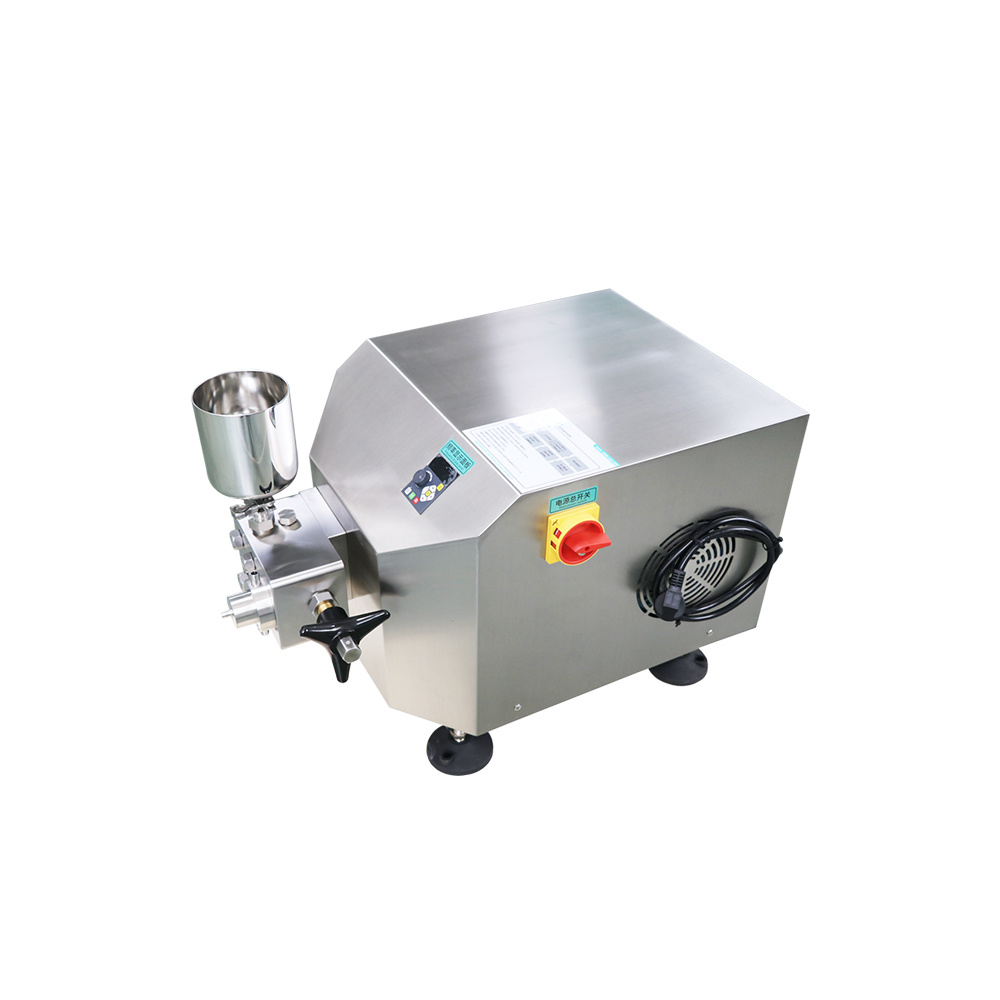
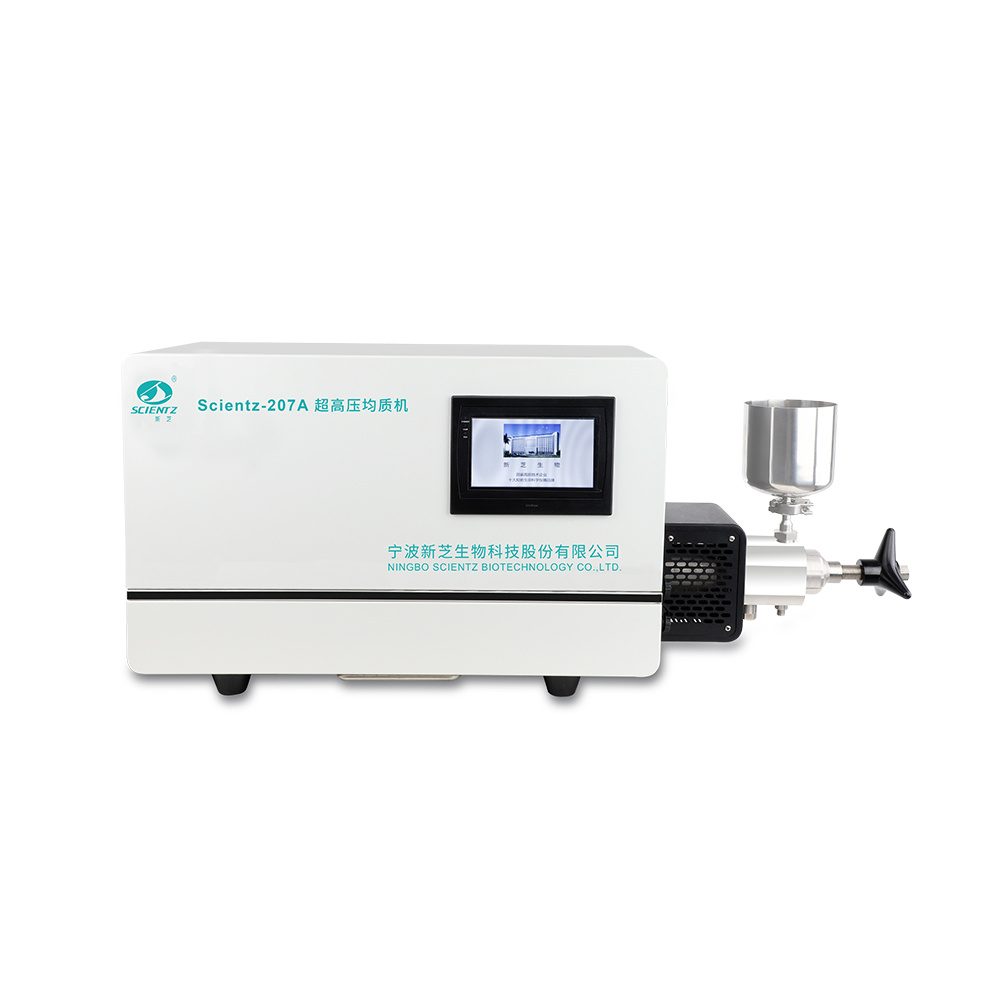
High-pressure homogenizer laboratory high-pressure micro-jet homogenizer GSL-15



Core Specifications
Product Details
The GSL series high-pressure homogenizer launched by Shanghai Jingxin Industrial Co., Ltd. is a device that uses a high-pressure pump to pressurize the material to a certain pressure, and then passes through the narrow gap of the homogenization valve to subject the material to shearing, impact and cavitation effects under high pressure, thereby achieving the purposes of homogenization, emulsification and crushing. The instrument has a built-in cooling circulation system that directly cools the homogenization head. It can be equipped with an optional secondary homogenization module and homogenization valves for different applications. It has the characteristics of high pressure, small volume, convenient operation, and high processing efficiency; it is used in pharmaceuticals, bioengineering, food, fine chemicals and other fields.
Homogenization is a process of micronizing and homogenizing the dispersion in a suspension (or emulsion) system. This treatment simultaneously reduces the size of the dispersion and improves the uniform distribution of the dispersion.
The principle of high pressure homogenization:
When the high-pressure pump head assembly works, the material is sucked into the pump chamber through the one-way valve. Under the force of the plunger, the material between the pump chamber and the homogeneous valve seat will develop extremely high pressure.
When high-pressure materials pass through the homogenization valve assembly, the following three homogenization effects are produced:
① Shearing effect, the gap between the homogeneous valve seat and the valve core is very small, causing shearing of material particles
②Cavitation effect, the material extruded at high speed loses pressure instantly, and finally achieves the purpose of evenly distributing the material
③ Collision effect, the high-speed extruded material hits the collision ring at an extremely high speed, causing impact and crushing
Physical installation diagram: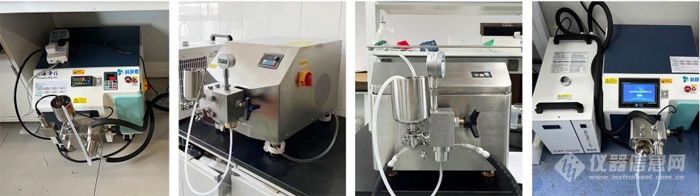
Application areas:
Preparation of fat particles, drug-loaded emulsion homogenization, liposomes, nanosuspensions and microcapsules in the pharmaceutical industry;
Cell disruption, extraction and homogenization of intracellular substances for bioengineering products;
Production and preparation of fine chemicals, carbon nanotubes, graphene, conductive slurries, and resistive slurries;
Personal care products - homogeneous dispersion of lipid nanoparticles;
Homogenization and emulsification of food and industrial products to improve product stability;
Product advantages:
① Structural features: Ceramic plunger drive, precise control of discharge flow. Optional plunger lubrication device ensures longer sealing life.
② Homogenization pressure: The maximum design pressure is 2000bar/200MPa/29000psi, and a pressure sensor is used for detection.
③Component technology: The homogeneous valve seat component can be made of zirconium oxide, tungsten steel, diamond, and other materials, with single/double-sided processing, double-sided use, and doubled service life. The secondary valve disperses and emulsifies the material, making the material distribution more uniform.
④Energy-saving technology: The equipment is controlled by frequency conversion and can be used when connected to 220V mains power. Imported brand components and equipment are more stable, lower energy consumption, and higher energy efficiency ratio.
Technical parameters:
Product model | GSL-15 |
Design flow (L/H) | 12~15 |
Design maximum pressure (mpa/bar/psi) | 200/2000/29000 |
Operating pressure (MPa/bar/psi) | 180/1800/26100 |
Operation mode | Touch screen/buttons |
Voltage(V) | 220 |
Number of plungers (pieces) | 1 |
Power(kw) | 2.2 |
Main functions | Homogenization, wall breaking and refinement (optional chiller temperature control) |
Minimum processing volume (mL) | 25 |
Product process viscosity | ≤2000cp |
Maximum feed particle size | 100μm |
Work pressure display | Pressure sensor (7-inch touch screen/digital display) |
Control method | manual operation |
Maximum product feed temperature | ≤90℃ |
Weight (KG) | 140 |