Gold Member
 Business License
Application of ScopeX vacuum X-ray fluorescence spectrometer in slag composition analysis
1. Introduction
Slag is produced at different stages of ironmaking and steelmaking, covering blast furnaces, converters, alkaline oxygen blowing furnaces, electric arc furnaces and iron (steel) ladles. In blast furnace smelting, slag is mainly formed by the melting of gangue components, flux and coke ash in the ore. Its chemical composition is complex, mainly including oxides and sulfides of silicon, aluminum, calcium, magnesium, and small amounts of manganese and iron oxides. The composition of slag not only directly affects the control of smelting process parameters and final product quality, but is also an important raw material for downstream industries such as cement and building materials. Therefore, rapid and accurate determination of the chemical composition of slag is of great practical significance for optimizing smelting operations, strengthening quality control, and promoting the utilization of solid waste resources.
2. Application of XRF in slag composition analysis
The main elements and oxides involved in the slag composition analysis include: SiO2、Al2O3, TFe (total iron), CaO, MgO, MnO, P2O5、TiO2wait.
Traditional slag composition analysis mostly uses chemical wet methods. Although the accuracy is high, the operation is cumbersome, the analysis cycle is long, and a large number of acid and alkali reagents are used, causing serious environmental pollution. X-ray fluorescence spectrometry (XRF) has become a mainstream method for slag composition analysis due to its advantages such as simple sample processing, simultaneous determination of multiple elements, and green and environmental protection.
3. Test cases
Testing equipment:ScopeX CS vacuum X-ray fluorescence spectrometer
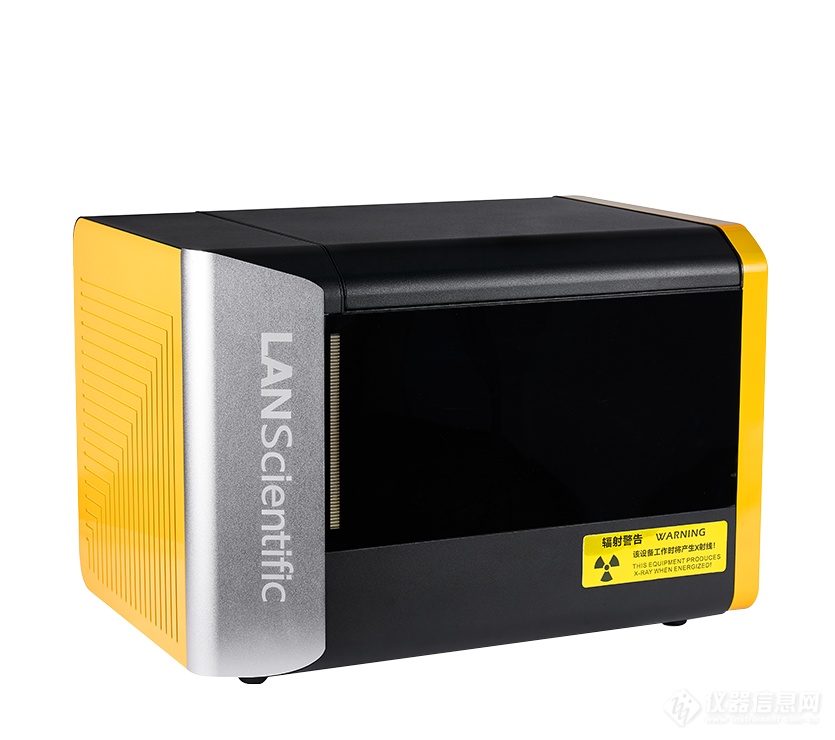
Sample preparation:The powder tableting method is used to prepare the sample. The slag sample ground to the specified particle size is pressed under high pressure into a flat, dense and uniform sample piece, which can be tested on the machine.
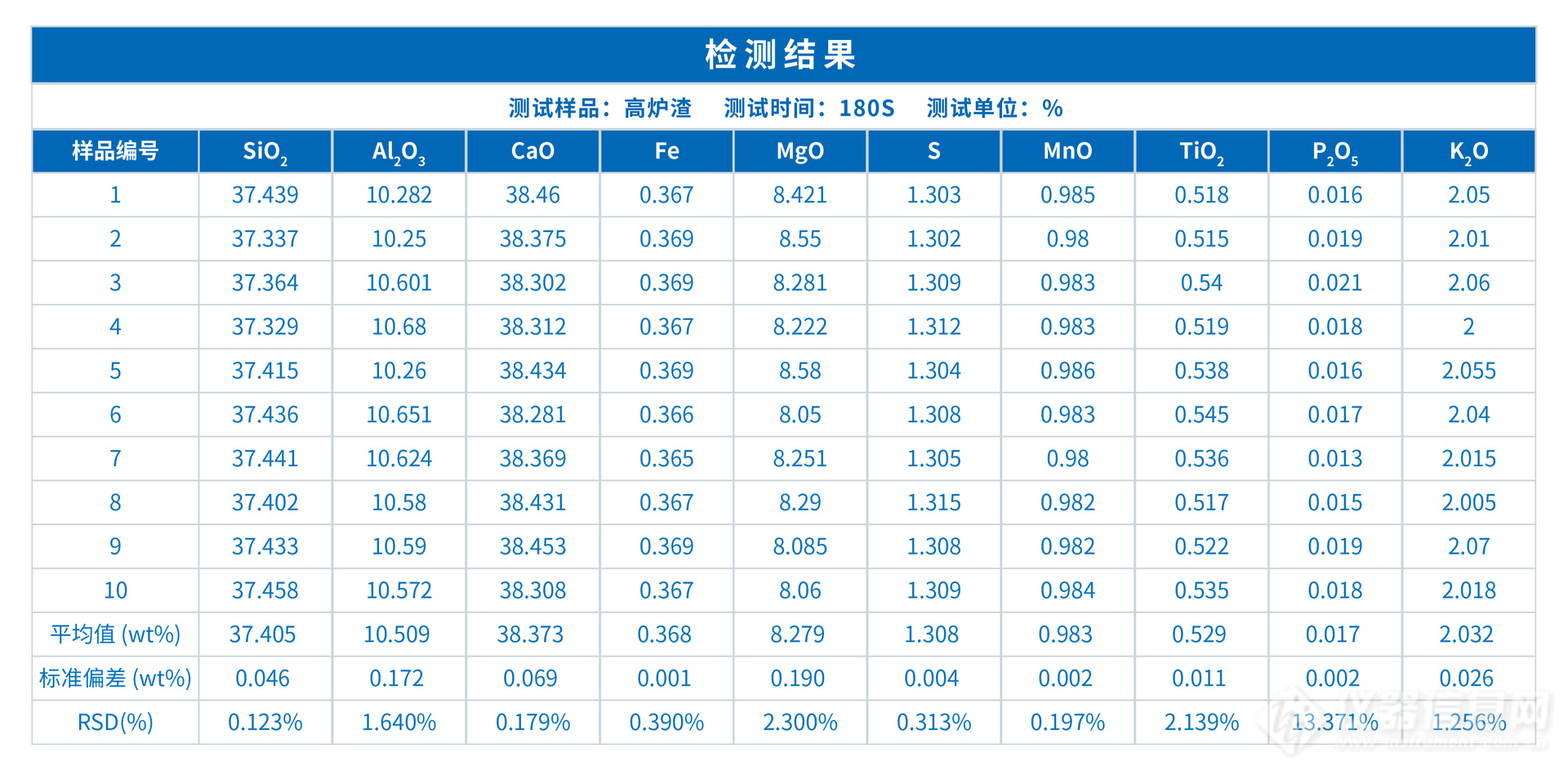
Test results:
4. Conclusion
Research shows that using ScopeX CS vacuum X-ray fluorescence spectrometer to determine the composition of solid slag is a reliable method with significant advantages. The high-performance detector and vacuum analysis system equipped with the instrument effectively shields the interference of air on light elements, significantly improves the detection limit and detection accuracy of Na, Mg, Al, Si and other elements, and can simultaneously meet the demand for rapid analysis of primary and secondary elements in slag.
The ScopeX CS vacuum system has good long-term stability and repeatability, and the relative standard deviation (RSD) of the main components can be better than 1%, providing reliable data support for smelting process control, quality monitoring and slag resource utilization. This method is suitable for the composition analysis of similar samples such as metallurgical waste residue, refractory materials and cement raw and auxiliary materials.
View More from This Booth

Seeing the microscopic through the mirror, enlightening the representation with wisdom | The 2026 National Academic Annual Conference on Electron Microscopy concluded successfully!
Application of FRINGE CLASS in the development and quality control of MgH2 hydrogen storage materials

October Exhibition Preview丨The 7th China International Metallurgical Materials Trade Expo