
 Gold Member
 Business License
Wet method actual measurement record|Particle size detection of red and yellow pigment dispersions
This tweet relies on the original German FRITSCH official experimental report S130257, using an A-22 laser particle size analyzer to carry out wet particle size testing on red and yellow pigment samples. An additional control experiment with and without ultrasound was conducted on the yellow pigment to examine the impact of ultrasound on the pigment test results. This article only excerpts the experimental part.(This article does not display all the original data and maps of the report. If you need a complete experimental report, please contact us for consultation)
1. Experimental basic information
📄Experiment report number:S130257
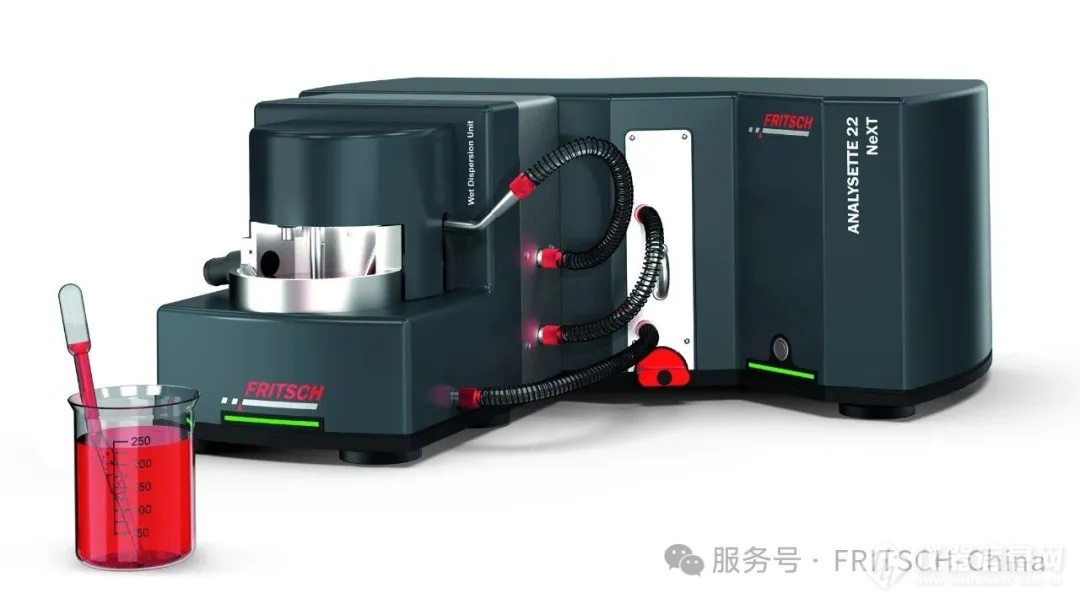
🔬Testing equipment: FRITSCH A-22 laser particle size analyzer
🧪Test samples: 2 pigments
1. Red pigment dispersion (red) 2. Yellow pigment dispersion (yellow)
🎯Purpose of the experiment: Use a wet dispersion unit to complete the particle size detection of pigment samples; conduct a control test with and without ultrasound on yellow pigments to evaluate the impact of ultrasound on the pigment particle size test results.
⚠️Remarks: Shake and mix the sample thoroughly before testing; the test medium is tap water with a total hardness of 6-7 °dH; add tetrasodium pyrophosphate as a dispersing aid.
2. Basic parameters of the instrument
Measuring interval: 0.01-1000μm
Calculation theory: Mie, refractive index = 2.02
Computational model: broad
Pump speed: 50%
3. Detailed experimental operation details
1. Sample pretreatment
- Shake the sample bottle for about 2 minutes to mix thoroughly;
- Take 3‑4 drops of pigment sample and place it in a beaker, add about 20mL of prepared 0.1% tetrasodium pyrophosphate aqueous solution;
- Use LABORETTE 17 ultrasonic bath to predisperse for 3 minutes;
- Add the prepared suspension to the wet loop of the instrument, and start measurement after reaching the preset shading rate.
2. Wet dispersion test process
The wet method unit has a built-in 50W ultrasonic bath; the ultrasonic setting of the instrument is 30 seconds before measurement; each group of samples completes two consecutive retests without changing the sample, which is used to judge the stability of the dispersion system; an additional set of yellow pigments is addedDo not turn on ultrasoundparallel control experiments.
3. Actual measurement data of various samples
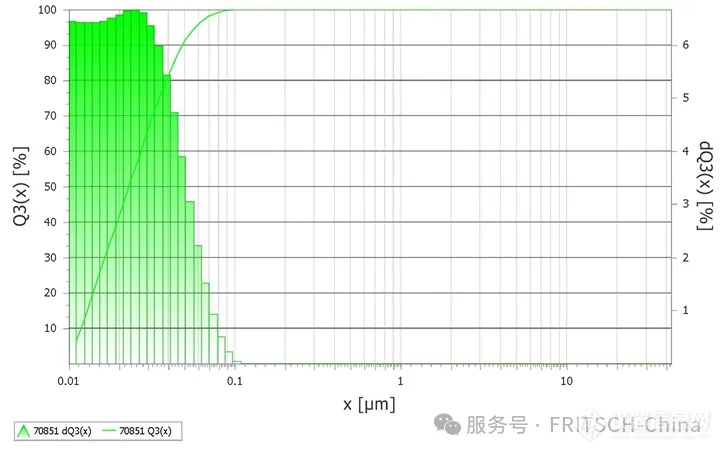
Red pigment (turn on ultrasound, retest twice)
D10:0.012 μm|D50:0.023 μm|D90:0.049 μm
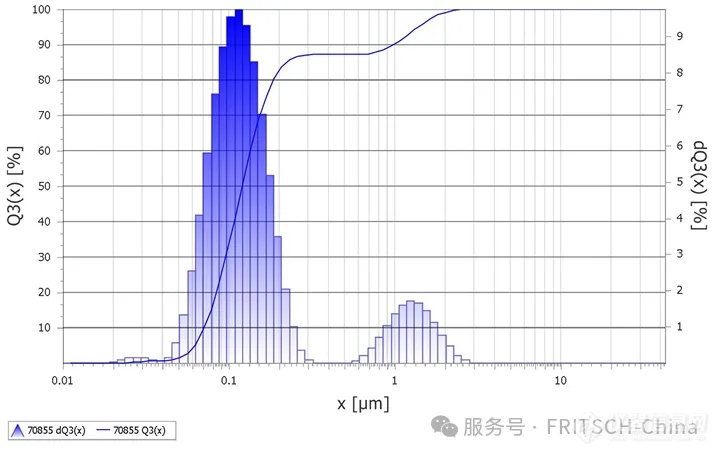
Yellow pigment (turn on ultrasound, retest twice)
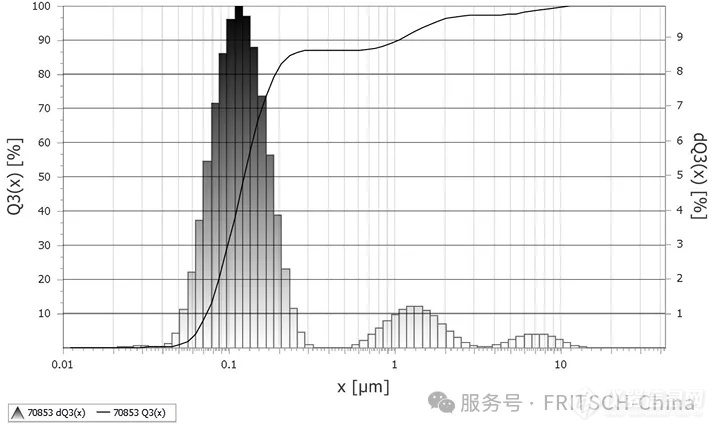
D10:0.071μm|D50:0.120μm|D90:0.984 μm
Yellow pigment (do not turn on ultrasound, retest twice)
D10:0.074μm|D50:0.124μm|D90:1.056 μm
4. Core conclusions of the experiment
1、The red and yellow pigment wet test has good repeatability.The opacity status of two consecutive re-measurements was stable and the data consistency was high, proving that the dispersion system is suitable for this batch of pigment samples.
2、Under the experimental conditions of this batch of yellow pigments, there is little difference in the test results with or without ultrasound., the D10/D50/D90 values of the yellow pigment are close to each other. The original degree of agglomeration of this sample is low, and ultrasound does not significantly change the particle size results.
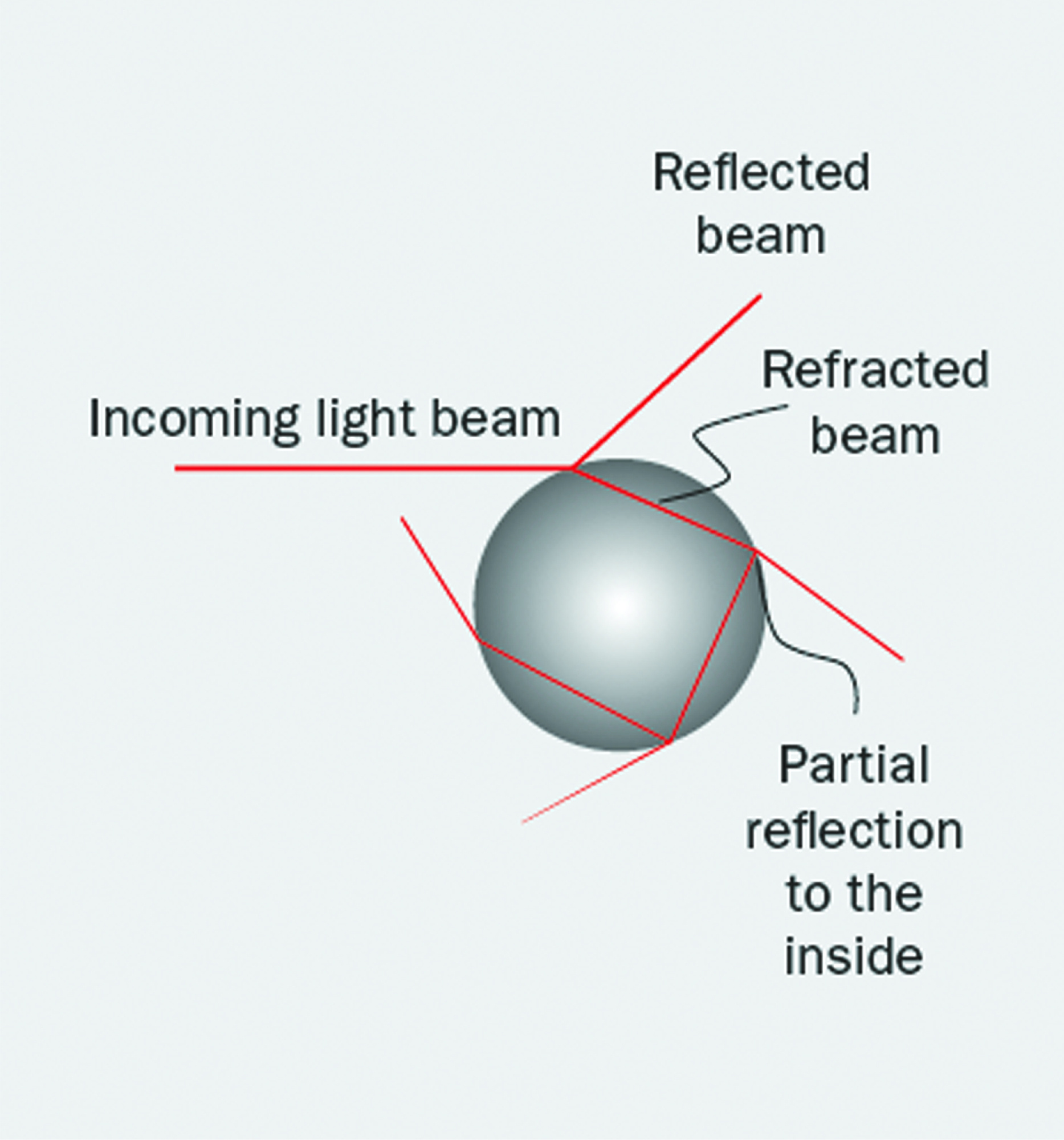
3、Mie model essential for ultrafine pigment detectionThe sample is a sub-micron ultra-fine pigment, and the Mie scattering model was used for calculations in the experiment; the report suggests that the selection of refractive index parameters will have a slight impact on the final result.
4. The shading rate drift is an important basis for judging dispersion stability.If the shading rate drifts during the retest, it means that the sample is continuing to deagglomerate and swell; in this experiment, the shading was stable and the dispersion system was in good condition.
💬Interactive topic When you are testing the particle size of ultra-fine pigments in inks and coatings, how do you judge whether to turn on ultrasound? Will you do a control experiment with and without ultrasound? Welcome to exchange practical experience in the comment area!
View More from This Booth
Popular Science | How to choose particle size analyzer calculation model Mie or Fraunhofer?
Micro sample cuvette unit unlocks a new solution for wet particle size analysis of micro samples

Stay away from health scams! How to uncover the disguise of “bad drugs”?