

 Gold Member
 Business License
When antibody verification pictures also begin to be questioned: What people who do WB really need to hold on to is the first original picture.
Content summary:The large-scale controversy surrounding commercial antibody verification images does not mean that all relevant antibodies have been proven to be ineffective. For those who actually do Western Blot (WB), a more realistic question is: when an experiment fails, can the records in hand help you judge whether the problem lies in the antibody, sample, transfer, exposure, or post-processing? This article provides a checklist for pre-validation and original image retention of new antibodies, and explains how Touch Imager and data stamps can support image acquisition and data traceability.
Factual boundaries: This article is based on 2026 Year 8 moon 27 Compilation of publicly available information. The investigation database mentioned in the article is a continuously updated clue record, and the marked images in it cannot be directly equivalent to the ineffectiveness of the antibody product, nor can it replace item-by-item, independent experimental verification. This article does not qualitatively characterize the performance or rank problem rates of any antibody brand.
one piece Western Blot There is something wrong with the picture. Should I suspect the antibody first or check my own experiments first?
For those who have actually done WB For people, this question is not easy to answer.
The antibody may not be suitable for the current application, the sample may be degraded, the transfer may be insufficient, the primary antibody concentration may be too high, and the exposure may be saturated; the pictures eventually used for group meetings or submissions may also be cropped or adjusted, and it is difficult to correspond to the original files collected for the first time.
A recent controversy over commercial antibody verification images has brought this issue that was originally hidden in the experimental process to the forefront again.
Exceed 18,000 An image is tagged, what is really worth paying attention to?
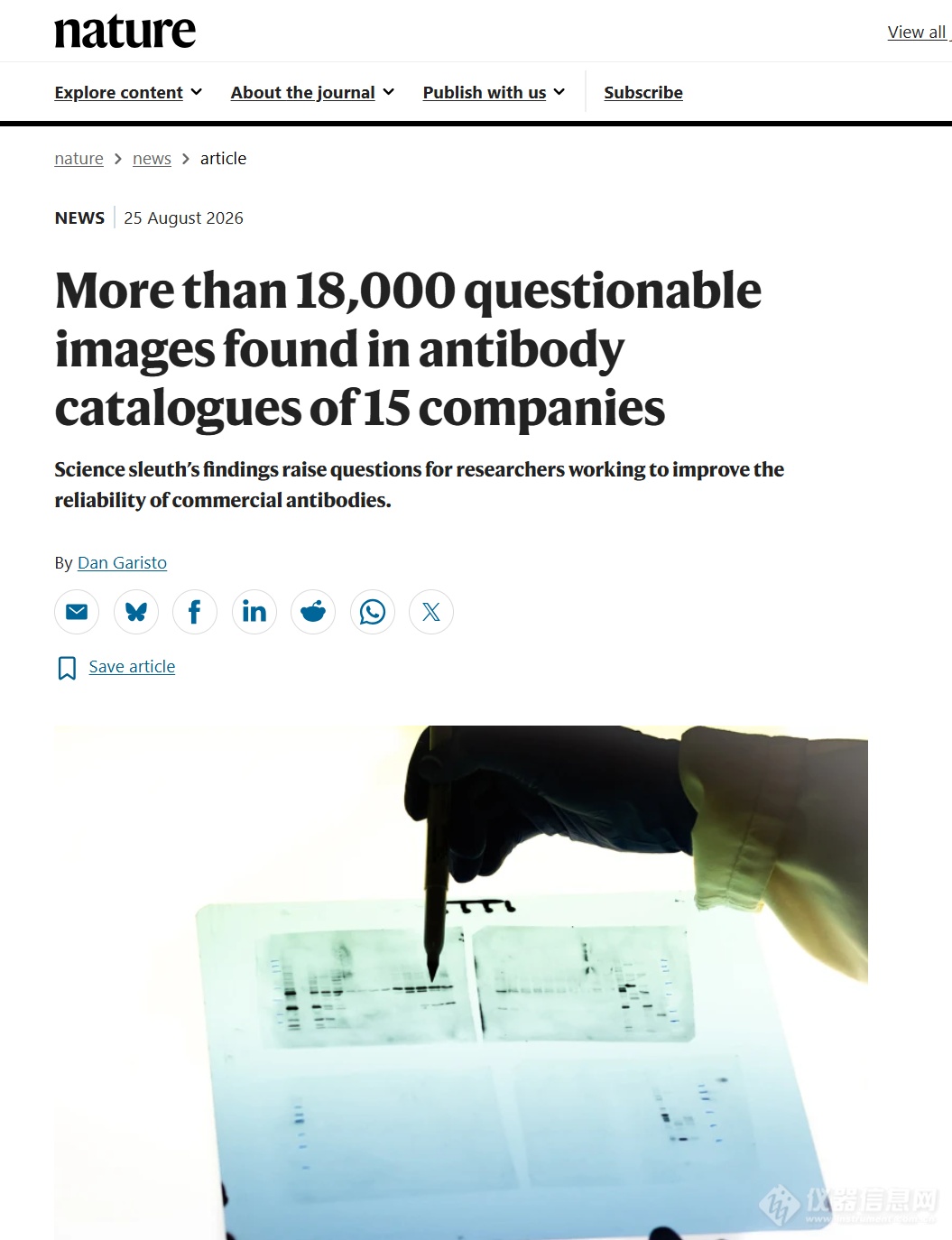
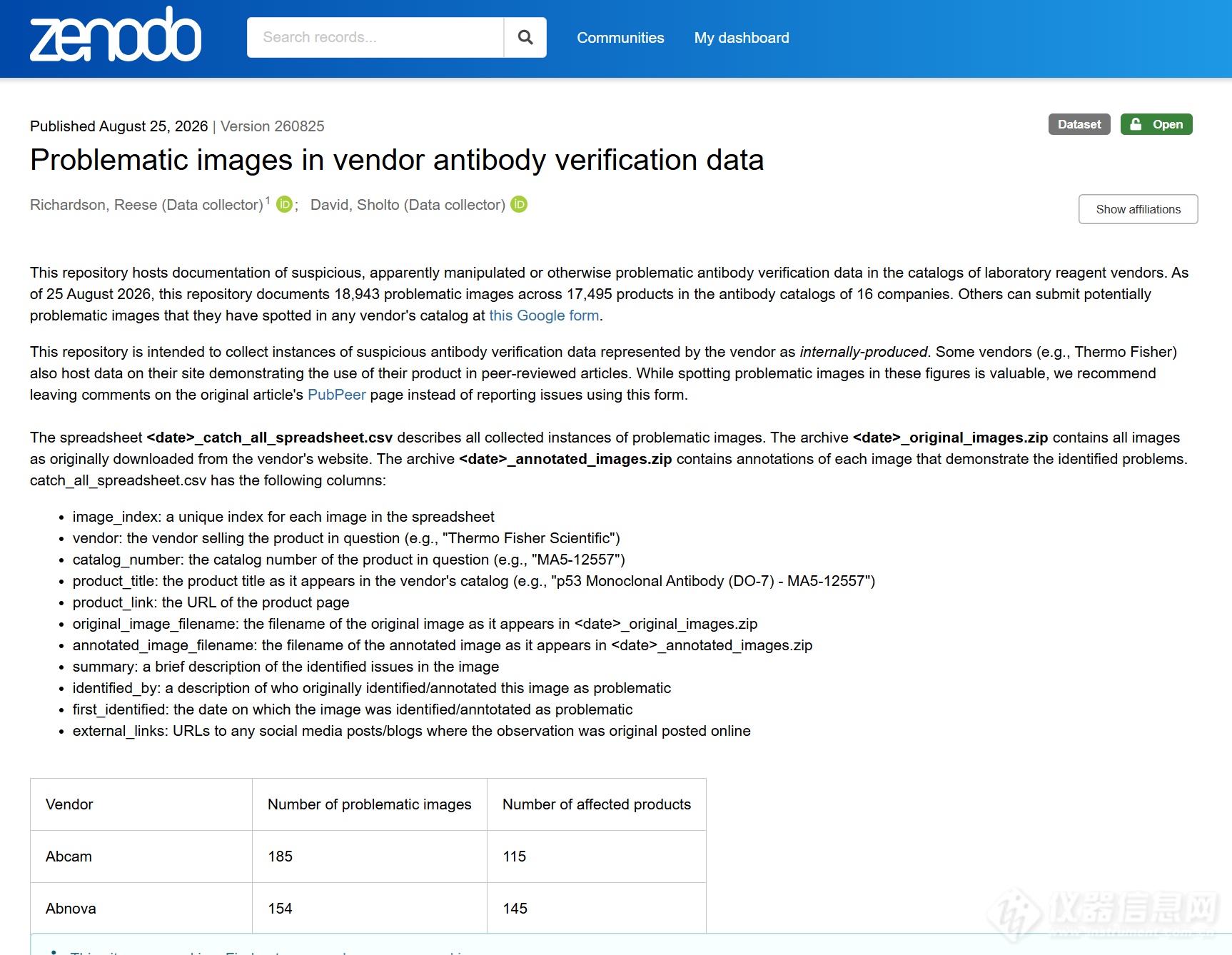
《Nature》2026 Year 8 moon 25 reports of the day Says a survey of commercial antibody catalog validation data flagged more than 18,000 An image worthy of further verification involving 15 Antibody catalogs from companies. Issues cited in the report include suspected duplication, splicing and other image patterns that may have been heavily edited. Investigators also released a continuously updatedDatabase , for outsiders to view relevant clues.
But here is a factual boundary that must be maintained:
Just because there are doubts in the verification image does not mean that the corresponding antibody is necessarily invalid.
The "Nature" report also clearly pointed out that the fact that the image was edited does not automatically indicate that the underlying product is defective; the entries in the database cannot simply be regarded as the final conclusion that independent experimental verification has been completed.ref-1
Therefore, for ordinary scientific researchers, what is really worthy of vigilance is not just "which brand should I buy in the future", but another more realistic question:
once WB When it fails, do I have enough information to judge where the problem lies?
a common WB Scenario: The same antibody, why does it "not work" this time?
Imagine such an experimental scenario.
You bought a new antibody. The verification pictures on the official website show clear bands, correct target molecular weight, and clean background. You did the first experiment according to the instructions. There was a band at the target position, but the background was high.
You adjust the primary antibody concentration and do it again. This time the background is lowered and the target band is weaker.
For the third time, you prepare the sample again and transfer the film again, and finally get a result that looks good.
A few weeks later, the instructor asked, “What exactly did you change the first time and the third time?”
Only then did I discover:
• There is no record of what settings were used for the first exposure;
• The original picture corresponding to the second time can no longer be found;
• For the third time, the picture was cropped for the purpose of presentation;
• There is only one left in the folder final.tif、final2.tif、final_new.tif and final_new2.tif。
The real problem arises.
It’s not that the experiment must have been done wrong;It is difficult to go back to the time when the experiment took place.
WB What I fear most is not just failure, but the inability to explain it after failure.
Western Blot It is an experimental chain strung together by multiple links:
sample → electrophoresis → Transfer film → closed → Antibody incubation → Wash film → color or luminescence → Image acquisition → image processing → Data display
If any link changes, the final strip may be different. So when you see a picture that “doesn’t look right” WB When drawing, you need to answer at least the following questions:
• Is the antibody suitable for the current application and sample type?
• Is the target protein expressed in the sample, and is the sample status normal?
• Are the sample loading and film transfer consistent and sufficient?
• Are the primary and secondary antibody concentrations appropriate?
• Has the exposure entered the saturation zone?
• Is the original acquisition image you see now, or the processed version?
• Does the same film retain its original results under other exposure conditions?
If this information is not retained, even if you redo the experiment, it will be difficult to tell whether you are testing a hypothesis or trying your luck again.
Nature Research Figure Guide Image Integrity Guidelines requirements, the final image should correctly represent the original data; the gel used in the final figure or blot Raw, uncropped data should be provided, local stitching needs to be clearly marked, and adjustments should not cause bands or other information to disappear. Nature Portfolio ofImage Integrity and Standards Policy It is also noted that researchers should retain unprocessed data and metadata and document key acquisition settings and processing operations.
For researchers, this is not just a formatting issue that needs to be dealt with before submission. It is first and foremost an experimental habit:
First save what actually happened in the experiment, and then discuss whether this picture is suitable for display.
After the antibodies arrive, ask yourself three questions:
Faced with the controversy over antibody verification information, a more practical approach for a laboratory is to add three judgments when purchasing and using antibodies, rather than getting caught up in the discussion of "which brand must be reliable."
1. Has the supplier verified my application scenario?
"This antibody has validation data" and "This antibody is suitable for my experiment" are two different things.
Antibody validation should be matched to the specific application. The "Five Pillars" framework proposed by the International Antibody Validation Working Group also emphasizes the need to validate antibodies based on specific applications by combining strategies such as gene knockout or knockdown, orthogonal methods, independent antibodies, and tagged protein expression.ref-3
Before purchasing, try to confirm:
• Is it targeted at Western Blot Have done application verification;
• Verify whether the species and sample type are close to your own experiments;
• Whether the theoretical molecular weight corresponds to the verification band;
• Whether to indicate positive, negative or KO/KD etc. verification basis;
• Whether sufficient and complete experimental conditions and image information are provided.
The closer the verification information is to your own experimental scenario, the more helpful it will be in reducing aimless trial and error.
2. Do I see beautiful results, or data that can judge the quality of the experiment?
A beautifully cropped picture of a single strip can actually tell us very little information.
If conditions permit, what is more worthy of attention is:
• Can I see the full film or uncropped image?
• Whether to retain Marker?
• Can you see other non-specific signals?
• Are different exposure conditions or necessary controls provided?
• Do images correspond to clear samples, conditions, and experimental records?
This information is often more helpful in judging whether a verification evidence is suitable for your experiment than "whether the final picture is beautiful."
3. If a dispute arises three months from now, will I still be able to find today's raw data?
This is often overlooked.
The actual data flow method in many laboratories is still:
Finished → Export → Change file name → Send to chat software → make progress PPT。
When the experimental volume increases, problems will soon arise:
• Which picture belongs to which sample?
• When was it collected?
• Where is the original image?
• Has it been re-exposed?
• PPT Which original file does the picture in come from?
If these relationships can only be maintained by the memory of the experimenter, then the cost of tracing will increase rapidly after personnel changes, the project cycle is extended, or the paper enters the submission stage.
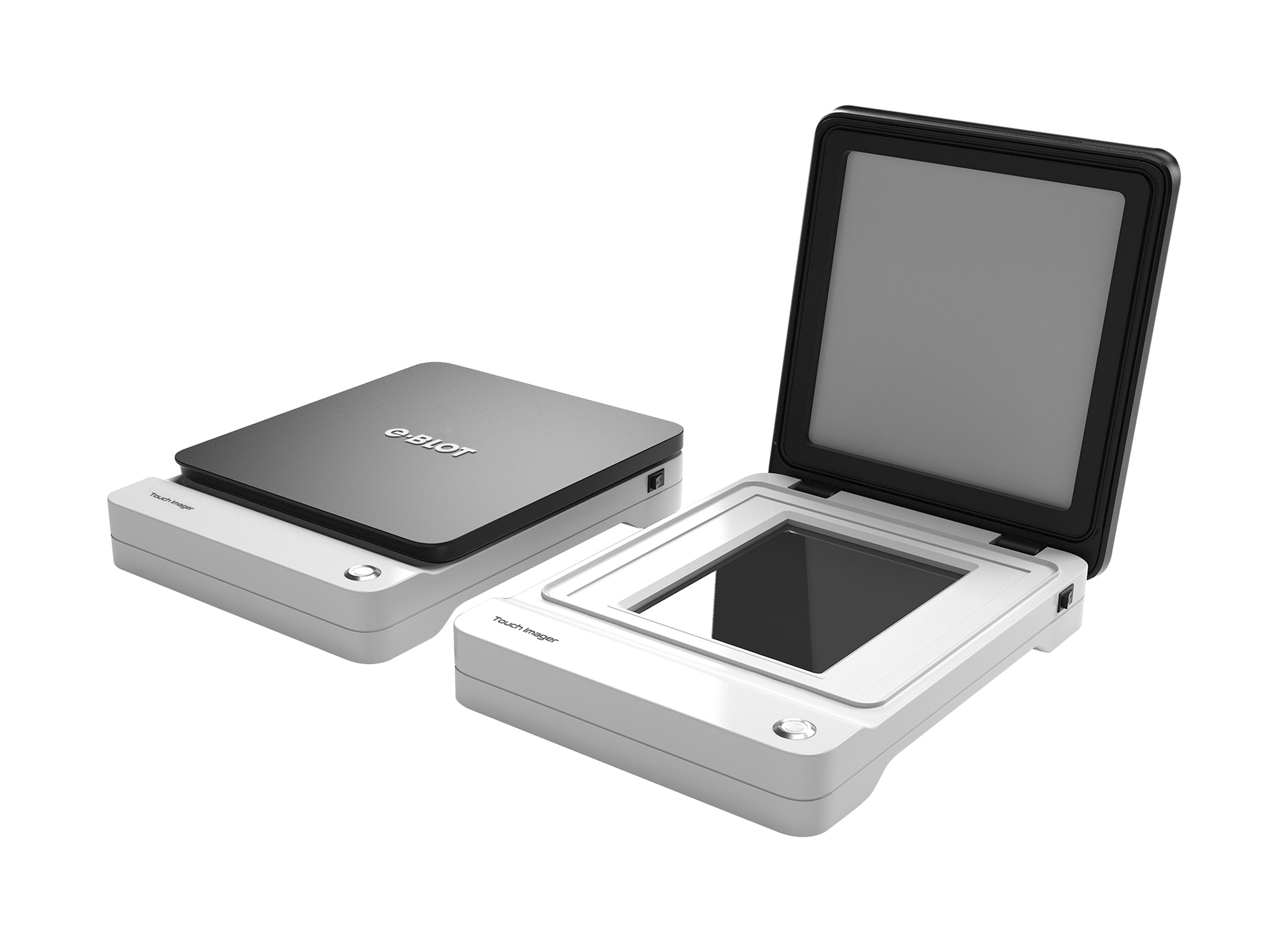
Touch Imager What I want to solve is not just "putting WB Photograph it"
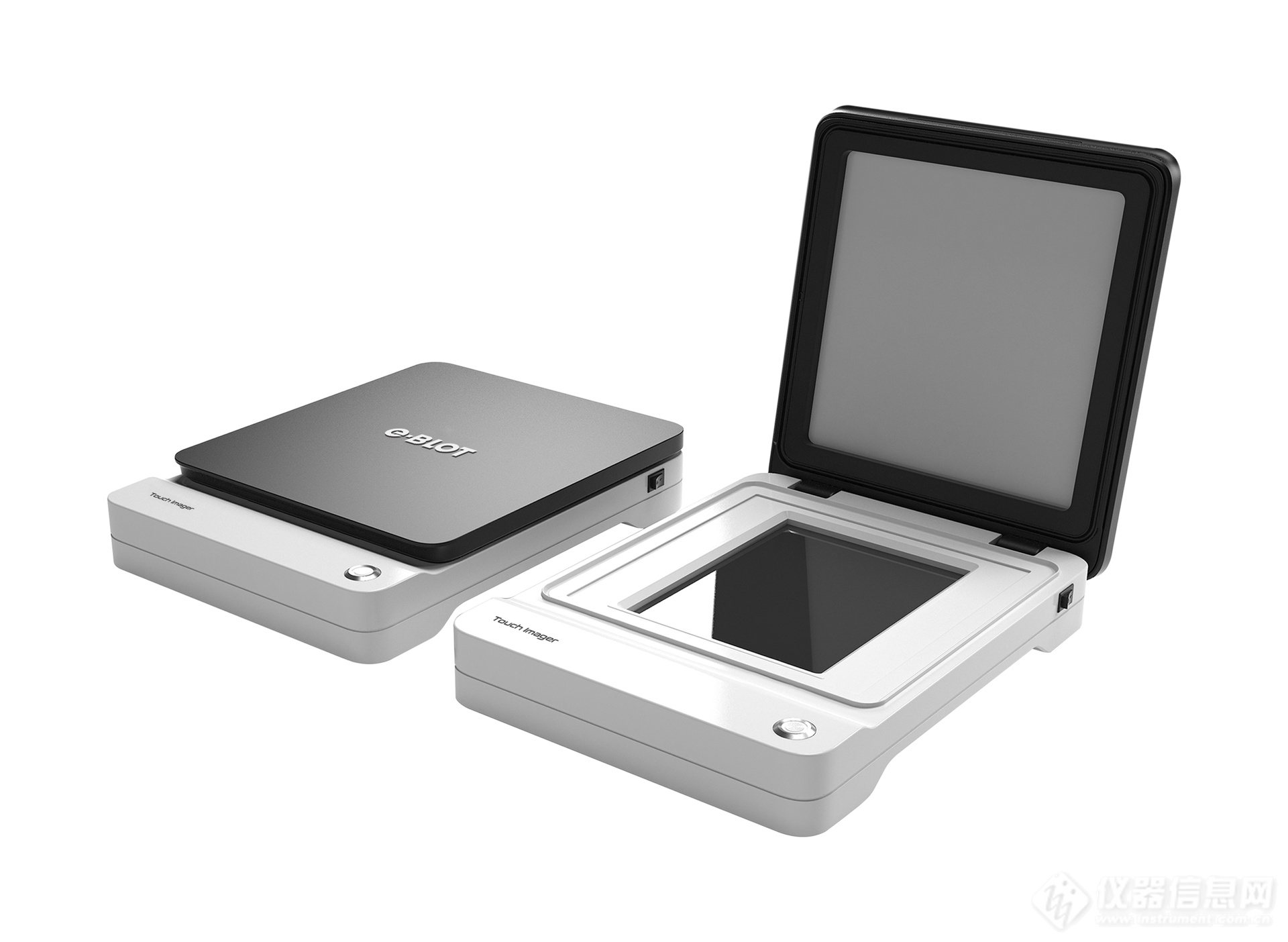
Many people choose Western Blot When it comes to imaging equipment, the first question usually comes to mind: “Can I capture the results clearly?”
This is of course important.
But when the experiment enters the paper writing, project acceptance, data review and long-term accumulation stages, the second question will become more and more important:
Can this picture be accurately found and explained in the future?
Touch Imager is in WB Image acquisition link. For experimenters, the value of equipment should not just stop at "getting a picture for display", but should also extend to the first site where experimental data is generated.
Because from the moment the image collection is completed, this picture enters a longer data life cycle:
Original image → Analysis chart → Statistical results → group meeting PPT → article Figure → Supplementary material
The further back you go, the more files and versions there are, and the further the distance between people and the original data becomes. Rather than re-prove "where does this picture come from" at the final stage, a more practical approach is to retain the information that should be left when the data is generated.
Data stamp: not to “catch forgery”, but to help data find its origin
Special instructions are needed here:
Data Stamp is not an image forgery detector.
It cannot help researchers determine whether an antibody is reliable, nor can it determine whether an experiment involves scientific research misconduct based on just a picture.
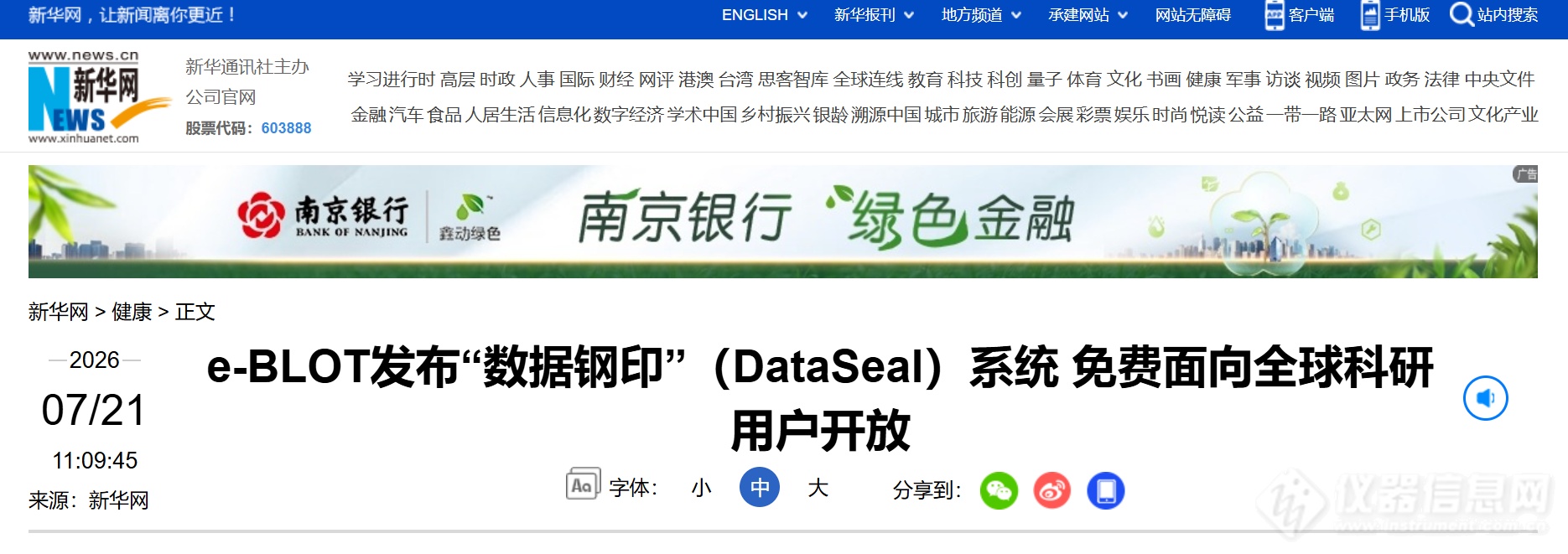
The data stamp is related to Touch Imager An additional function supporting the image collection process. It generates a unique digital identification for the file during image collection, and associates the collection time, equipment information and related records; a record relationship can also be formed between subsequent operations and raw data to help researchers review data sources and processing paths.
It's better suited to take on another thing:
When experimental data is generated, the image file is associated with the corresponding information to provide a basis for subsequent data review and tracing.
Research integrity cannot be guaranteed by a software button. Reliable data systems still come from:
Standardized experiments + original collection + information record + file association + Traceability management.
The function of data stamp is to try to advance "recording" and "correlation" to the data generation stage.
In this way, when someone asks a few months later "thesis" Figure 3B "Where is the original image of this strip?" Experimenters don't have to rely solely on memory to rummage through multiple hard drives, chat logs, and PPT, you can follow the existing data relationships and return to the corresponding original images and experimental records.
Why is establishing correlation during collection more important than making up records afterwards?
Researchers all know that experiments should be recorded. But the real question is: when did the recording occur?
If you sort it out a few days after the experiment is over, many details will have begun to be lost; if you wait until the paper is ready for submission before searching for the original figures again, a year or more may have passed.
Relatively complete information often exists at the moment when the data is just generated.
Therefore, data integrity management should not start at submission, but from the first collection.
Touch Imager The value of the combination with data stamping is also here: the former undertakes image acquisition, and the latter helps establish clearer file associations and traceability records when images are produced. They cannot make scientific research judgments for experimenters, but they can minimize a pity situation:
The experiment was done and the data was valuable, but because the original documents and experimental information were not well preserved, it was unclear in the end.
After the antibody arrives, don’t rush to run the whole plate: one serving WB Verification and original image retention list
If you are ready to buy or replace a new one WB For antibodies, you can first complete the following tests.
Antibodies before purchasing
• Confirm whether antibodies are directed against Western Blot Have done application verification
• Verify species, sample type, and theoretical molecular weight of target protein
• Try to see full film, uncropped images, or more complete verification information
• Pay attention to whether it has positive, negative, KO/KD or other application-specific validation basis
• Don’t judge antibody performance simply based on a “beautiful strip chart”
first experiment
• Conduct small-scale pilot experiments first to avoid directly consuming the entire batch of precious samples
• Set up necessary positive, negative or internal control controls
• reserve Marker and complete membrane information
• Experiment with appropriate exposure ranges and save more than just one "final image"
• Save original, uncropped image
After image acquisition
• The original file is not overwritten by the processing map
• Establish correspondence between samples, membranes, experiment dates and images
• Record key experimental conditions, collection information and processing steps
• ensure final Figure Ability to trace back to original data
• Regularly check before the end of the project that the data is still fully open and traceable
This process won’t make every antibody reliable, but it will help you answer a key question faster:
What step went wrong?
FAQ FAQ
There is controversy over the antibody verification pictures. Does it mean that the relevant antibodies can no longer be used?
no. There are suspected duplications, splicing or other abnormalities in the verification image, which require further verification, but it cannot be directly determined that the corresponding antibody is invalid based on this. A distinction should be made between "validation evidence is disputed" and "product performance has been invalidated by independent experiments."ref-1
Do Western Blot Why keep the original uncropped image?
Because the complete original image can be retained The overall relationship between markers, background, non-specific bands and lanes provides more basis for result review, submission and subsequent data tracing. The specific requirements of different journals may differ, and you still need to check the latest author guidelines of the target journal before submitting your manuscript.ref-4
Data stamp can determine WB Are the pictures fake?
It cannot and should not be understood this way. The core value of data stamping is to help the original image be associated with the collected information, making the data source and processing path easier to trace, rather than automatically judging scientific research misconduct.
Touch Imager Can the problem of non-specific antibodies be solved?
cannot. Antibody specificity is affected by many factors such as the antibody itself, the sample, the experimental system, and the experimental conditions. Touch Imager It is in the image collection stage, and its role is to help researchers obtain and retain experimental images, providing original and reviewable basis for troubleshooting.
A good set WB What is the most important thing about data management process?
It’s not about how beautiful the final image is saved, but making sure:
The final conclusion can be returned to the original experiment, and finally Figure Ability to return to original image.
From "getting a picture" to "leaving a piece of data that can be reviewed"
The antibody verification image controversy may continue to develop. The survey database may be updated, and suppliers may publish responses, update verification pages, or add additional instructions. It is not appropriate to make general characterizations of a brand before formal confirmation is obtained.
But for those who actually stand in front of the experimental bench every day, there is no need to wait for the industry to give the final answer before starting to improve our own experimental processes.
Because no matter which company the antibody comes from, no matter which journal it is submitted to, one thing will never change:
The scientific research evidence that truly belongs to you is the original data generated by your own experiments.
one piece WB The greatest value of a picture is not just that it can be put in today PPT, but six months or a year later, when your mentor, collaborators, reviewers, or even your future self ask about this set of experiments again, you will still be able to answer clearly:
• Which experiment was this?
• Which sample is this?
• This is the original result collected at that time;
• The conclusion we see now is how we can return to its data source step by step.
This is also Touch Imager Problems that Data Stamp hopes to help the laboratory solve:
not only Western Blot Collecting images also makes the results of each experiment more traceable.
References
1. Garisto, D. More than 18,000 questionable images found in antibody catalogues of 15 companies . Nature, 2026-08-25. DOI: 10.1038/d41586-026-02635-w . The reporting time, reporting caliber and factual boundaries used to support the dispute are that "image anomalies do not automatically equate to product invalidity".
2. Richardson, R.; David, S. Problematic images in vendor antibody verification data . Zenodo, 2026-08-25 Edition, accessed on 2026-08-27. This database will be continuously updated, and the entries in it are investigation leads and do not mean that independent experimental verification has been completed one by one.
3. Uhlen, M.; Bandrowski, A.; Carr, S.; et al. A proposal for validation of antibodies . Nature Methods 13, 823–827 (2016). DOI: 10.1038/nmeth.3995 . Antibodies used to support should be validated per specific application, as well as validation frameworks such as genetics, orthogonal methods, independent antibodies, etc.
4. Nature Research Figure Guide. Image Integrity . Access date: 2026-08-27. for support gel with blot Relevant requirements for raw, uncropped data and image processing.
5. Nature Portfolio. Image integrity and standards . Access date: 2026-08-27. Retention recommendations to support raw data, metadata, acquisition settings, and image processing records. Different journals may have different requirements, please refer to the latest author guidelines of the target journal.
6. Yibit e-BLOT. "Ebite launches "data stamp": for each WB Figure Establishing a digital signature traceable from the source》 , 2026-08-04, access date: 2026-08-27. for illustration Touch Imager Public function descriptions with data stamps; product capabilities and actual configurations are subject to the latest official information of Yibit.
View More from This Booth
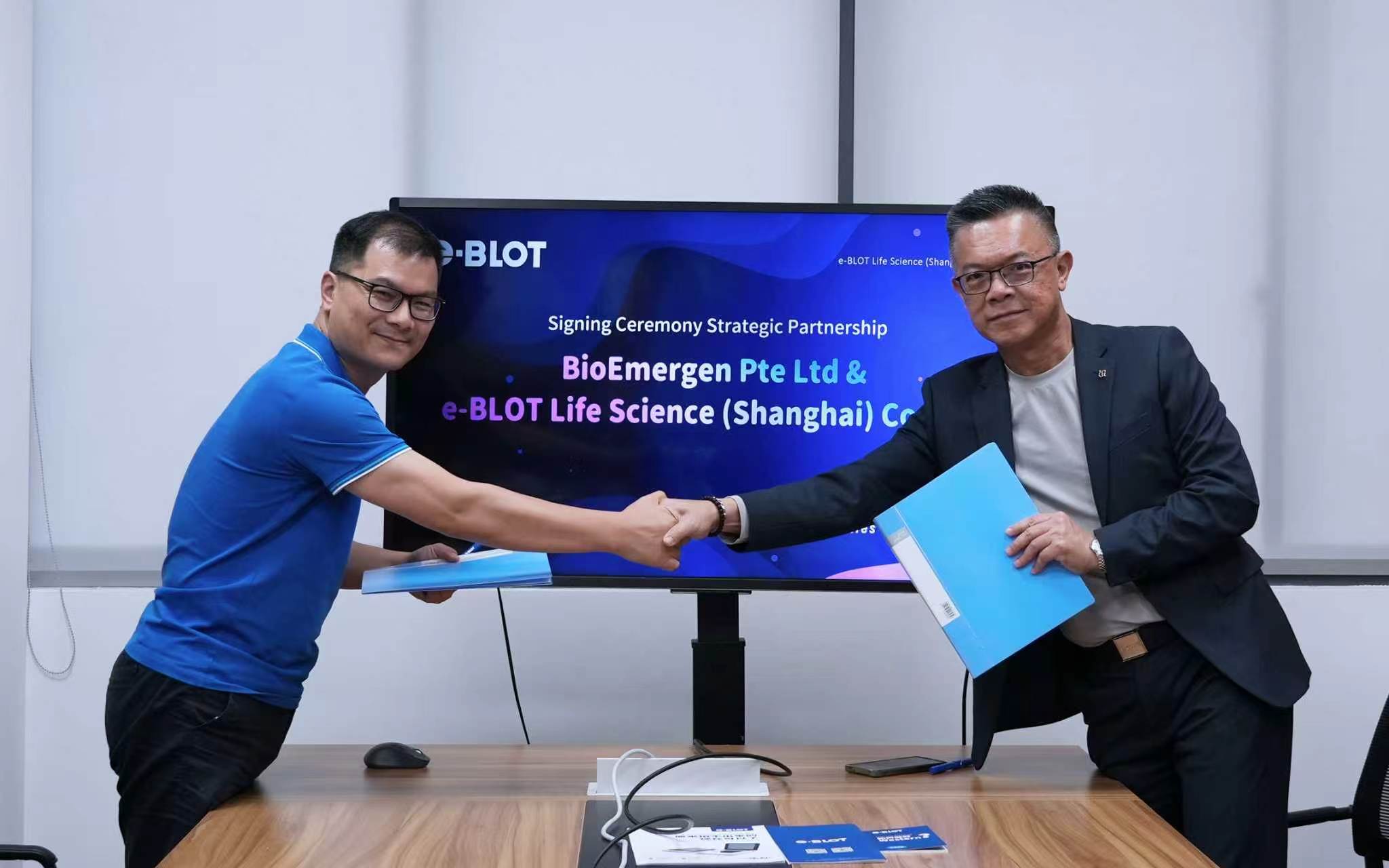
BioEmergen signed a strategic cooperation agreement with BioEmergen Pte Ltd to jointly expand the life sciences market in five Southeast Asian countries
Should I choose fluorescence or chemiluminescence for WB imaging? Principles, Advantages, Disadvantages and Selection Guide

What experimental records should be connected behind a WB picture?
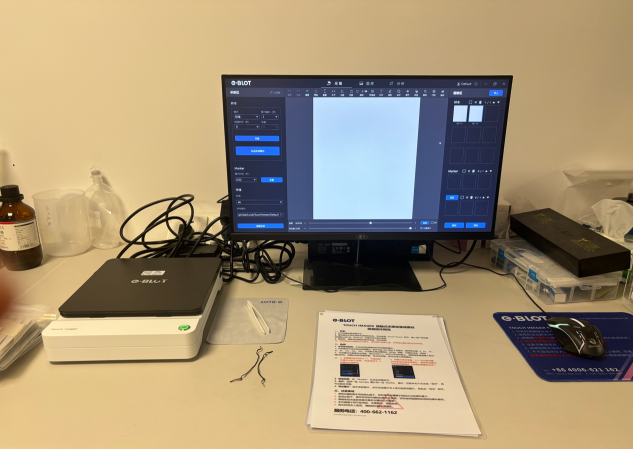
Five Touch Imagers are stationed in the Guangdong-Hong Kong-Macao Greater Bay Area Brain Science and Brain-inspired Research Center: allowing WB results to be seen faster
Recommended Products

Touch Imager electronic tablet imager/e-BLOT contact non-destructive quantitative WB imaging system
Negotiable
Model:Touch Imager