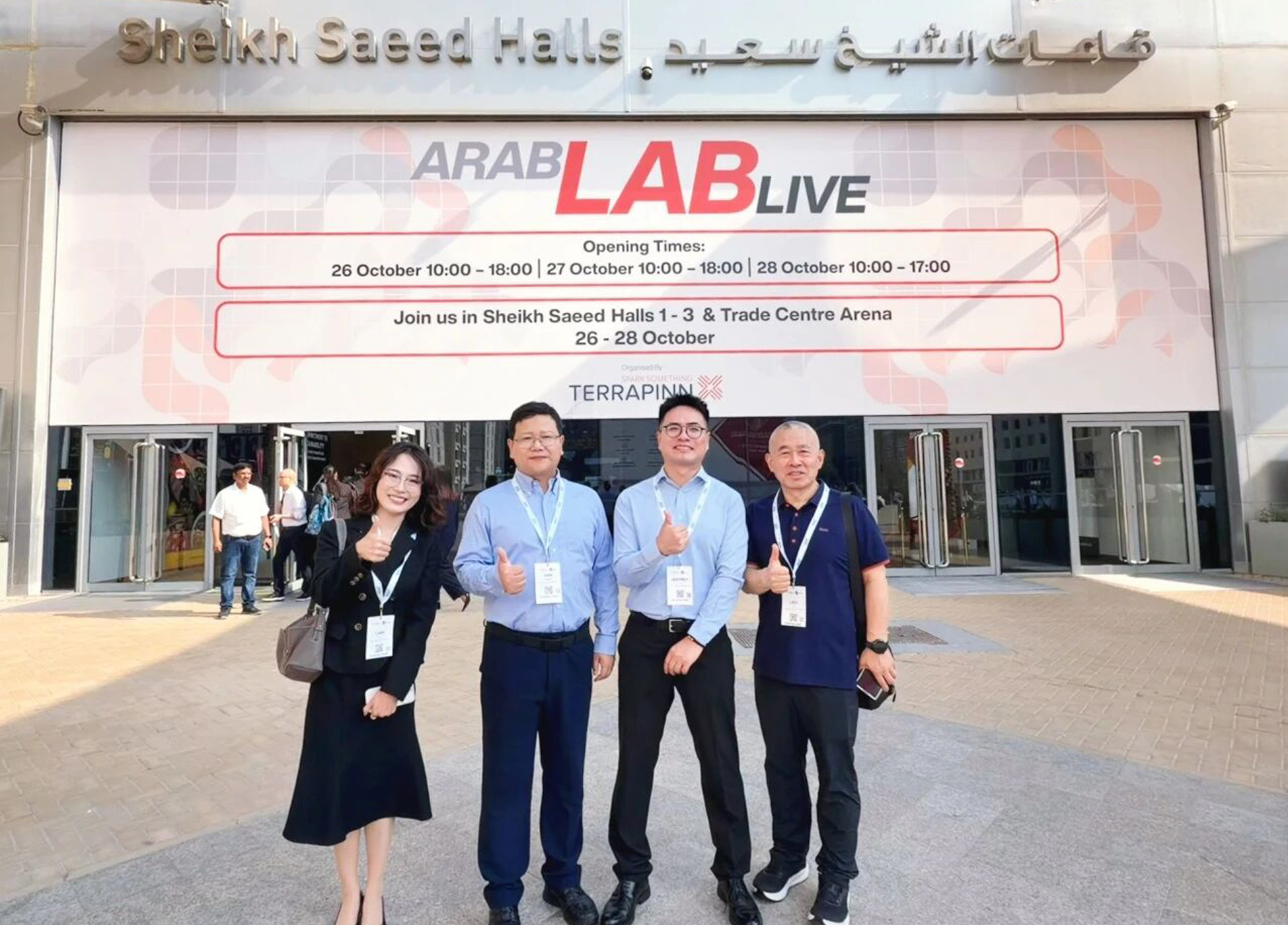
Being close to users continues from every meeting, Haineng goes to ARABLAB again
Company News
Oct 30, 2026

A must-read for the digital and intelligent transformation of laboratories in 2026
Policy orientation + technology dismantling + full analysis of application value
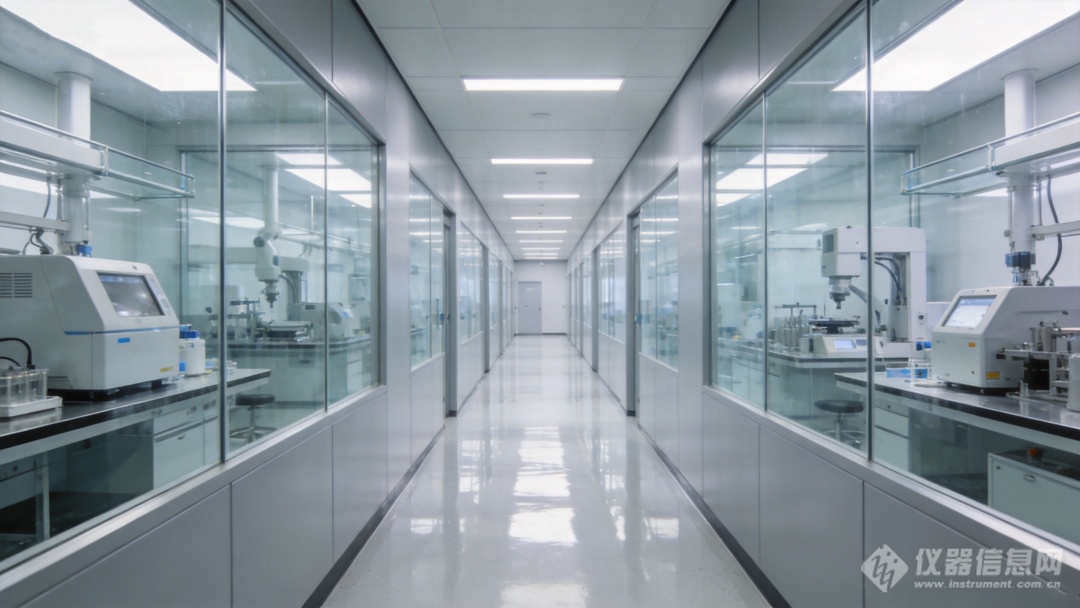
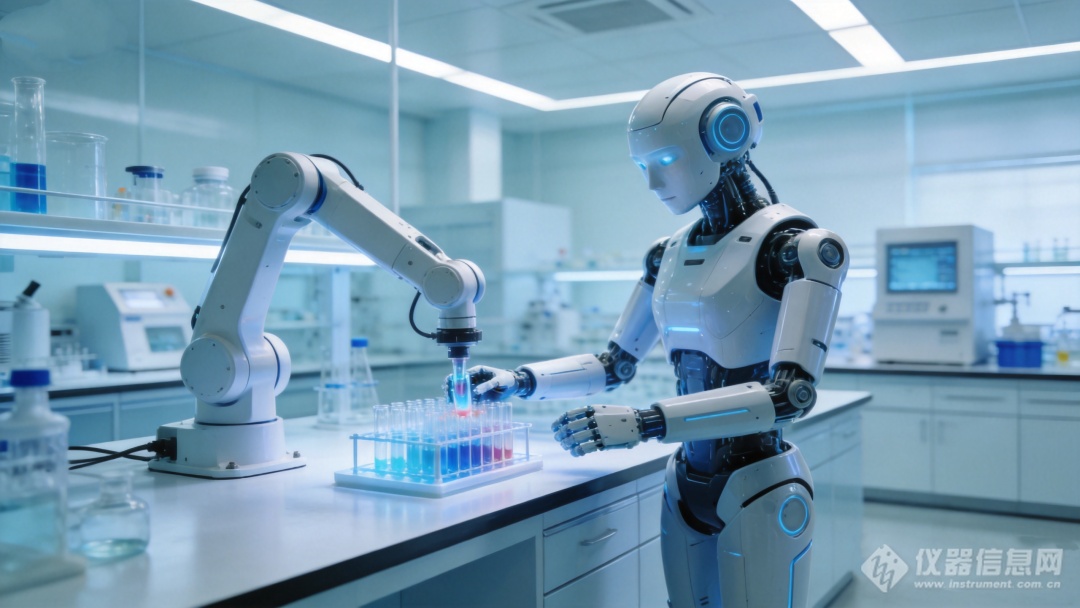
When night falls, the experimenters lock the door after get off work, and the lights in the laboratory are turned off one after another. Can you imagine: in the dark room, the robotic arm is accurately grabbing samples, the scientific instruments are running smoothly, and massive experimental data are being automatically generated, analyzed, and archived... This is not a scene in a science fiction movie, but a "scene" that is being implemented across the country.black light lab"Daily.
In April 2026, the Ministry of Ecology and Environment clearly proposed that during the "15th Five-Year Plan" period, about 10 comprehensive "black light laboratories" will be deployed across the country to promote the digital and intelligent transformation of more than 3,000 automatic water and gas stations. This new concept, which was only mentioned for the first time in the "Ministerial Channel" of the National Two Sessions in 2024, is becoming a "new infrastructure" in the field of scientific research and testing at an unimaginable speed.
Many people’s first impression of a black light laboratory is “no one, lights off, machines working”, but this is only its most superficial feature. As the ultimate form of laboratory digital transformation, Black Light Laboratory is a deep integration of artificial intelligence, robots, Internet of Things, and big data technology. The core is to realize an unmanned closed loop of the entire process from "sample in" to "result out".
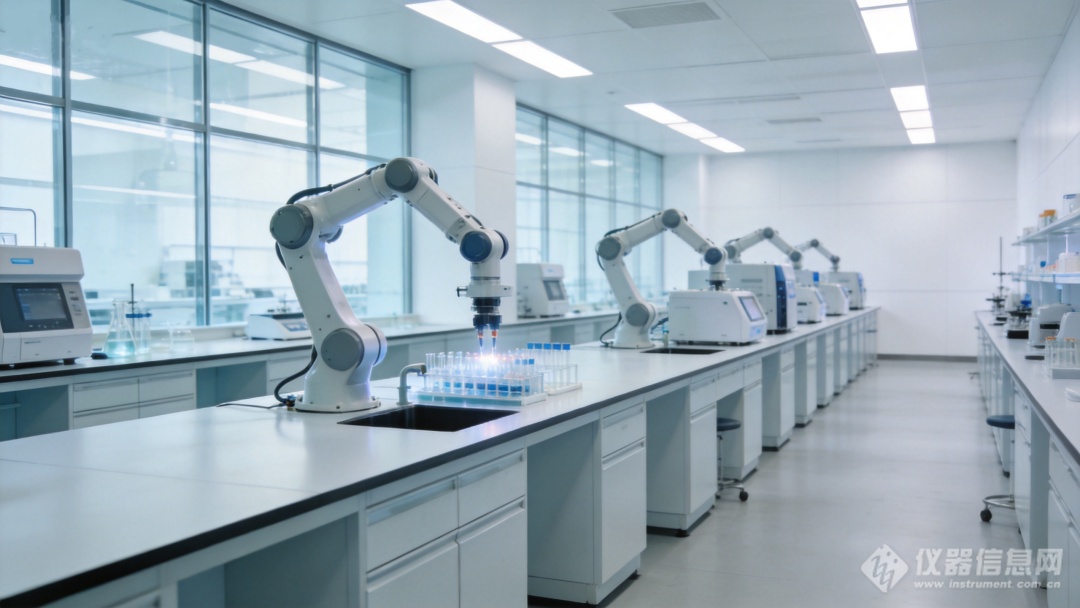
Smart laboratory technical architecture usually consists ofComposed of three major modules:
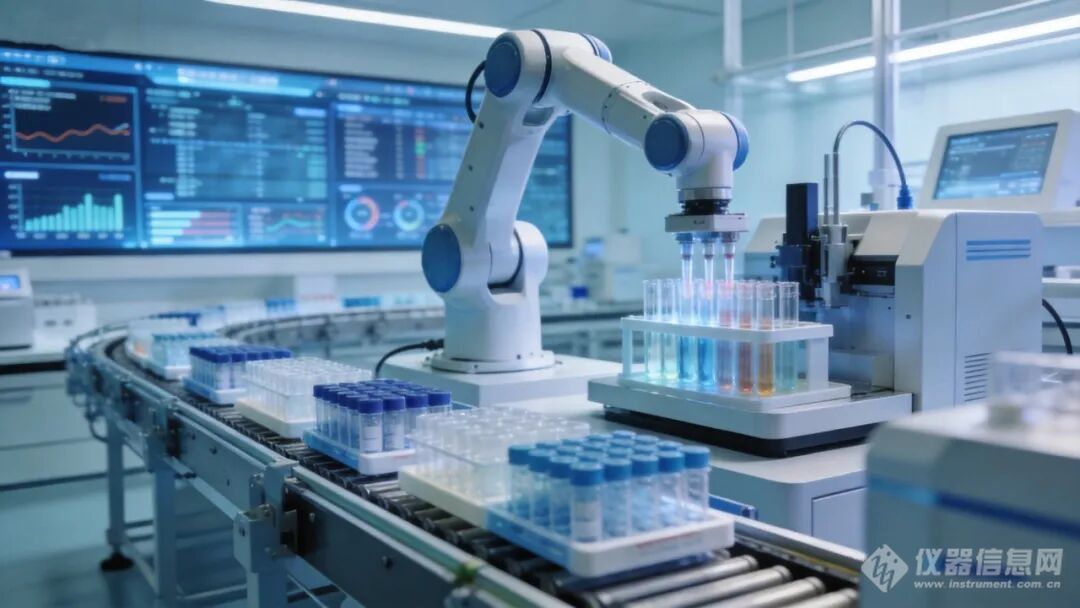
Automation execution layer:It consists of high-precision robotic arms, AGV mobile robots, automated pre-processing equipment, and various analytical instruments. It can replace experimental personnel to complete sample grabbing, liquid separation, pre-processing, sampling, detection,Waste liquid treatmentFor all physical operations, the error rate is much lower than manual operations.
Intelligent scheduling brain:Based on AI algorithmLaboratory information management system(LIMS) is the "central nervous system" of the entire laboratory. It can automatically allocate testing tasks according to sample priority, dynamically schedule all equipment to work together, monitor equipment operating status in real time, and make independent decisions when encountering abnormal situations without manual intervention.
Data closed-loop system:All detection data are automatically collected, automatically reviewed, and reports are automatically generated. The entire process is traceable, eliminating human errors and data fraud from the source, ensuring that the data is "authentic, accurate, and complete." It can even continuously optimize the experimental process and analysis accuracy through machine learning of historical data.
Traditional automated laboratories can only mechanically perform testing tasks according to preset fixed procedures; while black light laboratories break through the limitations of fixed processes and haveIntelligent task orchestration, automatic time scheduling, intelligent recommendations for detection methods, and intelligent recommendations for equipment operation and maintenancethe ability of autonomous regulation.
We use several sets of real operating data to intuitively experience the disruptive advantages of Black Light Lab:
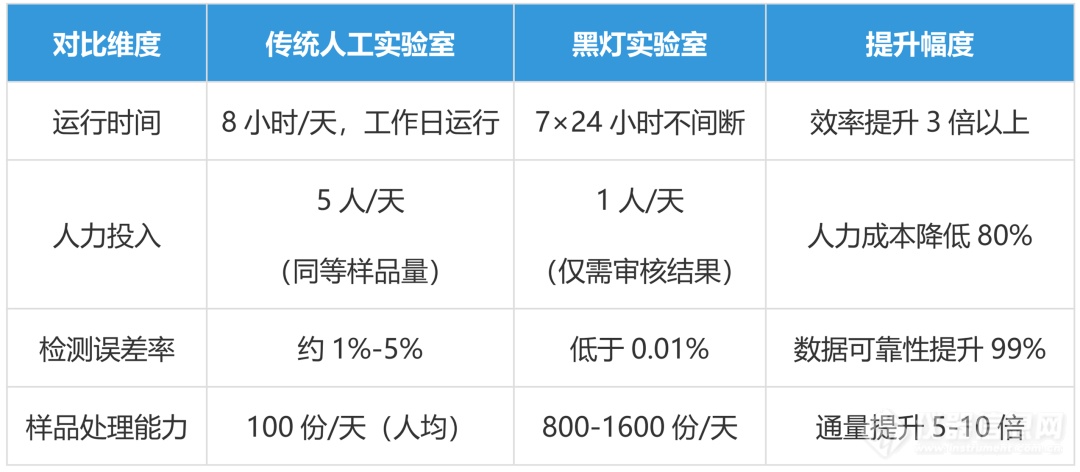
These data are not theoretical estimates, but have been verified in multiple implementation projects:
As the country's first black light laboratory specially used for the treatment of Taihu Lake, it has processed 10,900 bottles of water samples and accumulated 49,050 pieces of valid data since it was put into use in April 2025. In the past, five experimenters needed to work continuously for 8 hours to complete the detection task. Now, only one person is on duty. The system automatically completes the entire process from sampling to report generation, increasing the efficiency by more than 8 times, providing near-real-time data support for Taihu Lake cyanobacteria early warning.
In response to the testing needs of highly toxic acrylonitrile samples, the laboratory has achieved zero contact between people and samples. On average, it tests more than 1,600 samples per day and conducts more than 5,000 analysis projects. It saves about 6 million yuan in labor costs every year. Nearly 50 quality inspection personnel are liberated from high-risk and high-intensity working environments and turn to more creative data analysis and process optimization.
About 200 sample preprocessing can be completed in 24 hours, and the overall efficiency is more than 5 times that of the traditional manual mode. In food safety emergencies or large-scale special sampling inspections, its powerful throughput capabilities can provide regulatory authorities with near-real-time data support, greatly improving the response speed of food safety risk prevention and control.
In addition to improving efficiency, the more important value of the black light laboratory is that it solves the problems of traditional laboratoriesThree major painspoint:
First, security pain points,The detection of highly toxic, highly polluted, and high-risk samples enables unmanned operation to completely avoid occupational injuries to personnel;
Second, quality pain points,The entire process is standardized and data is traceable, eliminating human operating errors and data falsification;
The third is cost pain point,In the long run, labor costs and time costs are greatly reduced, and the investment return cycle usually only takes 2-3 years.
The rapid popularity of black light laboratories has also brought new challenges. At present, many high-end testing equipment still rely on imports, which are not only costly and difficult to maintain, but also pose data security risks. Driven by the "15th Five-Year Plan" national plan, localization of testing equipment and independent control of core technologies have become the inevitable direction of industry development.
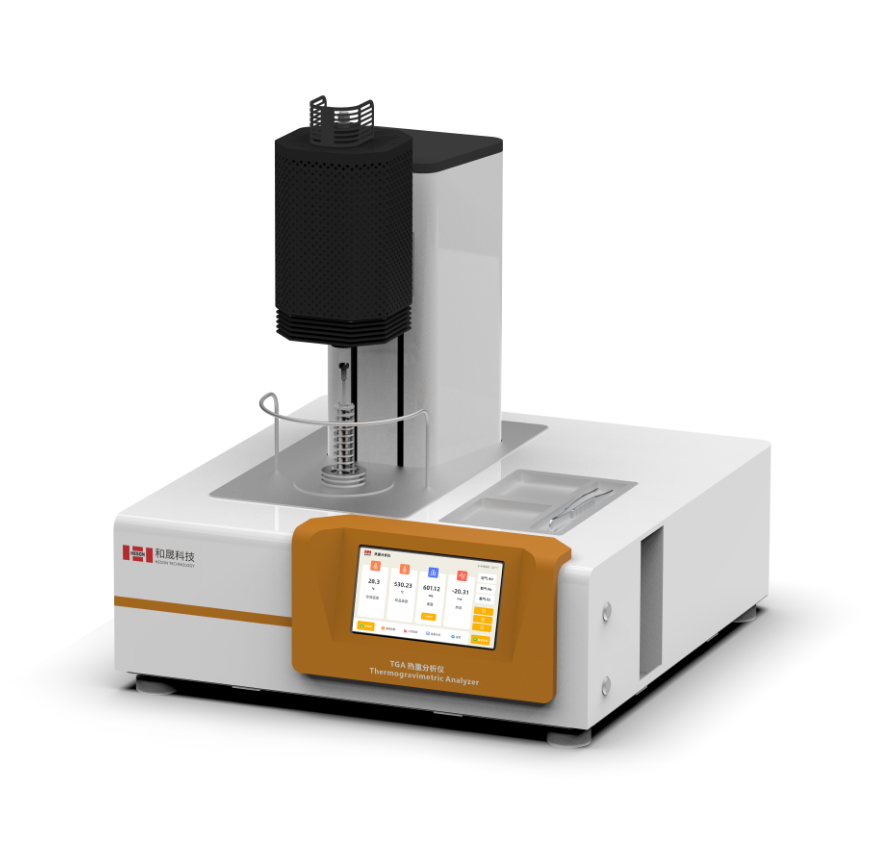
Qingyuan FengdaIt has achieved independent breakthroughs in core detection technologies such as ion chromatography and terahertz, and the performance of some products even exceeds similar international levels. Deeply integrating these independent and controllable core detection technologies with the smart laboratory system to create a fully domestic black light laboratory solution is becoming a new direction for the group to explore.
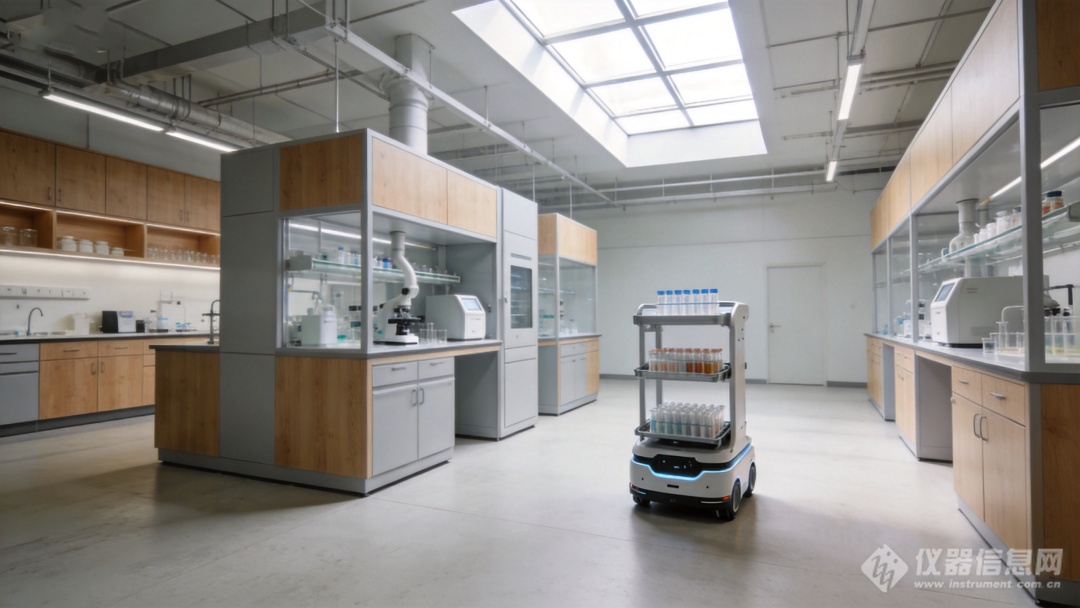
From "manual operation" to "machine substitution" to "AI independent scientific research", Black Light Laboratory is reshaping the production relationship in the scientific research and testing industry. When scientists are liberated from tedious repetitive work and devote more energy to creative research work, it will surely bring about a new leap in scientific research efficiency.
What efficiency pain points has your industry laboratory encountered? Do you think black light labs can solve these problems? Welcome to leave a message and share in the comment area~




When you visit any website, it may store or retrieve information on your browser, mostly in the form of cookies. This information might be about you, your preferences or your device and is mostly used to make the site work as you expect it to. The information does not usually directly identify you, but it can give you a more personalized web experience. Because we respect your right to privacy, you can choose not to allow some types of cookies. Click on the different category headings to find out more and change our default settings. However, blocking some types of cookies may impact your experience of the site and the services we are able to offer.