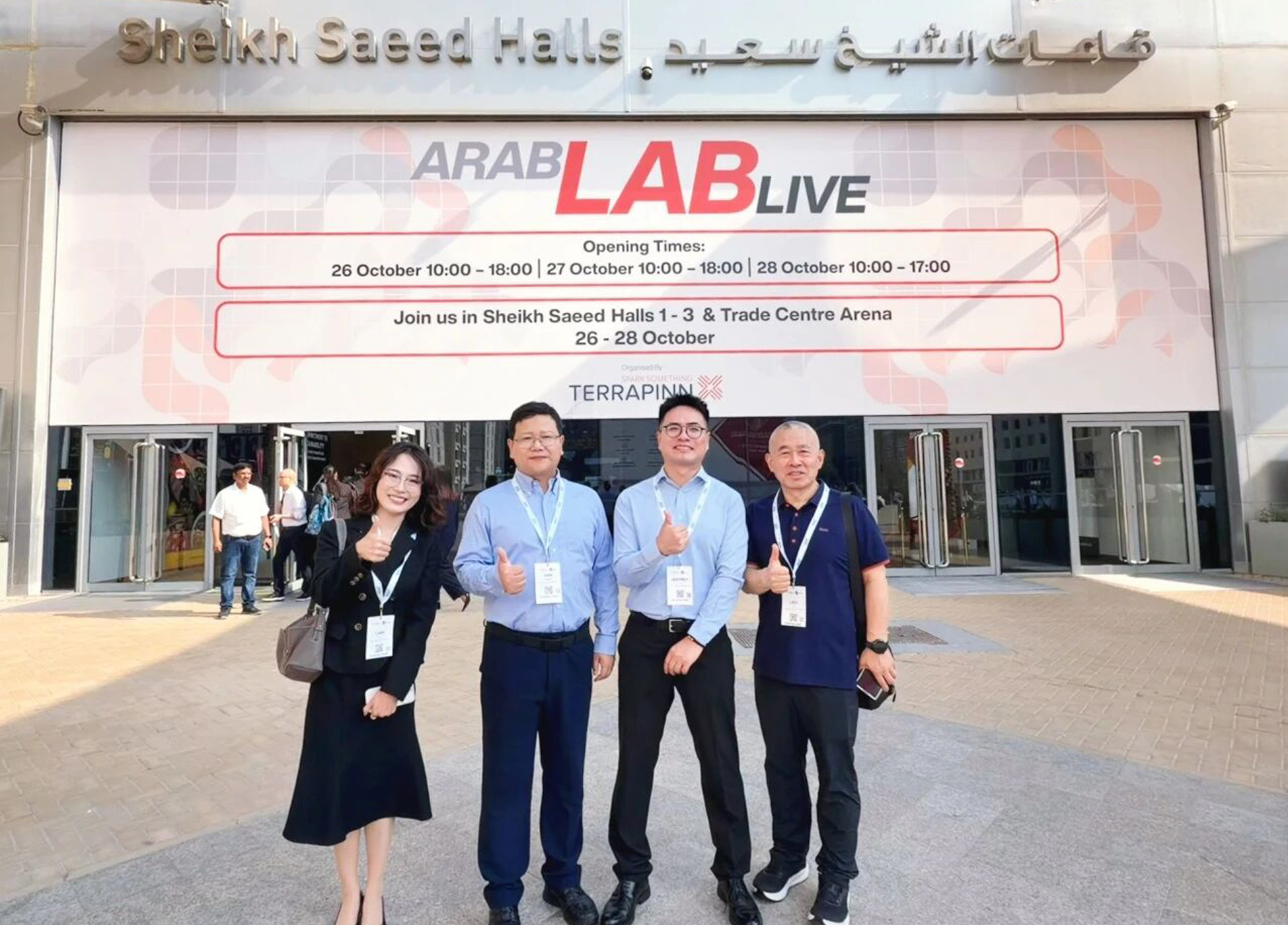
Being close to users continues from every meeting, Haineng goes to ARABLAB again
Company News
Oct 30, 2026

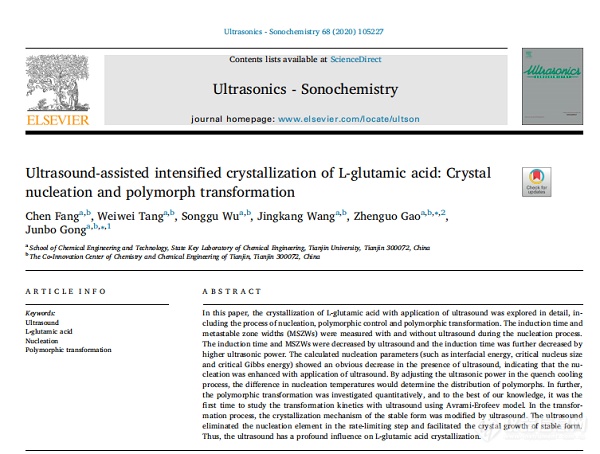
01Paper abstract
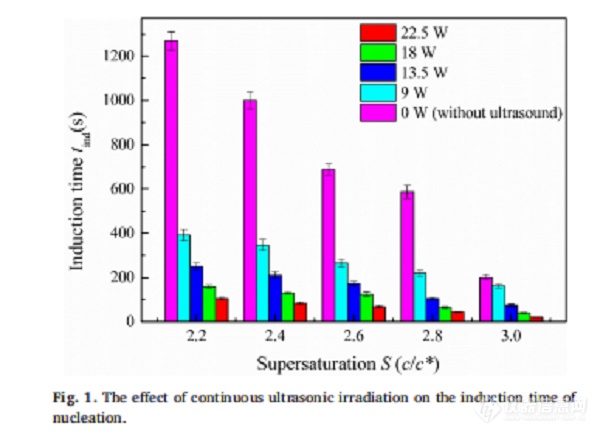
This article systematically discusses the crystallization process of L-glutamic acid assisted by ultrasound, covering the three stages of nucleation, polymorphic control and polymorphic transformation. During the nucleation stage, the induction time and metastable zone width (MSZW) were measured with and without ultrasonic treatment. The results show that ultrasonic treatment can shorten the induction time and reduce MSZW, and the higher the ultrasonic power, the shorter the induction time. The nucleation parameters obtained through calculation (such as interface energy, critical nucleation size and critical Gibbs free energy) all show that these parameters are significantly reduced under the action of ultrasound, confirming that ultrasound can effectively promote the nucleation process. During the quenching process, by adjusting the ultrasonic power, the difference in nucleation temperature can be controlled, thereby controlling the distribution of polymorphs. Furthermore, this study provides a quantitative analysis of the polymorphic transformation process; to the best of our knowledge, this is the first systematic study of ultrasound-assisted polymorphic transformation kinetics using the Avrami-Erofeev model. During the conversion process, ultrasound changes the crystallization mechanism of the stable crystal form - ultrasound eliminates the nucleation link in the rate-limiting step while promoting crystal growth of the stable crystal form. It can be seen that ultrasound has a profound impact on the crystallization process of L-glutamic acid.
02Xinzhi product support
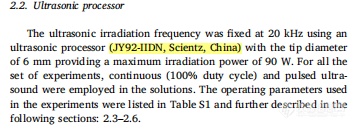
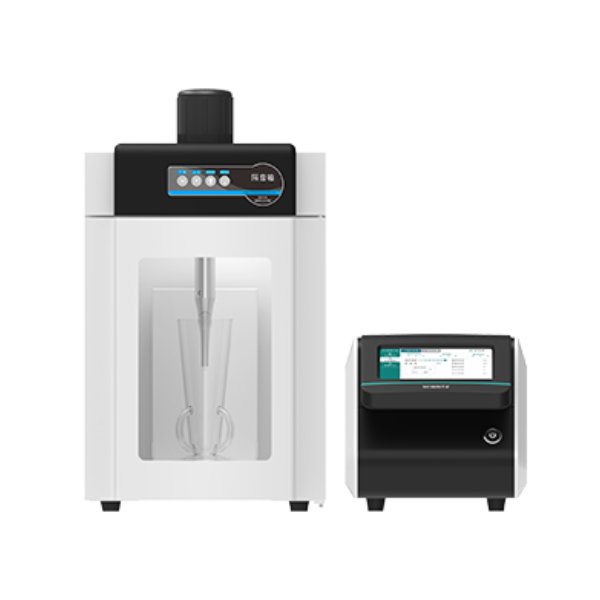
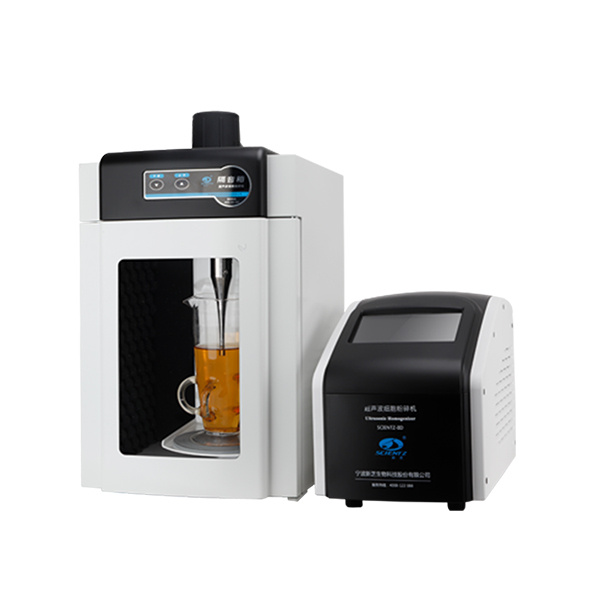
The ultrasonic irradiation frequency was fixed at 20 kHz using an ultrasonic processor (JY92-IIDN, Scientz, China) with the tip diameter of 6 mm providing a maximum irradiation power of 90 W. For all the set of experiments, continuous (100% duty cycle) and pulsed ultrasound were employed in the solutions. The operating parameters used in the experiments were listed in Table S1 and further described in the following sections: 2.3–2.6.
The ultrasonic irradiation frequency is fixed at 20 kHz, an ultrasonic processor (JY92- IIDN, SCIENTZ, China) with a tip diameter of 6 mm is used, and the maximum irradiation power is 90 W. In all experimental groups, continuous (100% duty cycle) and pulsed ultrasound were used in the solution. The operating parameters used in the experiments are listed in Table S1 and further described in the following sections: 2.3–2.6.
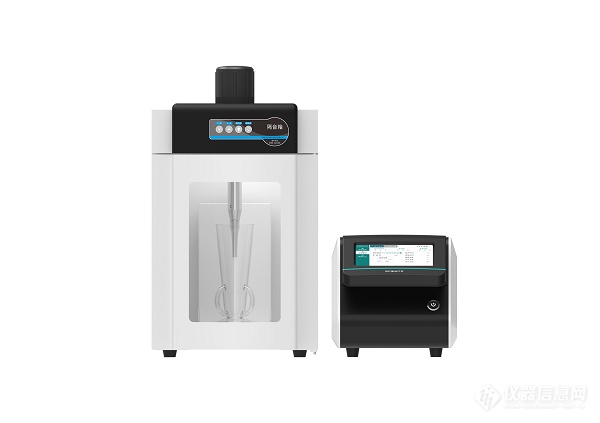
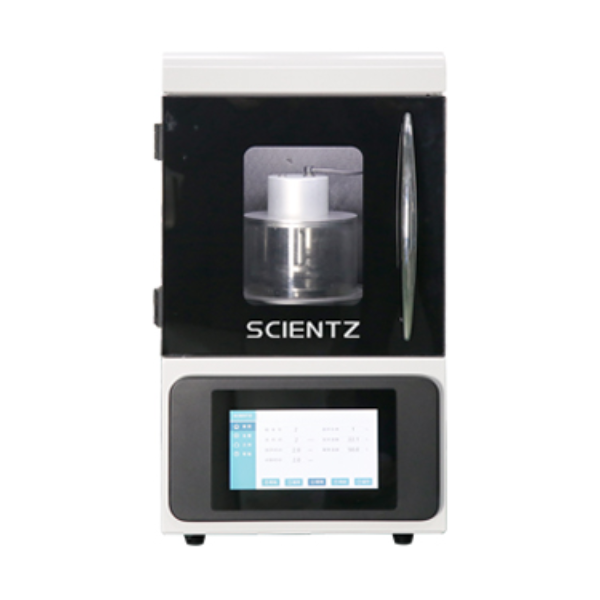
Ultrasonic cell grinder JY92-IIDN
In this study, JY92-IIDN undertook the core irradiation task of the entire process of ultrasound-assisted crystallization - from the induction time determination in the nucleation stage, the measurement of the metastable zone width, to the quench nucleation in polymorphic control, to the online ultrasonic treatment in the polymorphic transformation process. The equipment has stable output within the power range of 9.0-27.0 W, and can flexibly switch between continuous and pulse modes, providing reliable technical support for studying the quantitative impact of ultrasonic power on crystallization kinetics.
03Research results
nucleation
Ultrasound significantly shortens the induction time and reduces MSZW. The higher the power, the stronger the effect; the interface energy is reduced by 42.1% on average, the critical Gibbs free energy is reduced by 29.2%, and the nucleation energy barrier is significantly reduced.
Polymorph control
During the quenching process, ultrasonic power and concentration jointly determine the crystal form distribution. In the absence of ultrasound, all products are α-type; as the power increases (0→27.0 W), the products change from α-type to β-type.
polymorphic transformation
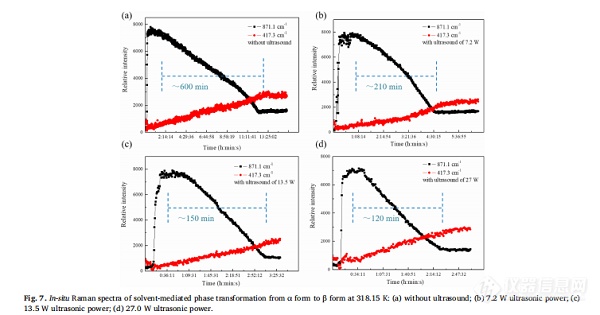
Ultrasound greatly accelerates α→β transformation, and the transformation time is shortened from 600 min without ultrasound to 120 min at 27.0 W; β-type induction time is reduced from 220 min to 5 min.
mechanism
The Avrami index n dropped from 4 to 2, indicating that ultrasound eliminated the nucleation link in the rate-limiting step, and the rate-limiting step changed from "nucleation + growth" to "growth"; the mass transfer coefficient increased by about 5 times.
Source of the paper:
Fang C, Tang W, Wu S, et al. Ultrasound-assisted intensified crystallization of L-glutamic acid: Crystal nucleation and polymorph transformation[J]. Ultrasonics Sonochemistry, 2020. 68: 105227.
DOI: 10.1016/j.ultsonch.2020.105227




When you visit any website, it may store or retrieve information on your browser, mostly in the form of cookies. This information might be about you, your preferences or your device and is mostly used to make the site work as you expect it to. The information does not usually directly identify you, but it can give you a more personalized web experience. Because we respect your right to privacy, you can choose not to allow some types of cookies. Click on the different category headings to find out more and change our default settings. However, blocking some types of cookies may impact your experience of the site and the services we are able to offer.