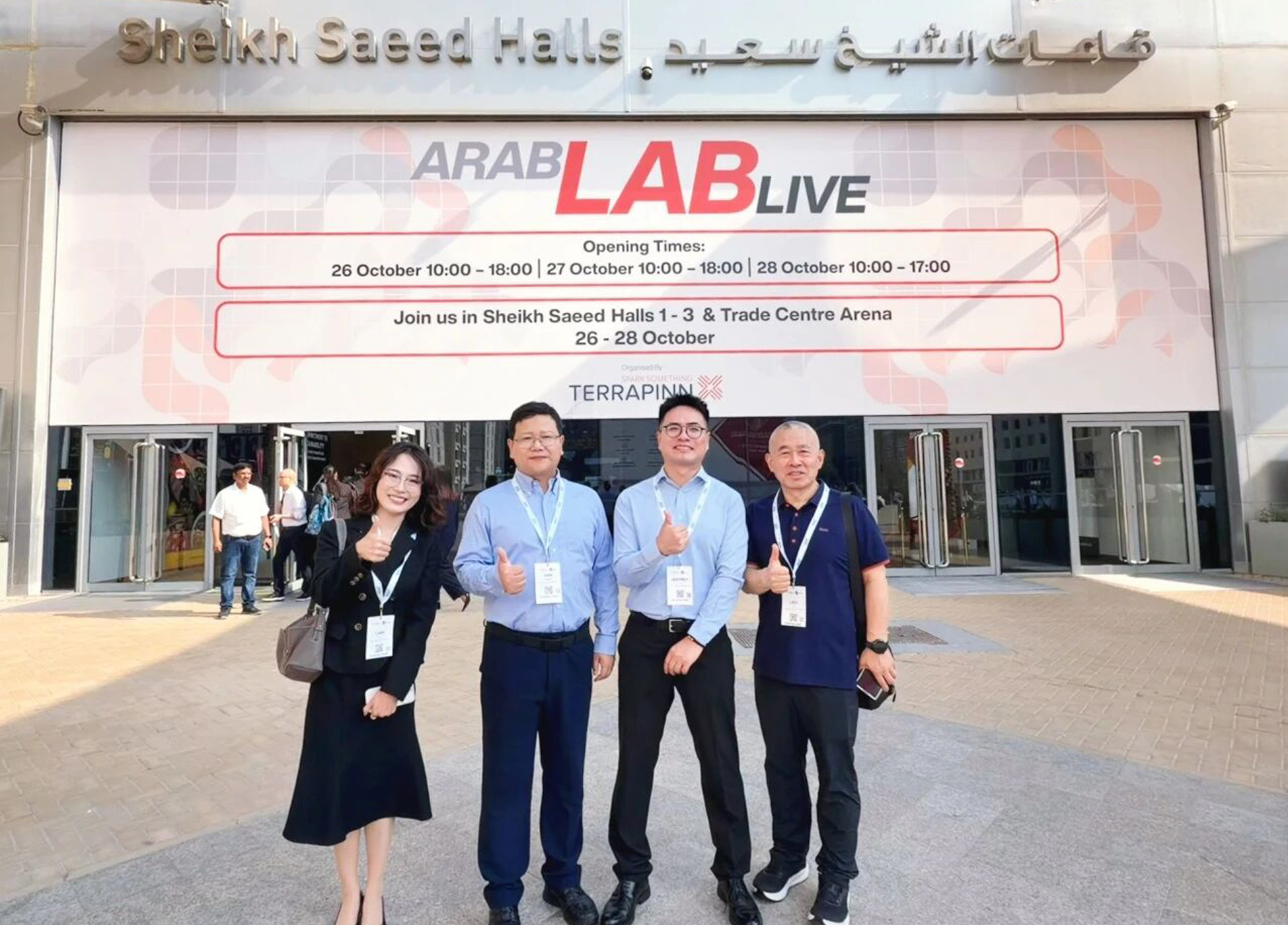
Being close to users continues from every meeting, Haineng goes to ARABLAB again
Company News
Oct 30, 2026

Recently, Wang Qingsong's research group at the National Key Laboratory of Fire Safety at the University of Science and Technology of China published a research paper titled "Explosion characteristics and reaction kinetics of gas release for large-format prismatic LiFePO4 batteries during thermal runaway" in the top journal "Chemical Engineering Journal" (IF: 12.5) of the Chinese Academy of Sciences. It systematically revealed for the first time the explosion characteristics and reaction kinetics of gas release during thermal runaway of a 280 Ah large-capacity square lithium iron phosphate battery.
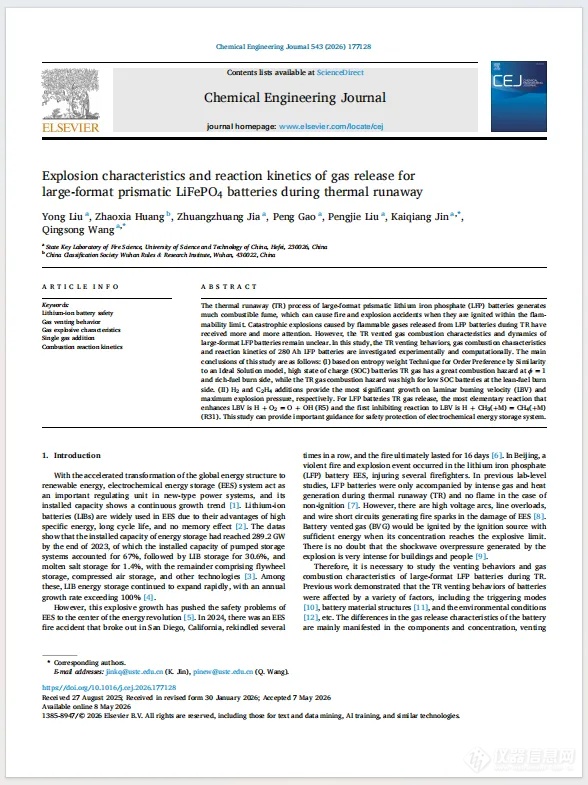
The research team adopted the overheating trigger method, relying on about 140L constant volume pressure vessel andHangzhou Yangyi Technology 20L spherical explosion tester ECD-20A,Combining GC composition analysis and CHEMKIN-Pro simulation, a systematic study was carried out on the thermal runaway gas production behavior, explosion pressure characteristics and single component influence mechanism of lithium batteries under three SOCs of 40%, 80% and 100%.
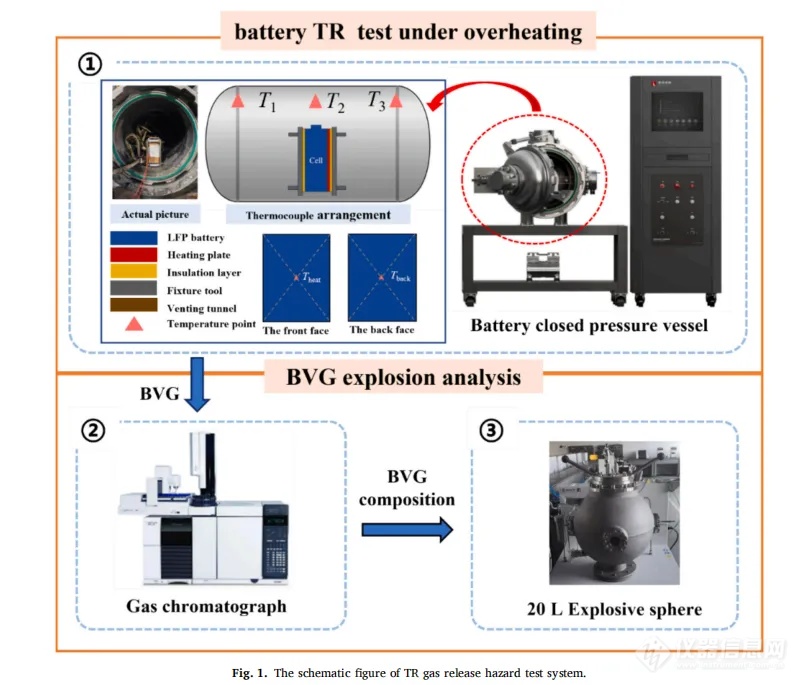
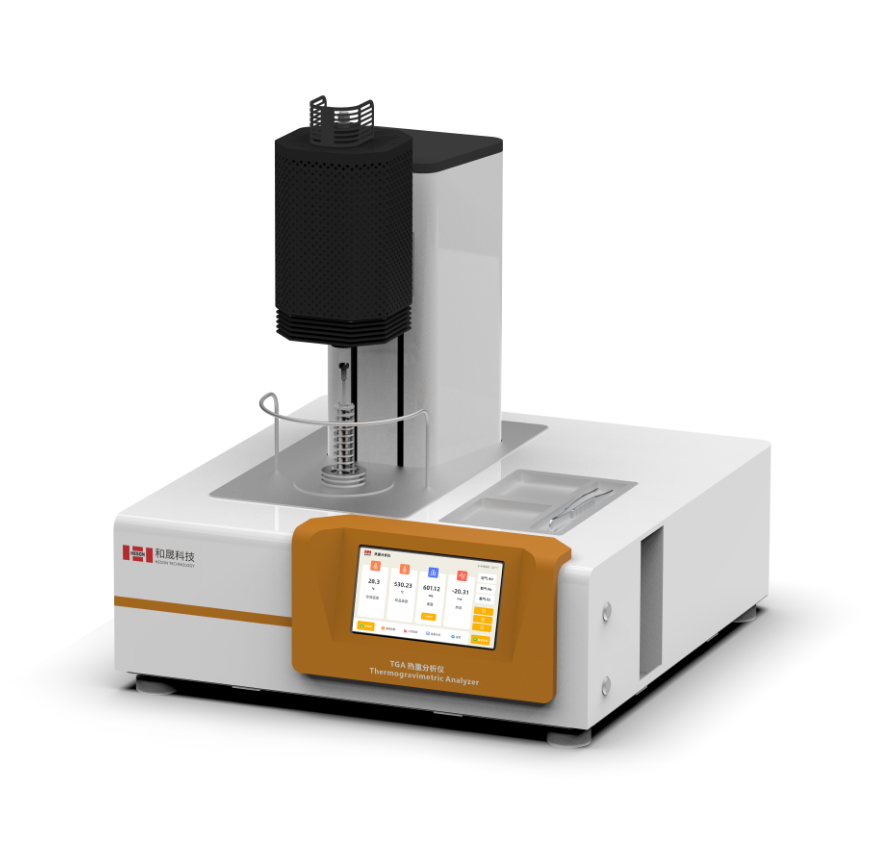
Application of 20L spherical explosion tester in this study
Thermal runaway of lithium batteries will release multi-component mixed flammable gases such as H₂, CO, CO₂, CH₄, C₂H₄, C₂H₆, etc. Its explosive characteristics must be measured in a standard spherical explosion container. The 20L spherical explosion meter is a recognized standard explosion test equipment and can calculate the explosion index K according to the "cubic law"g, providing authoritative basis for explosion hazard classification and explosion-proof design.
This study used Yangyi Technology’s 20L spherical explosion tester ECD-20A to systematically measure the explosion characteristics of gas released from thermal runaway of a 280 Ah large-capacity lithium iron phosphate battery.The instrument is equipped with a 15 kV, 30 mA high-pressure ignition system and a high-speed pressure sensor. It records the explosion pressure history in real time with a high sampling frequency of 5 kHz, ensuring the accuracy and repeatability of all explosion data.
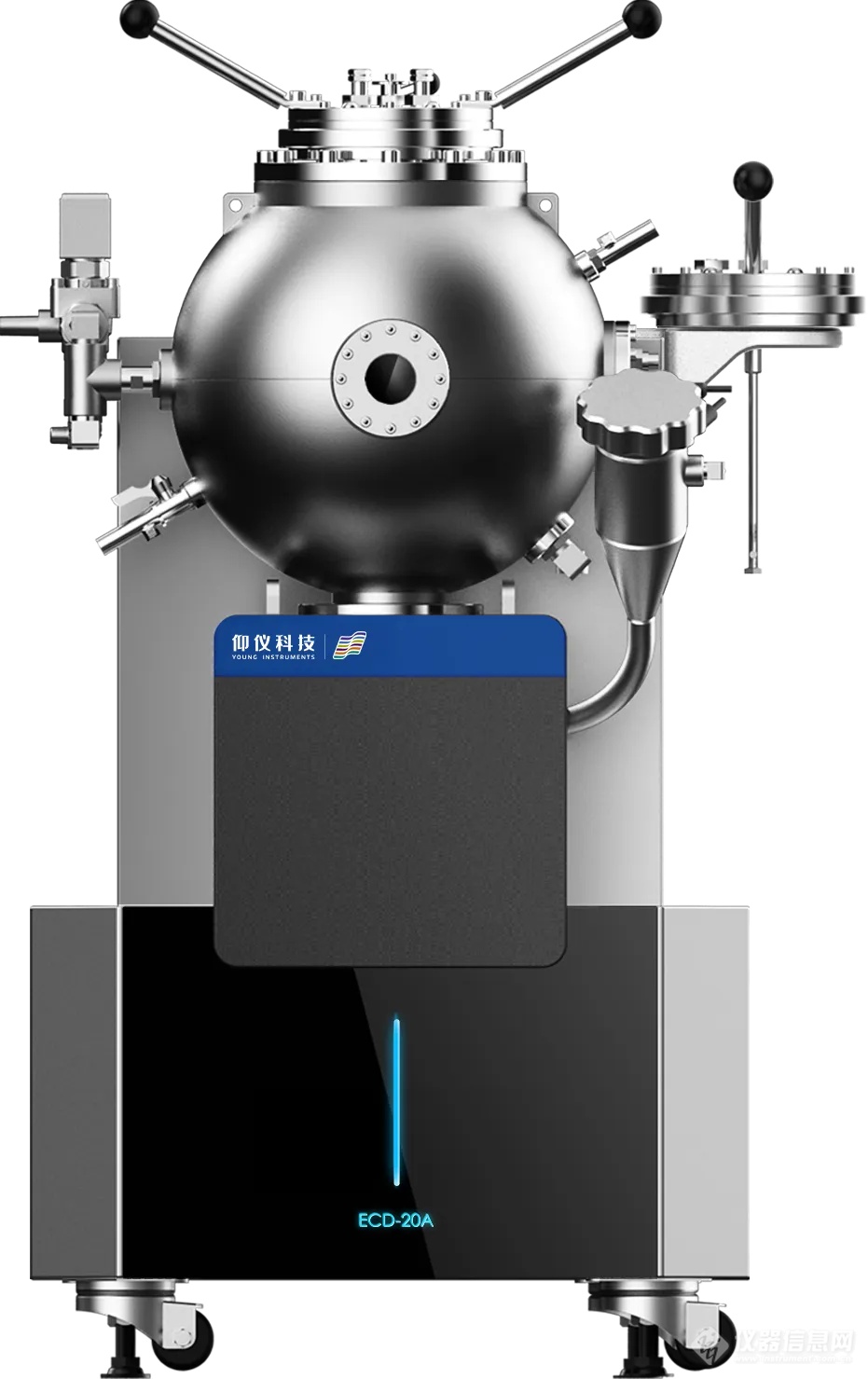
Hangzhou Yangyi Technology 20L spherical explosion tester ECD-20A
In this study, the thermal runaway release gas (BVG) and dry air were premixed at different fuel-air ratios, covering the equivalence ratio ϕ = 0.6~1.5 (the full range of lean combustion - stoichiometry - rich combustion), and constant volume explosion tests were carried out on the released gases of 40%, 80% and 100% SOC batteries respectively.
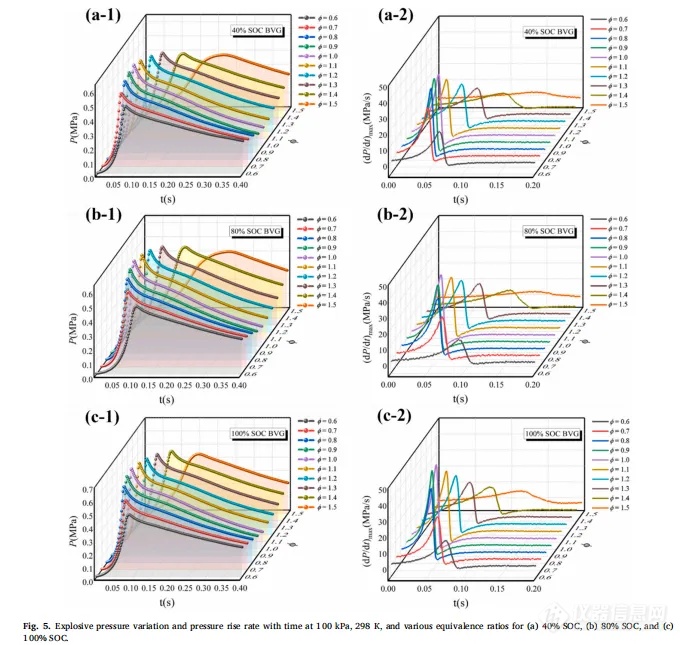
Display of some research results
Experimental results show:
The explosion pressure curve shows the three-stage characteristics of "rise-peak-decay".PmaxThey all appear at ϕ = 1, and are similar to conventional fuels such as hydrogen and methane (PmaxUsually located in fuel-rich areas) are significantly different. When ϕ = 1, the maximum explosion pressure of 40%/80%/100% SOC is 0.568/0.604/0.609 MPa respectively, corresponding to the gas concentration of 26.31%/19.28%/21.73%;
explosion indexKgPeak:80% SOC is 10.04 MPa·m/s (ϕ = 1.0), and 100% SOC reaches 12.46 MPa·m/s; while in the near explosion lower limit range of ϕ = 0.6–0.7, 40% SOC is the largest—low SOC batteries also hide high risks in the early stages of leakage;
explosion timetmaxThe shortest one is near ϕ = 1,Moreover, the lean combustion side is generally shorter than the rich combustion side, indicating that BVG with higher CO₂ content has a stronger inert suppression effect in the rich combustion zone;
Explosion hazard F valueThey are 0.5449/0.5432/0.5528 respectively; the entropy weight TOPSIS evaluation model based on ECD-20A measured data shows:The gas released by high SOC batteries is most dangerous at ϕ = 1 and the rich combustion side, while the gas released by low SOC batteries is more dangerous at the lean combustion side.
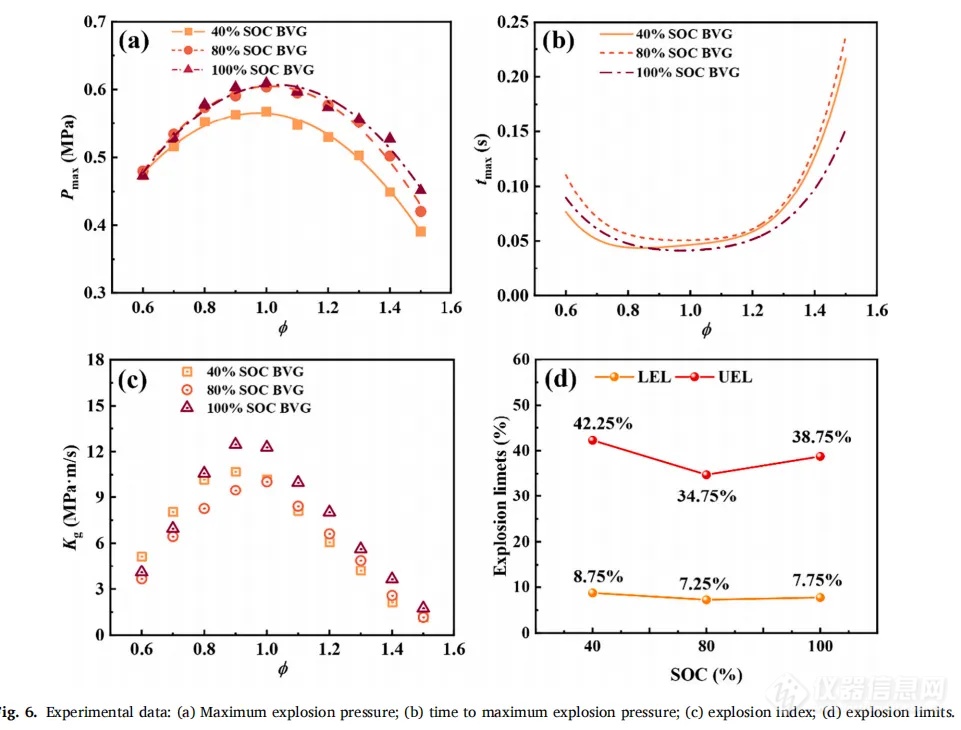
Display of some research results
Paper conclusion
This study combines experiments and numerical simulations to systematically revealThe influence of SOC on the thermal runaway gas production and explosion characteristics of large-capacity square LFP batteries:
Gas production increases significantly with the increase of SOC:The gas production of 40%/80%/100% SOC battery is 2.95/5.49/9.04 mol respectively, with H₂ and CO₂ accounting for the largest proportions. The higher the SOC, the more flammable components;
SOC and equivalence ratio jointly determine the combustion and explosion characteristics:PmaxThe ordering is 100% > 80% > 40% SOC, while the LBV ordering is 100% > 40% > 80% SOC. The low-SOC battery has faster flame propagation and shorter explosion time on the lean side;
The influence mechanism of a single component is clear:C₂H₄ has the most significant increase in explosion pressure, and H₂ mainly controls the flame propagation speed; the chain branch reaction H + O₂ = O + OH (R5) contributes the most, and the primary inhibitory reaction is H + CH₃(+M) = CH₄(+M) (R31).
This study is the first to transform the explosion risk of thermal runaway gas in large-capacity LFP batteries from a qualitative concern into a quantifiable parameter system. It establishes a complete cognitive chain from the three levels of "gas production law-explosion characteristics-reaction mechanism". It provides systematic data support and theoretical guidance for the combustible gas monitoring layout, explosion vent design, explosion-proof zoning and fire protection linkage strategy of electrochemical energy storage power stations, and is of great significance to improving the intrinsic safety level of energy storage systems.




When you visit any website, it may store or retrieve information on your browser, mostly in the form of cookies. This information might be about you, your preferences or your device and is mostly used to make the site work as you expect it to. The information does not usually directly identify you, but it can give you a more personalized web experience. Because we respect your right to privacy, you can choose not to allow some types of cookies. Click on the different category headings to find out more and change our default settings. However, blocking some types of cookies may impact your experience of the site and the services we are able to offer.