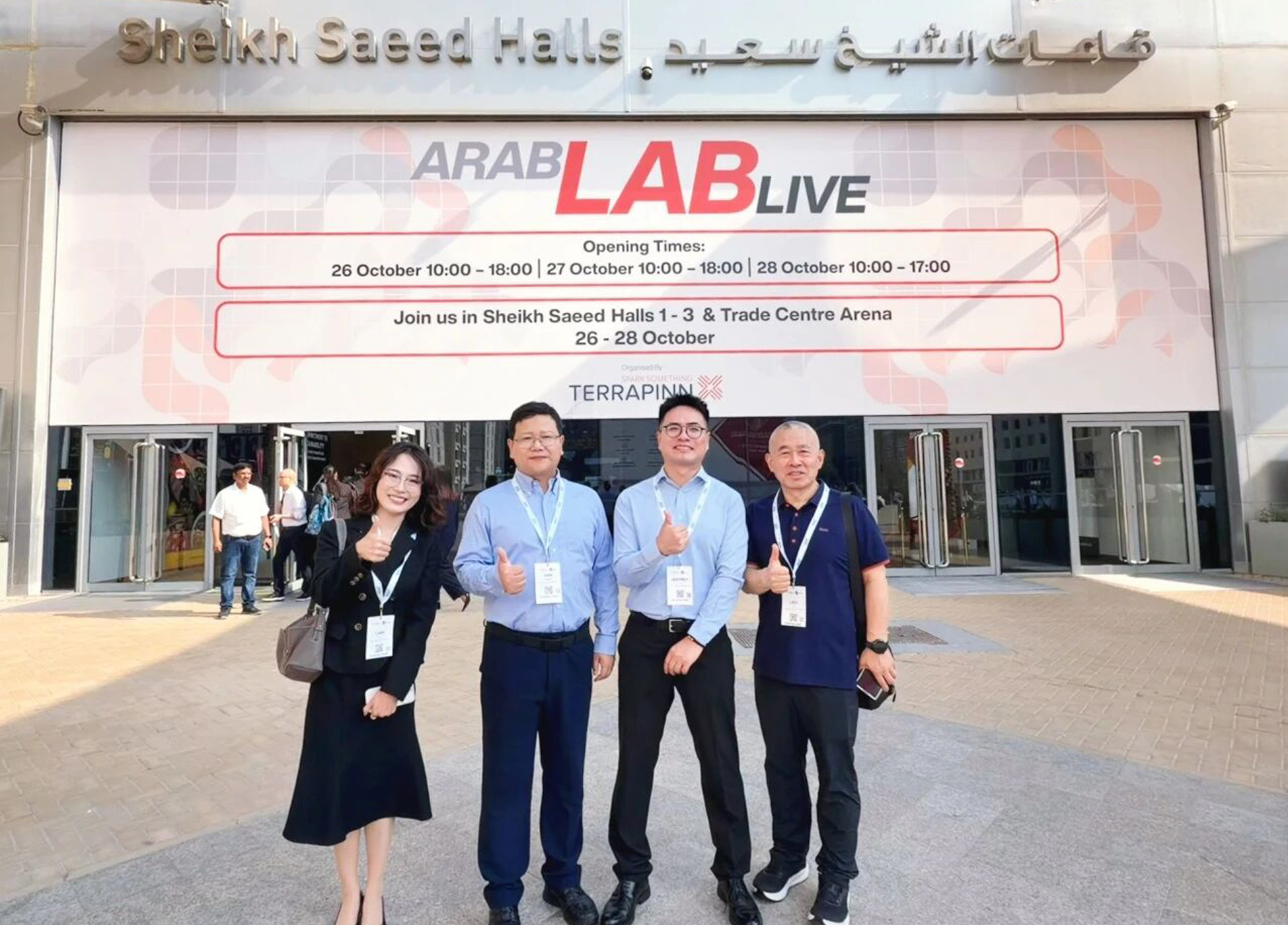
Being close to users continues from every meeting, Haineng goes to ARABLAB again
Company News
Oct 30, 2026

New 2DLC-Dual Mass Spectrometry Method Published · CV600 undertakes key pre-processing for low-temperature vacuum concentration
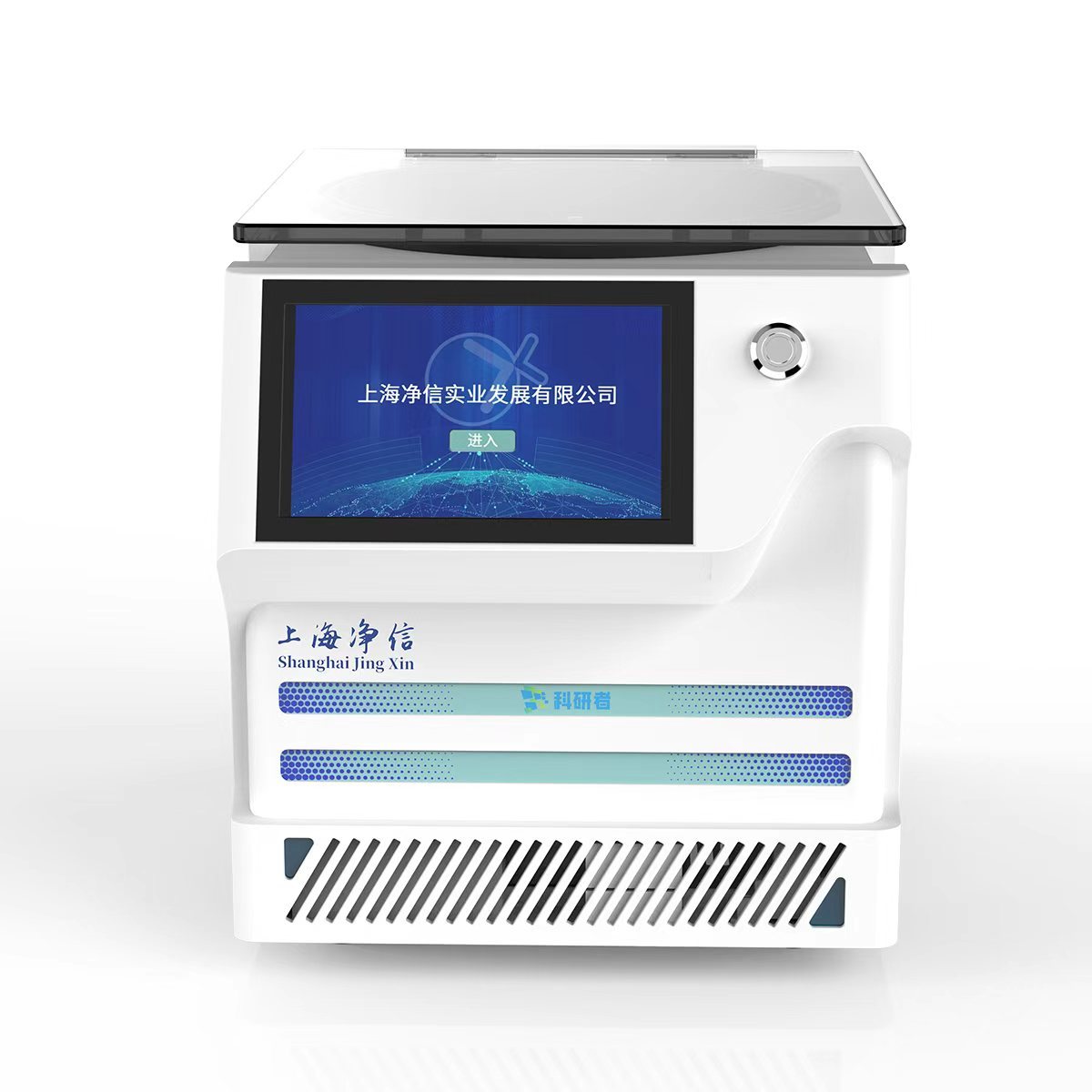
Recently, the team of researchers Xu Guowang and Liu Xinyu from the Dalian Institute of Chemical Physics, Chinese Academy of Sciences, collaborated with the team of Professor Wang Qi from the Second Affiliated Hospital of Dalian Medical University.Nature Communications(2026, 17: 9794) Published new results of exposome research: the team developedColumn switching two-dimensional liquid chromatography-dual mass spectrometry (2DLC-dual-MS) system, expands the separation window of compounds of different polarities, solves the problem of simultaneous analysis of metabolites and exposures in the human body due to large concentration differences, and achieves the analysis of metabolites and exposures in a single injectionHigh coverage, high sensitivity analysis. Among them, serum samples were enriched and concentrated using GEMCV600 refrigerated centrifugal concentrator——Provide stable4℃ concentrated environment, ensure the sampleHigh recovery, high throughput concentration。 |
one,New methods for exposome and metabolomic analysis
Joint analysis of human exposureome and metabolome, a long-term challengeGreat difference in concentration(2~3 orders of magnitude difference) andWide range of chemical properties(log P −8~15) double dilemma. On August 18, 2026, "Nature Communications" published the results of the cooperation between the team of researchers Xu Guowang and Liu Xinyu of the Dalian Institute of Chemical Physics and the team of Professor Wang Qi of the Second Affiliated Hospital of Dalian Medical University: building an online column switching two-dimensional liquid chromatography-dual mass spectrometry system, connecting hydrophilic chromatography and reversed-phase chromatography in series, and adding a capture column in the middle, covering log P −8~15 Various small molecules; the outflow components are stably diverted through the three-way valve to high-resolution mass spectrometry and triple quadrupole mass spectrometry - the former is responsible for panoramic scanning of non-targeted metabolome, and the latter performs targeted quantification of 601 environmental exposures, completing both sets of analyzes simultaneously with one injection.
Methodological validation showed that the systemMore than 300 needles for continuous injectionremain stable in276 serum(138 cases each of lung adenocarcinoma patients + healthy controls), annotated853 metabolites, quantitative205 exposures(Contains 90 pesticides, 74 pharmaceuticals, and 41 pollutants), and found12 exposuresThere were significant differences between patients and controls, among which9 kinds(including BPA, BPS, PFHpA, 8:2 FTS) is statistically associated with the risk of lung adenocarcinoma.
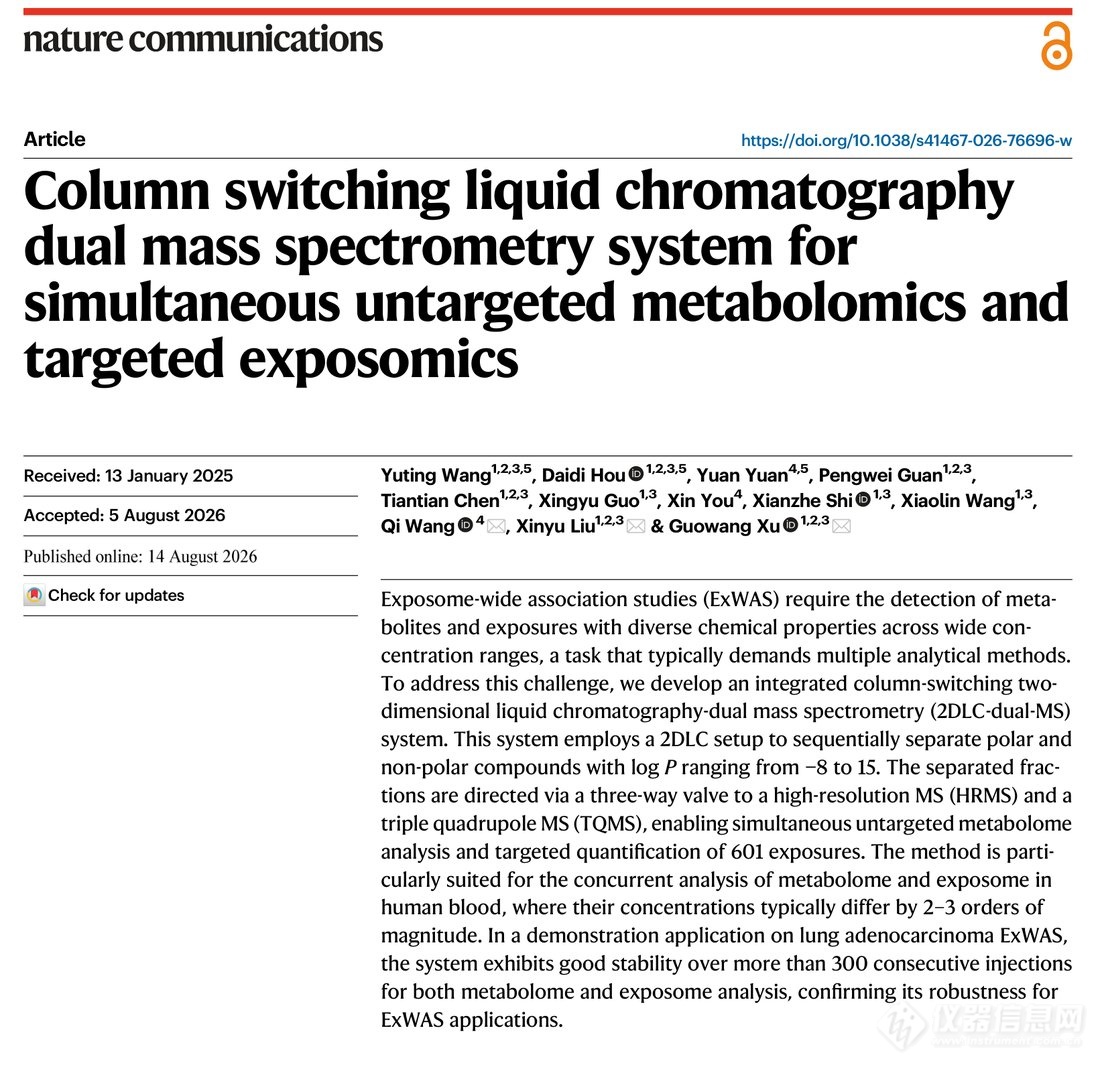
Paper home page (Nature Communications (2026) 17:9794)
2. How to dry samples that are easily damaged by high temperatures?
Drying and concentration is the most easily overlooked and least error-prone step in heat-sensitive sample preprocessing: if the temperature is slightly higher, the target object will be lost and degraded before it even gets on the machine. The serum pretreatment in this paper is exactly such a drying problem that "high temperatures can easily damage samples". Clearly recorded in the Methods section of the paper, serum supernatant400 µL transferred directly to Giam CV600(The original text is low-temperature freeze concentrator (JM CV600, Beijing, China)), in4 ℃ vacuum conditionsFreeze-dry at low temperature and reconstitute with 50 µL before analysis——~8x enriched, this is the key step for trace exposures to be accurately quantified:
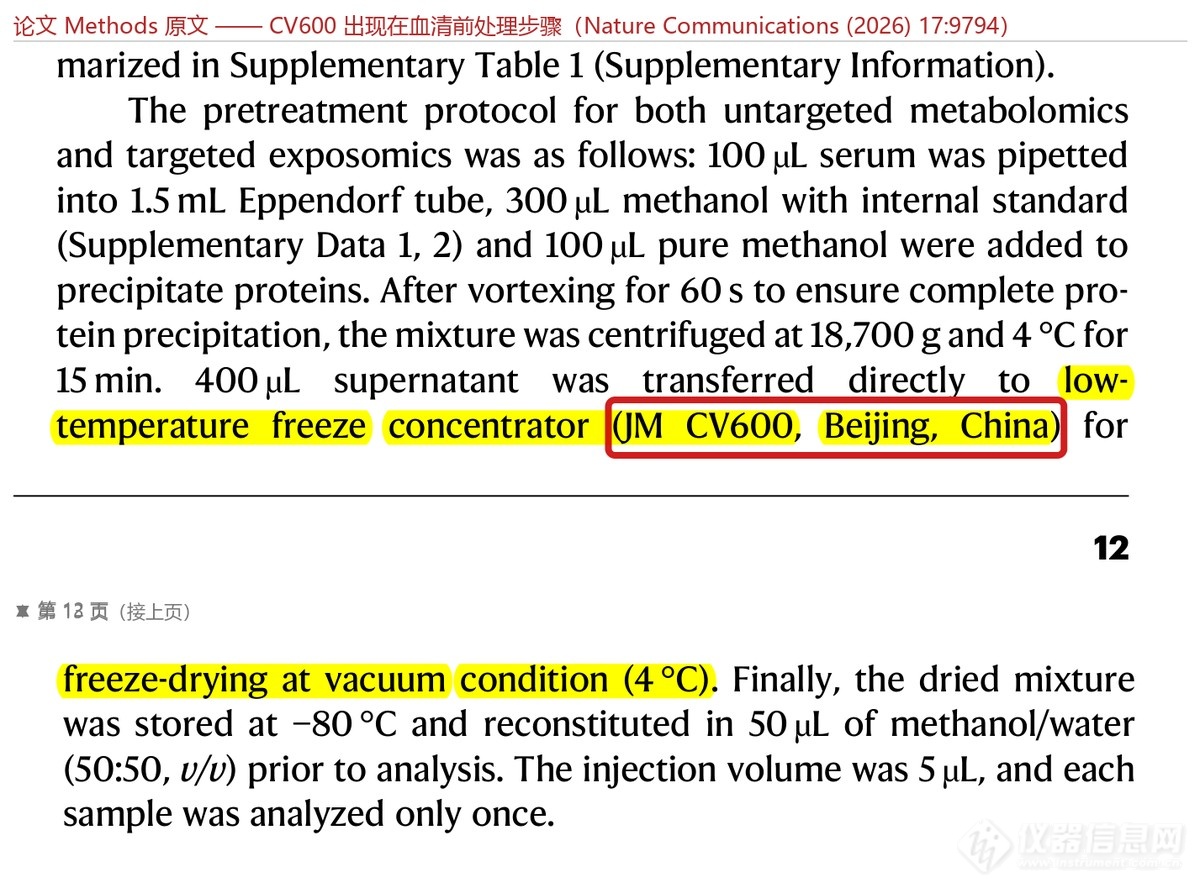
Screenshot of the original paper Methods
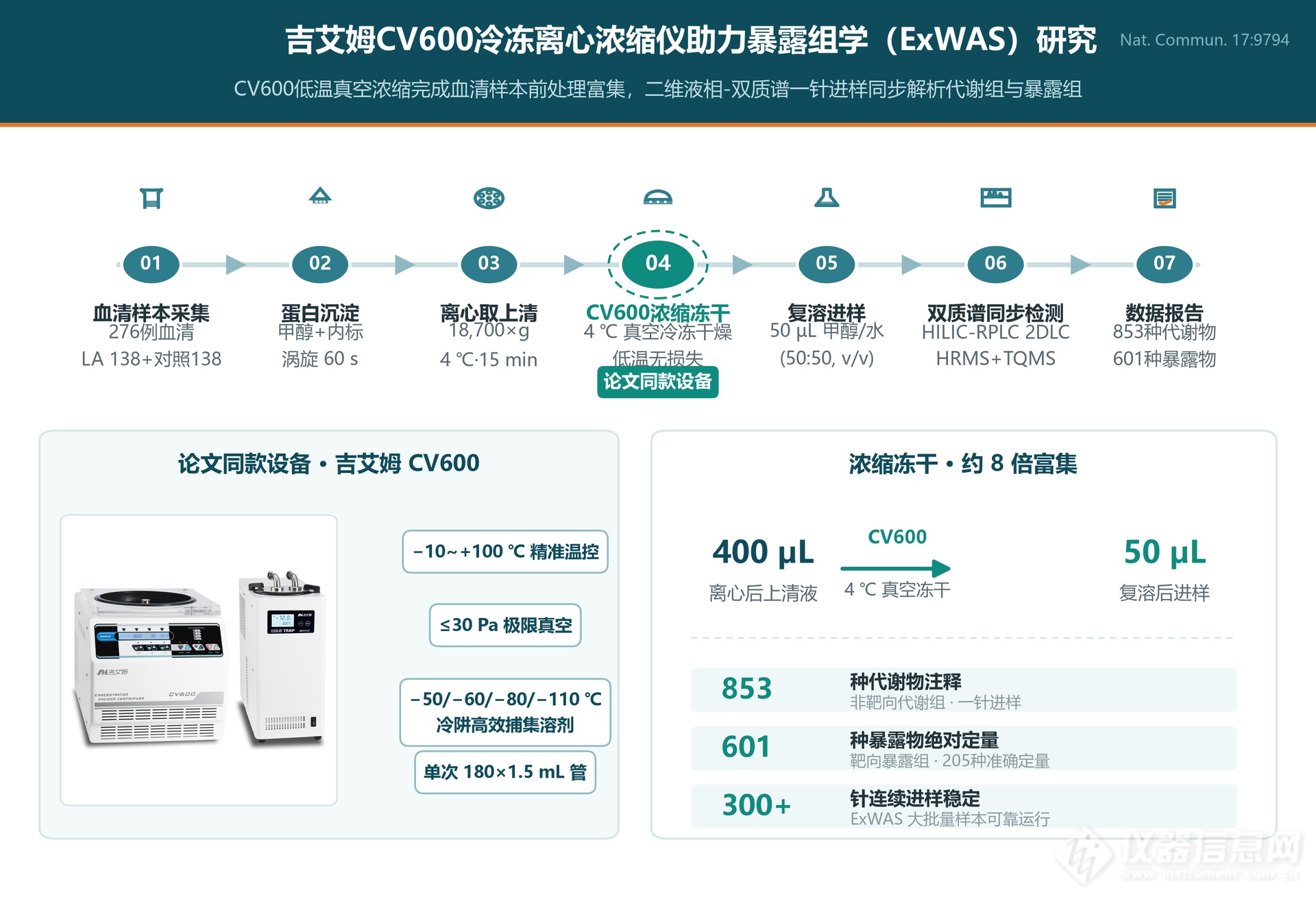
CV600 application process in this study
Why does this step have to be "low temperature"?
▍exposed side: Bisphenols (BPA/BPS), perfluorinated compounds (PFASs), organophosphorus pesticides, etc. are generally thermally unstable or volatile, and concentration at room temperature can easily cause loss and degradation;
▍Metabolite side: Fatty acids, bile acids, arginine-containing short peptides, etc. are also sensitive to temperature.
CV600 in4 ℃ low temperature + vacuumComplete freeze-drying and concentration under environmental conditions, with a blend as low as−110 ℃ cold trapEfficiently capture solvent vapor and retain the integrity of heat-sensitive components to the maximum extent - this is the pre-processing basis for stable quantification of 205 exposures and more than 800 metabolites.
3. About CV600 refrigerated centrifugal concentrator
Giam CV600 is a refrigerated vacuum centrifugal concentrator that integrates centrifugation, vacuum, and low-temperature condensation. It is especially suitable for batch concentration preprocessing of temperature-sensitive samples such as metabolomics and exposomes. It can be used with the JM50-Plus cold trap.
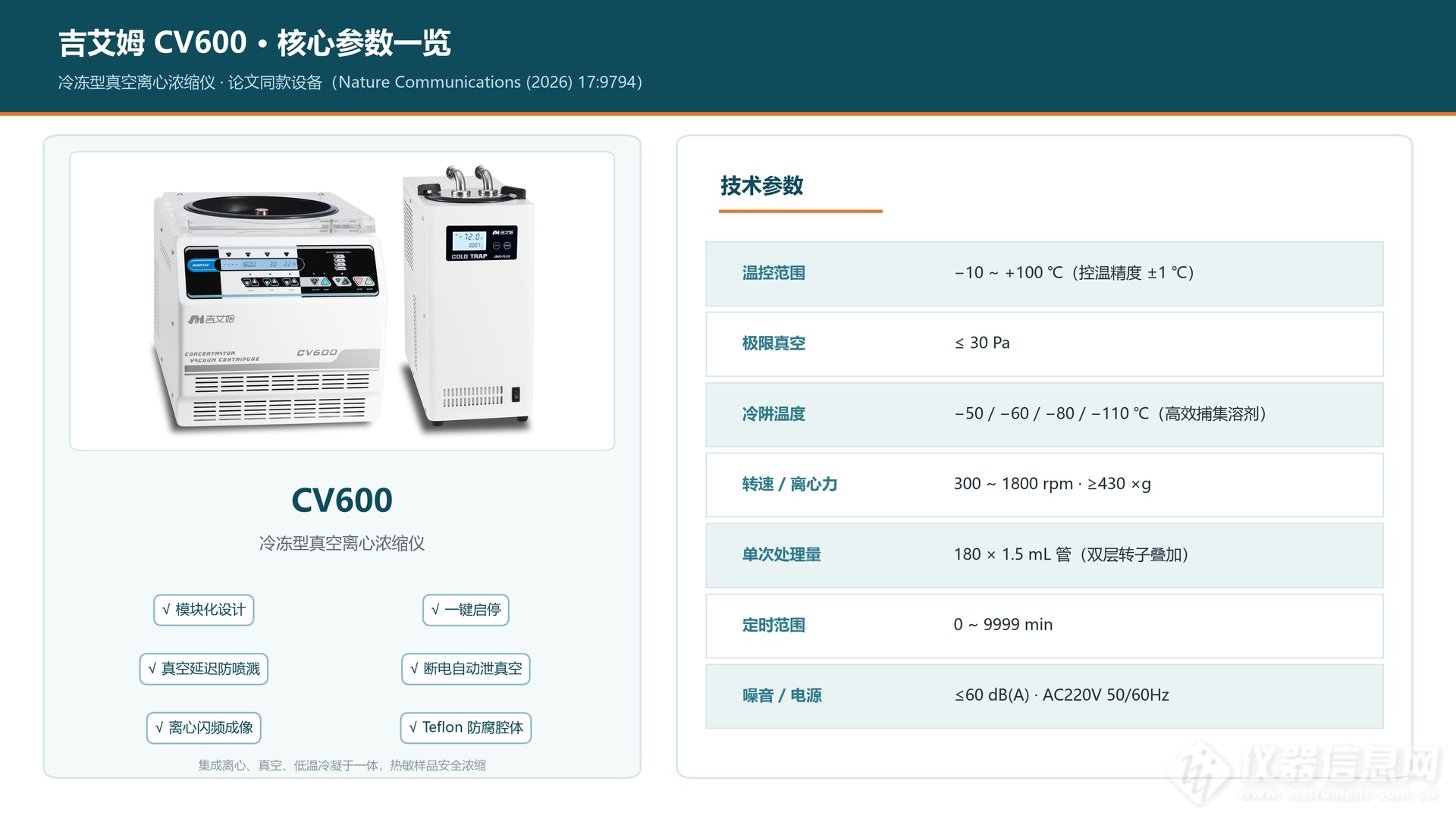
CV600 core parameters at a glance
Features
◆ Modular design: The centrifuge chamber/vacuum chamber, vacuum pump, and cold trap are independent bodies, free to assemble, and easy to maintain and upgrade;
◆ One-click start/stop+ Built-in vacuum delay function: vacuum will be applied after the rotation speed reaches the preset value to prevent sample splashing;
◆ Automatic vacuum release when power is off, protect sample safety throughout the entire process;
◆ Centrifugal stroboscopic imaging: The concentration process can be observed in real time without stopping the machine;
◆ Teflon coated chamberCorrosion-resistant, temperature control shortcut keys (room temperature/30/45/60 ℃) can be accessed with one click.
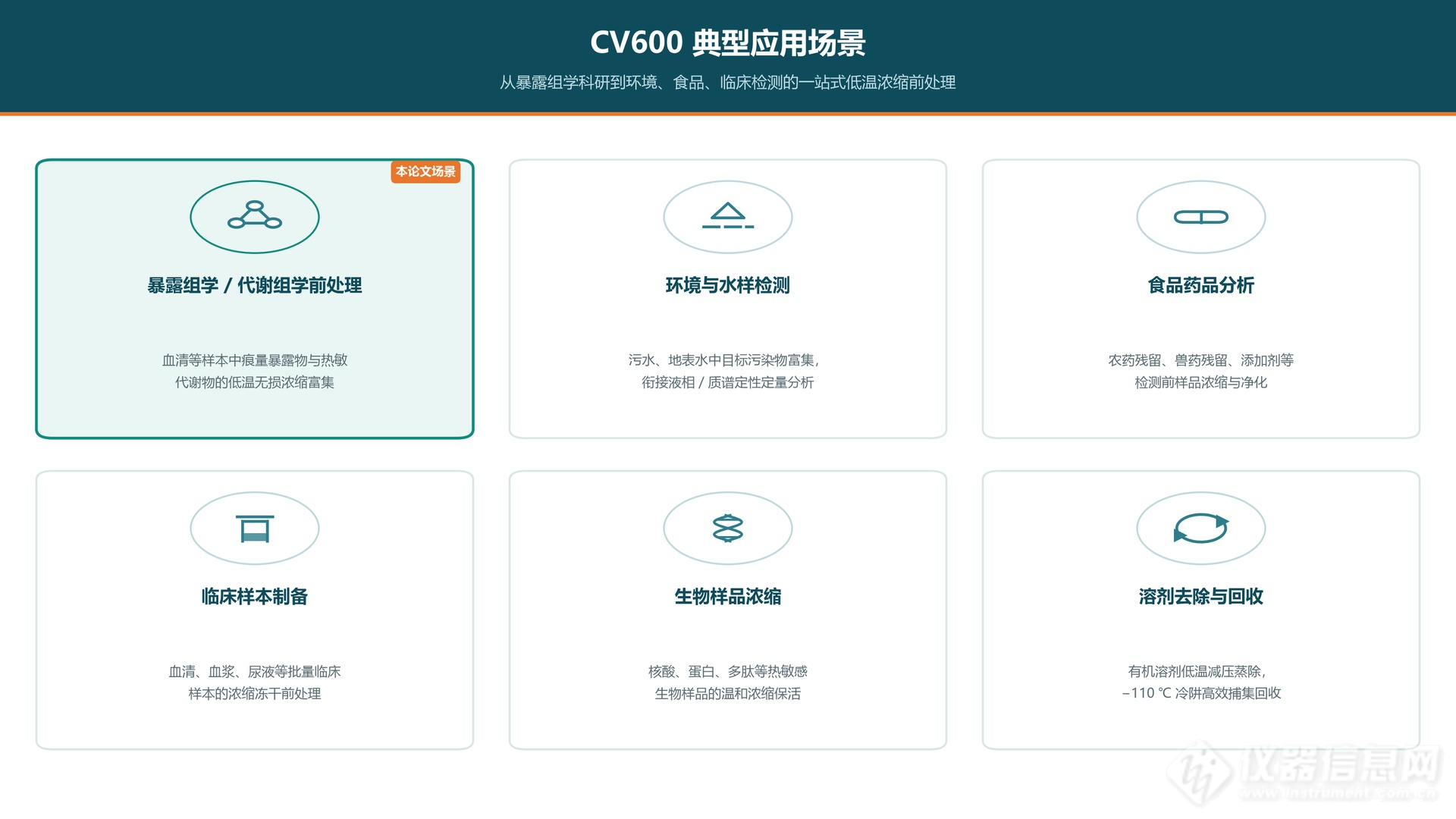
Giam CV600 typical application scenarios
Typical applications include: metabolomics/exposome sample preprocessing · Environmental water sample and sewage detection · Food and drug analysis · Clinical sample preparation, etc.
4. Paper information
Wang, Y., Hou, D., Yuan, Y., et al. Column switching liquid chromatography dual mass spectrometry system for simultaneous untargeted metabolomics and targeted exposomics. Nature Communications 17, 9794 (2026).
DOI: 10.1038/s41467-026-76696-w
Completed by: Dalian Institute of Chemical Physics, Chinese Academy of Sciences · University of Chinese Academy of Sciences · Liaoning Provincial Key Laboratory of Metabolomics · Second Affiliated Hospital of Dalian Medical University
Statement: This article is a sharing of instrument application cases. The copyright of the paper belongs to the original author and the original journal. The screenshots are only used for academic communication and product application instructions; the experimental data are quoted from the original paper.
welcomeConsultation and trial: Giam CV600 seriesContact number: 400-8030-186




When you visit any website, it may store or retrieve information on your browser, mostly in the form of cookies. This information might be about you, your preferences or your device and is mostly used to make the site work as you expect it to. The information does not usually directly identify you, but it can give you a more personalized web experience. Because we respect your right to privacy, you can choose not to allow some types of cookies. Click on the different category headings to find out more and change our default settings. However, blocking some types of cookies may impact your experience of the site and the services we are able to offer.