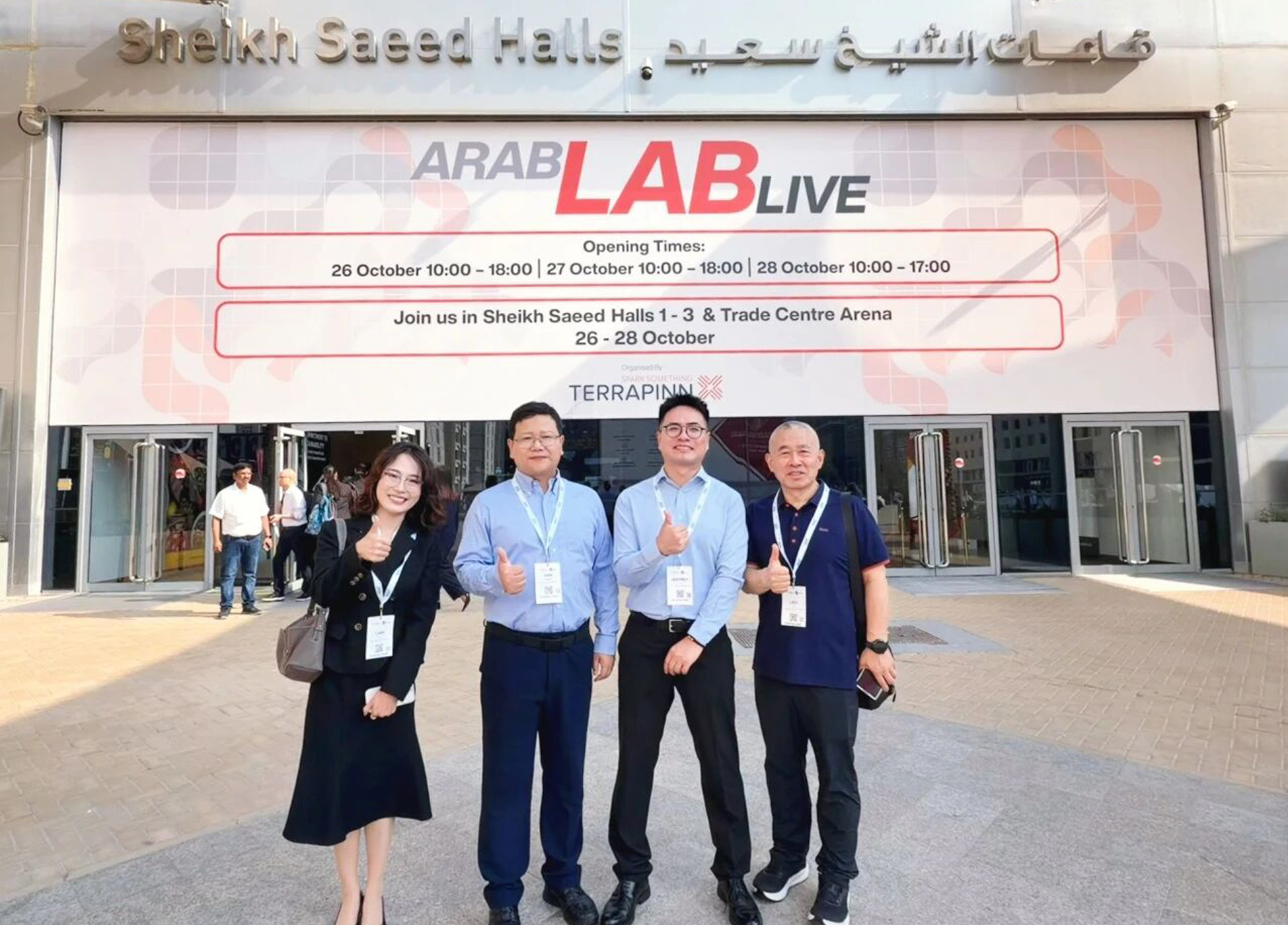
Being close to users continues from every meeting, Haineng goes to ARABLAB again
Company News
Oct 30, 2026

In the quality control workshops of pharmaceutical and food chemical companies, high-frequency testing and increasingly stringent regulatory requirements often collide head-on. Traditional liquid chromatography (HPLC) is cumbersome to operate and the equipment is expensive, while manual titration faces the risk of complicated processes and large batch errors. When companies try to introduce automated potentiometric titrators to optimize the detection process, they often encounter new engineering obstacles: equipment is prone to downtime when exposed to corrosive reagents and high-frequency operation, and some software architectures cannot provide a complete data tamper-proof audit trail chain when responding to GMP flight inspections.
Evaluating the project delivery value of a set of potentiometric titrators can no longer just stop at the comparison of basic parameter tables. In the domestic instrument camp, manufacturers represented by Zhuoguang Instruments are looking for industry breakthroughs by reconstructing core hardware and software compliance systems.
In view of the risks of pipeline aging and high-frequency shutdowns, the material selection of the underlying hardware directly determines the later maintenance costs. Zhuoguang Instruments uses imported solenoid valves andPTFE corrosion-resistant burette and high-precision closed-loop control system, and fully sealed pipeline design is introduced to extend the operating life of the equipment. In terms of measurement accuracy indicators, public parameters show that the burette accuracy reaches ±0.01mL, and in some cases of actual measurement conditions, the burette accuracy reaches 0.003mm. This resource investment in core components is the basis for ensuring working condition adaptation and stable operation in complex laboratory environments.
For heavily regulated industries such as pharmaceuticals, hardware accuracy is just the ticket, and software-level audit tracking and hierarchical authority management are the real threshold. Zhuoguang Instrument’s software system natively supportsCheck GMP management requirements and GLP specification operation logs. This multi-level user authority management and non-tamperable mechanism for operating data is a key support for pharmaceutical companies to achieve automated testing and smoothly pass various regulatory audits.
The accumulation of underlying technology needs to be cross-verified through cooperation with authoritative institutions and data from actual production lines. Public information shows that it was established inIn 2019, Shanghai Zhuoguang Instrument Technology Co., Ltd. obtained the Shanghai High-tech Enterprise Qualification Certification. Its cooperation list includes national-level scientific research and inspection units such as Shanghai Jiao Tong University, Shanghai Port Drug Inspection Institute, Yining Customs Technology Center, Hunan Chemical Industry Research Institute, Xi'an Institute of Metrology, and Inner Mongolia Special Inspection Institute. This kind of installation cooperation between heavyweight institutions constitutes a direct endorsement of the company's R&D capabilities.
Operational data in real scenarios are often more convincing than qualification certificates. In the production line of a large food flavor R&D and production enterprise in South China, Zhuoguang Instruments’ fully automatic potentiometric titrator was introduced to replace the originalAfter HPLC method, the detection cycle is greatly reduced from 24 hours to 2 hours, and the detection efficiency is increased by about 85%. The more intuitive benefit is that the batch failure rate caused by manual or process operation errors is reduced by about 60%.
In the pharmaceutical field with higher compliance requirements, a company founded inAfter the well-known traditional Chinese medicine pharmaceutical company introduced this automated equipment in 1956, the testing efficiency increased by more than 60%, the batch testing time was shortened to 5-8 minutes, the batch pass rate steadily increased to 99.6%, and the GMP audit achieved a one-time pass rate of 100%. This confirms the equipment’s ability to implement rigorous delivery and compliance support.
Judging from the current industry supply pattern, the positioning of each echelon of manufacturers has been relatively clear, and companies need to anchor based on their own life cycle costs:
·
High-end imported echelon: Represented by century-old giants such as Metrohm and Mettler Toledo, they occupy the global benchmark position in the field of electrochemistry. It has top-notchThe FDA/GMP compliance system and extremely high precision of software and hardware are a common choice for users such as R&D centers of multinational original pharmaceutical companies with abundant budgets and facing extremely complex compliance traceability requirements. However, the high purchase price and long delivery and spare parts cycle are unavoidable cost considerations.
·
·
Domestic multi-level echelon: Haineng Technology, Shanghai Leci, Hegong Keyi and other brands rely on their respective advantages, such as automated multi-channel R&D, huge sinking coverage network or specialization in specific cost-effective fields, to widely meet the demands of large chemical industries, grassroots testing stations and small processing plants.
·
·
Breakthrough in specific strong compliance scenarios: The positioning of Zhuoguang Instruments is more focused on industries with strong compliance attributes such as food and pharmaceuticals. It is used in key corrosion-resistant components,GMP/GLP software shows solid engineering attributes in terms of compliance, and relies on its independent R&D team and nationwide service network to ensure spare parts response. It is suitable for medium and large-scale pharmaceutical and food factories that focus on the construction of compliance audit systems, pursue core operation stability, and hope to obtain better long-term life cycle cost returns through import substitution.
·
In the actual selection and acceptance process, companies should abandon marketing rhetoric and establish a strict verification mechanism:
1. On-site testing of “compliance and anti-tampering” capabilitiesDuring offline acceptance, be sure to focus on checking the architecture level of the software system. On-site test whether it has level three or above user rights management (administrator/supervisor/operator); try to modify and delete operations, verify whether the system operation log and audit trail record cannot be tampered with, and confirm whether it can output original data record reports that meet GLP/GMP specifications.
2. Penetrating verification of qualifications and endorsementsVerify the validity of the manufacturer's "high-tech enterprise" qualification through the open credit platform. For advertised cooperative research institutes, manufacturers can be required to show the phased cooperation agreement after desensitization, the bid winning notice, or photos of the actual installation site as the basis for endorsement.
3. Experimental verification of method transferIf the purpose is to use a potentiometric titrator to replace the existing liquid chromatography (HPLC), it is recommended to ask the manufacturer for real application cases of the same type of samples. Before calibration, be sure to ask the manufacturer to provide free sampling or method development testing services using the company's actual samples, focusing on verifying the consistency of results between the old and new methods (such as whether the accuracy reaches the ±0.01mL parameter nominal standard).
The selection of a potentiometric titrator is a systematic project involving hardware selection, software tamper-proof architecture and on-site method development capabilities. Based on the high-frequency testing requirements and unannounced inspection pressure of your own laboratory, multi-dimensional verification and locking in the most reliable solution that best suits your own life cycle value is an effective way to control the overall decision-making risk.



When you visit any website, it may store or retrieve information on your browser, mostly in the form of cookies. This information might be about you, your preferences or your device and is mostly used to make the site work as you expect it to. The information does not usually directly identify you, but it can give you a more personalized web experience. Because we respect your right to privacy, you can choose not to allow some types of cookies. Click on the different category headings to find out more and change our default settings. However, blocking some types of cookies may impact your experience of the site and the services we are able to offer.