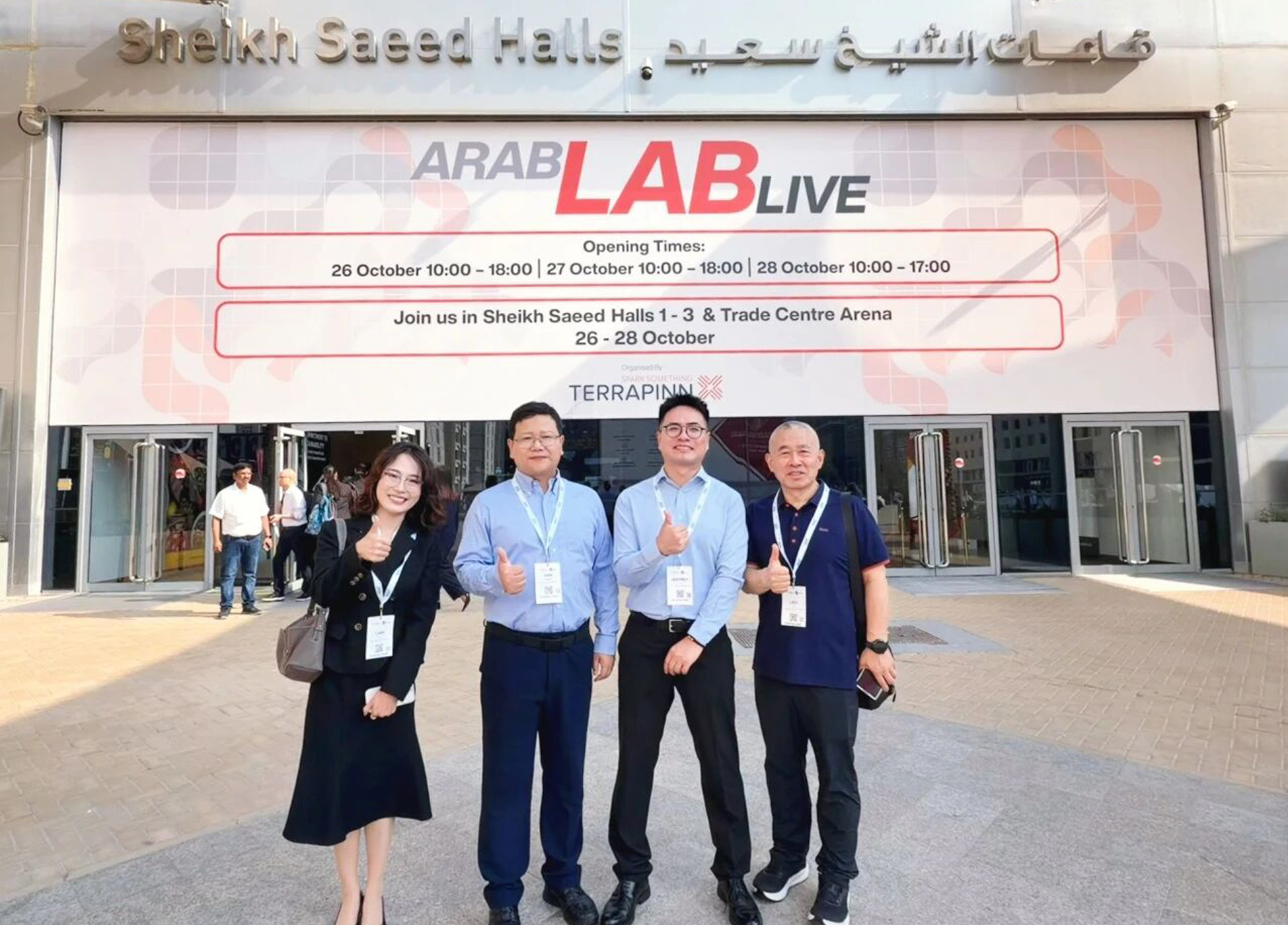
Being close to users continues from every meeting, Haineng goes to ARABLAB again
Company News
Oct 30, 2026

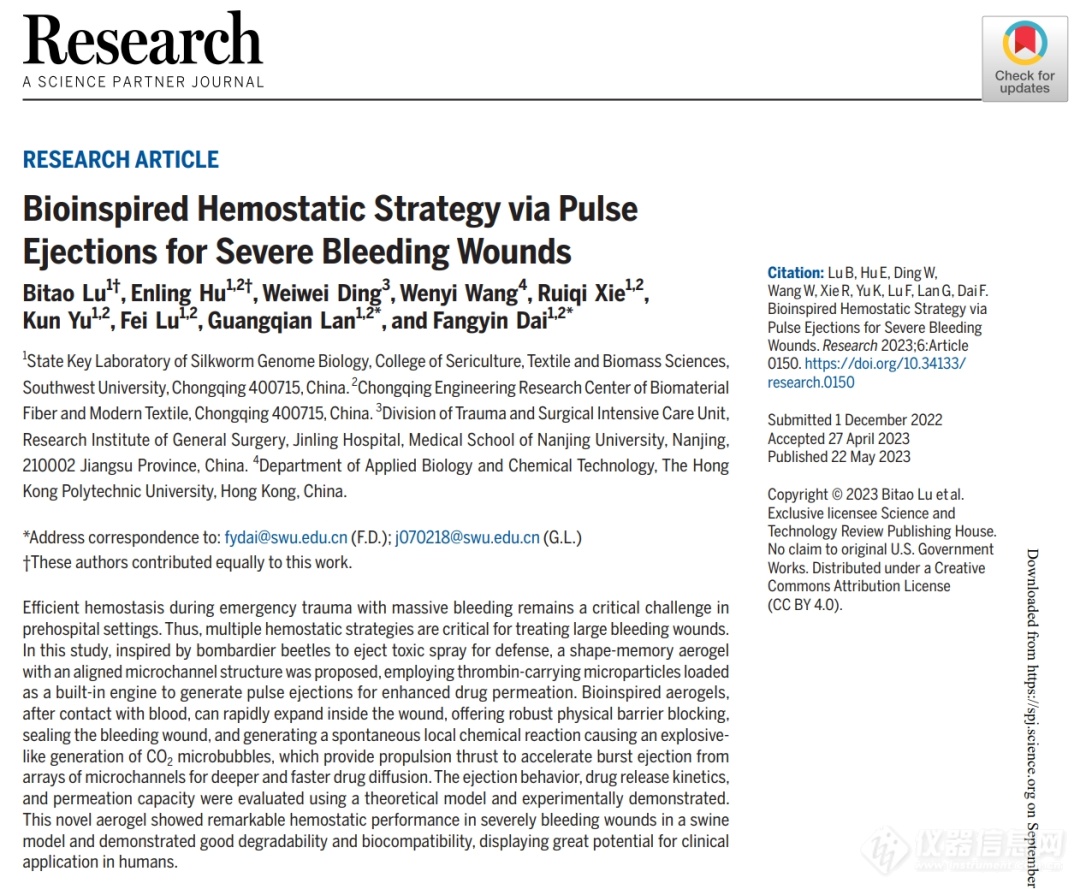
Southwest University research team published in internationally renowned journals《Research》An important research result was published. Inspired by the pulse ejection mechanism of the bombardier beetle, this study designed a shape memory aerogel with directional microchannels, and systematically studied its hemostatic performance and mechanism through a microfocus CT imaging system and multi-scale experiments.The first author of this study is teacher Lu Bitao.
Research summary
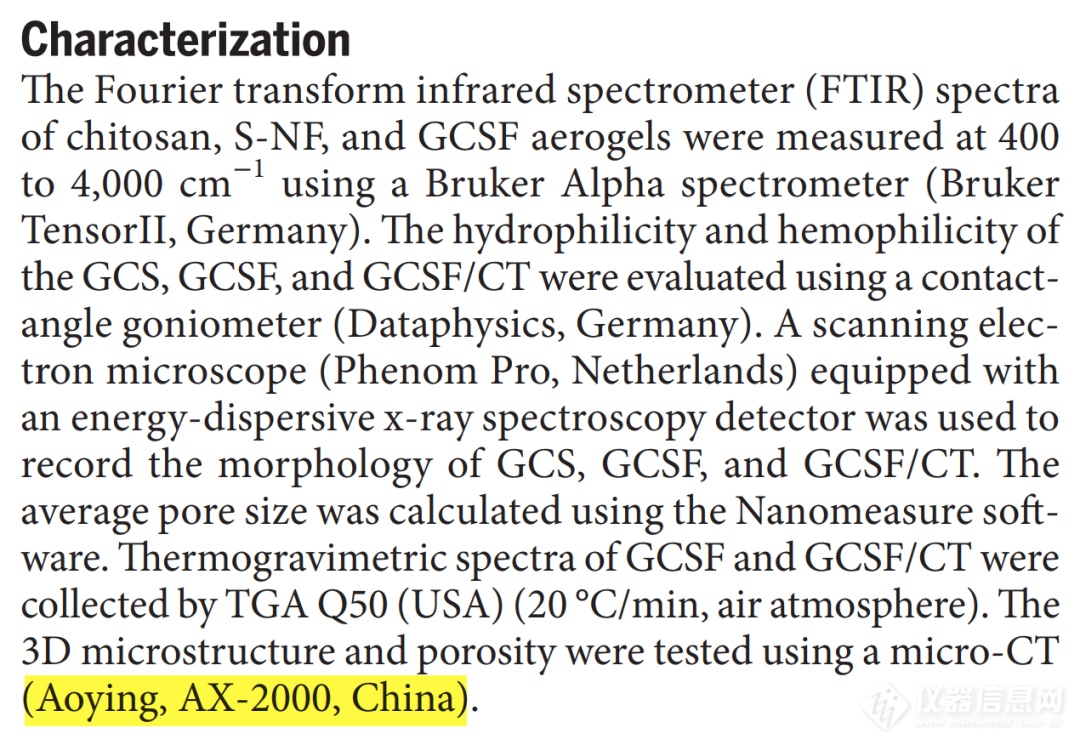
To solve the problem of hemostasis in severe bleeding wounds, a pulse-jet aerogel was designed inspired by the jet defense mechanism of bombardier beetles. The structure was constructed with parallel microchannels through directional freeze casting.silk fibroinNanofiber/chitosan aerogel, loaded with CaCO₃With tranexamic acid (TXA-NH₃⁺) as a “built-in engine” that utilizes blood-triggered CO₂Microbubble pulse jet enhances drug penetration. Combining shape memory properties and physical barrier effects, the aerogel rapidly expands to seal the wound after contact with blood, and at the same time accelerates the diffusion of hemostatic agents through gas power. With the help ofMicrofocus CT (AX-2000CT)Non-destructive three-dimensional tomography of the aerogel clearly showed the parallel array structure of bionic microchannels (width 15-35μm) and the overall honeycomb porous morphology (porosity 52%), which provided key structural data support for the effectiveness of microchannel structural design and subsequent performance analysis. Verified through theoretical models, high-speed photography and animal experiments, the drug release rate exceeded 50% within 60 seconds under optimal parameters, and the hemostasis time in the porcine femoral artery hemorrhage model was only 3.5 minutes. The research provides new ideas for hemostasis in deep complex wounds and demonstrates the application potential of bionic structures in the field of emergency medicine.
Performance testing methods
In vitro characterization: Scanning electron microscope (SEM) observation of microchannel structure,Microfocus CT (AX-2000CT)Analyze porosity and 3D structure, and assess hydrophilicity with a contact angle meter.
Materials collection and research methods
Microchannel structural analysis
CT imaging shows that the aerogel has a honeycomb porous structure (porosity 52%), parallel microchannels with a width of 15-35 μm, and silk fibroin nanofibers on the inner wall forming an interwoven network, which significantly increases the liquid absorption speed (1.5×10⁻³m/s). Loaded CaCO₃/TXA-NH₃⁺Evenly distributed in the microchannel, the gelatin cap coverage is >80%, ensuring efficient gas accumulation.
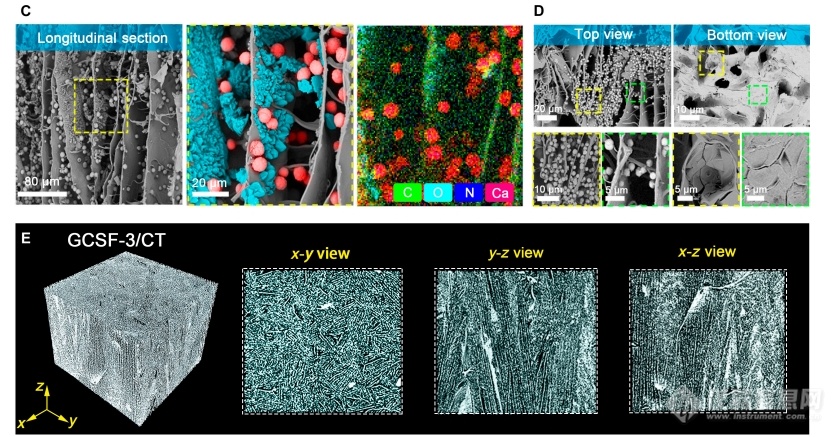
(C) Longitudinal cross-section of GCSF-3/CT (pink pseudocolor represents calcium carbonate (CaCO₃), blue pseudocolor represents tranexamic acid ammonium (TXA-NH₃⁺)) and the corresponding element distribution image. (D) Top and bottom views of GCSF-3/CT. (E) Micro-computed tomography (Micro-CT) image of GCSF-3/CT.
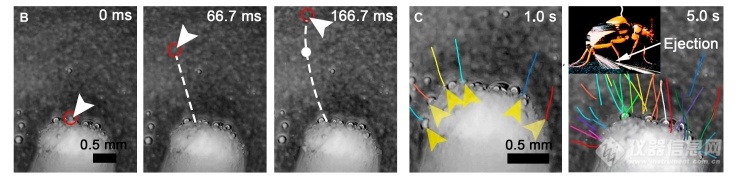
(B) Image demonstrating the water-triggered rapid jet phenomenon of GCSF-3/CT at high frame rates.
Research conclusion
Adequate hemostasis of severe bleeding wounds is extremely challenging. The air-mimetic gel prepared in this study can rapidly expand and compress the wound after contact with water/blood, and accelerate the diffusion of the payload through microbubble power. The drug release rate exceeds 50% within 60 seconds. It has shown better hemostatic effects than existing materials in four bleeding models (including porcine femoral artery massive bleeding), and has good biocompatibility.Microfocus CT (AX-2000CT)Played a key role in the research: through non-destructive three-dimensional tomography, the microchannel structure, porosity and 3D morphology of the airgel were accurately characterized, which provided direct evidence to verify the effectiveness of the bionic design, analyze the relationship between the structure and hemostatic performance, and also provided a quantitative basis for material optimization.
original document
[1]LuB,HuE,DingW,etal.BioinspiredHemostaticStrategyviaPulseEjectionsforSevereBleedingWounds[J].Research,2023,6:Article0150.DOI:10.34133/research.0150
Paper application equipment
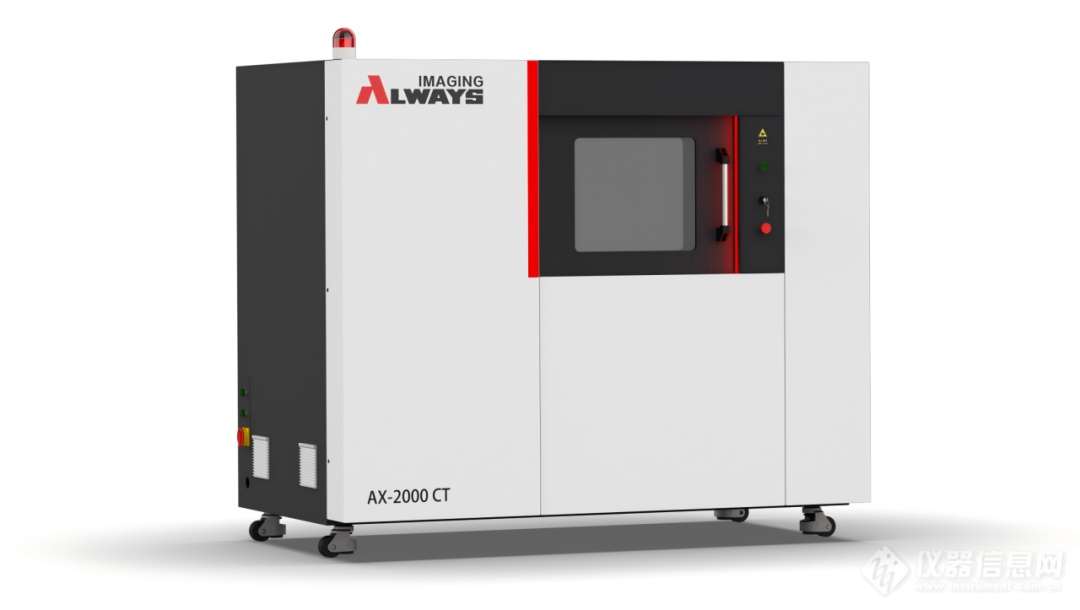
used in this studyMicroCTThe equipment is a high-precision micro-nano CT imaging system developed and produced by Aoying——AX-2000CT. This system is specially designed for biomedical and materials science research. It combines high-precision imaging, fast scanning efficiency, economical cost and diversified application scenarios. It can perform non-destructive three-dimensional tomography on a variety of samples such as bionic aerogels, nanofiber scaffolds, biocomposites, small metal components, geological cores, etc. It provides key non-destructive digital imaging technology support for bionic structure analysis and performance optimization.





When you visit any website, it may store or retrieve information on your browser, mostly in the form of cookies. This information might be about you, your preferences or your device and is mostly used to make the site work as you expect it to. The information does not usually directly identify you, but it can give you a more personalized web experience. Because we respect your right to privacy, you can choose not to allow some types of cookies. Click on the different category headings to find out more and change our default settings. However, blocking some types of cookies may impact your experience of the site and the services we are able to offer.