

Being close to users continues from every meeting, Haineng goes to ARABLAB again
Company News
Oct 30, 2026

Recently, Baxter's underwater particle grading and sediment content monitoring system obtained a U.S. patent authorization certificate (Patent No. US 12,680,936 B2). This marks the international recognition of China's sediment particle in-situ monitoring technology and is another outstanding achievement of Baxter's independent innovation technology.

Detection of river sediment particle gradation and content is time-consuming and labor-intensive and has poor accuracy.
In China, large rivers have high sediment content, and sediment monitoring methods have long relied on manually taking water samples to the laboratory, and then carrying out processes such as sedimentation, clarification, drying, sample separation, testing, and data collection. Testing a group of samples often requires multiple people to work continuously for a week. Not only is the timeliness poor and the labor intensity high, but also due to the long time, many links and manual operation of sample processing and testing, the accuracy of the data is also poor, which affects the accuracy of hydrological data, which in turn has an impact on channel dredging, flood control dispatching, and the design, construction and operation of large-scale water conservancy projects.
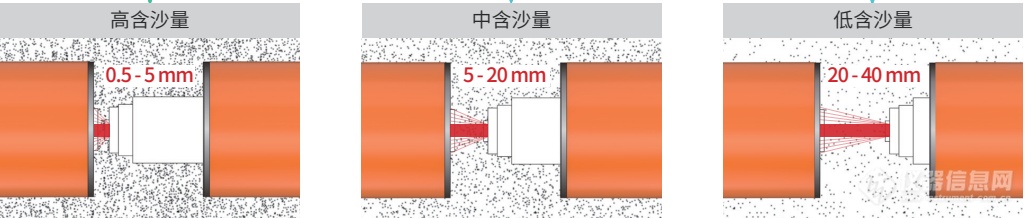
In order to change this situation, the R&D team headed by R&D Director Fan Jilai (Li Chuang, Chen Hao, Hu Sen, Wu Mingfeng, Zhou Xiaodong, Li Xiaoxu, Liu Wei, Guo Shiji, etc.) worked together based on years of deep cultivation of the underlying technology of particle size testing. After extensive calculations, experiments and verifications, they developed The dual optical path signal difference technology has been successfully developed to eliminate the influence of background changes on the results during underwater particle monitoring; the optical path adaptive sand content technology has been successfully developed to ensure the best shading rate for monitoring; the automatic lens cleaning technology has been successfully developed to ensure that the lens is always clean. These technologies reliably guarantee the accuracy of particle gradation and sand content, and logically solve the problem of automatic monitoring of sediment-level mix content.
The historical significance of the first U.S. patent
The U.S. patent system has a long history and strict review. This first patent has three significances: First, it is the first breakthrough in the field of particle testing in China that has been granted a U.S. patent, indicating that China's first particle testing technology has been recognized internationally, and it also builds a moat to enter the international market; second, it has broad prospects for independent innovation. in internationalcompeteToday, as the situation becomes increasingly fierce, only the road of independent innovation becomes wider and wider. The third is to realize the leap from "self-certification" to "other certification" for China's particle testing technology to reach the world's advanced level.
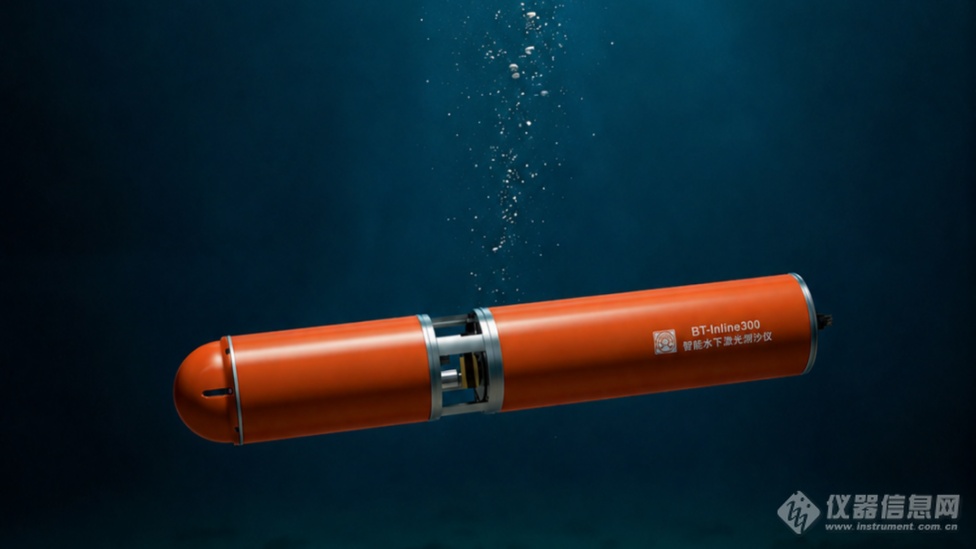
Baxter BT-Inline300 intelligent underwater laser sand meter
The effect is remarkable and it is widely used in the field of sediment monitoring.
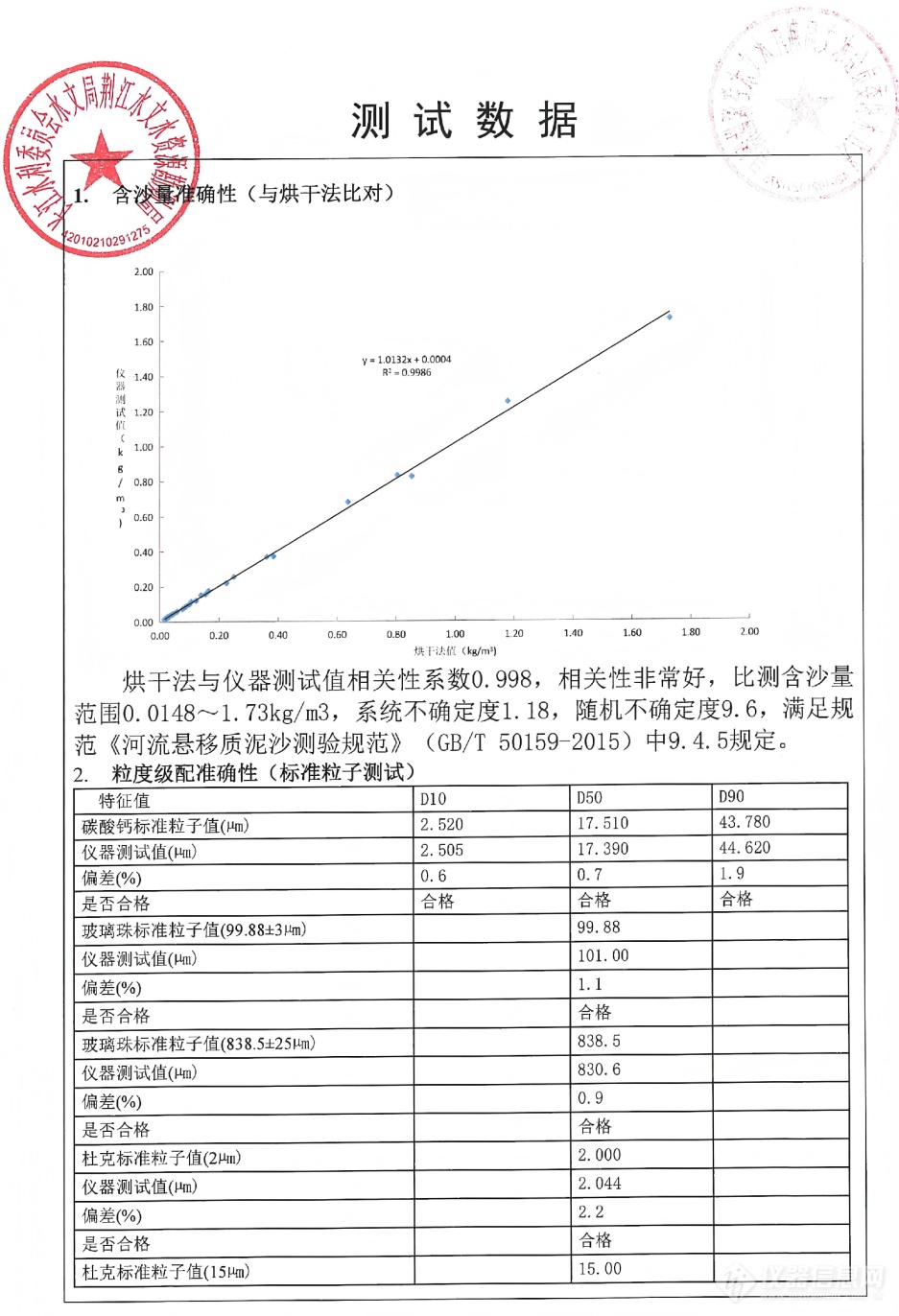
At present, the modernization of hydrological monitoring in China is accelerating in an all-round way, and the online sediment monitoring equipment in key sections of the country's seven major river basins has been comprehensively updated. Dandong Baite cooperates closely with industry organizations such as the Hydrological Bureau of the Yangtze River Commission, Jingzhou Hydrological and Water Resources Survey Bureau, Foshan Hydrological Bureau of the Pearl River Commission, Liaoning Province and Dandong Hydrological Bureau. Xiashu Hydrological Station, Yellow River Huayuankou Hydrological Station, Shanghai Wusongkou Hydrological Station, Yalu River Huanggou Hydrological Station, etc. have carried out comparative experiments on sediment particle gradation monitoring. After long-term experiments, the instrument monitoring data are highly consistent with the data of the standard method, and have been widely used.


The transformation from following to originality is a true portrayal of Baxter's thirty years of innovative development. Baxter will continue to deepenCultivate the underlying technology of particle analysis, adhere to the path of independent innovation, and strive towards the goal of international brandssteadilygo ahead!






When you visit any website, it may store or retrieve information on your browser, mostly in the form of cookies. This information might be about you, your preferences or your device and is mostly used to make the site work as you expect it to. The information does not usually directly identify you, but it can give you a more personalized web experience. Because we respect your right to privacy, you can choose not to allow some types of cookies. Click on the different category headings to find out more and change our default settings. However, blocking some types of cookies may impact your experience of the site and the services we are able to offer.