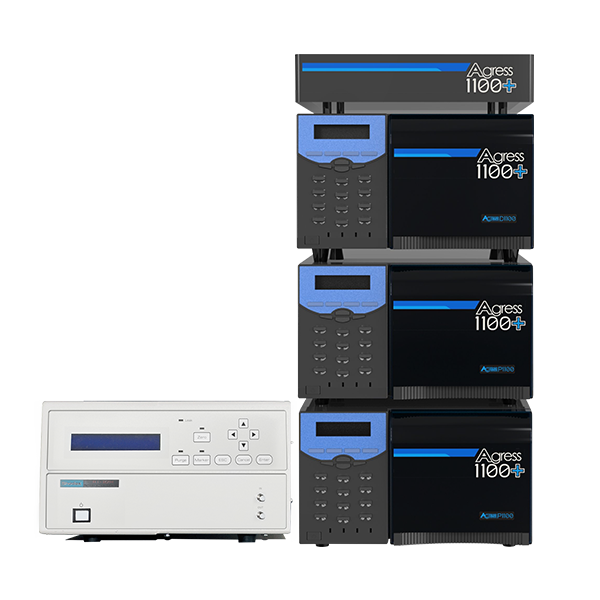



Gel permeation chromatography (GPC), also called gel chromatography, is a method of separating macromolecular solution components by molecular size. It is a method of separation based on the different permeability properties of molecules in the gel. In this method, the sample is injected into a transparent column filled with a polymer gel material. The gel material can form a pore structure in which large molecules are more difficult to pass through, while small molecules can pass through the pore structure more easily, so separation occurs between large and small molecules. When the sample passes through the gel in the column, the macromolecular components will be intercepted in the gel pores, allowing the components with larger molecules to run slower, while the components with smaller molecules can pass through the gel pores relatively quickly, thereby achieving separation of the sample components. Finally, by detecting the signals of molecular components, the content and relative content distribution of components of different molecular sizes in the sample can be obtained. Gel permeation chromatography has the advantages of simple operation, reliable results, and wide application range, so it is widely used in fields such as polymer chemistry and biochemical analysis.
When you visit any website, it may store or retrieve information on your browser, mostly in the form of cookies. This information might be about you, your preferences or your device and is mostly used to make the site work as you expect it to. The information does not usually directly identify you, but it can give you a more personalized web experience. Because we respect your right to privacy, you can choose not to allow some types of cookies. Click on the different category headings to find out more and change our default settings. However, blocking some types of cookies may impact your experience of the site and the services we are able to offer.