

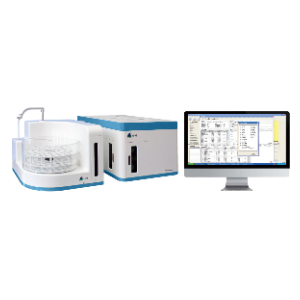


Gas-phase Molecular Absorption Spectrometer (GMA) is an optical instrument used to study molecules in the atmosphere. The principle is to use gas molecules to absorb a laser beam of a specific wavelength and then absorb the light through the gas. Based on the relationship between the absorbed light intensity and the wavelength, the absorption spectrum of each molecule in the gas can be obtained, thereby obtaining information on the concentration of molecules in the atmosphere. GMA is mainly composed of laser source, sample chamber, spectrometer, data acquisition and processing system, etc. First, the laser beam passes through the sample chamber, interacts with gas molecules in the atmosphere, and is absorbed or scattered. Then, the light is decomposed into monochromatic light through the optical elements in the sample chamber, which is detected in the spectrometer. The signal is collected, processed and analyzed using a computer to obtain the absorption spectrum of the gas molecules. Finally, based on the relationship between absorbed light intensity and wavelength, the concentration of molecules in the sample chamber, changes in the atmospheric environment, and other related parameters can be inferred. GMA has the advantages of high accuracy, high sensitivity, and high time resolution, and has been widely used in atmospheric chemistry, environmental monitoring, climate and weather forecasting and other fields.