

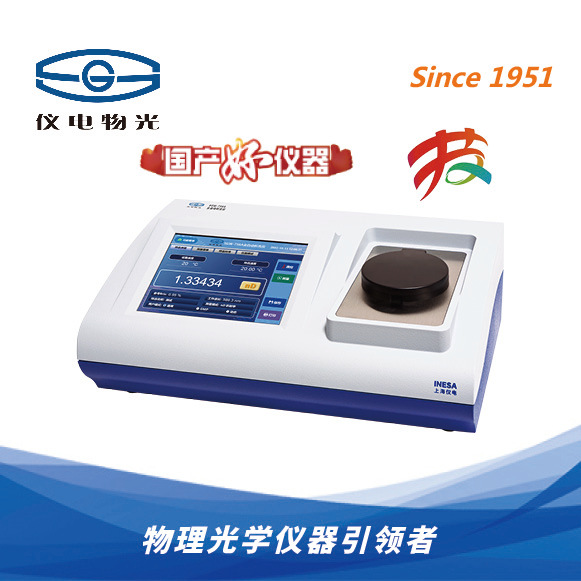


A refractometer, also called a refractometer, is an instrument used to measure the refractive index of light in a substance. The index of refraction is the ratio of the speed of light as it travels from one medium to another. The basic principle of a refractometer is to use the refraction and reflection phenomena of light in different media to determine the refractive index of the sample. A refractometer usually consists of a light source, a collimation device, a sample chamber, a telescope, an angle measuring device, a detector and other components. The sample chamber is a container for placing the substance to be measured, the collimating device is used to make the light pass through the sample vertically, and the angle measuring device is used to measure the incident and exit angles of the light. When using a refractometer, you must first calibrate the instrument and adjust the light to pass vertically through the sample from the collimating device. Then change the incident angle of the light by changing the angle of the angle measuring device, and observe the reflection and refraction of the light in the sample. Finally, calculate the refractive index of the sample based on the incident angle and exit angle. Refractometers are widely used in quality control, materials science, biochemistry and other fields. For example, they can be used to detect impurities in pharmaceuticals and measure sugar content in food.