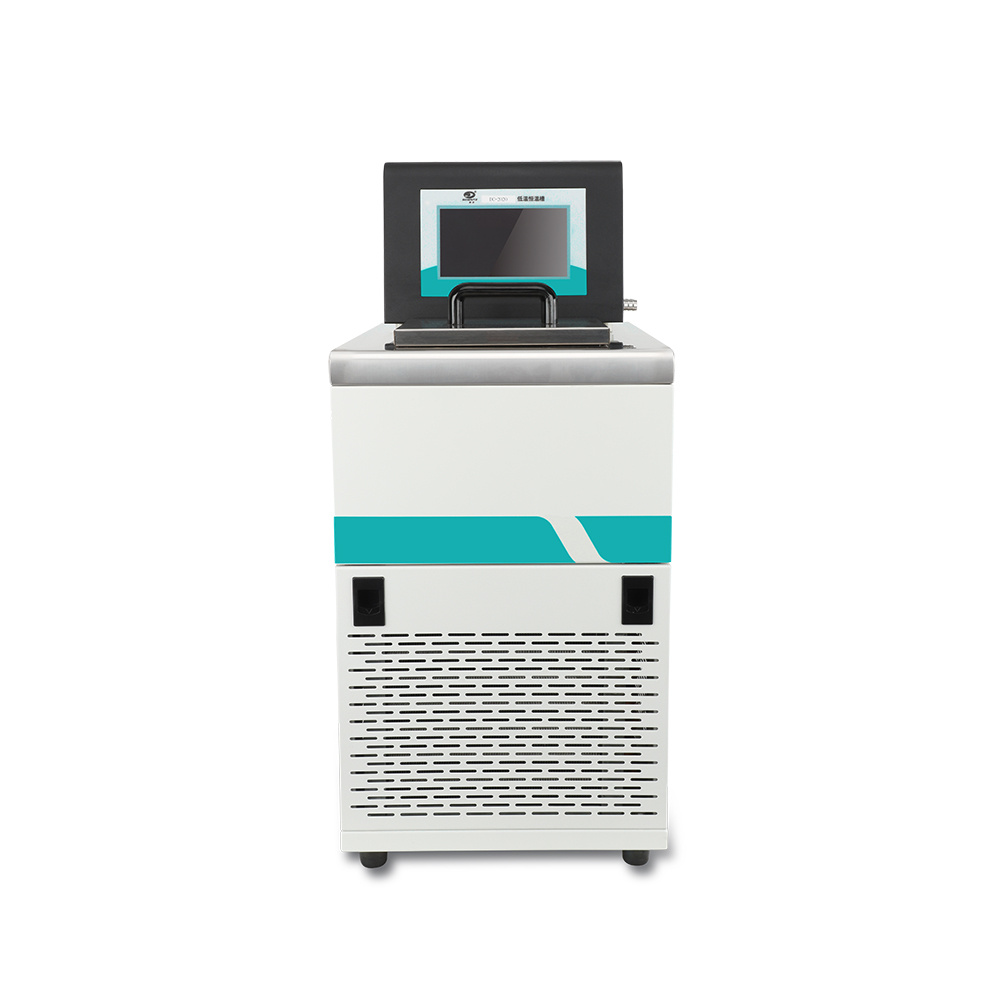
Model:
DC-1006 DC-2006 DC-3006 DC-4006
Brand:
Scientz
Origin:
China
NINGBO SCIENTZ BIOTECHNOLOGY CO.,LTD.




NINGBO SCIENTZ BIOTECHNOLOGY CO.,LTD.
Water baths, oil baths and thermostatic baths are all commonly used heating equipment in chemical laboratories. They can heat samples or reagents by controlling the temperature. Water bath: A water bath is a container placed in heated water, and the materials in the container are heated by the heating of the water. Water baths usually use ordinary tap water because water has a large specific heat and can stably maintain a certain temperature range, and the operation of the water bath is relatively simple. Water baths can generally be heated to around 100°C and are suitable for experiments requiring low to medium temperatures. Oil bath: In an oil bath, a container is placed in heated liquid oil, and the contents of the container are heated under the heating effect of the oil. Oil baths usually use high-temperature lubricating oil, because oil has a higher specific heat than water, can heat up faster and more stably, and can be heated to high-temperature areas above 300°C, making it suitable for high-temperature reactions and experiments with high heating accuracy. Thermostatic bath: A thermostatic bath is a device that can accurately control the temperature and maintain it at a constant value. It is often used in experiments and tests that require specific temperatures. A thermostatic bath usually consists of a heater, a temperature sensor and a temperature controller, which can accurately control the temperature beyond the range of water baths and oil baths, and has the advantages of high temperature stability and good temperature uniformity.
When you visit any website, it may store or retrieve information on your browser, mostly in the form of cookies. This information might be about you, your preferences or your device and is mostly used to make the site work as you expect it to. The information does not usually directly identify you, but it can give you a more personalized web experience. Because we respect your right to privacy, you can choose not to allow some types of cookies. Click on the different category headings to find out more and change our default settings. However, blocking some types of cookies may impact your experience of the site and the services we are able to offer.