

 Gold Member
 Business License
【JMCA】Rapid adsorption and kinetic separation of benzene, cyclohexane and cyclohexene in microporous metal azole framework
Quick overview of full text
Benzene, cyclohexane, and cyclohexene are basic raw materials for the petrochemical industry. Their separation and purification rely on traditional distillation processes, which consume a large amount of energy due to their close boiling points. Zhang Jiepeng's research group at Sun Yat-sen University reported a new microporous metal azole framework for the mild adsorption and kinetic separation of three hexacyclic hydrocarbons. The microporous metal azole framework exhibits ultrafast adsorption of benzene and ultrafast kinetic adsorption separation of benzene/cyclohexane and benzene/cyclohexene in a short period of several seconds. Investigation of the adsorption kinetics of benzene, cyclohexane, and cyclohexene revealed that this is a two-step adsorption process, including the steps of intraparticle fusion and surface adsorption, respectively. Furthermore, by adjusting the sample particle size, the adsorption behavior can be significantly controlled. The large particle sample has high benzene/cyclohexene selectivity (94.3) and reversed cyclohexane/cyclohexene selectivity, in contrast to the small particle sample. This highlights the feasibility of controlling adsorption selectivity by manipulating kinetic steps in porous materials。Background introduction
Benzene (C6H6), cyclohexane (C6H12) and cyclohexene (C6H10) is of great significance in chemical production. High purity benzene can be obtained through benzene/cyclohexane separation. Due to their close boiling points, traditional distillation processes consume large amounts of energy to separate these three hydrocarbons. Metal-organic frameworks (MOFs) show unique advantages and great potential due to their highly designable framework structures. The mechanism of MOFs adsorption and separation can be roughly divided into thermodynamic mechanism and kinetic mechanism. The former relies on differences in thermodynamic parameters, mainly controlled by temperature and pressure, and is independent of time. For example, introducing large conjugatesp systems, open metal sites or p-electron-deficient moieties enable selective recognition of C6H6. This results in a relatively high adsorption enthalpy for C6H6 and thus a relatively high adsorption enthalpy for C6H6 relative toC6H12high selectivity. On the other hand, adsorption separation based on kinetic mechanisms not only depends on different host-guest interactions but also on differences in molecular transport parameters under non-equilibrium conditions, such as adsorption and diffusion rates, and is therefore susceptible to the influence of separation conditions. Kinetic separation is feasible for weakly binding adsorbents. A common strategy for kinetic separation mechanisms involves controlling the pore window size of the microporous framework to achieve differences in diffusion rates between mixture adsorbates. Under ideal conditions, molecular sieving can be achieved when the pore window size falls precisely between the kinetic sizes of the two adsorbates.MAF-67Small-particle samples can be synthesized at gram scale under relatively mild conditions, which exhibit significantC6H6Ultra-fast adsorption, with significant saturation times within seconds andC6H6/C6 H12andC6H6/C6H10rapid kinetic separation. On the basis of further analysis of the adsorption kinetics, it was clarifiedMAF-67The adsorption process of three hydrocarbons includes intra-particle diffusion and surface adsorption. It was also demonstrated that the diffusion selectivity can be tuned by adjusting the particle size of the adsorbent. Compared with small particle samples, large particlesMAF-67show highC6H6/C6 H10Kinetic selectivity andC6H12/C6H10reverse selectivity.crystal structure

Key points:This framework contains crystallographiccone dimension of axis(1D)aisle. These channels consist of alternating cavities(9.2×10.0 Å)and window(4.6Å)composition. Each well window is modified with three different methyl groups。
adsorption isotherm

Key points:MAF-67ofN2adsorption isotherm(exist77 KDown)show typicalItype isotherm(The saturated adsorption capacity is5.71 mmol g-1, equivalent to0.198 cm 3g-1pore volume, which is close to the theoretically calculated value derived from the crystal structure0.182 cm 3g-1。
Study on the adsorption of benzene on small particle samples

Key points:MAF-67The pore size in the gas is larger than the molecular size of most gases, including light hydrocarbons, and its4.6 ÅThe pore size is smaller than that of hexacyclic hydrocarbons(C6 H6:5.9 ÅC6H10:6.1ÅandC6H12:6.1 Å)aperture size. In terms of adsorption separation,MAF-67The pore characteristics of can be used to differentiate between benzene, cyclohexane, and cyclohexene. After exposure to benzene, it was observedMAF-67rapid fluorescence reaction. in ultraviolet light(365 nm)down, joinC6H6Within one second,MAF-67There will be obvious fluorescence "turning on"(picture3a). This response phenomenon was further confirmed by in situ time-dependent fluorescence spectroscopy.(picture3b). It is worth noting thatMAF-67The fluorescence intensity ofC6 H6The joining of0.2Approximately displayed within seconds42%rapid enhancement. These preliminary results indicateMAF-67Benzene can be adsorbed with very fast adsorption kinetics.
Adsorption Kinetics of Small Particle Samples

Key points:For equimolarC6H6/C6H12mixture,MAF-67in front5Second(0.083 min)InternallyC6H6The selectivity is approximately18.7. In this experiment,MAF-67rightC6 H6The maximum adsorption capacity is1.13 mmol g−1. As the soaking time increases,C6H6The adsorption amount gradually decreases, andC6 H12The amount of adsorption gradually increases. butC6H6andC6H12The total intake remains almost constant. soak48 hFinally, competitive adsorption slowly reaches equilibrium.C6H6The equilibrium selectivity is only1.6(picture4aandb). forC6H6/C6H10existMAF-67adsorption in the initial5Within seconds, the correspondingC6H6The selectivity is approx.19.1(0.083 min), showing the intake is1.10 mmol g−1,exist0.5 minwhen further increased to1.48 mmol g−1. same,24hours later,C6H6The selectivity gradually reaches2.5balance (Fig.4candd)
Adsorption mechanism

Key points:loadC6H6ofMAF-67The host-guest interaction in PTFE is mainly multiple weak intermolecular interactions between the host skeleton and benzene molecules. believed to beMAF-67The pore characteristics in , especially the absence of strong binding sites near the pore diameter, facilitate thisMOFRapid adsorption kinetics in .
Large particles of paraben/Cyclohexene mixture (1:1) adsorption capacity and selectivity

Key points:forC6 H6/C6 H10adsorption, the selectivity is5Second(0.083minutes)94.3,C6 H6The adsorption capacity is0.166 mmol g-1. exist0.5 min, the selectivity is reduced to71.3, the adsorption capacity increases to0.442 mmol g−1(MAF-67absorptive34%)(picture6)。
big/Comparison of liquid adsorption of small particle samples

Key points:MAF-67The large particle sample showed anC6H12relative toC6H10Better selectivity, as opposed to what is the case in small particle samples(picture7)。C6H12/C6H10The selectivity is in0.083 minWhen adsorption begins, it is measured as8.7. This can be attributed to the fact that adsorption in large particle samples is mainly controlled by the diffusion rate, in the orderC6H12> C6H10. For small particle samples, the surface adsorption step is the rate-limiting step. Therefore, the adsorption rate of small particle samples isC6H10> C6H12. By adjusting the particle size of the adsorbent, it can be achievedC6H10reverse adsorption, thus directly obtaining pureC6H10。
Summary and Outlook
This new type of microporous MOF has good kinetic adsorption/separation effects on benzene/cyclohexane/cyclohexene mixtures. This MOF has ultrafast adsorption properties for benzene, cyclohexane and cyclohexene. And its adsorption process in porous materials, including intra-particle diffusion and surface adsorption, was systematically studied. Research on the adsorption differences of MOFs with different particle sizes shows that the adsorption selectivity can be adjusted by controlling the particle size of the adsorbent.Original link:
https://pubs.rsc.org/en/content/articlelanding/2024/ta/d4ta02030h
View More from This Booth
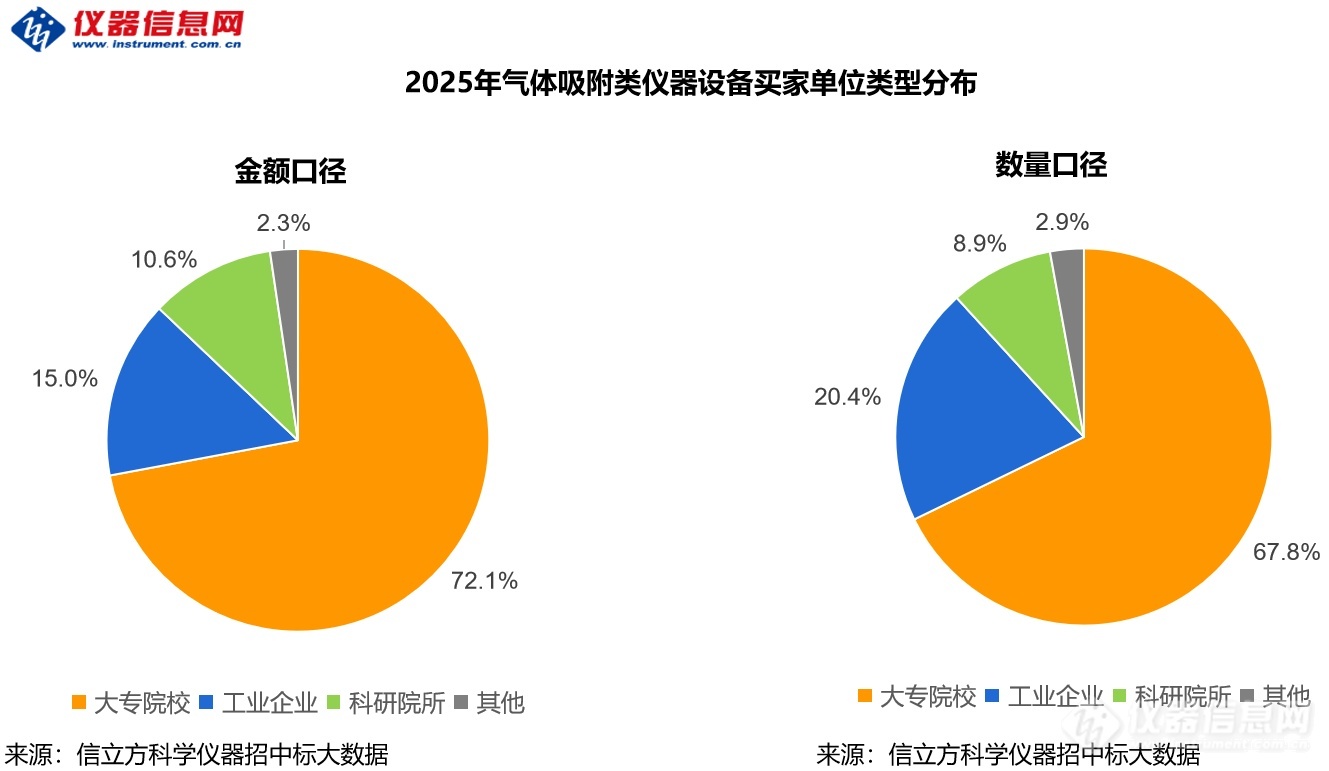
2026 Gas Adsorption and Specific Surface Area Pore Size Analyzer Industry Procurement Data Report (Official Survey by Instrument Information Network)
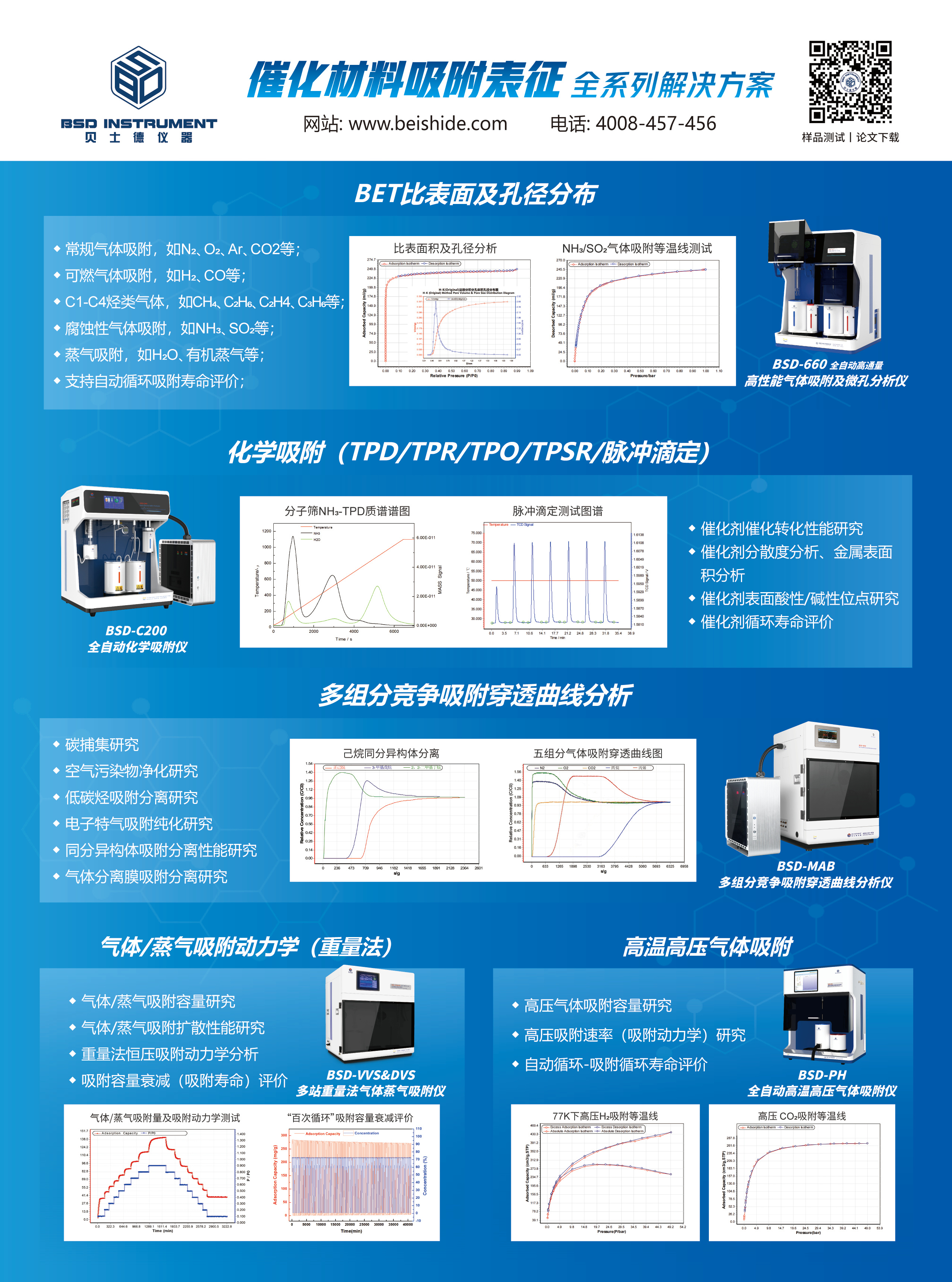
Best Instruments | BSD series adsorption BET specific surface area and adsorption characterization analyzer National high-tech enterprise source manufacturer

Hydrogen storage materials, Nature Chemistry!

Analysis of testing accuracy of samples with small specific surface areas by dynamic method and static method
Recommended Products
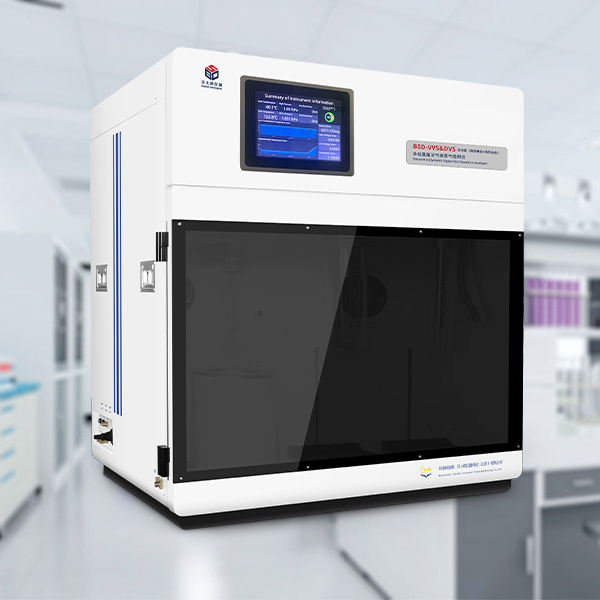
BSD-VVS&DVS multi-station gravimetric gas vapor adsorption instrument
US$ 69930.00-139860.00
Model:BSD-VVS&DVS