
 Gold Member
 Business License
Paper sharing | Xinzhi MGC-500 facilitates research on the environmental tolerance of Clostridium perfringens on the Qinghai-Tibet Plateau
Paper sharing
1. Paper abstract
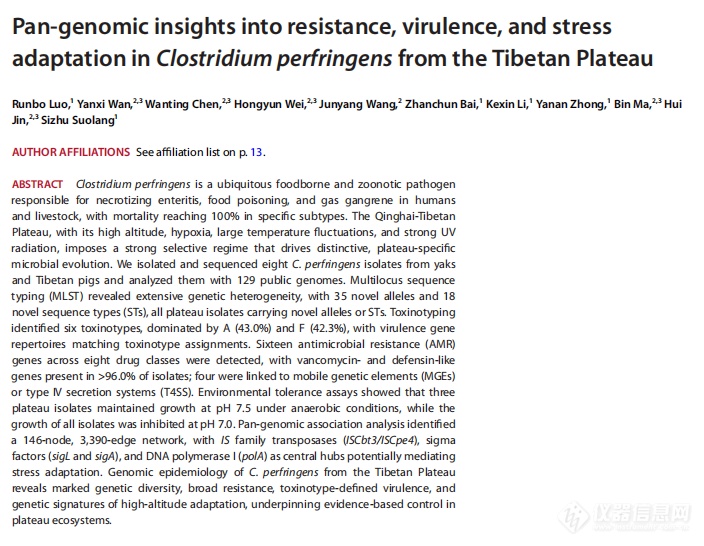
Ningbo Xinzhi Biotechnology Co., Ltd. (Scientz) MGC-500 microbial growth curve analyzer supports the genome research of Clostridium perfringens on the Qinghai-Tibet Plateau, revealing the genetic diversity, drug resistance and adaptation mechanism of this pathogen in the extreme environment of the plateau. Clostridium perfringens is a ubiquitous foodborne and zoonotic pathogen that can cause necrotizing enteritis, food poisoning and gas gangrene in humans and livestock, with higher fatality rates in certain subtypes. The Qinghai-Tibet Plateau has formed a strong natural selection mechanism due to its high altitude, low oxygen environment, severe temperature fluctuations and strong ultraviolet radiation, which drives the evolution of plateau-specific microorganisms. We isolated and sequenced 8 strains of Clostridium perfringens from yaks and Tibetan pigs, and compared them with 129 publicly available genomes. Multilocus sequence typing (MLST) revealed extensive genetic heterogeneity, with a total of 35 new alleles and 18 new sequence types (STs) discovered, and all plateau isolates carried new alleles or new sequence types. Six toxin types were identified by toxin typing, among which type A (43.0%) and type F (42.3%) were dominant, and their virulence gene profiles were consistent with the toxin type classification results. A total of 16 antimicrobial resistance (AMR) genes covering 8 drug classes were detected, among which vancomycin and defensin-like genes were present in >96.0% of the isolates; 4 of the genes were related to mobile genetic elements (MGEs) or type IV secretion system (T4SS). Environmental tolerance tests showed that three plateau isolates could still grow at pH 7.5 under anaerobic conditions, while the growth of all isolates was inhibited at pH 7.0. Pan-genome association analysis revealed a network containing 146 nodes and 3,390 edges; among which IS family transposase (ISCbt3/ISCpe4), σ factors (sigL and sigA), and DNA polymerase I (polA) serve as core hubs and may be involved in mediating bacterial adaptation to stress environments. Genomic epidemiological analysis of Clostridium perfringens from the Tibetan Plateau revealed that this bacterial consortium possesses significant genetic diversity, broad drug resistance, virulence characteristics defined by toxin types, and genetic characteristics adapted to high-altitude environments. These findings provide a basis for the implementation of evidence-based prevention and control measures in plateau ecosystems.
2. Xinzhi product support
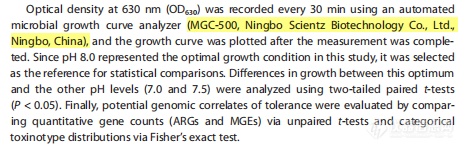
Optical density at 630 nm (OD₆₃₀) was recorded every 30 min using an automatedmicrobial growth curve analyzer (MGC-500, Ningbo Scientz Biotechnology Co., Ltd.,Ningbo, China), and the growth curve was plotted after the measurement was completed. Since pH 8.0 represented the optimal growth condition in this study, it was selected as the reference for statistical comparisons. Differences in growth between this optimum and the other pH levels (7.0 and 7.5) were analyzed using two-tailed paired t-tests(P < 0.05). Finally, potential genomic correlates of tolerance were evaluated by comparing quantitative gene counts (ARGs and MGEs) via unpaired t-tests and categorical toxinotype distributions via Fisher’s exact test.
The optical density value at 630 nm (OD₆₃₀) was recorded every 30 minutes using an automated microbial growth curve analyzer (MGC-500, Ningbo Xinzhi Biotechnology Co., Ltd., Ningbo, China), and the growth curve was drawn after the measurement was completed. Since pH 8.0 represents the optimal growth condition in this study, it was used as the reference value for statistical comparison. Differences in growth between this optimal pH and other pH levels (7.0 and 7.5) were analyzed using a two-tailed paired t test (P< 0.05)。最后,通过非配对t检验比较定量基因计数(ARGs与MGEs)以及通过Fisher精确检验分析分类毒素型分布,评估耐受性潜在的基因组相关性。
Microbial Growth Curve Analyzer MGC-500
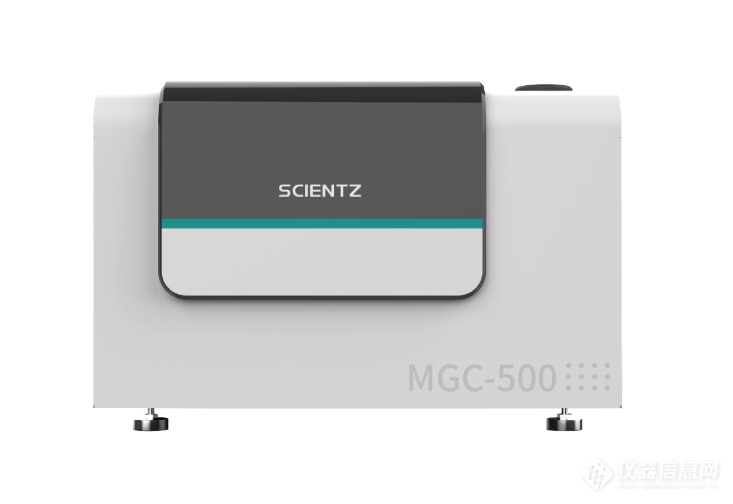
In this study, the growth kinetics monitoring of 8 plateau isolates under three conditions of pH 7.0, 7.5, and 8.0 was fully undertaken by Ningbo Xinzhi Biotechnology Co., Ltd. MGC-500. The MGC-500 automatically records the OD₆₃₀ value every 30 minutes without manual sampling. It provides researchers with complete and continuous growth curve data, greatly reducing the labor costs and contamination risks of continuous monitoring experiments. MGC-500 is equipped with an advanced gas circuit control system that supports dual or single control of O₂ and CO₂. In anaerobic mode, it can be used with palladium particles to effectively remove oxygen from the environment and maintain a strict anaerobic state. Clostridium perfringens involved in this study is a strictly anaerobic bacterium. The anaerobic environment control capability of MGC-500 provides a key guarantee for the smooth development of the experiment.
View More from This Booth

Meet SCIENTZ at Analytica China 2026

Paper sharing|ASGPR mediates liver cancer targeting chitosan nanoparticles, SCIENTZ‑10N freeze dryer facilitates sample preparation

Paper sharing | Xinzhi JY92-IIDN facilitates the study of ultrasound-assisted L-glutamic acid crystallization, revealing the kinetic mechanism of polymorphic transformation for the first time

Paper sharing | Xinzhi SCIENTZ-12N/D freeze dryer facilitates research on the regulation of functional groups of two-dimensional carbon nanosheets

Paper sharing | Can pH 1.0 also grow? Xinzhi MGC-500 monitors the growth curve of Enterococcus faecium in extreme environments throughout the process
Recommended Products