

 Gold Member
 Business License
Excellent Paper | Quantitatively Revealing the Competition Mechanism of Gas-Phase Crosstalk and Silicon-Graphite Reaction
The research team of Sun Jinhua and Wang Qingsong from the University of Science and Technology of China published a research paper titled "Quantifying Gas-Phase Crosstalk and SiO/Gr Reactivity Competition Governing Thermal Runaway in Composite-Anode Batteries" in the internationally authoritative journal Advanced Materials.
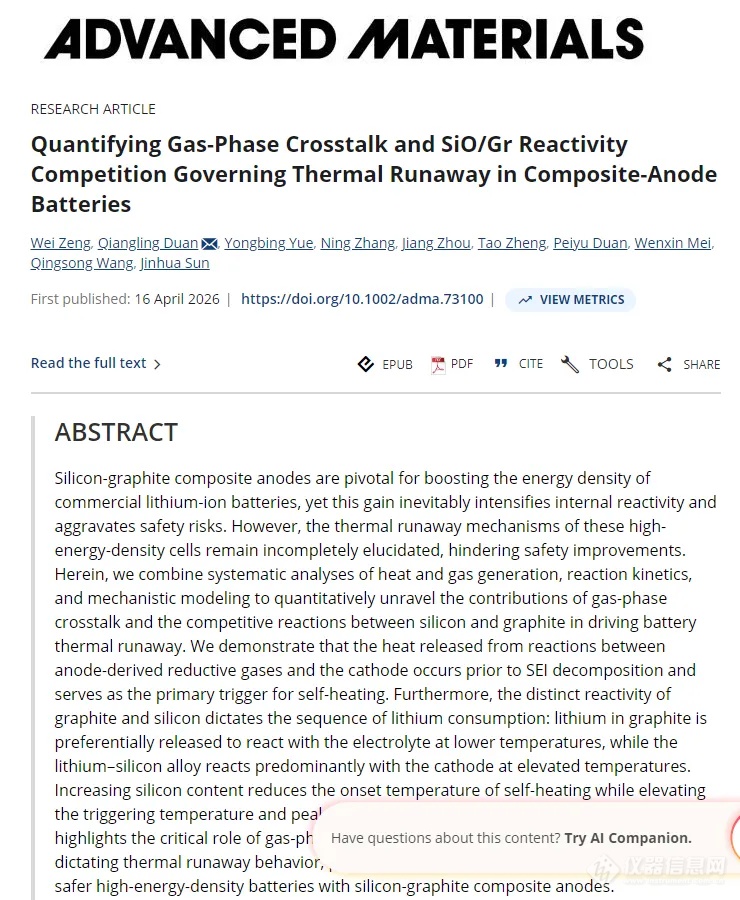
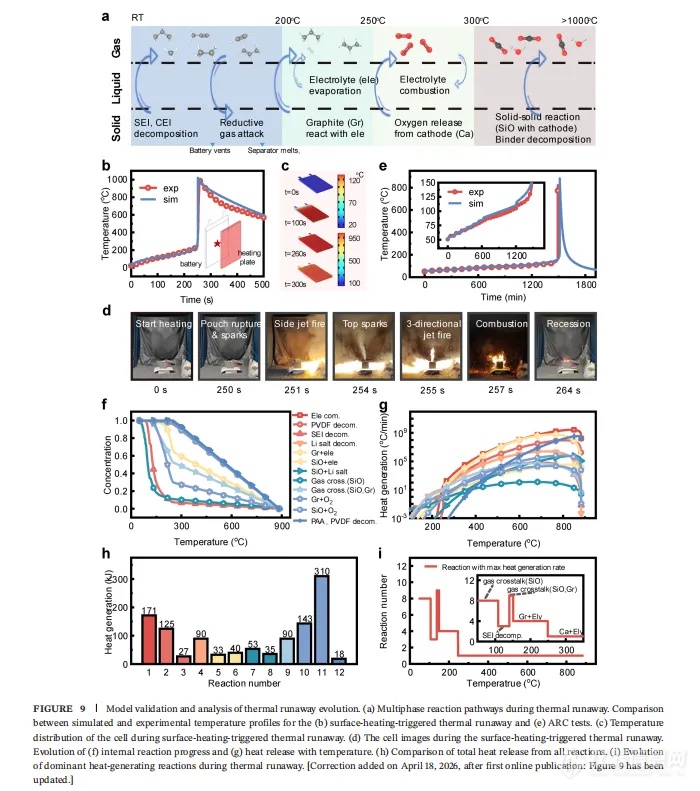
This study combines heat and gas production system analysis, reaction kinetics and mechanism modeling to quantitatively reveal the contribution of gas phase crosstalk and competitive reactions between silicon and graphite in promoting battery thermal runaway. A group-level reaction kinetics model was constructed to achieve independent parameterized tracking of 12 internal reaction heat-generating processes, providing a theoretical framework for the safety optimization of silicon-graphite batteries.
In order to systematically evaluate the impact of silicon content on battery thermal runaway behavior and verify the reliability of the thermal runaway prediction model,The study used Yangyi Technology's large-scale battery adiabatic calorimeter BAC-420A to conduct a systematic thermal safety test on SiO/graphite composite anode batteries with different silicon contents.
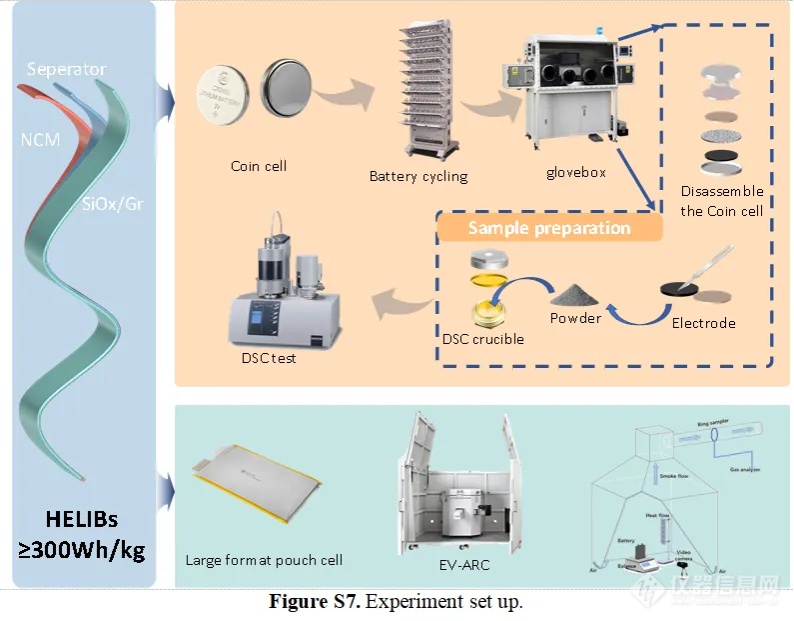
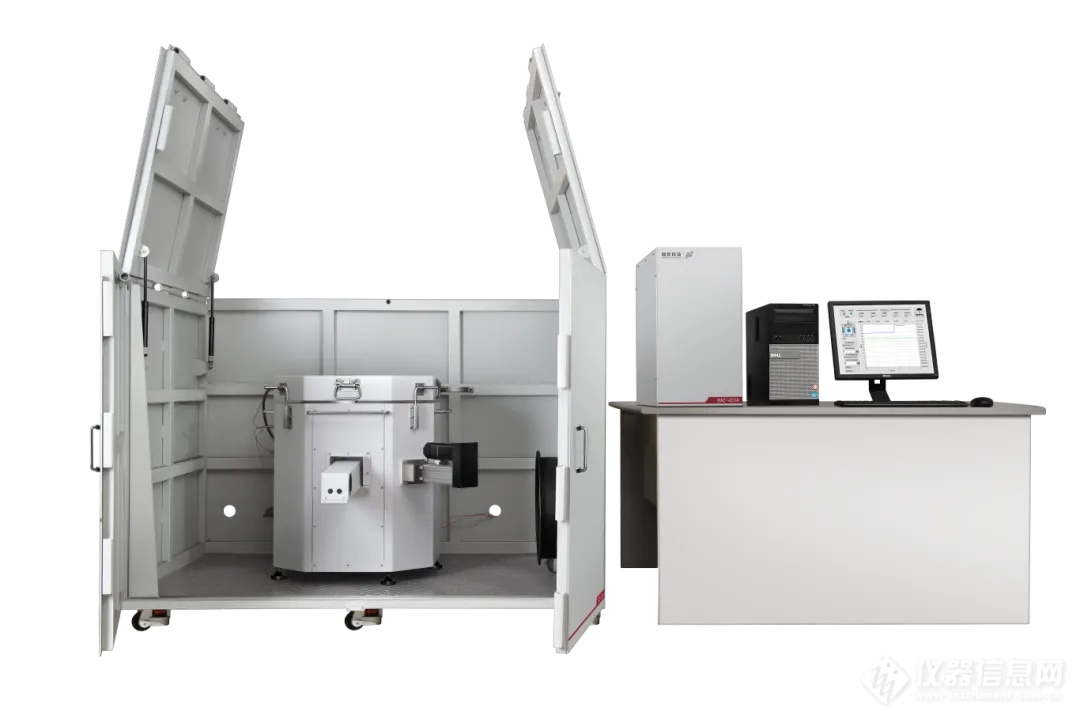
Yangyi Technology Large Battery Adiabatic Calorimeter BAC-420A
Application of BAC-420A in this study
1. Thermal runaway predictionModel validation
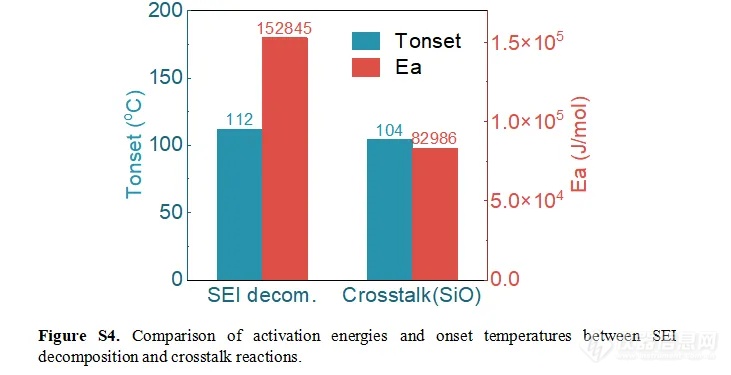
The study used the large-scale battery adiabatic calorimeter BAC-420A to conduct core verification of the thermal runaway prediction model based on reaction sequences. The experimentally measured battery self-heating onset temperature is 86.3°C, which is highly consistent with the model prediction of 88.8°C. This result verifies the model's ability to accurately predict the gestation and development process of thermal runaway.. The evolution of the reaction process shows that the gas-phase crosstalk reaction first dominates the heat release, followed by SEI decomposition, graphite-electrolyte reaction, silicon-electrolyte reaction and solid-solid reaction.
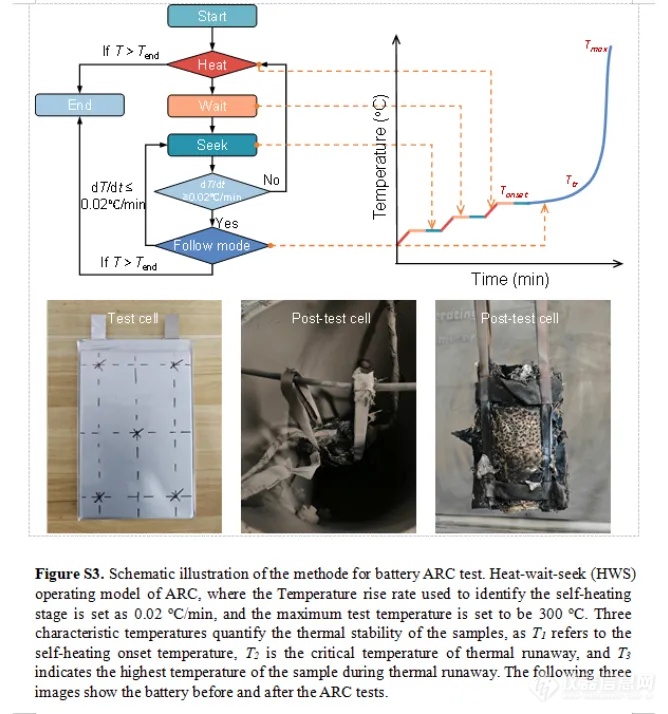
Display of some research results
2. Effect of silicon content on thermal runaway behavior
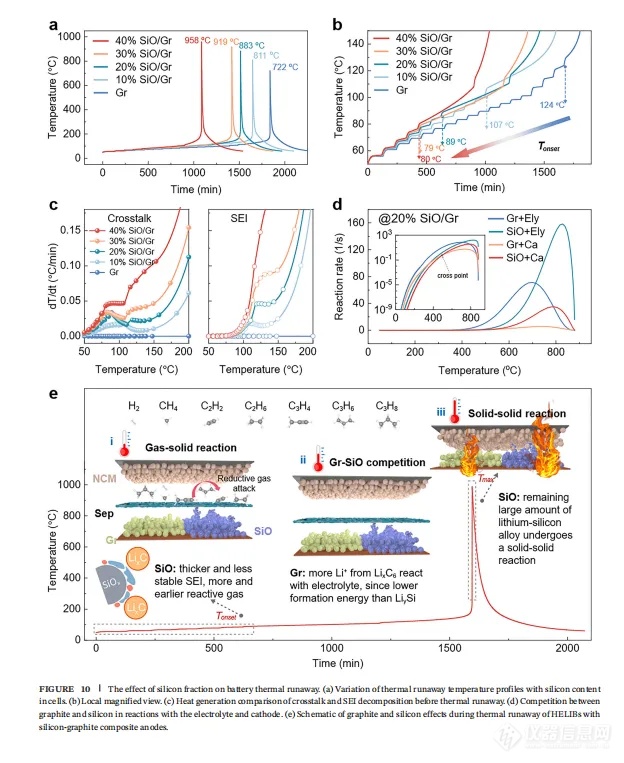
forQuantitatively reveal the influence of silicon content on battery thermal safety. This paperThe study used a large battery adiabatic calorimeter BAC-420A system to study the differences in thermal runaway behavior of SiO/graphite composite anode batteries with different silicon contents (0%, 10%, 20%, 30%, 40%) in the ARC test.
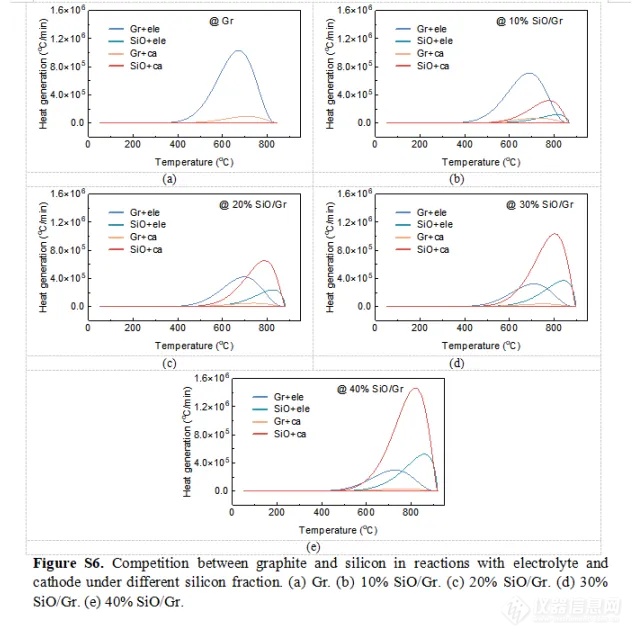
The results show that silicon content has a significant impact on battery thermal runaway behavior:Increasing the silicon content decreases the self-heating onset temperature but increases the thermal runaway trigger temperature and peak temperature. As the silicon content increases, the heat-generating contributions of gas-phase crosstalk and SEI decomposition change, and the reaction between silicon and the cathode at high temperatures becomes dominant, resulting in more severe thermal runaway.
Display of some research results
Summarize
This research systematically clarifies the thermal runaway mechanism of high-energy-density lithium-ion batteries using silicon-graphite composite anodes, and quantitatively evaluates the contributions of gas-phase crosstalk and silicon/graphite reaction competition to thermal runaway. A thermal runaway prediction model based on component reaction kinetics was established, which provides important theoretical guidance for the thermal safety design and optimization of high-energy-density batteries.
View More from This Booth
Application Case | DSC applied to study the thermal properties of polymer plastics
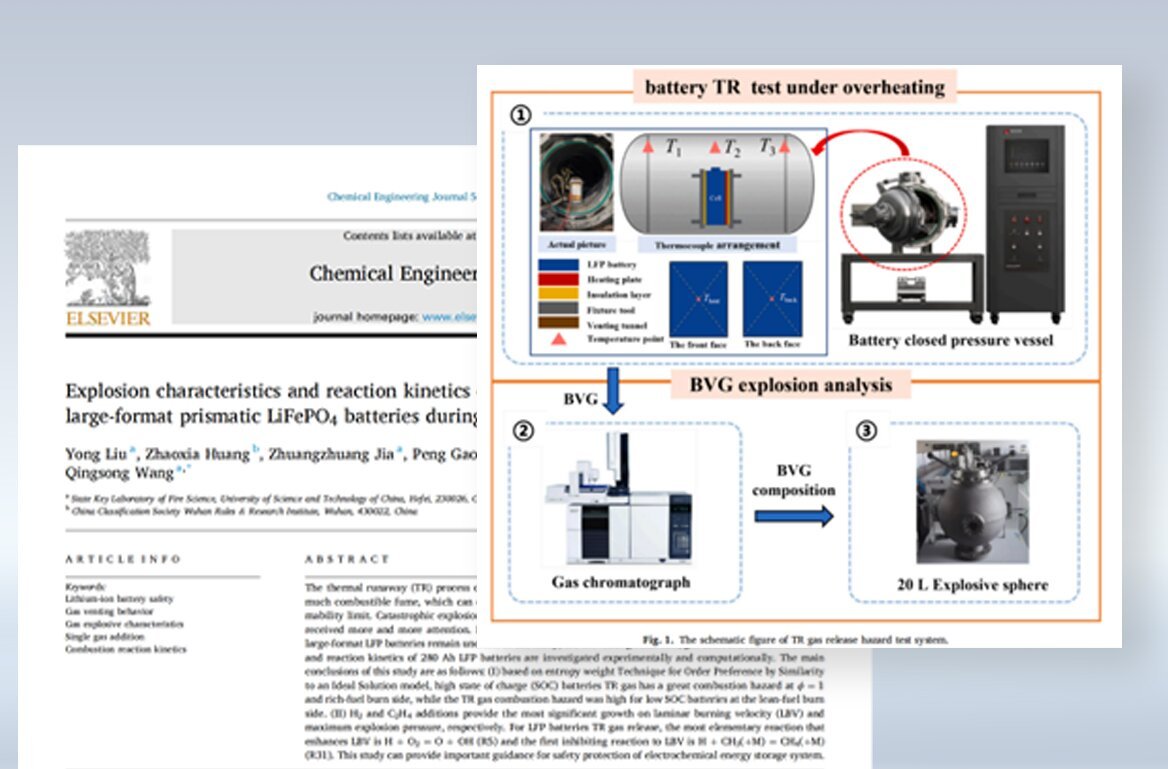
Top Papers from University of Science and Technology of China | How violently will the thermal runaway gas of lithium batteries "explode"? This study found the answer
Interpretation of standards | Differentiated requirements for power and energy storage batteries from the perspective of thermal safety testing
Hard core upgrade | Low temperature + fully automatic double buff, Yangyi Technology Differential Scanning Calorimeter DSC unlocks multi-scenario material thermal analysis
Recommended Products

Large battery adiabatic calorimeter-adiabatic temperature rise characteristic test-BAC-420A
Negotiable
Model:BAC-420A