
 Gold Member
 Business License
Academician Rao Zihe’s team makes intensive reading | NanoTemper helps you pass the structural biology challenges with one click
Keywords: Structural biology|Drug targets|Molecular interactions

NanoTemper Market Insights
High score journal assistant:
Why is quantitative interaction inseparable from MST technology?

research unit:Shanghai University of Science and Technology
use product:Molecular interaction platform Monolith series & protein stability platform Prometheus series
Core achievements and breakthroughs:
*Crack the inhibitory mechanism of new tuberculosis drugs
* Create a new way to diagnose live tuberculosis bacteria
*Quantitative interaction helps overcome scientific research bottlenecks
Research background
tuberculosisIt remains one of the major challenges facing global public health. Mycobacterium tuberculosis has a complex structure and a lipid-rich cell wall. This "natural barrier" not only helps it resist external drug attacks, but also makes tuberculosis treatment cycle long, has a high risk of drug resistance, and makes early diagnosis difficult. With the continuous emergence of drug-resistant tuberculosis strains, the development of new anti-tuberculosis drugs and more sensitive and specific diagnostic tools has become a key scientific issue in tuberculosis prevention and treatment.
Research content
MmpL3:
A key pathway for cell wall synthesis in Mycobacterium tuberculosis
MmpL3It is an essential membrane transport protein in Mycobacterium tuberculosis and is mainly responsible for transporting cell wall precursors such as trehalose and monomycolic acid from the inside of the cell membrane to the outside. This process relies on proton driving force and is a key step in cell wall synthesis by Mycobacterium tuberculosis. Once MmpL3 function is blocked, Mycobacterium tuberculosis cell wall synthesis will be interfered with, thereby affecting its growth and survival.
The research team studied and analyzedComplex structure of MmpL3 with multiple inhibitors, including compounds such as NITD-349, SPIRO and ST004 obtained through structure-guided design1,2. The results show that although these compounds have different chemical skeletons, they are all able to bind near the central channel of the MmpL3 transmembrane region and block the proton-driven substrate transport process by affecting the key Asp-Tyr proton transport network.
This type of research not only explains the common mechanism of action of multiple types of MmpL3 inhibitors, but also provides guidance for subsequent anti-Rational design of tuberculosis drugsIt provides a structural basis: by optimizing the hydrophobic interaction and hydrogen bonding interaction of inhibitors at different subsites, it is expected to obtain more efficient and selective anti-tuberculosis drug candidates.
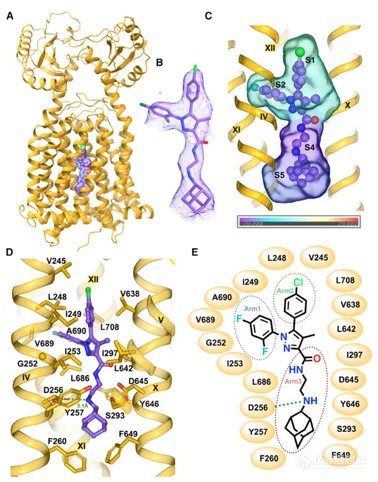
Mechanistic model for MmpL3 inhibitors to bind to the central channel in the transmembrane region and block proton-driven transport
LpqY-SugABC:
Potential gateway for diagnostic probes for Mycobacterium tuberculosis
Unlike MmpL3, which points to drug development,LpqY-SugABC systemshowed anotherImportant application paths: Utilizing the unique trehalose recovery system of Mycobacterium tuberculosis to develop viable bacteria detection and imaging probes.
TrehaloseIt is a core molecule in the synthesis of glycolipids in the cell wall of Mycobacterium tuberculosis.Mycobacterium tuberculosisDuring the synthesis of important glycolipids such as trehalose monomycolic acid, trehalose is released; subsequently, the LpqY-SugABC system is responsible for recycling trehalose into the cytoplasm.
The study analyzed the structure of the complex of Mycobacterium tuberculosis LpqY-SugABC and trehalose through cryo-electron microscopy.3, and further obtained the crystal structure of LpqY combined with various trehalose analogs. The structure shows that LpqY adopts a similar"Flytrap"The closed conformation recognizes trehalose, and the two glucose units are stabilized by interacting with multiple key residues, including Arg421, Asp97, Glu258, Asn151, Gln76, Thr42, Asp43, and Trp276. Multiple hydroxyl groups of trehalose participate in the hydrogen bonding network, ensuring highly specific recognition.
More importantly, the substrate-binding pocket of LpqY is not completely rigid, but has some plasticity. The study found that 6-TreAz, 6,6′-difluorotrehalose, 6,6′-trehalose diazide and trehalose analogs with larger substituents can still be recognized by LpqY to varying degrees. This means that researchers can introduce fluorescent groups, azide groups or other functional groups onto the trehalose skeleton to make it a molecular probe that can enter tuberculosis bacteria and mark the state of viable bacteria.
this discoveryProvides new ideas for tuberculosis diagnosis: Different from simply detecting nucleic acids or antigens, the subsequent development of trehalose analog probes is expected to utilize the sugar metabolism pathway of tuberculosis bacteria to achieve specific labeling and imaging of living bacteria, thus servingEarly diagnosis and drug efficacy evaluationandInfectious process research。
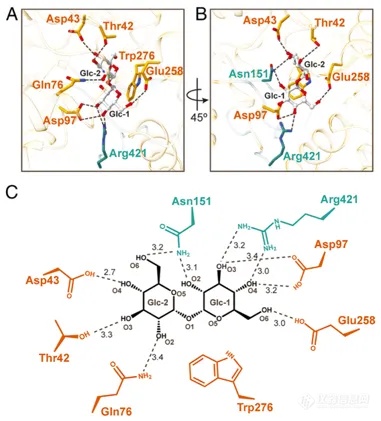
LpqY recognizes seaweed and provides the structural basis for diagnostic probes to enter tuberculosis bacteria
MST technology provides quantitative "evidence chain" of key interactions
In such cases as MmpL3 and LpqYResearch on membrane proteins and substrate-binding proteins, the research team facedCommon difficultiesyes:
The target protein system is complex, the ligand molecules include bothStrongly hydrophobicSmall molecule inhibitors, including carbohydrate analogs with multiple hydroxyl groups or functional modifications;
At the same time, membrane protein samples often require detergents, lipid nanodisks and other environments to maintain a stable conformation.Traditional interaction detection methodIt is susceptible to limitations such as immobilization, large sample consumption, or insufficient system compatibility.
Microvolume Thermophoresis Technology (MST)These studies provide importantQuantitative interaction evidence1。
For MmpL3 inhibitor research, MST directly determines the binding affinity of small molecule compounds to MmpL3KdAbout 9.58 μM, combined with the drug susceptibility experiment of MmpL3 overexpression strains and the cryo-electron microscopy structure, we jointly established"Compound binding - target verification - structure analysis - antibacterial activity"complete chain of evidence.
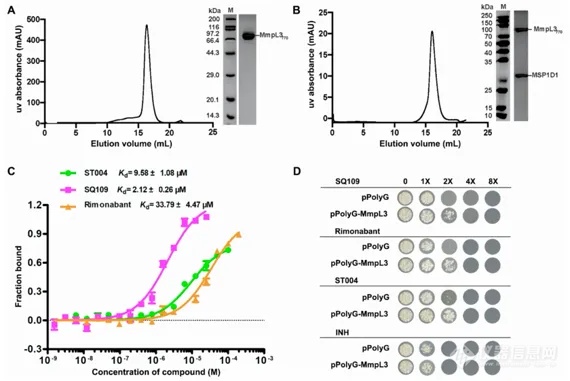
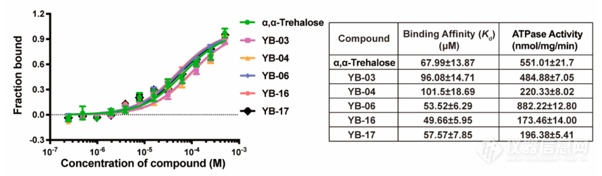
For the LpqY-SugABC system,MSTThe same applies toAssessing the binding ability of trehalose and its analogs to LpqY. Such studies not only need to know whether an analog can be recognized by LpqY, but also need to further compare the effects of different modification groups on binding affinity and transport potential.MST can be in solutionFinishProtein-Small Moleculeinteraction detection,Avoid fixationPossible conformational interference. Combined crystal structure, cryo-electron microscopy structure and substrate-stimulated ATPase activity experimentsform complementary explanations: Structural analysis shows "how molecules are identified",MST quantitatively shows"What is the difference in binding strength?" The ATPase activity further suggests "whether this binding may drive transport."
What the research team says
NanoTemperprovided by the companyMST and Label free technology, the biggest advantage is that it canin solution state,byVery little protein consumption, is not limited by the detection buffer, and can quickly complete the detection of multiple groups of molecular interactions, using a variety of labeling methods or only using the protein's own fluorescence.No need to fix the sample, to maximize the retention of proteins and ligandsnatural binding state, providing key quantitative basis for drug screening.
We look forward to NanoTemper continuing to use its stable, sensitive, and low sample consumption molecular interaction technology platform in the future to help achieve breakthroughs in the development and research of more pathogenic microorganisms, membrane protein drug targets, and diagnostic probes.
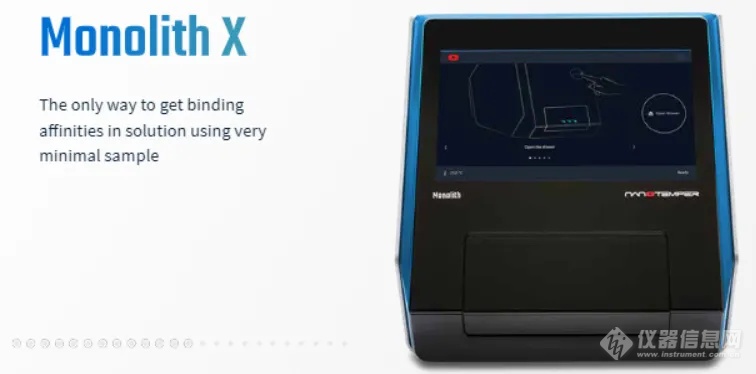
Molecular interaction platform Monolith X
"Easy, fast and accurate detection of intermolecular interactions"
Introduction to the first author and research team
Dr. Hu Tianyu
ShanghaiTech University

Postdoctoral fellow in Rao Zihe’s research group at ShanghaiTech University, engaged in research on Mycobacterium tuberculosis, transporters related to lipid transport and nutrient uptake, inSci Adv、Nat Struct Mol Biol&StructurePublished many papers in international journals.
Rao Zihe academician teamHe has long been engaged in research on the molecular mechanisms of important pathogens such as influenza viruses, coronaviruses, HIV, and Mycobacterium tuberculosis and the development of related vaccines, neutralizing antibodies, and small molecule drugs. He has published more than 480 peer-reviewed papers in international scientific journals, including"Cell" (Cell), "Nature" (Nature), "Science" (Science)Published 32 research papers in the main issues of the three major scientific journals and been cited more than 43,100 times.
References
Hu T, Yang X, Liu F, Sun S, Xiong Z, Liang J, Yang X, Wang H, Yang X, Guddat LW, Yang H, Rao Z, Zhang B. Structure-based design of anti-mycobacterial drug leads that target the mycolic acid transporter MmpL3. Structure. 2022 Oct 6;30(10):1395-1402.e4. doi: 10.1016/j.str.2022.07.009IF: 4.3 Q1
Yang X, Hu T, Yang X, Xu W, Yang H, Guddat LW, Zhang B, Rao Z. Structural Basis for the Inhibition of Mycobacterial MmpL3 by NITD-349 and SPIRO. J Mol Biol. 2020 Jul 24;432(16):4426-4434. doi: 10.1016/j.jmb.2020.05.019IF: 4.5 Q2
Liang J, Liu F, Xu P, Shangguan W, Hu T, Wang S, Yang X, Xiong Z, Yang X, Guddat LW, Yu B, Rao Z, Zhang B. Molecular recognition of trehalose and trehalose analogues by Mycobacterium tuberculosis LpqY-SugABC. Proc Natl Acad Sci U S A. 2023 Aug 29;120(35):e2307625120. doi: 10.1073/pnas.2307625120IF: 9.1 Q1
View More from This Booth

New Product | Monolith Omni, a one-stop solution for multifunctional molecular interaction and stability analysis

NanoTemper's new variable temperature control | gives you more confidence in in-depth characterization of protein stability

Look at "AI + high-precision characterization" to increase the "stability" of China's innovative drugs overseas