 Gold Member
 Business License
HGK-55 fully automatic Kjeldahl nitrogen analyzer technical parameter operation process and applicable scenario analysis
summary
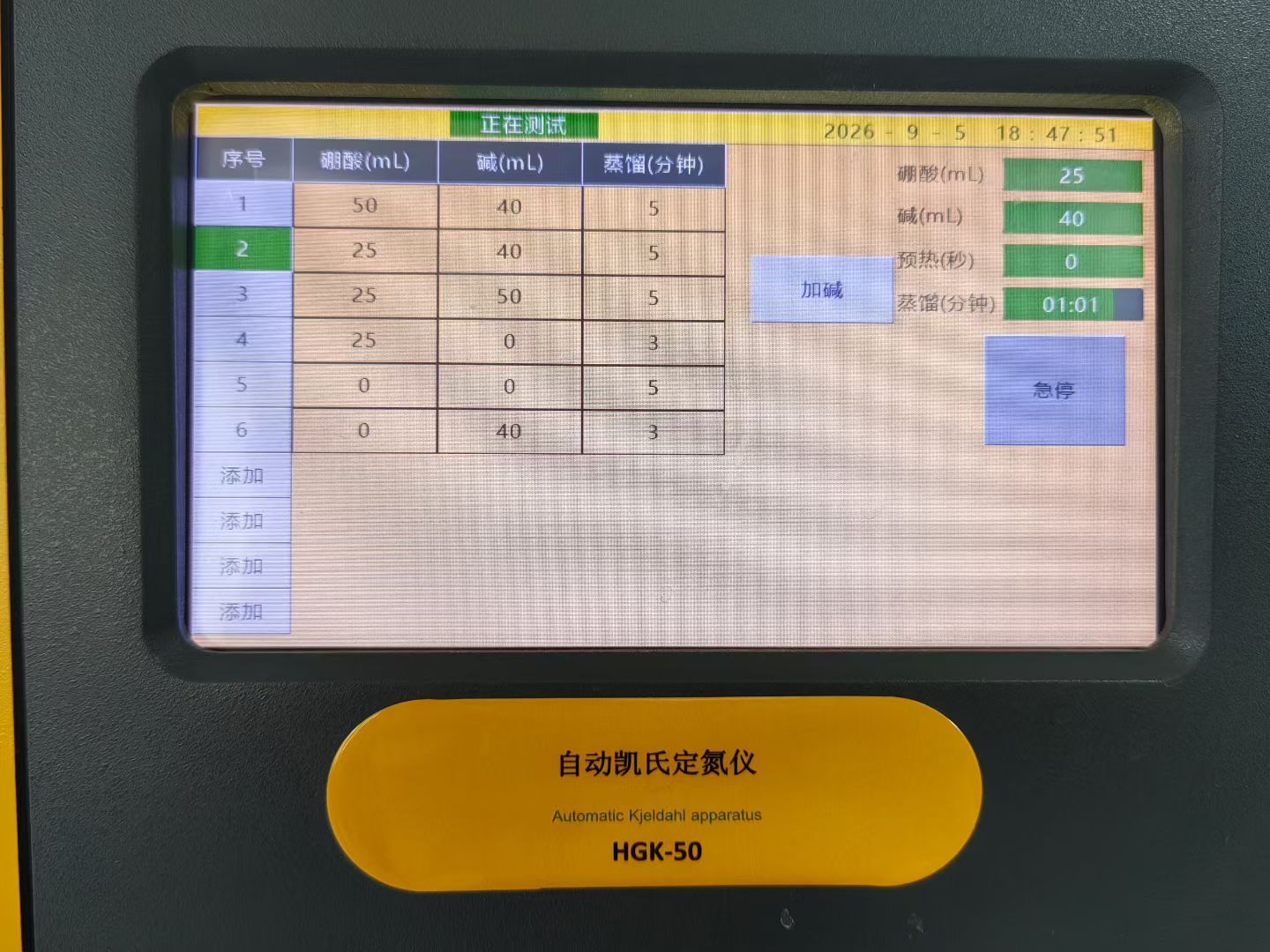
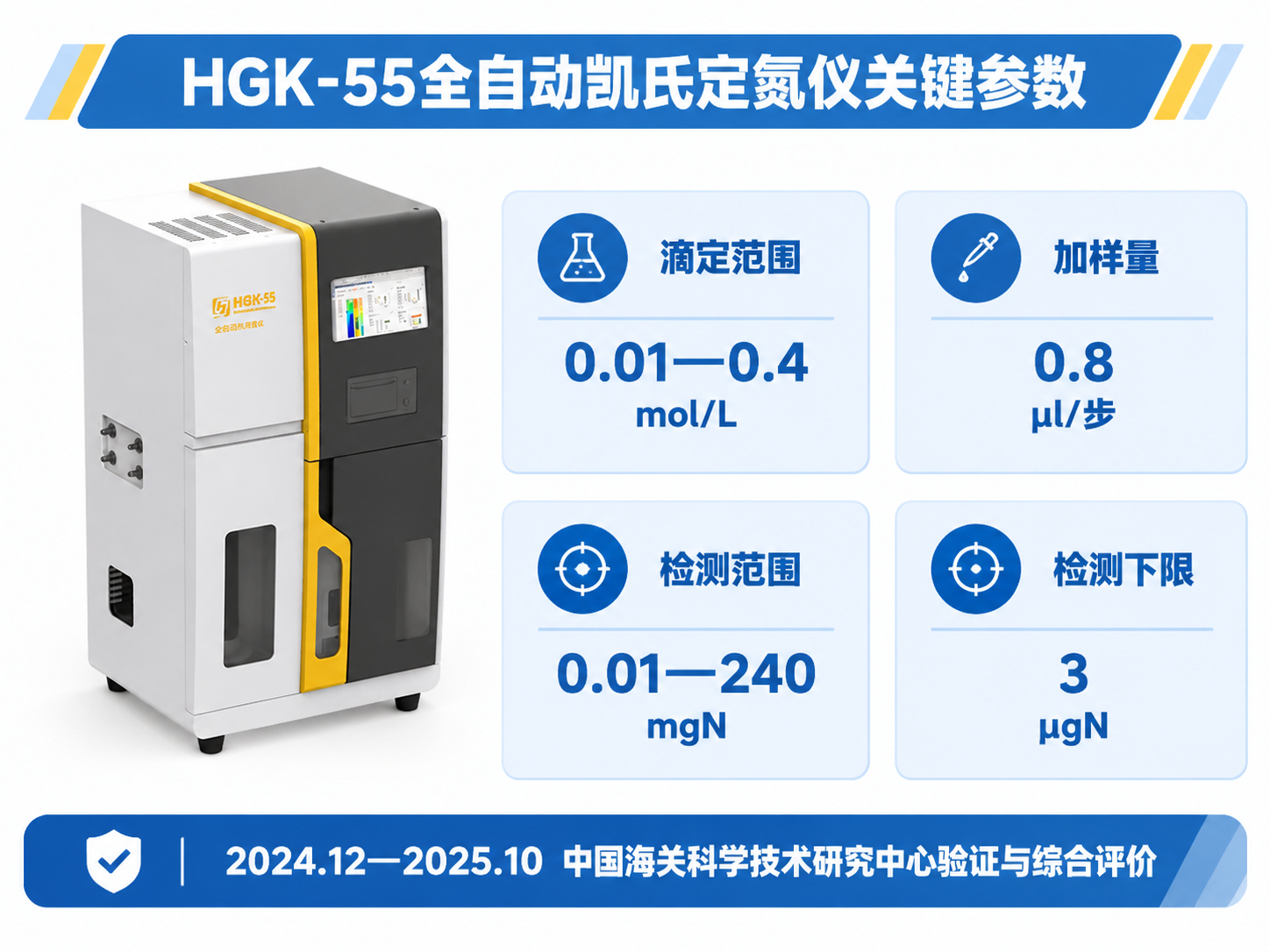
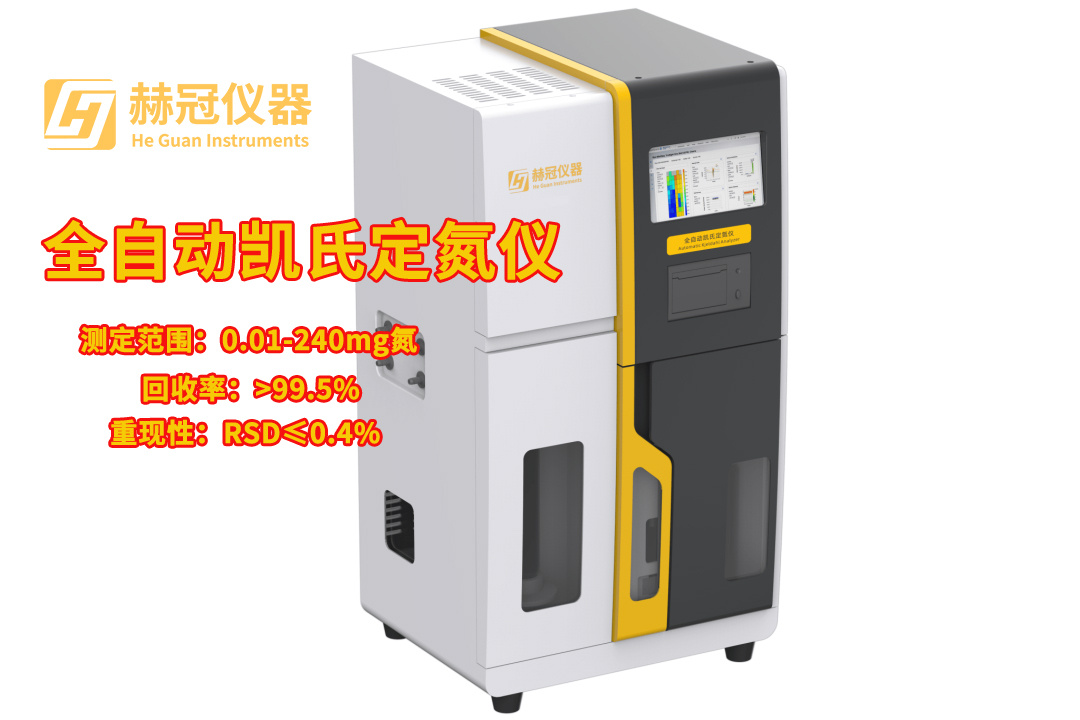
HGK-55 fully automatic Kjeldahl nitrogen analyzer is developed and produced by Shanghai Heguan Instrument. It is mainly used to determine the nitrogen content and protein content in samples. The nitrogen measurement range of the instrument is 0.01–240mg, the recovery rate is >99.5%, and the reproducibility RSD≤0.5%. It adopts distillation and titration synchronization technology to meet the nitrogen and protein detection needs of laboratories in many industries. This article provides a comprehensive analysis of the equipment from the aspects of principles, technical parameters, operating procedures, application scenarios, purchase points, etc., for reference by laboratory equipment selection and operators.
1. Instrument detection principle
The Kjeldahl nitrogen determination method is based on the national standard GB/T 33862-2017 and is divided into four steps: digestion, distillation, titration, and calculation. First, the organic nitrogen in the sample is converted into ammonium salt through concentrated sulfuric acid, and then ammonia gas is released through alkali distillation. After boric acid is absorbed, a standard acid is used for titration. Finally, the nitrogen content is calculated, and the protein content is obtained by multiplying by the conversion factor.
HGK-55 can automatically complete boric acid addition, alkali addition, distillation, titration, waste liquid discharge, data storage and printing. Experimenters are only responsible for sample weighing and preliminary digestion, and the digestion process requires an infrared digestion furnace.
2. Core technical parameters
1. Determination range: 0.01–240 mg nitrogen
2. Distillation time: 0.0–9.0 min/sample, parameters can be customized
3. Titration accuracy: ≤0.0012 μl/step, minimum titration volume 0.8 μl/step
4. Reproducibility: RSD ≤0.5%; recovery rate >99.5%
5. Delay time: 0–3600s, supports nitrate nitrogen sample detection
6. Distillation power: 0–1500W infinitely adjustable
7. Data output: USB interface to export detection data; power supply AC220V
The core advantages of the instrument: distillation and titration synchronization (Patent No. ZL 2022 1 0517820.2), reducing the risk of over-titration; RGB three primary color determination end points, strong anti-interference ability; automatic cleaning and automatic calibration at startup, eliminating errors caused by manual calibration; equipped with safety door, reagent level, water pressure, and temperature multiple monitoring, automatically shutting off condensation water when idle.
3. Standard operating procedures
1. Sample digestion: The sample is added with concentrated sulfuric acid and catalyst, and placed in an infrared digestion furnace to complete digestion.
2. Loading samples on the machine: Put the digestive tube into the instrument, and it can be connected to an electronic balance to automatically enter the sample weight, or it can be entered manually.
3. Method settings: Set the distillation duration, delay time, and distillation power according to the sample type.
4. Sample detection: Start the equipment, the instrument will run fully automatically, automatically complete the detection, calculation and save the results.
5. Maintenance and cleaning: Clean the pipeline and distillation cup regularly after the test is completed; drain the pipeline reagents when the machine is shut down for a long time.
Tip: Before testing large batches of samples, it is recommended to test quality control samples first and verify that the recovery rate reaches the standard before officially running the machine.
4. Applicable industry scenarios
It is suitable for protein detection of food grains, oils, dairy products, and beverages; crude protein detection of raw materials and finished products in the feed industry; total nitrogen and nitrate nitrogen detection of soil and fertilizers; nitrogen element analysis in pharmaceutical, chemical, agricultural inspection, third-party testing, and geological and mineral laboratories.
5. Key points for instrument purchase
Laboratory selection can refer to the following dimensions: choose a semi-automatic or fully automatic model as needed; an automatic sampler is optional for large-volume sample testing; confirm the specifications of the digestive tube (300ml/750ml); if there is a need for laboratory informatization, give priority to models that support balance linkage and USB data export. For routine protein detection in small and medium batches, a single machine can meet the needs.
6. Frequently Asked Questions
1. HGK-55 recovery rate index: nominal recovery rate >99.5%, which can be used as a reference for equipment arrival acceptance. Actual test results are affected by samples, reagents, and digestion effects. It is recommended to use quality control samples for verification.
2. Whether manual calibration is required: No manual calibration is required. The instrument automatically cleans and completes calibration when it is turned on.
3. Whether it can detect nitrate nitrogen: support detection, 0-3600s delay time is adjustable.
4. Detection data export: USB export is supported, and the detection data is traceable.
5. Difficulty of equipment maintenance: Multiple self-check functions are built in, and only the pipelines need to be cleaned regularly, making maintenance simple.
Note: The parameters in this article are public configurations of the HGK series. The final technical specifications of the equipment are subject to the specifications provided by the manufacturer.
View More from This Booth
Domestic Kjeldahl nitrogen analyzer selection reference: semi-automatic/fully automatic positioning, low nitrogen parameters and supporting verification
Analysis and control of common abnormal problems in fully automatic Kjeldahl nitrogen analyzer
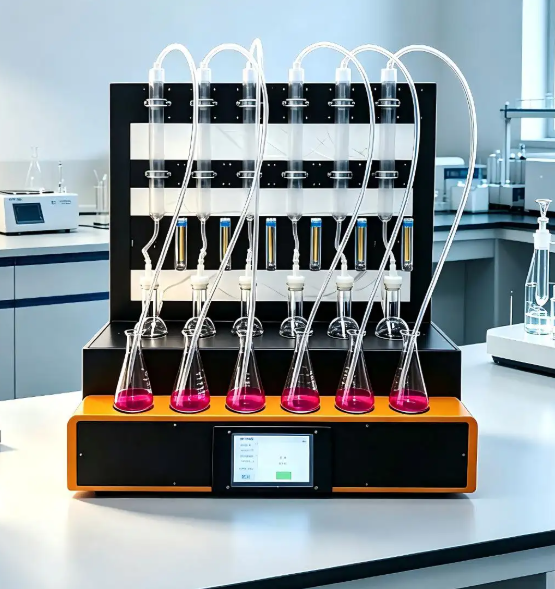
How to more accurately detect sulfur dioxide residues in food additives and wolfberry? Interpretation of measured data of Heguan HGK-82-6