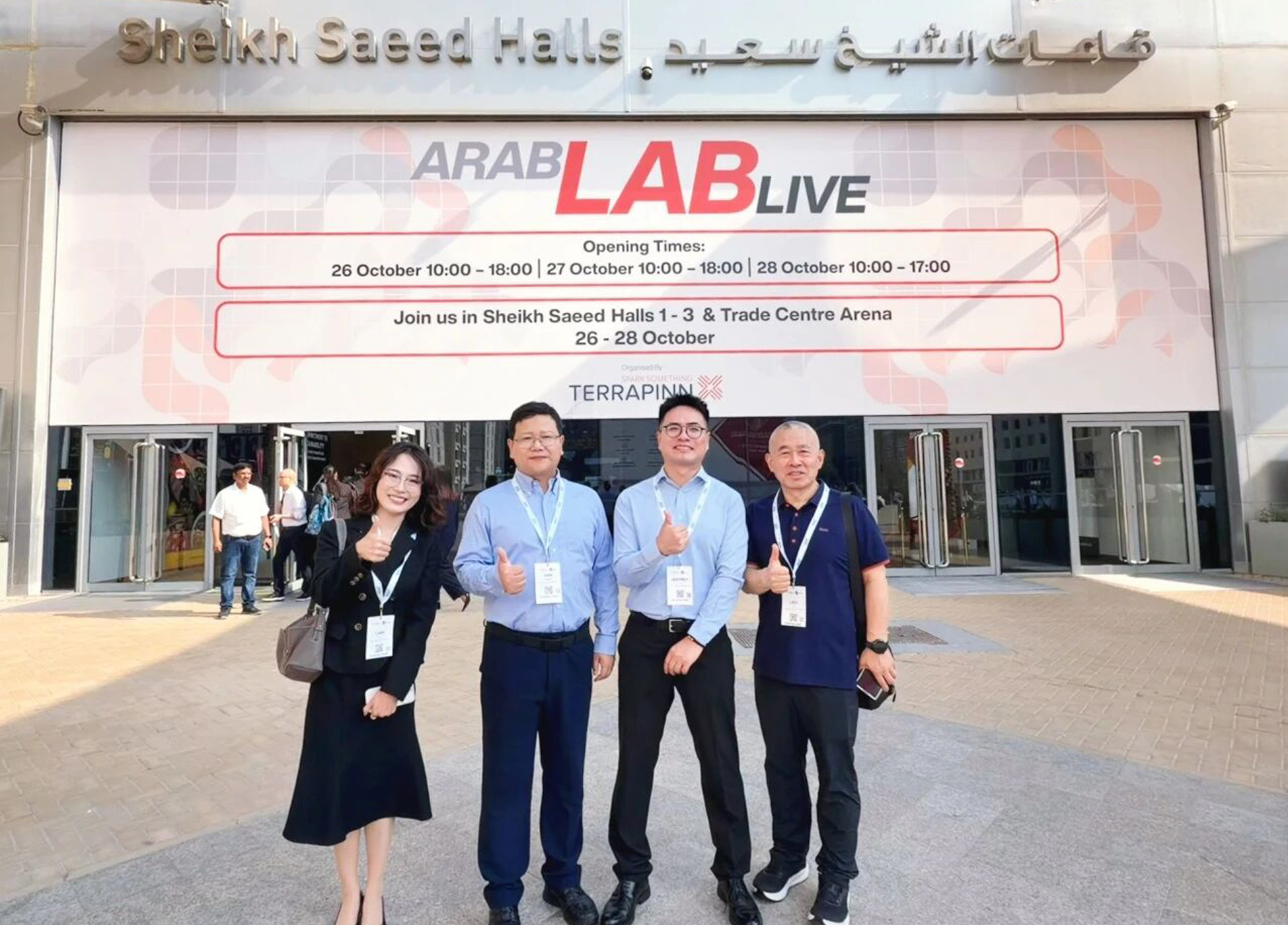
Being close to users continues from every meeting, Haineng goes to ARABLAB again
Company News
Oct 30, 2026

There is a problem with cables and pipes: they are all green when shipped from the factory, but the problem only emerged three years later.
The root cause of the aging of polyethylene materials is oxidation—oxygen attacks the polymer chains bit by bit, causing the material to become brittle, cracked, and pulverized. This process takes place in years at room temperature and cannot wait in the laboratory. What really determines the longevity is not the base material itself, but the handful of antioxidants in the formula: how much is added, how evenly dispersed it is, and how much is left under the high temperature shear of the extruder.
Why promise customers 30 years? Rely on a number that can be measured in 8 minutes:Oxidative induction period (OIT)。
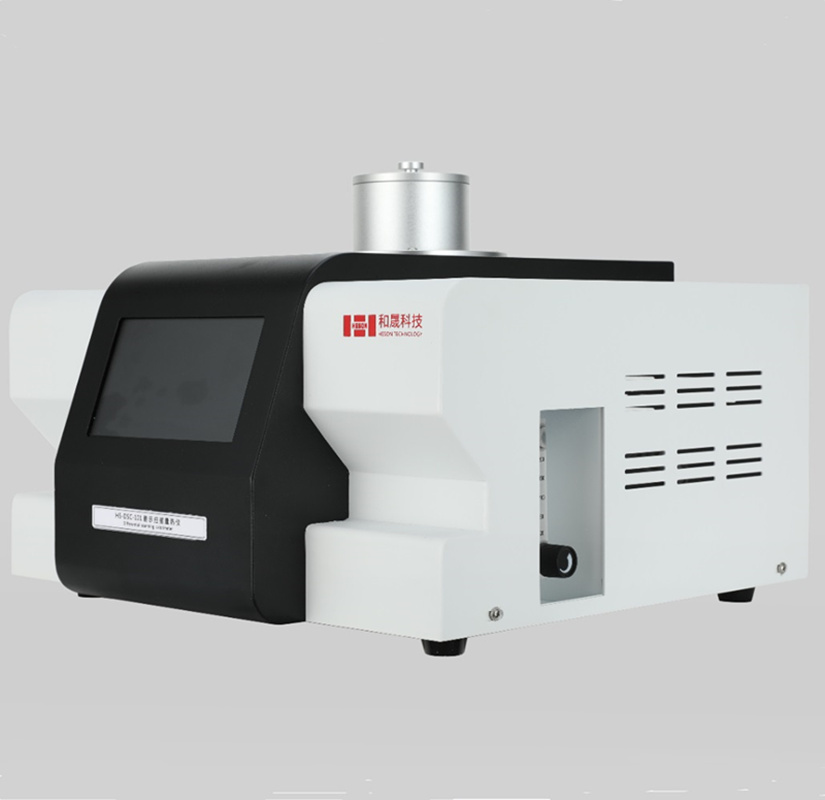
Use differential scanning calorimeter (DSC). The steps are short:
Take a few milligrams of the sample and put it into the crucible.NitrogenRaise the temperature to the test temperature under protection (polyolefins are usually kept at a constant temperature of 200~210℃);
After the temperature stabilizes, the atmosphereswitch to oxygen, start timing at the same time;
The moment the antioxidant is exhausted, the material begins to oxidize and release heat, and the curve turns upward - the time when this turning point occurs is OIT.
In other words, OIT measures "how long the antioxidant system can last." The instrument will automatically complete the switch from nitrogen to oxygen and accurately time it, and the results will be available within thirty minutes.
The corresponding standards are also mature: ISO 11357-6 specifies the method for measuring OIT by DSC, and GB/T 17391 writes it into the technical requirements for polyethylene pipes. Pipes, cable insulation materials, photovoltaic backsheets, waterproof membranes, these products that "will last for decades if buried" almost all have this item in the incoming material inspection.
Watch the batch.For materials from the same supplier, two batches of OIT last for 25 minutes and one for 6 minutes. It is most likely that the antioxidant is missing or the masterbatch is unevenly dispersed. Conventional indicators such as melt index and density may be exactly the same on both sides - the problem of antioxidant system cannot be revealed by conventional indicators.
Watch the craftsmanship.If the extrusion temperature is too high and the screw shear is too strong, the antioxidants will be consumed during the processing. The OIT of the same batch of materials is measured once before and after molding, and the difference is the "tuition fee" of the process.
Watch aging.Measure once before and after the accelerated test in the thermal aging chamber. The OIT decline curve directly corresponds to the life prediction model.
The requirements for DSC to do OIT are concentrated in three places:Atmosphere switching should be automatic(Manual air cylinder replacement, the error in switching time is directly entered into the data);The baseline should be stable(Oxidation heat is a small signal, and the inflection point cannot be found accurately if the noise is too loud);The temperature must be accurate(The difference in constant temperature is 1°C, and the OIT can differ by a certain amount).
Take HS-DSC-101 as an example: dual-channel atmosphere automatic switching, DSC resolution 0.001mW, temperature accuracy and repeatability ±0.1°C, these three are exactly the bottom line for trustworthy OIT data.

OIT can't tell you exactly how many years a product will last - that's a combination of formulation and accelerated aging. But it can tell you the moment the material comes in:The antioxidant system of this batch of materials is sufficient to guarantee that life span.
For pipe and cable factories, this inspection is extremely cost-effective: a few milligrams of sample, half an hour, and a whole batch of after-sales products three years later will be blocked.




When you visit any website, it may store or retrieve information on your browser, mostly in the form of cookies. This information might be about you, your preferences or your device and is mostly used to make the site work as you expect it to. The information does not usually directly identify you, but it can give you a more personalized web experience. Because we respect your right to privacy, you can choose not to allow some types of cookies. Click on the different category headings to find out more and change our default settings. However, blocking some types of cookies may impact your experience of the site and the services we are able to offer.