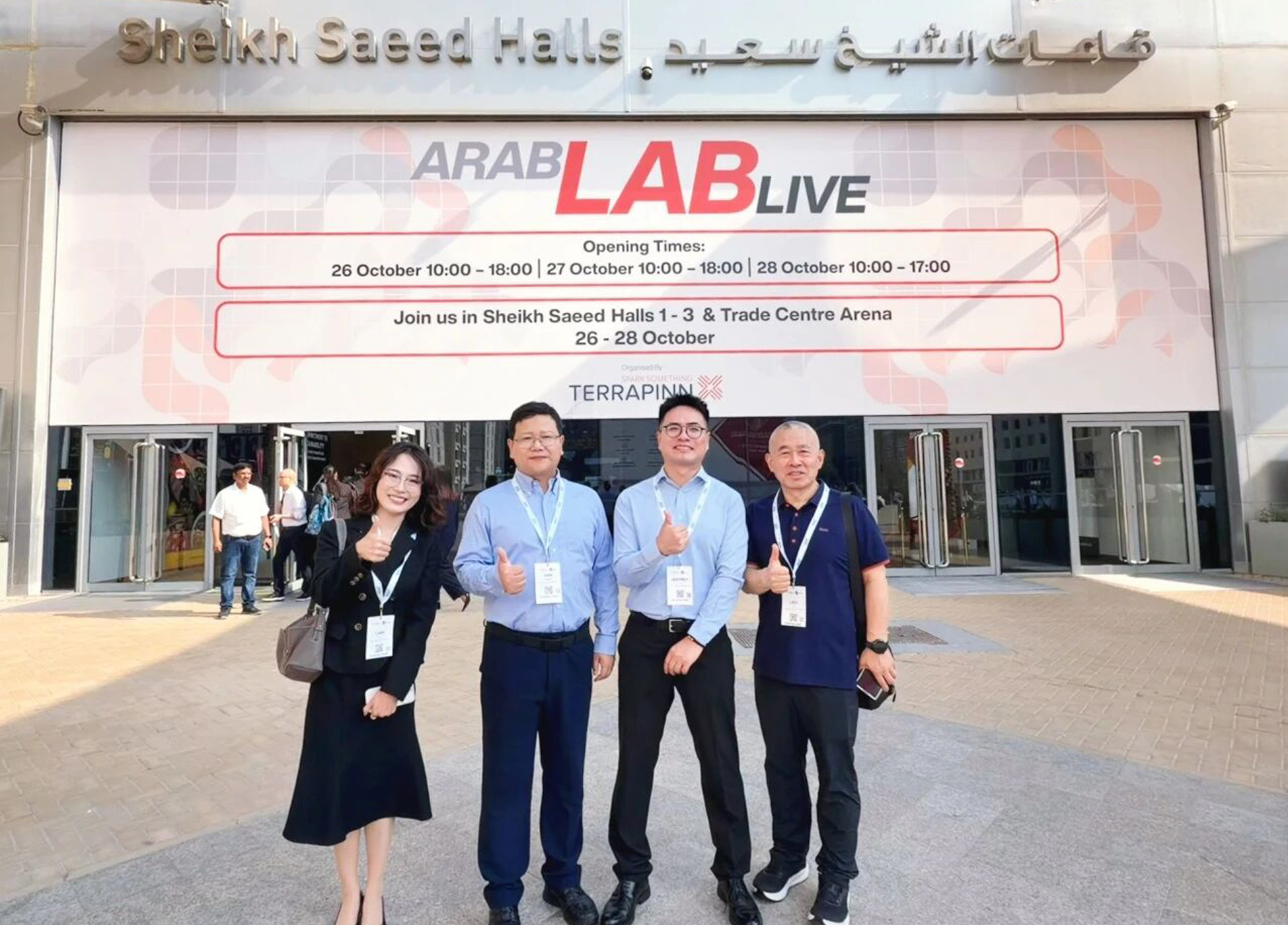
Being close to users continues from every meeting, Haineng goes to ARABLAB again
Company News
Oct 30, 2026

Air flow sieves are commonly used in screening applications of light and ultra-fine powders. However, many people just stare at the parameter table for a long time when selecting a sieve. When they actually use it, they don’t know how to configure the screen, how to adjust the air pressure, and how to perform daily maintenance. Today, I will summarize the experience accumulated in using air jet sieves over the years. I hope it can help friends who are making selections or just getting started.
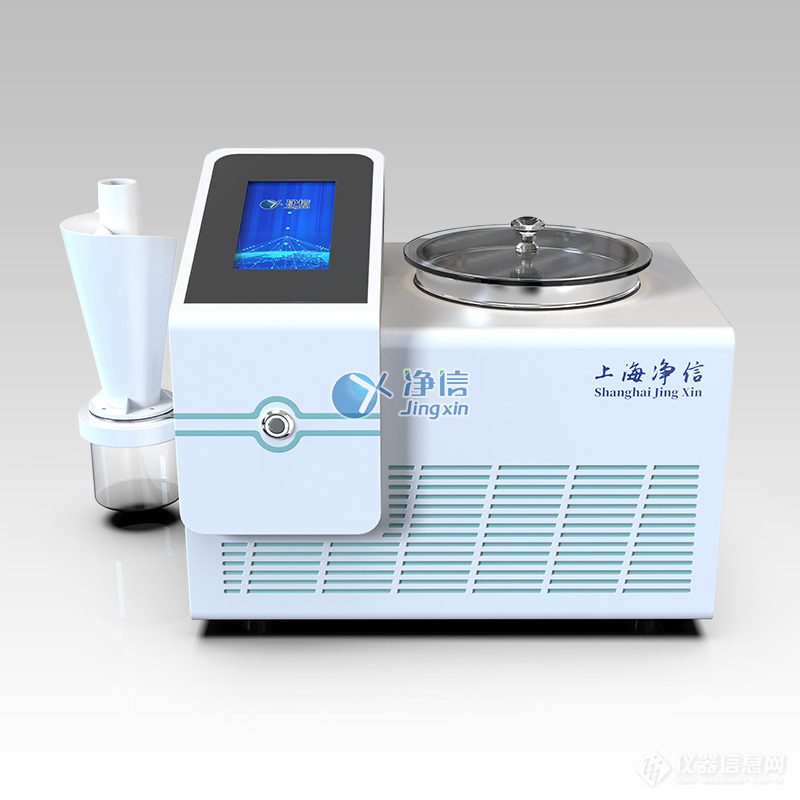
Air flow sieveThese parameters should be understood clearly when selecting a model.
1. Measuring range. This is the most core indicator. Shanghai JingxinJX-QLS air flow sieveThe measuring range is from 15 to 5000 microns, covering a wide range from fine powder to medium particles. You need to first figure out where the particle size distribution of your daily samples lies. If you mainly produce ultrafine powders below a few microns, you may have to consider equipment with a finer range; if you mainly produce particles above a few hundred microns, this range is more than enough.
2. Air pressure adjustment range. The air pressure of the air jet screen is generally adjustable between 0 and 10 kPa, and the touch screen displays it in real time. Why is this parameter important? Because different samples require completely different spraying strengths. The air pressure for light powders needs to be increased, while the air pressure for heavy particles must be turned down. There is no standard answer to how much air pressure adjustment is appropriate. You have to rely on your own samples.
3. Cavity sealing. The fully enclosed design is the standard configuration of the airflow screener. First, it protects the experimenter from dust escape. Second, it ensures stable negative pressure in the chamber and good screening repeatability. When selecting a model, you should check whether the sealing strip of the cavity door is thick and whether the buckle is tight. These details directly affect whether the powder leakage will be used later.
4. Model positioning. Shanghai Jingxin has the JX-QLS standard type, and the JXKQ-200 series is divided into economical type and standard type. If you have sufficient budget and a wide variety of samples, you can go directly to the standard model; if you just fix a few types of powders on a daily basis and the screening requirements are not that high, the economical model is sufficient and has a good price/performance ratio. The specific configuration is subject to the manufacturer's instructions.
Screen selection: bigger aperture is not better
The screen is a consumable component of the air flow sieve and is also the component that most affects the results. Many novices often make two mistakes when setting up a screen for the first time: either buy a bunch of holes to prepare them all, or buy one or two to make do. In fact, there are rules to follow.
1. First find out the particle size distribution of the sample. Use a laser particle size analyzer or microscope to first look at the approximate particle size range of your sample, and then select 2 to 3 screens to cover the target range. For example, if your samples are mainly distributed between 20 and 100 microns, then a three-speed screen of 25 microns, 45 microns, and 75 microns is basically enough.
2. Don’t make the aperture of adjacent screens too large. For example, if you jump directly from 25 microns to 150 microns, the information in the middle will be lost. Generally, it is more reasonable to increase the aperture of adjacent screens by 1.5 to 2 times, so that the data for graded screening can be fine enough.
3. Select special screens for special samples. For example, for samples that are prone to agglomeration, it is recommended to choose a woven sieve with a higher opening rate; if the sample is oily or has high humidity, you may have to use a stainless steel punching sieve or a gold-plated sieve to avoid being blocked and unable to be cleaned. To optimize screening conditions for different powder types, screen selection is the first step.
4. There should be a margin in screen inventory. After being used for a long time, the screen will be worn, deformed, and partially blocked, especially for samples with hard particles. It is recommended to prepare at least two copies of each commonly used aperture, one in use and one as a spare. Otherwise, sudden breakage and discontinuation of accessories will cause delays.
Air pressure adjustment: try slowly from light to heavy
Air pressure is the most important parameter in the operation of air flow screener. I have seen too many novices pump up the air pressure as soon as they start, and the result is that the screening curve is so distorted that it is difficult to see.
1. Light powder (density<0.5g/cm³)。比如淀粉、滑石粉、气相硅,气压建议从低起步。这类样品一吹风就跑,气压太大细粉一下全穿网,粗颗粒反而被团聚体糊在网上。先跑跑看不够再加慢慢加,一点点往上调。
2. Medium density powder (0.5 to 1.5g/cm³). For example, ordinary mineral powders, pigments, and food additives, samples in this category are easier to handle. Run them first according to the parameters recommended in the instructions, and then fine-tune them according to the screening rate.
3. Heavy particles (density>1.5g/cm³). Such as metal powder, slag powder, ceramic powder. It should be noted that too much air pressure will have a great impact on the screen, and the life of the screen will be shortened. This is a balance.
Another experience is how to disperse easily agglomerated powder? Instead of just increasing the air pressure, you can try the strategy of "short-term high air pressure + multiple cycles". Stop for 2 minutes each time to loosen the agglomerates on the screen and then continue running. The effect is better than blowing at full air pressure all the time.
How to match the screening conditions for different samples
1. 3D printing metal powder. This has been done a lot in recent years, such as titanium alloy powder and cobalt-chromium alloy powder. The density of metal powder is high, and the air pressure needs to be higher. The screen must use a high-strength stainless steel screen, otherwise it will deform after several passes.
2. Food powder. Such as flour, milk powder, cocoa powder. This type of sample is afraid of contamination, and the screen and cavity must be thoroughly cleaned every time they are used, or even one set of screens for one sample at a time to avoid cross-odor.
3. Soil and environmental samples. This type of sample has complex components, ranging from coarse to fine. It is recommended to pass through a coarse sieve to remove large particles, and then use an air flow sieve for fine classification.
Routine maintenance of air flow screener: don’t be lazy with these things
The air jet screener looks solid, but if you really want to extend its service life and ensure data stability, you cannot skip routine maintenance.
1. Clean the chamber of the instrument every time you use it. A little bit of the light powder remains, and it will be mixed in next time I make another sample. Use a soft-bristled brush to brush the cavity wall, screen seat, and collection cup. If possible, use an ear cleaning ball to blow into the dead spots.
2. Regular inspection of the screen. Use a magnifying glass to see if the screen mesh is broken, deformed or clogged. If there is a slight blockage, you can use ultrasonic cleaning (be careful not to touch the screen directly with the bottom of the tank). If there is a serious blockage or the wire is broken, just replace it. Don't make do with it.
3. Replace the sealing ring once a year. The sealing tape of the chamber door will age and harden after being used for a long time. After the sealing performance is reduced, the screening negative pressure is not enough, and the result will be floating. It is generally recommended to replace the sealing ring once a year or so. The cost is not high but the impact is great.
4. Calibrate the air pressure sensor regularly. The air pressure is displayed on the touch screen, and the sensor may be biased over time. Calibration must be done regularly, otherwise if you think the adjustment is 5 kPa, it may actually be 4.5, and the experimental data will be inaccurate.
5. Place the environment. Instruments and equipment should be placed on a stable surface, do not pile too many clutter around them, and leave some space behind them for heat dissipation. The ambient humidity should not be too high, otherwise the light powder will absorb moisture and block the network.
How to choose an airflow screener without stepping into pitfalls? My experience is just three words. First, find out the particle size range and density of your sample, and then compare the measurement range and air pressure range of the equipment; don’t spare the screen, match it according to the sample type; don’t be lazy in daily maintenance, keep an eye on the cavity, screen, sealing ring, and air pressure sensor.
We have been using Shanghai Jingxin’s air flow sieve and air jet sieve for several years. The parameter adjustment and maintenance logic of the instrument are not complicated. The key is to be willing to spend time to get your own samples and slowly explore the conditions. The instrument is dead, but the person is alive. After feeling the machine in my hand,ScreeningDepending on the temperament of the device, the data produced will naturally be stable.


When you visit any website, it may store or retrieve information on your browser, mostly in the form of cookies. This information might be about you, your preferences or your device and is mostly used to make the site work as you expect it to. The information does not usually directly identify you, but it can give you a more personalized web experience. Because we respect your right to privacy, you can choose not to allow some types of cookies. Click on the different category headings to find out more and change our default settings. However, blocking some types of cookies may impact your experience of the site and the services we are able to offer.
