
Being close to users continues from every meeting, Haineng goes to ARABLAB again
Company News
Oct 30, 2026

Another major application direction of high-pressure homogenizers in the field of biopharmaceuticals is cell disruption. Whether it is recombinant protein expression, natural product extraction, or enzyme preparation development, when the target product is distributed within the cell, the first step is to break the cell and release the contents into the liquid phase. The level of fragmentation efficiency directly determines the subsequent protein yield, and whether the fragmentation conditions are mild or not determines the degree of activity retention of the target protein.
Commonly used cell disruption methods in the laboratory include ultrasonic disruption, high-pressure homogenization, bead beating, enzymatic lysis, etc. inHigh pressure homogenizerThe advantages of crushing include large processing capacity, good repeatability, and easy amplification. It is the most commonly used crushing method from small laboratory trials to production scale. Different types of cells such as E. coli, yeast, mammalian cells, and algae have very different cell wall structures, and the corresponding crushing process conditions are also completely different. Treating all cell types with the same set of parameters is a common mistake made by many novice protein purifiers.
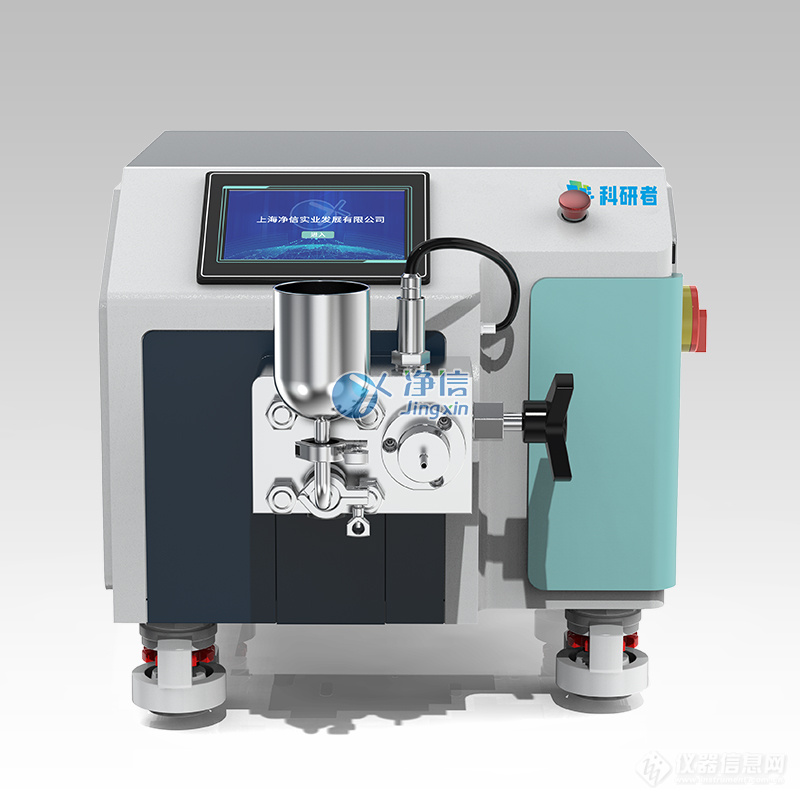
In its service experience with customers in the biopharmaceutical industry, Shanghai Jingxin found that many teams’ understanding of the high-pressure homogenizer crushing process is still at the level of “just run the high-pressure machine twice”, and lack a systematic understanding of the quantitative relationship between crushing pressure, cycle times, temperature control, protein yield, and activity.
Core variables for optimization of process parameters of high-pressure homogenizer
1. Determination of cell disruption pressure
Pressure is the first factor affecting crushing efficiency. The general rule is that the higher the pressure, the more complete the crushing will be in a single pass. However, the pressure selection in the actual process also needs to take into account the shear sensitivity of the target protein. Some proteins are prone to aggregation or inactivation under strong shear. In this case, the pressure cannot be increased blindly in order to pursue the fragmentation rate. For the load of subsequent purification, if the fragmentation is too violent, a large amount of tiny cell debris will be produced, which is difficult to remove by ordinary centrifugation. Higher-speed ultracentrifugation or additional filtration steps are required. Capacity boundaries of homogeneous equipment. Different models of high-pressure homogenizers have different maximum pressures. When selecting, you need to match the target process pressure range and leave a margin.
The classic method for optimizing pressure is a gradient experiment: fix the number of cycles, crush parallel samples under different pressures, and detect the soluble yield of the target protein. Draw the pressure-yield curve and find the pressure point when the yield enters the plateau period, which is the more economical working pressure.
2. Selection of the number of homogenization cycles
The disruption efficiency of high-pressure homogenization has an upper limit, and some cells will not be completely disrupted in the first round. It takes multiple cycles to gradually increase the overall crushing rate. But the more cycles the better. With one more cycle, the material will experience one more high-pressure shear and temperature rise, which will cause greater cumulative damage to heat-sensitive and shear-sensitive proteins. In the experiment, it is necessary to determine a minimum effective number of cycles. Under this number, the crushing rate has reached an acceptable level, and the yield improvement will be limited if additional cycles are added.
3. The importance of temperature control
During the cell crushing process, the heat generated by high-pressure shearing will increase the temperature of the material. For most enzymes and active proteins, temperature rise will cause denaturation and inactivation. Cooling measures must be considered in process design. A common practice is to install a cooling water jacket outside the homogenizing valve, pre-cool the material to about 4°C before feeding, and continue to flow cooling water during the crushing process. The discharge temperature needs to be monitored in real time. If it exceeds the set threshold, the single processing volume must be reduced or the cycle interval time must be increased. For particularly heat-sensitive proteins, you can even use an intermittent operation of "run one round, cool in an ice bath for a while, and then run the next round" to control the cumulative temperature rise to a minimum.
4. Material concentration and feeding conditions
The concentration of cell suspension will also affect the disruption effect. If the concentration is too high, the viscosity of the material will be high, the shear distribution when passing through the homogenization valve will be uneven, the crushing efficiency will decrease, and it will be easily blocked. The concentration is too low, the single processing volume is small, the production efficiency is low, and the subsequent concentration cost is high. The general experience is to resuspend the bacterial pellet in an appropriate proportion and control it within a suitable concentration range. The specific concentration range needs to be determined comprehensively based on the type of bacteria, subsequent purification process and equipment parameters. Before feeding, it is recommended to mix the bacterial solution thoroughly to remove large clumps. If necessary, filter it with gauze to avoid clogging the homogenization valve.
Evaluation index of crushing effect of high-pressure homogenizer
How to judge whether the cell disruption is qualified? You can't just rely on "it looks broken", you need to quantitatively evaluate:
1. Soluble yield of target protein. After fragmentation, centrifuge the supernatant, detect the target protein content, and compare it with the total protein amount before fragmentation to calculate the release rate. This is the most direct process indicator.
2. Microscope observation. Take a smear of the broken sample for microscopic examination to observe the proportion of intact cells remaining. For bacteria and yeast, you can visually see the degree of fragmentation.
3. Clarity and viscosity. The clarity of the lysate after disruption indirectly reflects the particle size distribution of cell debris. The viscosity is related to the amount of genomic DNA released. If the viscosity is too high, it means the fragmentation is too violent.
4. Protein activity is retained. For enzymes or biologically active proteins, it is necessary to measure the activity units after fragmentation, compare them with the theoretical total activity, and calculate the activity recovery rate.
A complete set of cell disruption and homogenization processes requires a comprehensive look at these indicators, and cannot just focus on one dimension.
Frequently asked questions and troubleshooting of high-pressure homogenizer cell disruption
1. The crushing rate is not up to standard: first check whether the actual pressure reaches the set value and confirm that the pump body is working properly. If the pressure is OK, try increasing the number of cycles. If it still does not meet the standard, consider whether the cell wall of the strain itself is too thick, and it may be necessary to combine enzymatic pretreatment with assistance.
2. The protein yield is low but the fragmentation rate is high: The fragmentation rate is sufficient but the yield is low, indicating that the target protein is not fully released or denatures and precipitates after release. Check whether the crushing temperature is too high or the pressure exceeds the tolerance range of the protein.
3. The viscosity of the lysate is too high: It is most likely caused by the release of a large amount of genomic DNA. You can consider adding nuclease treatment, or reducing the crushing intensity to reduce the degree of fragmentation of cell debris.
4. There is a large difference between batches: check whether the inoculation amount and culture conditions of the bacteria are uniform, and whether the resuspended concentration of the bacterial slurry is consistent. At the same time, check the wear of the homogenizing valve. The decrease in sealing performance after long-term use will affect the crushing stability.
For protein purification R&D teams, it is recommended not to use general parameters by default, but to find a pressure-cycle-temperature combination suitable for their own expression system. This can not only effectively increase the yield of the target protein, but also reduce a lot of trouble in subsequent purification. Shanghai Jingxin GSL SeriesHigh pressure homogenizerCovering different models from laboratory micro-processing to pilot scale, it is suitable for the crushing process development needs at all stages of biopharmaceutical research and development. Specific parameter selection recommendations are based on actual target protein characteristics and communicated with the manufacturer's technical team.






When you visit any website, it may store or retrieve information on your browser, mostly in the form of cookies. This information might be about you, your preferences or your device and is mostly used to make the site work as you expect it to. The information does not usually directly identify you, but it can give you a more personalized web experience. Because we respect your right to privacy, you can choose not to allow some types of cookies. Click on the different category headings to find out more and change our default settings. However, blocking some types of cookies may impact your experience of the site and the services we are able to offer.