
Being close to users continues from every meeting, Haineng goes to ARABLAB again
Company News
Oct 30, 2026

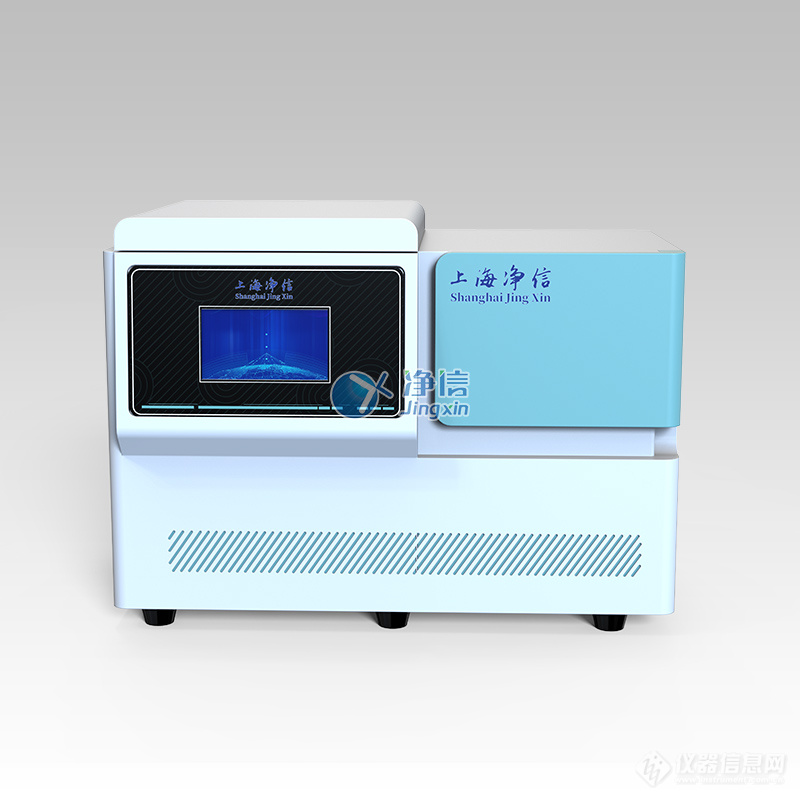
The step of pretreatment and grinding of chemical raw materials may seem inconspicuous, but when real problems arise, it often lies in the distribution of sample grinding particle size. If the thickness of a batch of pigment powder is uneven, dispersion experiments and color matching slurry tests will be carried out later, and the repeatability of the results will be very poor; if the catalyst carrier is not ground finely enough, the specific surface area will not increase, and the catalytic activity data will drift.Laboratory grinderIt is the key equipment at this stage to bring the particle size of raw materials to a controllable range.
Why does chemical raw material pretreatment require grinding?
The common types of raw materials in chemical laboratories can be roughly divided into three categories: pigments (organic/inorganic toners), fillers (calcium carbonate, talc, silica, etc.), catalysts and their carriers. When these raw materials are returned from suppliers, they are usually in the form of coarse powder, granules or even blocks. There are several problems in using them directly for reaction or characterization:
1. Broad particle size distribution. When coarse particles and fine particles are mixed together, the specific surface area difference is large, and the dissolution rate and dispersion stability are unstable.
2. Poor mixing uniformity. In multi-component formulas, different raw materials have different sedimentation speeds, and the sampling representativeness is poor.
3. Reaction kinetics are uncontrollable. For example, if the particle size of the catalyst carrier is large and the active center is not fully exposed, the data from the small scale test will not be accurate when enlarged to the pilot scale.
Therefore, before formal experiments, almost all chemical R&D laboratories will set up a "grinding + sieving" pre-treatment process. In the past, manual grinding in a mortar was low-efficiency and poor in consistency. Now the mainstream method is to use a laboratory grinder to centrally process a batch of samples, and then uniformly screen and classify them.
How much impact does the particle size uniformity of sample grinding have on subsequent experiments?
Taking pigment dispersion as an example, if the particle size of the toner is reduced from 10 microns to 2 microns, the gloss and tinting power of the color paste will be significantly improved under the same sanding process. However, if there are both 10 microns and 2 microns in the same batch of samples, the produced color paste will have local coarse grains, blooming, and uneven gloss. When doing color matching experiments, this deviation directly leads to repeated adjustments to the formula.
Catalyst direction is more sensitive. Taking supported catalysts as an example, the particle size and specific surface area of the carrier (such as alumina, silica) directly determines the loading uniformity of the active component. The grinding is not in place, the internal pores of the carrier are not opened, and the active components can only be attached to the outer surface. After roasting, the activity data will be lower than expected. If the data fluctuates during the small-scale trial stage, the process parameters for subsequent pilot-scale amplification will not be legal at all.
The packing direction is similar. When fillers such as calcium carbonate and talc are added to the resin system, the particle size distribution directly affects the rheological and mechanical properties. If different batches from the same filler supplier are not uniformly ground, the measured tensile strength and impact strength data may fluctuate by more than 10%, which is a very troublesome thing when formula screening.
Typical configuration of laboratory grinder in chemical pretreatment
When choosing a tissue grinder for chemical R&D laboratories, you usually need to pay attention to the following points:
1. Sample grinding throughput. In the small-scale trial stage, only a few to a dozen samples may be processed at a time, and a desktop grinder is sufficient; but if it is the formula screening period, and dozens of groups of different raw material ratios need to be run at a time, multi-station grinding equipment needs to be considered.
2. Grinding media compatibility. The properties of raw materials such as pigments, fillers, and catalysts vary greatly. Some are afraid of iron contamination (for example, the catalyst cannot introduce metal ions), and some require agate or zirconia grinding media. The material selection range of the grinding jar of the grinder equipment should be wide.
3. Temperature control capability. Some organic pigments will generate heat during the grinding process. Excessive temperature may cause crystalline transformation or color shift. Equipment with cooling or low-temperature grinding functions is more reliable.
4. Repeatability of sample grinding between batches. If the same raw material is ground at different times and by different operators, the difference in particle size distribution cannot be too great. This requires that the vibration frequency, amplitude, and grinding time parameters of the laboratory grinder equipment must be independently set and recordable.
Shanghai Jingxin’s laboratory grinder product line covers chemical pretreatment needs from small amounts of samples to medium throughput. The grinding jar materials can be selected from stainless steel, agate, zirconia, etc., and are suitable for the pretreatment of different types of raw materials such as pigments, fillers, and catalysts. For chemical R&D laboratories, it is more practical to choose a grinder with stable parameters and optional media than to worry about brand premium.
Several common pitfalls in the practical operation of grinders
1. The longer the sample grinding time, the better. Many people think that the finer the grinding, the better, but in fact, excessive grinding will cause powder agglomeration, especially nano-scale fillers, which will not be dispersed if grinding is too fine. It is recommended to do a gradient experiment first, measure the particle size distribution in several steps from 30 seconds to 3 minutes, and find the most cost-effective time point.
2. No clean cross-validation. When changing different raw materials, the grinding jar and grinding beads must be clean. Especially when changing from dark pigments to light-colored fillers, residual toner will directly contaminate the next batch of samples. The normal practice is to pre-grind with blank media or waste of the same type, then pour it out before officially loading the sample.
3. Only look at the average particle size but not the distribution. D50 can only represent the median value, but what really affects performance is often D90 or the proportion of coarse particles. After grinding the sample, it is recommended to use a laser particle size analyzer to measure the complete distribution instead of just looking at one value.
The value of laboratory grinders in the pretreatment of chemical raw materials is essentially to bring the "raw material state" from an uncertain state back to a state that is controllable by the laboratory itself. Only when the sample particle size is uniform can subsequent dispersion, reaction, and characterization data be repeatable. For the chemical R&D team, instead of repeatedly looking for the cause in the subsequent experimental stages, it is better to select the right experimental equipment and stabilize the parameters in the pre-processing sample grinding step.




When you visit any website, it may store or retrieve information on your browser, mostly in the form of cookies. This information might be about you, your preferences or your device and is mostly used to make the site work as you expect it to. The information does not usually directly identify you, but it can give you a more personalized web experience. Because we respect your right to privacy, you can choose not to allow some types of cookies. Click on the different category headings to find out more and change our default settings. However, blocking some types of cookies may impact your experience of the site and the services we are able to offer.