
Inconsistent Results When Operators Change? This Chinese-Made Homogenizer Turns Hands-On Expertise into Standardized Programs
Featured Case Studies
Sep 21, 2026

For many procurement users, choosing a reliable and durable product from among the thousands of instrument brands of mixed quality on the market has always been a headache. To improve users’ selection efficiency and help them buy the “big brand, good instrument, excellent service” they desire, Category Pioneers focuses on highly competitive, fast-growing instrument categories and selects the domestic/imported TOP 5 brands in each sub-category for users.
Because Category Pioneers companies have long concentrated on a specific sub-market, continuously honing their production technology or processes, and have withstood the test of long-term use in the daily work of thousands of users, they ultimately rank at the forefront nationwide, or even globally, in single-product market share. Category Pioneers instruments have also earned much praise and usage feedback from users. Today we share the user insights on the INSA Optics INSA FOLI10 FT-IR Spectrometer, a Category Pioneer.
Clever Use of FT-IR to Read Ligand Electronic Effects — FOLI10 for evaluating the σ-acceptor ability of dicationic tetrylene ligands.
In homogeneous transition-metal catalysis, it is the metal center that actually participates in substrate activation and chemical bond transformation, but its reactivity and selectivity depend to a large extent on the surrounding coordination environment. Even with the same metal, changing only the ligand may cause marked changes in catalytic activity, reaction selectivity and even the reaction pathway.
From the perspective of ligand design, the factors affecting the properties of the metal center can usually be summarized as steric effects and electronic effects. Steric effects mainly determine the spatial environment in which the substrate approaches the metal center; electronic effects, through electron-donating or electron-withdrawing action, regulate the electron density of the metal center, thereby affecting substrate coordination, activation and the energy barriers of different elementary steps in the catalytic cycle. Therefore, accurately evaluating the electronic properties of ligands is a fundamental problem in research on homogeneous catalysis and coordination chemistry.
For common L-type ligands, researchers usually focus on their electron-donating ability; this study focuses instead on a class of dicationic tetrylene ligands with pronounced acceptor character. Such ligands can act as Z-type ligands to accept electron density from the metal center; therefore, experimentally evaluating their σ-acceptor ability is an important basis for understanding and further regulating their electronic properties.
However, “the strength of a ligand’s electron-withdrawing ability” is not itself a directly readable experimental quantity. Structural parameters and theoretical calculations can provide important information, but to establish an intuitive and unified experimental comparison scale for a series of ligands, a spectral probe sufficiently sensitive to the electronic environment must be chosen.
This work selected cyclohexyl isocyanide (CyNC) as the infrared spectral probe. The C≡N bond of CyNC is very sensitive to electronic changes in the coordination environment; when the σ-acceptor ability of a tetrylene ligand changes, the electronic effect can be transmitted to CyNC through the coordination framework, ultimately appearing as a shift in the C≡N stretching vibration peak ν(CN). In this way, the abstract “ligand electronic effect” can be converted into a peak position that can be directly read and compared in FT-IR.
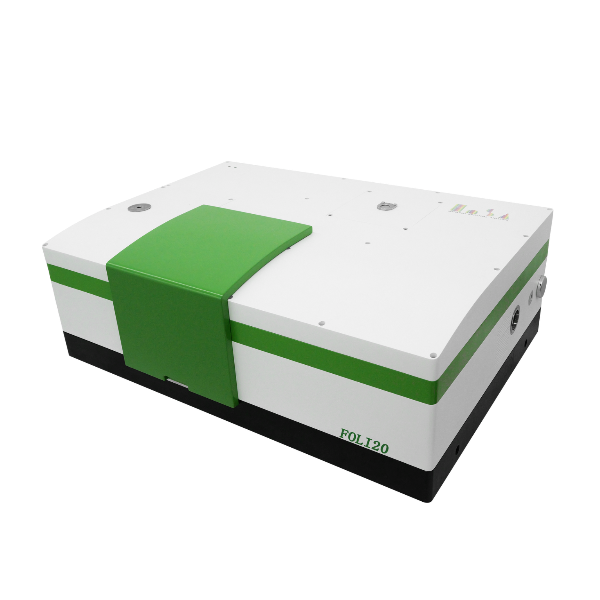
This case used the INSA Optics INSA FOLI10 FT-IR spectrometer to test Ge, Sn and Pb series dicationic tetrylene ligand systems, and evaluated the electronic effects and σ-acceptor abilities of different ligands by comparing the position of ν(CN).
Click to view more details on the INSA Optics FOLI10 FT-IR Spectrometer
Because the organometallic complexes studied are sensitive to air and moisture, the entire INSA Optics FOLI10 was placed inside an inert-atmosphere glovebox. From sample weighing, solution preparation, dripping of the sample onto the KBr disk and solvent evaporation, to sample loading and FT-IR spectral acquisition, the whole process can be carried out inside the glovebox, thereby minimizing contact between the sample and air and moisture.
This experiment mainly used the following instruments and tools:
Among these, the FOLI10 was placed directly inside the glovebox for infrared spectral measurement of air- and moisture-sensitive samples. After the samples are prepared in the glovebox, there is no need to seal them again and transfer them out of the box; they can be loaded directly into the instrument to acquire spectra, thereby reducing the chance of contact between the sample and air and moisture.
Figure 1. Photograph of the FOLI10 FT-IR inside the glovebox.
The sample solvent was dried dichloromethane (DCM). The samples tested in this experiment were mainly divided into two groups:
The ν(CN) of free CyNC = 2136 cm-1, used as the reference value for subsequent comparison.
Because the complexes to be measured are relatively sensitive to air and moisture, the KBr disk must first be thoroughly dried before the formal experiment. The KBr disk used in the experiment was placed in a vacuum oven to dry in advance; after drying was completed, it was placed in the small antechamber of the glovebox overnight, and then transferred into the glovebox for storage and use.
This treatment has two considerations: first, KBr itself readily absorbs moisture, and after becoming damp it will affect the infrared transmission performance; second, for air-sensitive organometallic complexes, moisture introduced by the KBr disk should be avoided as much as possible.
After being transferred into the glovebox, the KBr disk should remain transparent, with no obvious fogging or contamination on the surface. During operation, dry tweezers should be used to hold the edge of the KBr disk, avoiding direct contact with the central effective light-transmitting area. The DCM used in the experiment likewise needs to be dried in advance. Therefore, from the KBr disk and solvent to the sample to be measured, everything should be kept as dry as possible and in an inert experimental environment before the formal test.
The entire sample-preparation process was completed in the glovebox. About 6 mg of the complex to be measured was weighed and placed in a clean, dry sample vial, and about 0.5 mL of dried DCM was added. The vial was gently shaken to fully dissolve the complex, yielding a uniform sample solution to be measured.
The compounds in each series were prepared, as far as possible, with the same sample amount, solvent volume and operating method. Because the experiment ultimately needs to compare the change in ν(CN) peak position between different samples, it is very important to keep the preparation conditions of series samples consistent.
This experiment did not use the common method of “mixing and grinding a solid sample with KBr powder and then pressing a pellet,” but instead used solution dripping to form a thin solid layer followed by transmission measurement. The sample-preparation process was: dissolve the sample in DCM → drip onto the KBr disk → DCM evaporates → transmission measurement of the thin solid layer.
A pre-dried KBr disk was taken and laid flat in a clean area inside the glovebox. A small amount of the sample solution to be measured was drawn up with the sample-dripping tool and dripped onto the central effective light-transmitting area of the KBr disk.
For the first dripping, an excessive amount of solution should not be added. After dripping is completed, the DCM is allowed to evaporate naturally inside the glovebox; after the solvent has evaporated, whether to continue adding more is decided according to the sample loading on the KBr disk. If the sample amount needs to be increased, it is recommended to proceed gradually in the manner of “a small drip → DCM evaporates → add again.”
Compared with adding a large amount of solution at one time, dripping a small amount multiple times makes it easier to control the final thickness of the solid layer and can reduce the local accumulation of sample on the KBr disk. After the DCM has completely evaporated, the complex remains on the surface of the KBr disk as a thin solid layer and can be used directly for FT-IR measurement.
Because the processes of solution preparation, dripping and evaporation are all completed in an inert atmosphere, oxidation, hydrolysis or other changes of air-sensitive samples during sample preparation can be avoided as much as possible.
The main test conditions of this experiment are as follows:
Table. Main test conditions of the FT-IR experiment.
After confirming that the DCM has completely evaporated, the KBr disk was installed directly into the transmission measurement position of the FOLI10 inside the glovebox. Background and sample spectra were acquired according to the conventional procedure, and the complete infrared data from 600–3500 cm-1 were saved.
This experiment used CyNC as the electronic-effect probe, so on the basis of the complete spectrum, the C≡N stretching vibration region was focused on, and the ν(CN) peak positions of different samples were accurately recorded. The main ν(CN) signals of the complexes in this series are concentrated in the region of about 2180–2220 cm-1.
Unlike conventional functional-group qualitative analysis, what this case focuses on is not “whether a C≡N absorption peak exists,” but the magnitude of the peak-position shift of the same ν(CN) characteristic peak in different ligand systems.
The ν(CN) data obtained for the different ligand systems are as follows:
Figure 2. IR spectrum of the SnPt complex.
Figure 3. The ν(CN) ruler for the different systems and its correlation analysis.
Comparing the three systems Ge, Sn and Pb first: the ν(CN) of free CyNC is 2136 cm-1; in the different tetrylene ligand systems, this characteristic peak showed an obvious blue shift. The ν(CN) values of the Pb, Sn and Ge systems were 2186.7, 2198.6 and 2217.5 cm-1, respectively.
σ-acceptor ability order: Ge2+ > Sn2+ > Pb2+.
It can be seen that the σ-acceptor ability of the three dicationic tetrylene ligands decreases in turn. The advantage of the FT-IR spectral probe is thus also demonstrated: the ligand electronic properties that were originally difficult to observe directly can be converted, through the ν(CN) peak position, into an experimental result that is measurable, comparable and rankable.
Further examination of the Sn system shows that: after the Sn end is coordinated with Mo(CO)5, W(CO)5 and Cr(CO)5 respectively, ν(CN) increased from 2198.6 cm-1 to 2213.2, 2215.5 and 2215.9 cm-1, respectively. This indicates that, in addition to the relatively large adjustment of the ligand electronic properties through the change of the Ge, Sn and Pb elements, finer regulation of the σ-acceptor ability can also be achieved through further coordination at the Sn end.
The experimentally obtained ν(CN) shows a good linear correlation with the theoretically calculated Hirshfeld charge, with R2 = 0.998. The high correlation between experiment and theory further shows that ν(CN) can serve as an effective experimental probe of the electronic effects of this series of dicationic tetrylene ligands.
In homogeneous catalysis, ligands are not merely structural units “fixed” around the metal. Ligands can change the electronic state of the metal center through electronic effects, and can also control the spatial manner in which the substrate approaches the metal center through steric effects; together these determine the reactivity and selectivity of the catalytic system.
Therefore, one of the important ideas in modern homogeneous-catalyst design is to finely tune the metal center by purposefully modifying the ligand structure. A large amount of traditional ligand chemistry research has focused on electron-donating ligands such as phosphines and carbenes; in contrast, Z-type ligands that can accept electron density from the metal offer another route of regulation.
The dicationic tetrylene studied in this work belongs to the class of ligands with pronounced σ-acceptor character. If, by changing the Ge, Sn and Pb elements or by further coordination, its σ-acceptor ability can be made to vary continuously, this means that the reactivity of the entire catalytic system can be controlled by adjusting the electronic properties of the peripheral ligand, without directly changing the catalytic metal itself.
Therefore, accurately evaluating the electronic effects of such ligands is not merely a structural characterization problem in coordination chemistry, but can also provide an experimental basis for subsequent homogeneous-catalyst design and electronic-property regulation. In this case, the core role of FT-IR is precisely to provide a simple, intuitive spectral ruler for “ligand electronic effects.”
KBr readily absorbs moisture. This experiment used a treatment process of “vacuum-oven drying → overnight in the small antechamber of the glovebox → transfer into the glovebox for use.” For air-sensitive samples, this step not only affects infrared transmission quality but also helps reduce the moisture introduced by the KBr.
The complexes to be measured are sensitive to air and moisture, so dried DCM should be used to prepare the samples, and solution preparation and dripping should be completed in the glovebox.
When using the solution-dripping method, the more sample the better is not the case. If the sample layer formed after the solvent evaporates is too thick, the infrared transmission intensity will decrease, and some absorption peaks may even become too strong. Therefore, dripping a small amount multiple times is more conducive to controlling the thickness of the sample layer.
After each dripping, one should wait for the DCM to fully evaporate before proceeding to the next dripping or directly to measurement. This can both reduce interference from residual solvent on the spectrum and help form a relatively stable solid sample layer.
This case shows that the use of FT-IR is not limited to routine functional-group identification. By introducing CyNC as a unified spectral probe, the abstract σ-acceptor ability can be converted into an easily read ν(CN) peak position; the differences between the Ge, Sn and Pb ligand systems and the fine regulation brought by further coordination can all be directly reflected in the shift of the FT-IR peak position.
The FOLI10 can be placed directly in a glovebox, which is particularly practical for the air-sensitive organometallic complexes involved in this study. From sample weighing, preparation of the solution with dried DCM, dripping onto the KBr disk and evaporation of the solvent, to the final spectral acquisition, the sample can always be kept in an inert environment, without needing to be transferred out of the glovebox for FT-IR measurement.
This measurement approach both reduces the transfer steps of air-sensitive samples and lowers the additional uncertainty caused by short-term exposure of the sample to water and oxygen. In actual operation, the key to obtaining reliable results is not necessarily complex instrument parameters, but strict control of basic experimental details, such as whether the KBr disk is thoroughly dried, whether the DCM is dry and completely evaporated, whether the sample-layer thickness is appropriate, and whether the preparation and measurement conditions of different samples are kept consistent.
Once these experimental details are well controlled, FT-IR can be further extended from a routine structural identification tool into an effective means of studying the electronic properties of ligands.
This case used the INSA Optics FOLI10 FT-IR, placed inside an inert-atmosphere glovebox, to test a series of air- and moisture-sensitive dicationic tetrylene ligand systems.
By dissolving about 6 mg of sample in 0.5 mL of dry DCM and using the method of dripping onto a KBr disk followed by transmission measurement after solvent evaporation, the entire FT-IR measurement process could be completed with the sample always in an inert environment.
Using the ν(CN) of CyNC as the spectral probe, the experimentally obtained σ-acceptor ability order of the dicationic tetrylene ligands was Ge2+ > Sn2+ > Pb2+. After further coordination at the Sn end, ν(CN) also showed regular changes, indicating that the electronic effects of such ligands can be continuously regulated.
Therefore, the FT-IR in this case is not only used to judge whether a characteristic group exists in a molecule; more importantly, it converts the difficult-to-directly-observe ligand electronic effects and σ-acceptor ability into measurable, comparable spectral parameters. For homogeneous catalysis research, this method also provides an intuitive experimental basis for understanding how ligands regulate the catalytic system and for further carrying out ligand design.
[1] Chen, Liuyang.; Zhang, Shaoguang. Dicationic Tetrylene Ligands Modulate Pt0 π-Acid Catalysis. Angewandte Chemie Novit, 2026, 2, e70024. DOI: 10.1002/anov.70024.



When you visit any website, it may store or retrieve information on your browser, mostly in the form of cookies. This information might be about you, your preferences or your device and is mostly used to make the site work as you expect it to. The information does not usually directly identify you, but it can give you a more personalized web experience. Because we respect your right to privacy, you can choose not to allow some types of cookies. Click on the different category headings to find out more and change our default settings. However, blocking some types of cookies may impact your experience of the site and the services we are able to offer.