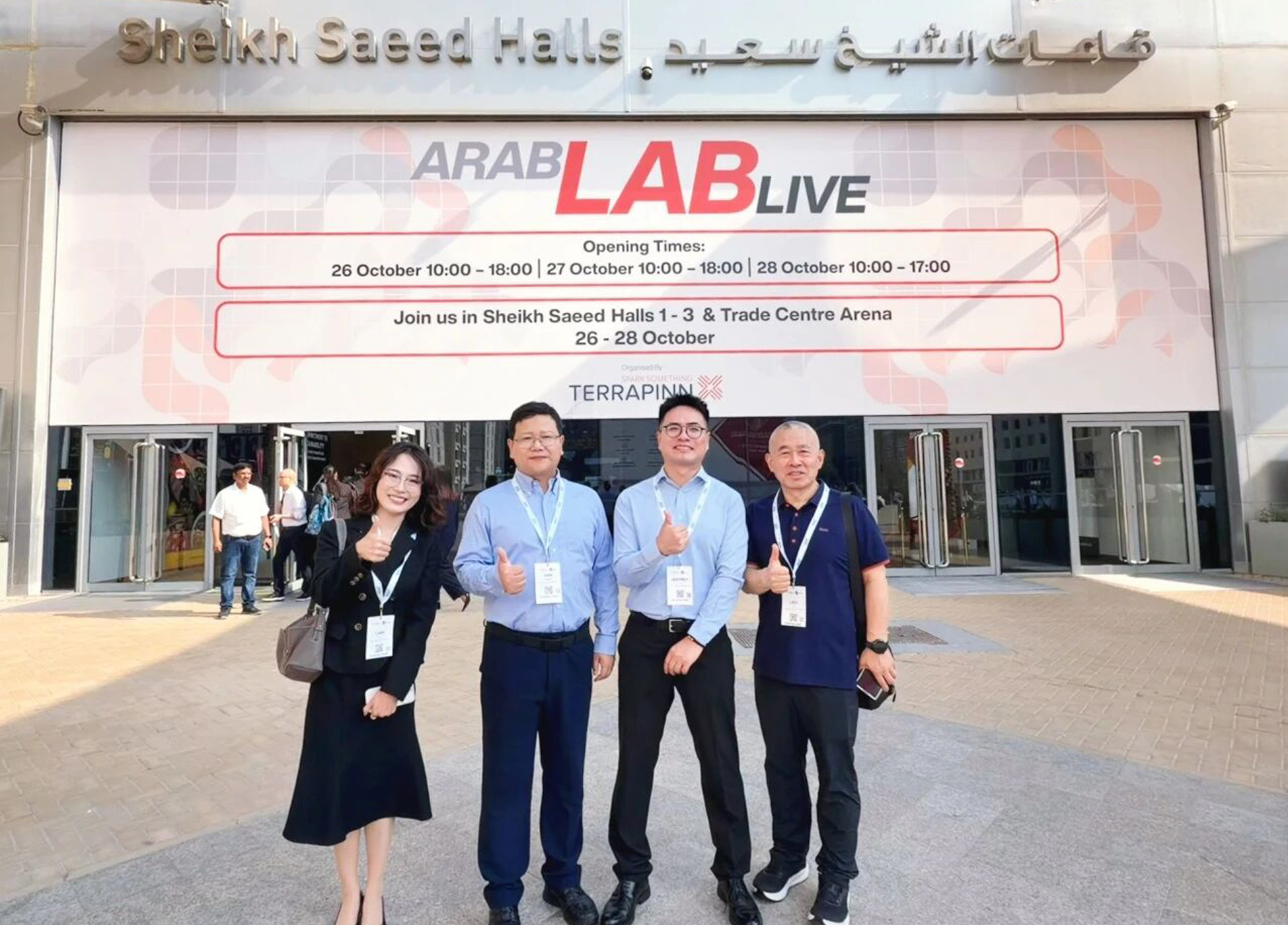
Being close to users continues from every meeting, Haineng goes to ARABLAB again
Company News
Oct 30, 2026

EBIT Life Sciences Content Team
2026-09-07
Let me first talk about a common scenario in the laboratory: the reviewer asks for additional original data, or your senior graduates and you need to take over his project. When you open the folder, you see a bunch of pictures with similar file names - which one is the original picture? Which one has the contrast adjusted? What exposure conditions were used when shooting? Which membrane and which electrophoresis does it correspond to? The answers to these questions often exist only in someone's memory.
Let me give a conclusion first: Many experimental data problems are not that the results were not obtained at the time, but that after a period of time, the results lost contact with the experimental background. The value of WB images is extending from "the result can be seen clearly" to "the source can be clearly explained, the process is correct, and it can be found later". This article discusses how to get it done today.
1. Why can't I still tell the source of the "picture saved"?
Taking apart "image loss", it is usually one of four situations, or a combination of several:
| Lost connection type | Typical performance |
|---|---|
Original picture lost | Only the cropped and adjusted images are retained, and the unprocessed original files can no longer be found. |
Conditional loss of contact | The shooting time, equipment, and exposure parameters are not saved with the pictures, and the collection process cannot be restored. |
Version lost contact | Original pictures, group meeting report pictures, and submission pictures coexist, and it is unclear which one corresponds to which purpose. |
context loss | There is no corresponding record between the image and sample number, transfer conditions, and control settings. |
It is worth noting:Image processing itself is not the problem. Journal guidelines allow for Western Make necessary cropping and contrast adjustments to the Blot image. The key requirement is to retain the original data and faithfully present the processing method. The real risk is that there is no traceable path between the processed graph and the experimental process that produced it.
2. Recent Industry Trends: A complete chain of evidence is becoming a consensus
From the end of August to the beginning of September 2026, four public developments from different links pointed to the same change.
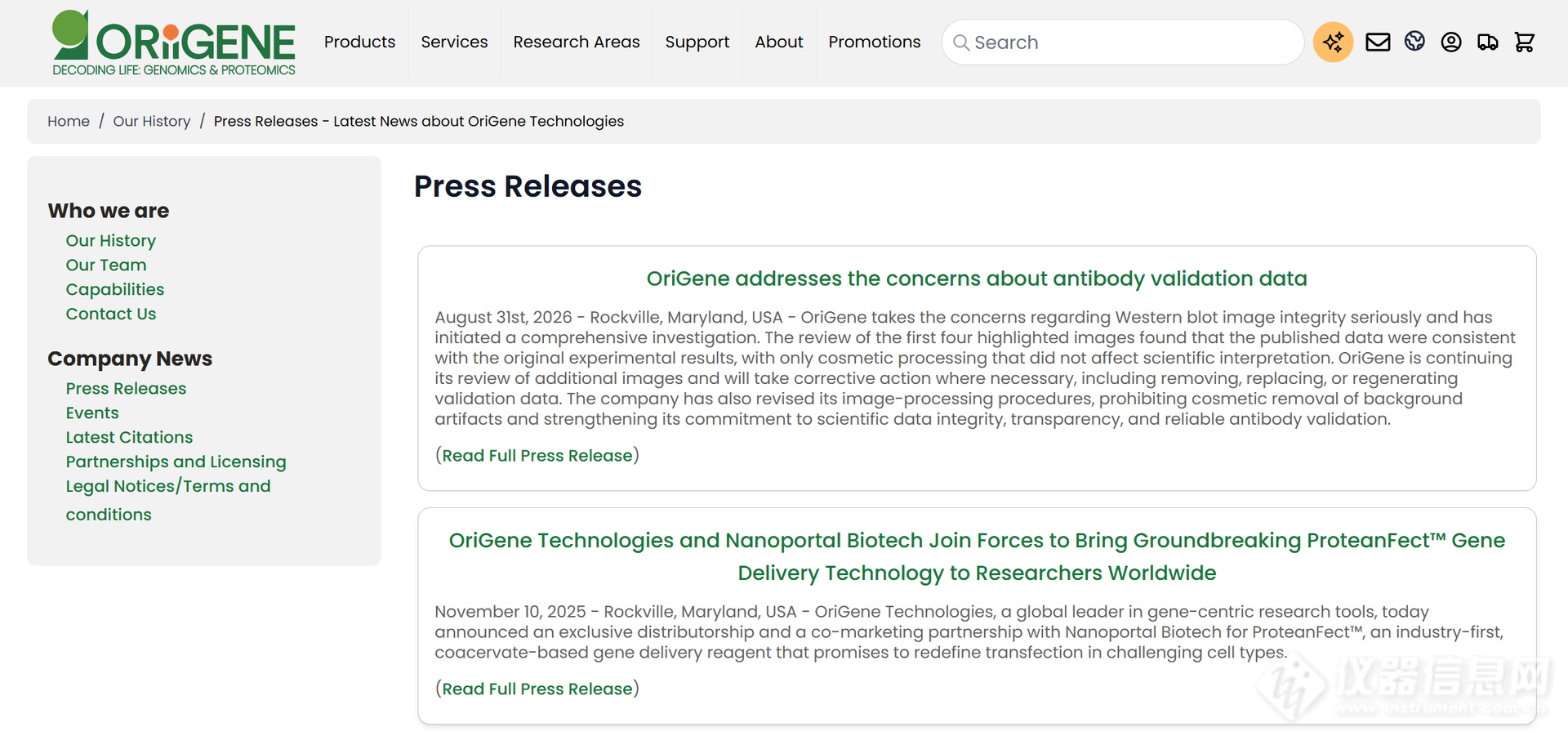
Suppliers are beginning to regulate their own image processing practices. On August 31, 2026, antibody supplier OriGene publicly responded to external doubts about its antibody verification images, stating that it had launched an image integrity investigation and revised its internal image processing process to prohibit the removal of background artifacts for aesthetic reasons. Regardless of the final specific judgment on its images (the relevant conclusion belongs to the company's own statement), one confirmable fact is that the disclosure of image processing rules has changed from an external appeal to an actual action by suppliers.
The structured management of R&D data is extending upstream of the antibody industry chain. On September 3, 2026, Abcam announced an expanded collaboration with Genedata to deploy a structured data platform across its R&D organizations in the UK, China and the United States to connect teams, manage workflows, track sample history, and record and analyze characterization data. This means that "what records are connected behind each result graph" is changing from a personal habit in the laboratory to an industrial-level data infrastructure requirement.
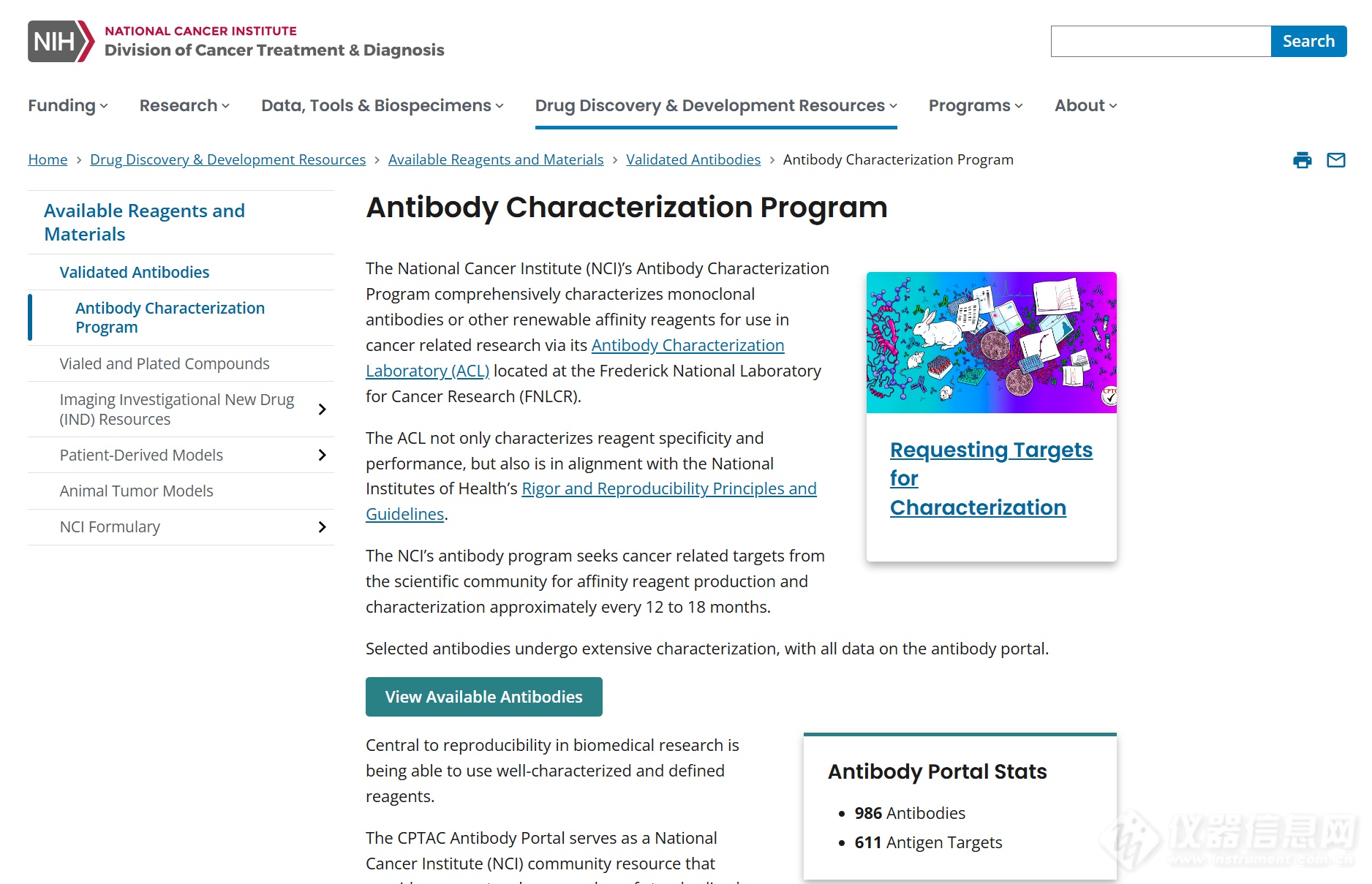
Public representation resources provide an entry point for "checking beyond looking at pictures". The National Cancer Institute (NCI) updated Antibody on September 1, 2026 Characterization Program public resource, the page lists the characterization data of 986 antibodies and 611 antigen targets, and is aligned with NIH's requirements for rigor and reproducibility. When selecting an antibody, public characterization data is a first-level basis for checking, instead of relying solely on a single verification chart on the supplier's page.
Academic discussions have begun to face the issue of image credibility in the AI era. An article published in Journal of Law, Medicine and The paper "Ethics" systematically discusses the proof of data authenticity in the context of generative AI, emphasizing accountability mechanisms, access to original research records, and the preservation of research history and source information; the paper also points out that the lack of records itself does not automatically equate to scientific research misconduct.. In other words: the point of the discussion is not to doubt every picture, but to bring each picture back to its source.
The four developments come from suppliers, data infrastructure, public resources and academic norms——The probative power of a single result graph is declining, while the probative power of a complete evidence chain is increasing.. This trend has nothing to do with equipment brand, it affects every laboratory doing WB.
3. WB minimum evidence chain: from sample to result chart
There is no need to build a complete electronic laboratory notebook (ELN) in one step. First establish the "minimum evidence chain": let the records of each link correspond to each other.
| link | Records that should be left | Common ways of losing contact |
|---|---|---|
Sample preparation | Sample number, source and processing conditions, protein quantification results | After repeated freezing and thawing, the numbering is confused and I only remember "approximately" |
Electrophoresis and transfer | Gel concentration, transfer method and conditions, membrane type | The conditions only exist in the operator's mind and are lost when the personnel leave. |
Image acquisition | Acquisition time, equipment and parameters, original unprocessed images | Only the "adjusted" pictures are retained, and the original acquisition files are overwritten. |
image processing | Operation contents, software and versions of cropping and adjustment | Multiple versions coexist, and it is impossible to distinguish the sequence. |
Result output | Correspondence between images and text, normalization method, number of repetitions | The report picture does not match the original picture, and the duplicate data is nowhere to be found. |
There is only one judgment criterion for this table:When a WB picture needs to be re-understood, can the experimental background when it was produced be retrieved?
Four and Five Checklists: Check Yourself Now
Take a WB picture you took six months ago and try to answer the following five questions:
1. Do you still have the original files? Can the original unprocessed acquisition be found, not just the final version?
2. Can the collection conditions be restored? Are the collection date, equipment used, and exposure parameters available with the picture?
3. Is the version relationship clear? From original drawings to report drawings and submitted drawings, is every step of processing traceable?
4. Does the experimental context correspond? Which sample preparation, which membrane, and which control does this picture correspond to?
5. Can someone else understand it? If you hand over tomorrow and the person taking over doesn't ask you, can you sort out all the above by yourself?
If more than two of the five questions cannot be answered, it means that this batch of images is at risk of losing contact - there is no need to remedy the problem.
5. What can be done in advance during the collection process?
The chain of evidence depends on processes and habits, but equipment can help at the collection node.

Touch Imager's data stamp additional function plays a role in this link: while collecting chemiluminescent images, it establishes a correlation between the original image and the collection-related information, so that the image not only leaves the result, but also leaves a collection background that can be reviewed. In scenarios such as supplementary materials, personnel handovers, and review of abnormal results, this related information provides clues for retrieving the experimental background and reduces reliance on personal memory. This feature was reported by Xinhuanet when it was released.
At the same time, the boundaries of its capabilities must be clearly stated: the data stamp is Touch Imager's additional functions help establish the association between images and information in the acquisition stage; itIt does not automatically determine whether the image has been processed, cannot recognize AI-generated images, does not constitute compliance certification, and cannot replace controlled experiments and the laboratory's own data management system.. It is a collection node in the evidence chain, not the entire evidence chain.
Frequently Asked Questions (FAQ)
1. Is it illegal to adjust the brightness and contrast of WB images?
Doesn’t count. Journal guidelines allow necessary image processing. The core requirement is to preserve the original data and faithfully present the processing method; what is generally prohibited is misleading processing, such as selective deletion of bands, splicing images of different membranes without explanation, etc.
2. Can data stamps determine whether an image has been tampered with?
cannot. Its function is to establish a correlation between images and collected information during collection, and to provide clues for tracing and review. It is a recording and tracing tool, not an image authentication tool.
3. The laboratory currently does not have an electronic recording system, where to start?
Start with the five-item checklist in Section Four. Paper sample record books, unified file naming rules, and parameter records kept at hand during collection can also form a minimum evidence chain - the key is that the records of each link can correspond to each other, not the tool itself.
References
1. OriGene. Releases (Official Press Release: Image Integrity Investigation and Image Processing Process Revised Statement) . 2026-08-31.
2. Abcam. development (official press release) . 2026-09-03.
3. National Cancer Institute (NCI). Assuring Data Authenticity in the Age of Generative AI . Cambridge University Press, 2026.
Content boundary description: This article is for experimental record management reference and does not constitute a recommendation for the selection of any supplier, antibody or instrument, nor does it replace the submission requirements of specific journals. Each journal may have different requirements for raw data, so please check the official guidelines of the target journal before submitting.


When you visit any website, it may store or retrieve information on your browser, mostly in the form of cookies. This information might be about you, your preferences or your device and is mostly used to make the site work as you expect it to. The information does not usually directly identify you, but it can give you a more personalized web experience. Because we respect your right to privacy, you can choose not to allow some types of cookies. Click on the different category headings to find out more and change our default settings. However, blocking some types of cookies may impact your experience of the site and the services we are able to offer.
