

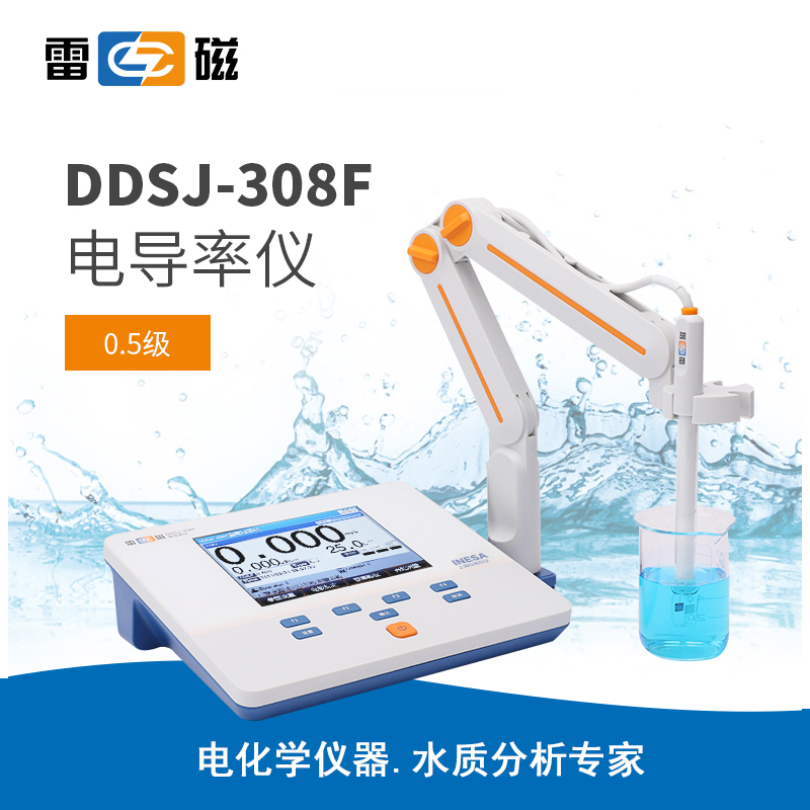


Conductivity meters, conductivity meters and salinometers are all used to measure the concentration of dissolved solids in water. The difference between them is that conductivity meters and conductivity meters mainly measure the electrical conductivity (i.e., the reciprocal of resistivity) in the water to derive the dissolved solids concentration in the water, while the salinometer estimates the dissolved solids concentration by measuring the salinity in the water. A conductivity meter is an instrument that can directly measure the conductivity of water. It can calculate the conductivity from the ratio of current and voltage between the electrodes at both ends to obtain the dissolved solids concentration. The conductivity meter is also an instrument for measuring conductivity in water, but it is different from the conductivity meter in that it can usually only measure very low conductivity values, so it is only suitable for measuring conductivity in special occasions such as pure water or ultrapure water. A salinometer is an instrument that measures the concentration of dissolved solids in water based on changes in the density of dissolved salts in the water. It usually uses the principle of buoyancy to measure the density of water and calculate salinity from this. Salinometers are usually suitable for testing higher salinity water samples such as seawater, but their accuracy is greatly affected by factors such as ambient temperature.