
 Gold Member
 Business License
Coal Chemical Process Gas Monitoring Plan (3) - Purification Chapter
Background overview
"Purification" is an important section in the coal chemical process that connects the past and the future. Its core mission is to remove sulfides (mainly H₂S, COS, etc.) and carbon dioxide (mainly H₂S, COS, etc.) and carbon dioxide (CO₂) etc. This process is directly related to product quality, production safety and environmental protection in the downstream sections.
Sulfide is a "fatal poison" for various downstream synthesis catalysts. Even a small amount may cause permanent deactivation of the catalyst and cause huge economic losses. At the same time, H₂S and the SO₂ generated after combustion are strictly controlled atmospheric pollutants. As the main inert component, CO₂ will reduce the efficiency of synthesis reactions, and it is also an important greenhouse gas and carbon tax accounting object. Therefore, the primary goal of gas monitoring in the purification section is to protect the safety of downstream catalysts and ensure environmental protection standards, while also providing authoritative data for accurate carbon accounting.
Process introduction
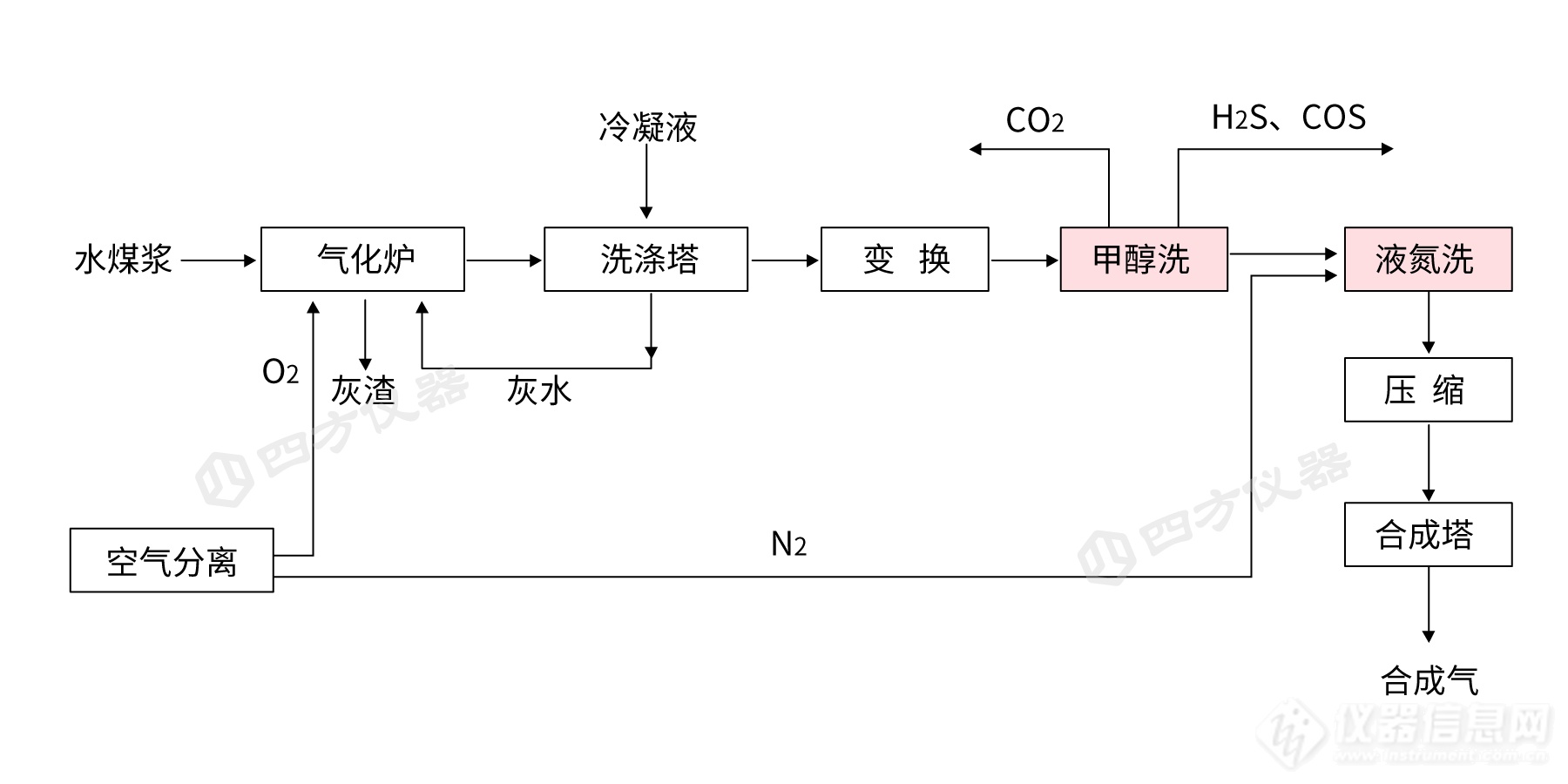
In large-scale coal chemical industries, especially projects that require high purity of syngas such as ammonia synthesis and coal-to-hydrogen production, the purification section generally adopts the technically mature "methanol washing + liquid nitrogen washing" combination process to achieve deep refining of the gas.
1. Preprocessing:The conversion gas from the conversion section must first undergo pretreatment steps such as cooling, water removal, and dust removal. This step is crucial to prevent water from freezing and clogging the low-temperature equipment, diluting the methanol solvent, and contaminating the solvent with impurities in the next step of methanol washing, laying the foundation for stable operation under subsequent low-temperature conditions.
2. Methanol washing:The pretreated gas enters the low-temperature methanol washing unit. Methanol solvent can physically absorb and remove acidic gases, including CO₂, H₂S, and organic sulfur (such as COS) at low temperatures (about -40°C to -70°C) and high pressures. This process can simultaneously achieve deep desulfurization and large-scale decarbonization and is the core of the purification process.
3. Liquid nitrogen washing:The gas purified by methanol washing needs to enter the liquid nitrogen washing unit. This unit utilizes the cryogenic characteristics of liquid nitrogen (close to -200°C) to distill and remove trace amounts of CO, CH4, Ar and other impurities in the gas, and directly adds pure N₂ to adjust the precise hydrogen-to-nitrogen ratio that meets the requirements for ammonia synthesis. For ammonia synthesis, CO is a catalyst poison; although CH4 and Ar themselves do not poison the catalyst, since they do not participate in the reaction, they will continue to accumulate in the synthesis loop, resulting in insufficient hydrogen and nitrogen purity and affecting the quality of the raw gas for the synthesis reaction. Therefore, the deep removal of these types of impurities in the liquid nitrogen washing section is the key to ensuring efficient and economical operation of the synthesis tower.
Monitoring needs
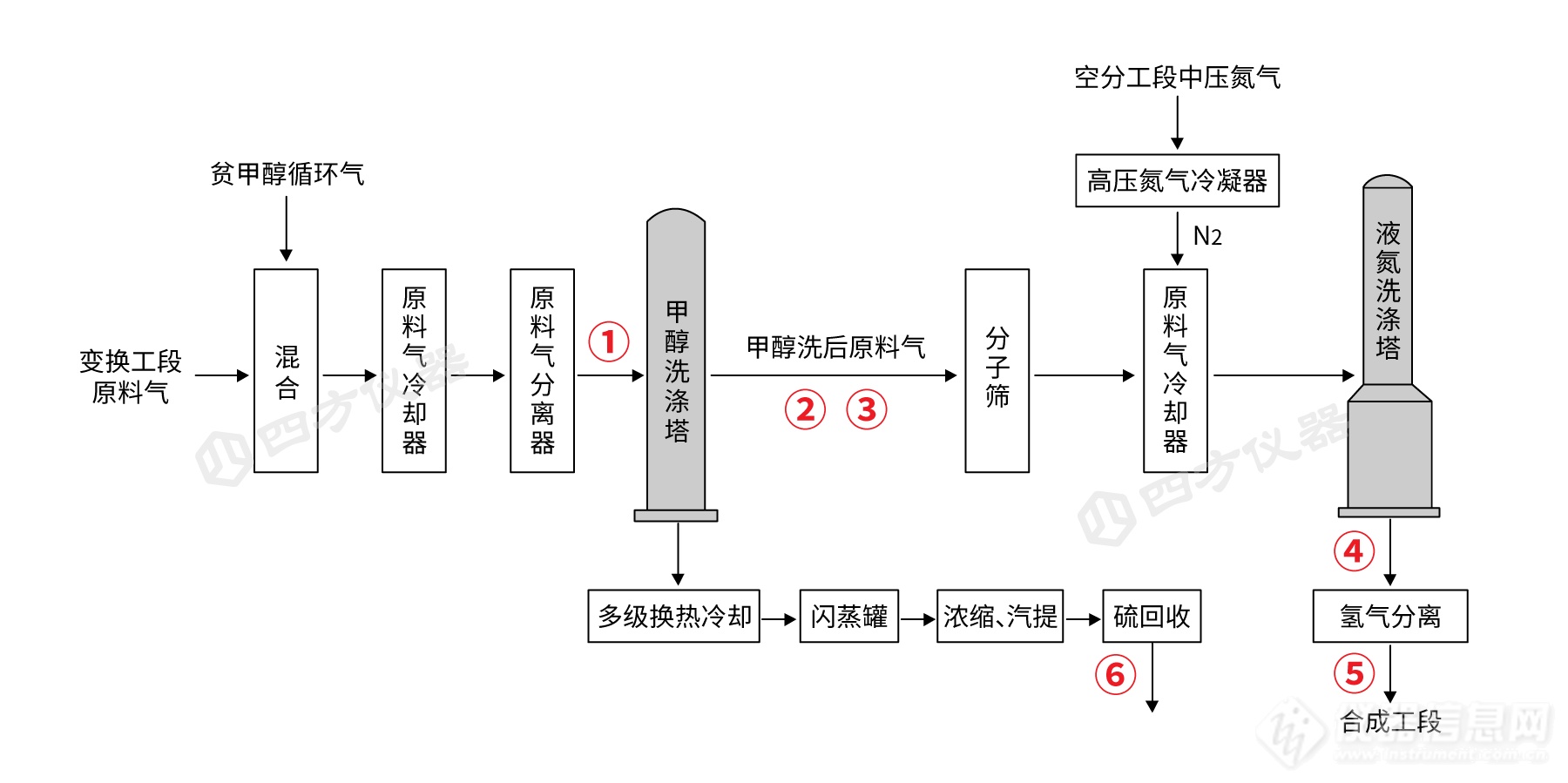
The monitoring objectives of the purification section are to ensure purification efficiency, ensure downstream safety and control raw gas quality. Based on the mainstream "methanol washing + liquid nitrogen washing" process, the key monitoring points are generally set as follows:
① Raw gas CO₂ monitoring
Monitoring purpose: Before the raw gas enters the low-temperature methanol washing device, monitor a small concentration of CO₂ as a benchmark for calculating the total removal efficiency of the purification device, and conduct pre-monitoring of the quality of the raw gas.
② Total sulfur monitoring of purified gas at methanol wash outlet
Monitoring purpose: This point is the core monitoring point for purification efficiency and environmental protection standards. Monitoring the total sulfur concentration (H₂S and COS) is intended to accurately evaluate the removal effect of sulfide by the low-temperature methanol washing process and ensure that the total sulfur content is well below the poisoning threshold of the catalyst in the downstream liquid nitrogen washing and synthesis section.
③ Monitoring CO₂ of purified gas at methanol wash outlet
Monitoring purpose: In synchronization with total sulfur monitoring, trace amounts of CO₂ are monitored at this point to comprehensively evaluate the deep purification capability of low-temperature methanol washing to ensure that CO₂ is also effectively removed to meet the air intake requirements of subsequent sections.
④ Trace CO monitoring of syngas at liquid nitrogen purge outlet
Monitoring purpose: This point is the final line of defense to protect the downstream synthesis catalyst. It is necessary to ensure that the CO concentration is within a safe range and prevent it from causing irreversible pollution and poisoning of the gas synthesis catalyst.
⑤ Monitoring of syngas H₂ at liquid nitrogen purge outlet
Monitoring purpose: This point is a direct reflection of product quality and synthesis efficiency. By accurately measuring the concentration of high-purity H₂, we can then calculate and control the optimal hydrogen-to-nitrogen ratio (H₂/N₂) to provide qualified raw gas for the synthesis section, which is directly related to the output and energy consumption of the final product.
⑥ SO₂/H₂S monitoring of exhaust gas from sulfur recovery unit
Monitoring purpose: By monitoring the two concentrations in real time, feedback to the control system to adjust the air/acid gas feed amount, maintaining this ratio can maximize the sulfur recovery rate (usually up to 95%~99%).
solution
Faced with the challenges of wide range and high precision in gas component monitoring in the purification section, from percentage concentration to ppm level content, we provide an integrated gas monitoring solution with "laser/infrared gas analyzer (explosion-proof type)" and "laser Raman spectroscopic gas analyzer" as the core. This solution is specially designed for complex processes such as "methanol washing + liquid nitrogen washing" to achieve targeted and professional coverage of different monitoring points.
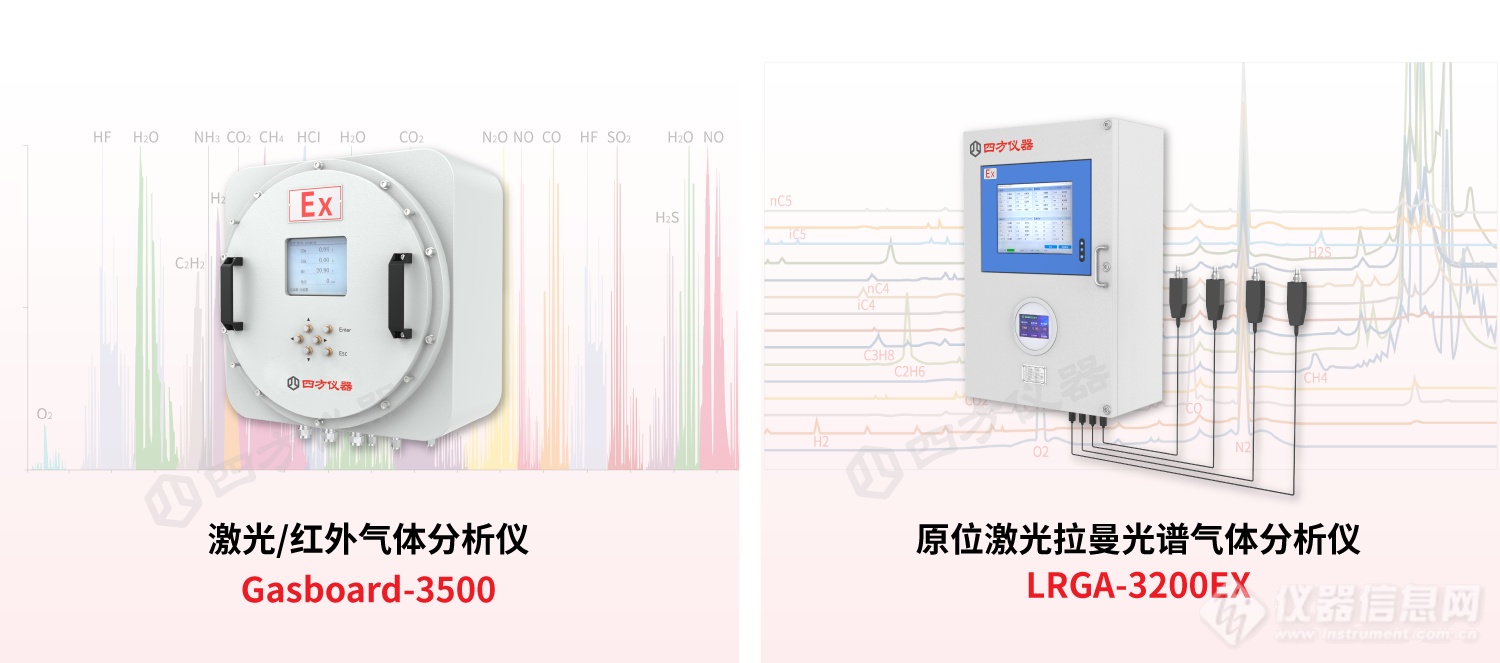
1. Laser/infrared gas analyzer (explosion-proof type): professional guarantee for multi-range accurate monitoring
This series of products is an ideal choice to meet the needs of wide range and high sensitivity monitoring from percentage to ppm level. It is suitable for concentration monitoring of CO2, CO and H2 in multi-point process control.
Its technical features include extremely low detection limit, extremely high precision and excellent stability, and it adopts explosion-proof and dust-composite explosion-proof design to provide professional and reliable data support for safe production and process optimization.
2. Laser Raman Spectroscopic Gas Analyzer: Expert in simultaneous analysis of multiple components
This technology is an expert in core process control such as low-temperature methanol washing. With its unique advantage of simultaneous real-time analysis of multiple components, a single device can measure the concentrations of more than ten gases such as CO₂, H₂S, and CH4 online without interfering with each other.
This function provides an unprecedented comprehensive and real-time data view for accurately evaluating solvent absorption efficiency and optimizing regeneration conditions, which can greatly improve the intelligent level of process control.
Through the collaborative deployment of laser Raman and infrared/laser analyzers, the entire solution achieves full coverage and accurate monitoring of the entire purification process from constant to trace gases. The system has multi-interface seamless integration capabilities, and data can be directly connected to the DCS/SIS system to support intelligent control and safety interlocking. Its high-level explosion-proof and self-diagnostic design, combined with the anti-corrosion process of key components, ensures high reliability and long life under harsh working conditions. It is a reliable data cornerstone for deep customization of the coal chemical purification section.
Application cases
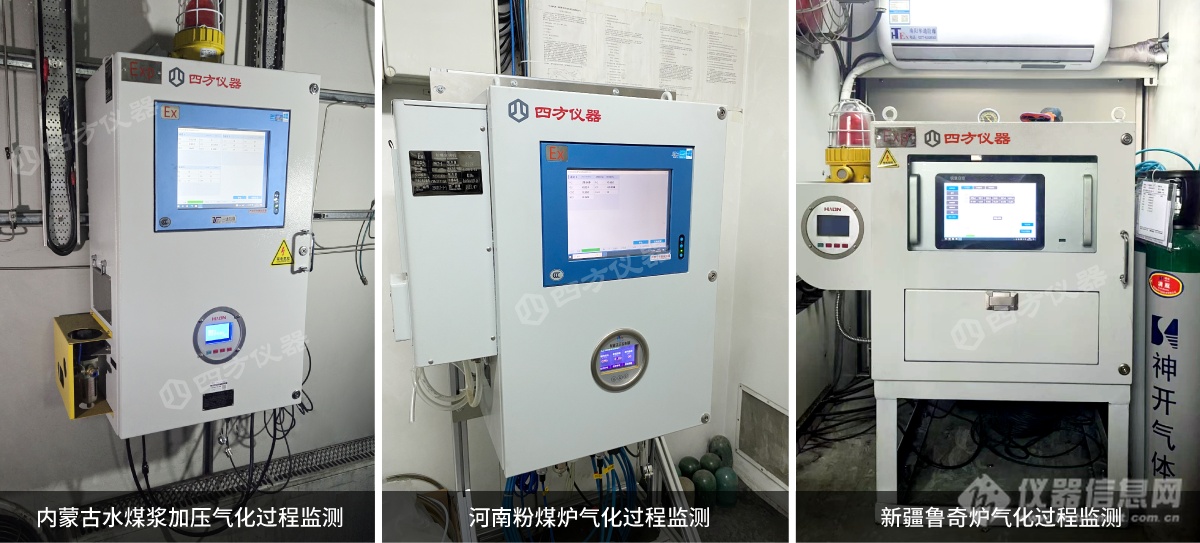
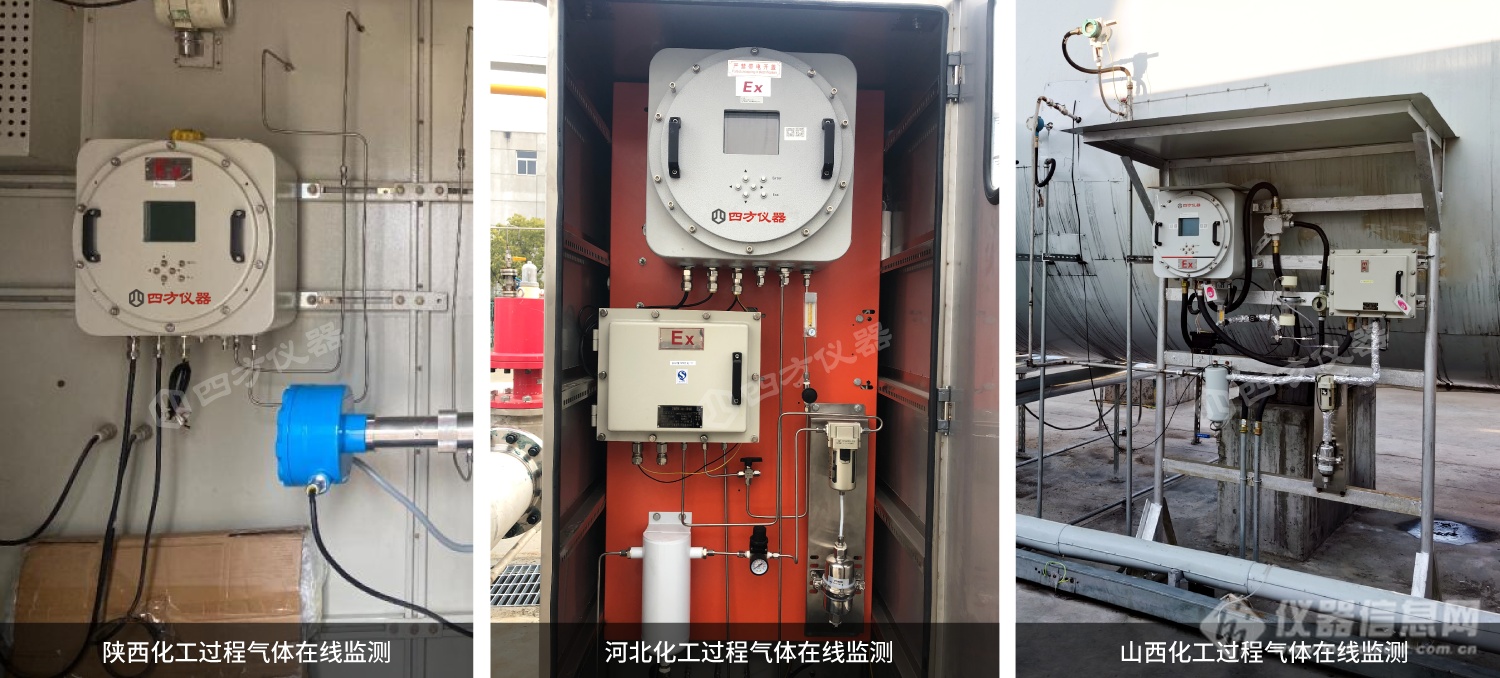
View More from This Booth
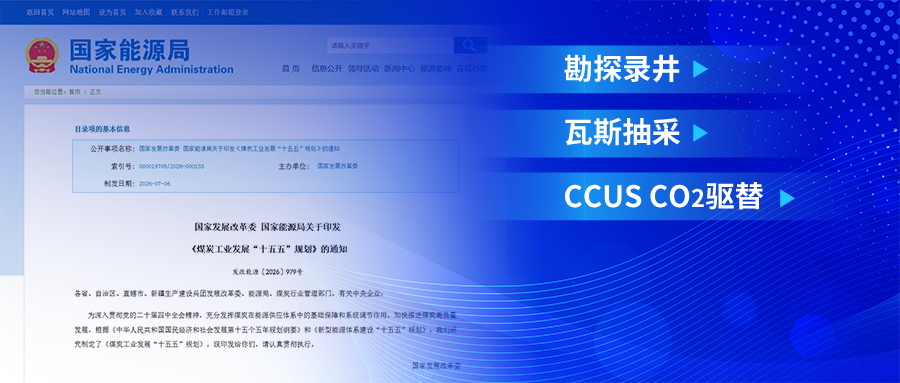
The "15th Five-Year Plan" for coalbed methane sets the tone: With the output target of 26 billion cubic meters, which monitoring links will face rigid demand?
Sifang Instruments laser Raman analyzer facilitates efficient analysis of CO2 electrocatalytic gas phase products
Sifang Instruments | A new generation of natural gas calorific value analyzer solves the problem of industrial energy measurement of multiple gas sources