 Gold Member
 Business License
Shipping environmental protection supervision is gradually tightening. How can ship CEMS help ship owners maintain compliance red lines and optimize carbon asset allocation?
From the implementation of the IMO global sulfur limit order to the successive implementation of a series of EU carbon emission regulations, the shipping industry has entered a critical period of green and low-carbon transformation. The compliance threshold for ship operations continues to rise, and the refined management of carbon emission data has become a key factor affecting the operational efficiency of shipowners' routes. This article combines industry regulatory requirements to explain in detail how the ship's continuous emission monitoring system (CEMS) can help shipowners strictly abide by navigation compliance red lines, optimize carbon asset allocation, and increase ship profitability with accurate monitoring capabilities.
one,Global shipping environmental compliance pressure surges, and the scope of ship gas monitoring continues to expand
As early as 2020, the IMO International Convention for the Prevention of Pollution from Ships (MARPOL Convention) lowered the global upper limit of sulfur content in ship fuel from 3.5% to 0.5% (0.10% in the ECA). In order to meet this requirement, ships equipped with desulfurization towers must be equipped with a continuous emission monitoring system (CEMS) to verify the desulfurization efficiency through real-time monitoring of the SO₂/CO₂ ratio to ensure normal navigation of the ship.
With the trend of decarbonizing the entire shipping industry chain, regulatory requirements are no longer limited to traditional air pollutants. EU MRV regulations have included the three greenhouse gases CO₂, CH₄, and N₂O into the scope of continuous monitoring starting from 2024; EU ETS (European Union Carbon Trading System) has further clarified that starting from January 1, 2026, it will enter the 100% full compliance stage. For ships of 5,000 gross tons and above, traveling to and from ports in the EU and European Economic Area (EEA), 100% of all greenhouse gas emissions will be included in carbon quota accounting, and the types of monitored gases will be simultaneously expanded to CH₄ and N₂O.
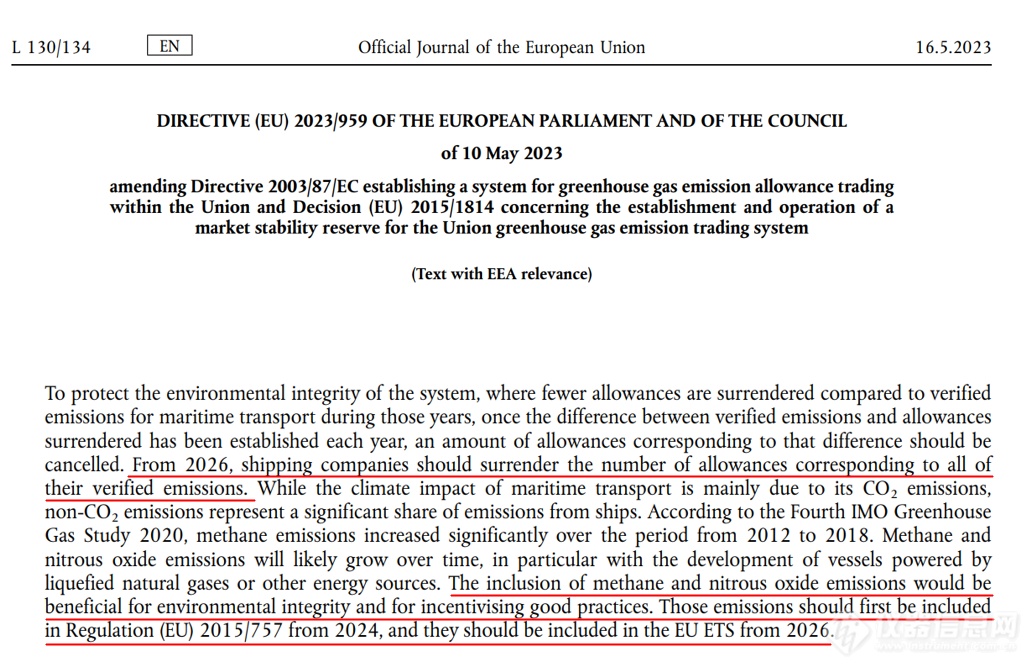
For ship owners/shipping companies, accurate monitoring of ship emission gases and carbon emission accounting are not only necessary for compliance, but also directly affect ship route operating costs.
2. Sifang Instruments Ship CEMS helps shipowners keep compliance red lines and optimize carbon asset allocation
Faced with the pressure of IMO navigation compliance requirements and EU carbon quota performance, Sifang Instruments, as an instrumentation solution provider focusing on gas composition and flow measurement, relies on its first-mover advantage in early deployment in the field of ship emission monitoring and its full-stack self-developed gas sensor technology platform to create comprehensive ship CEMS solutions to help ship owners build a solid compliance defense line and increase ship profitability.
1. Ship exhaust gas continuous emission monitoring system - accurately monitors exhaust gas pollutants to help ships operate in compliance with regulations
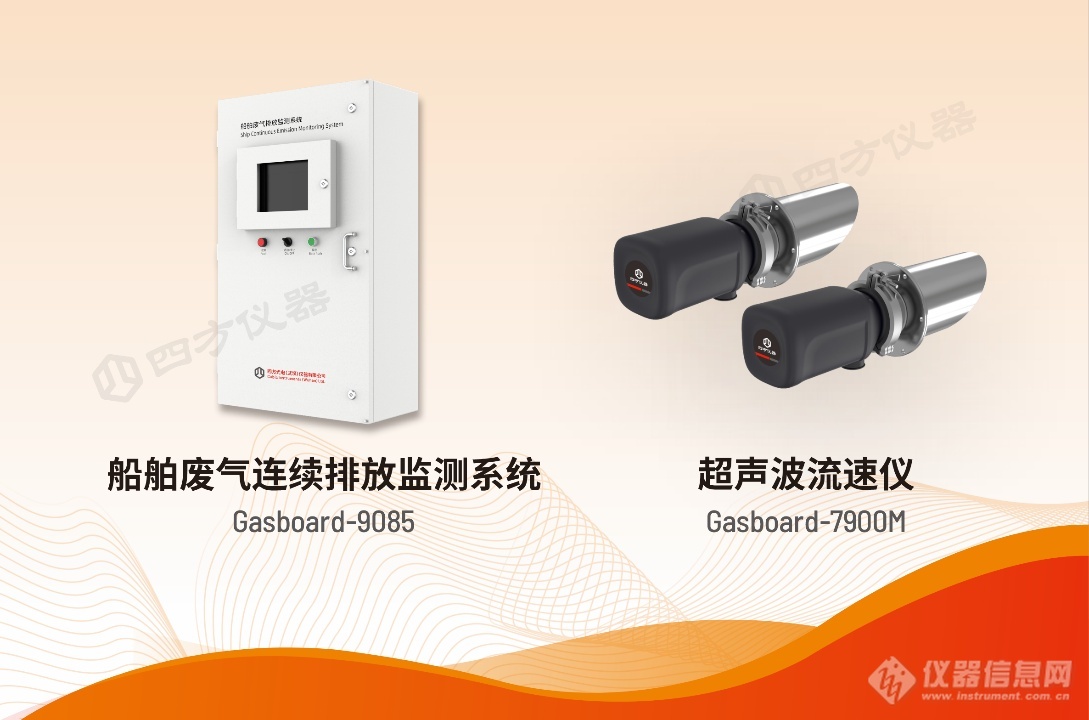
Relying on advanced sensor technology platforms such as NDIR, NDUV, and TDLAS, Sifang Instruments independently developed the ship exhaust gas continuous emission monitoring system Gasboard-9085, which can continuously monitor the concentration of multi-component gases such as SO₂ and CO₂ in the exhaust gas online, achieve accurate calculation of the SO₂/CO₂ ratio, and monitor the pollutant emission rate and total amount. This equipment has been authoritatively certified by classification societies in many countries. Its measurement data is accurate and reliable, and it has international credibility to help ships operate in compliance with regulations.
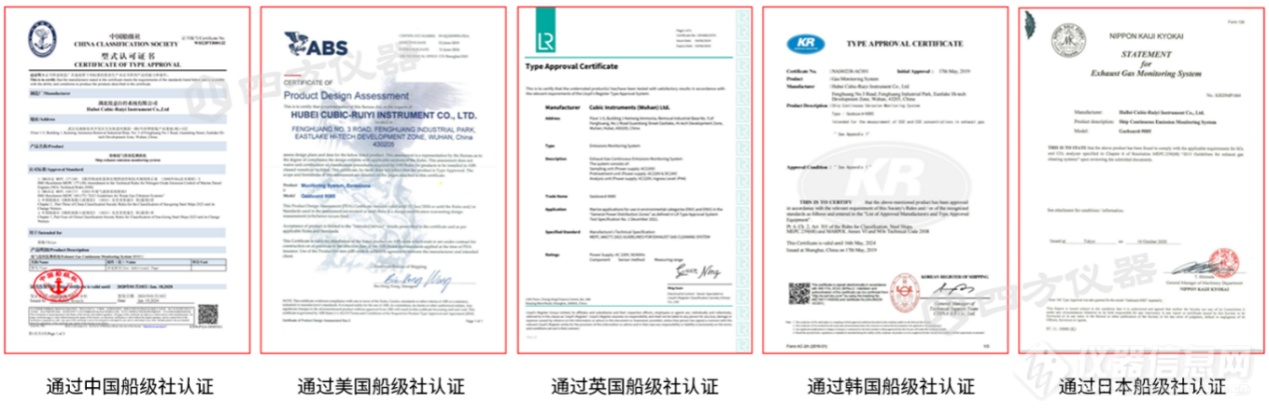
Multi-national classification society certification certificate
Related products:Ultrasonic flow meter provides key flow rate and flow data for accurate calculation of emission rate and total volume.
2. Online monitoring system for ship exhaust carbon emissions—accurately calculates carbon emissions and helps optimize carbon asset allocation
Focusing on key greenhouse gas indicators, Sifang Instruments has launched a fully self-developed ship exhaust carbon emission online monitoring system, which integrates carbon monitoring and thermo-pressure flow modules. It can monitor CH₄, N₂O and other gas components in ship exhaust in real time, meet the EU MRV compliance requirements for continuous monitoring of ship greenhouse gases, and provide data support for EU ETS carbon quota trading. The system uses the Method D direct measurement method approved by the European Union MRV to achieve precise measurement and dynamic accounting of carbon emissions by directly measuring exhaust gas concentration and flow in real time. Compared with traditional estimation methods based on fuel consumption, it can effectively reduce carbon emission accounting deviations and help shipowners manage carbon asset allocation more accurately.
This product can be flexibly expanded according to specific needs to monitor multi-component gases such as NO, NO₂, SO₂, CO, NH₃, etc.
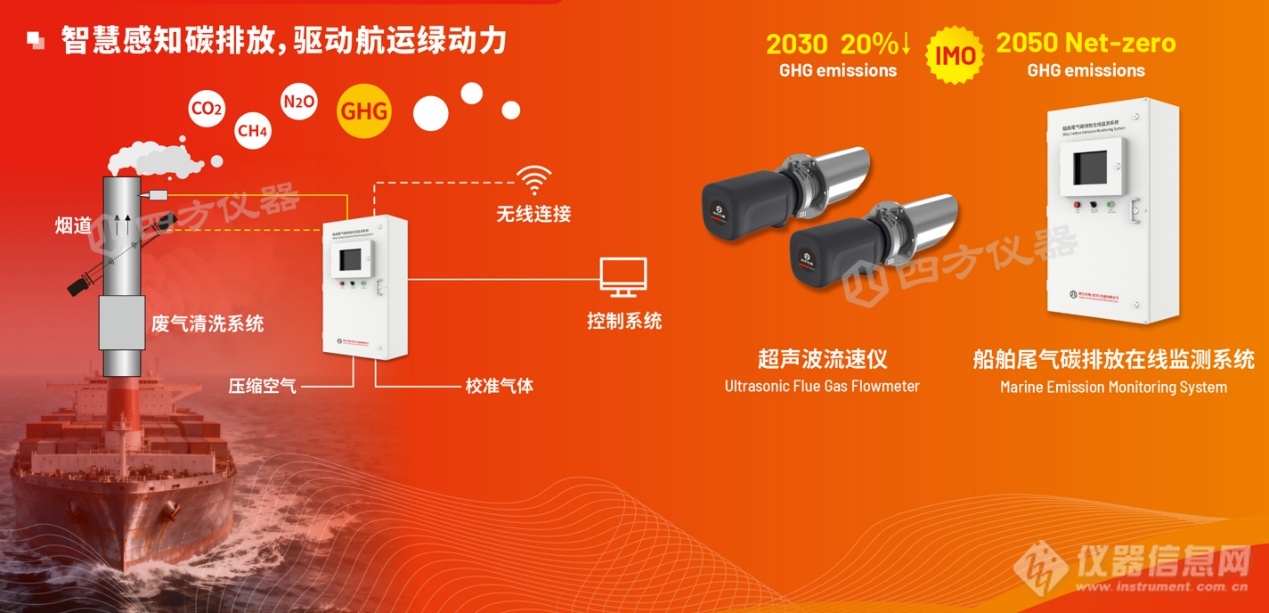
Features:
Full-stack self-developed sensor technology, deep experience in the industry for many years, and stable system performance;
Use anti-corrosion components to adapt to the high-humidity and high-corrosion environment of shipping;
Extractive measurement can effectively deal with the influence of dust, temperature and pressure fluctuations in the flue;
Built-in automatic correction algorithm to eliminate interference from other gas components;
The analysis host adopts an earthquake-resistant structural design;
3. Case presentation: Solving the compliance problems of overseas routes and assisting the low-carbon transformation of ships
A container shipping company with the world's leading shipping capacity has been using a foreign brand of exhaust gas monitoring equipment for its European route ships for a long time. In actual operations, deficiencies were gradually exposed: the lack of CH₄ and N₂O monitoring capabilities, poor adaptability to equipment working conditions, and high after-sales costs, making it unable to meet EU route compliance requirements.
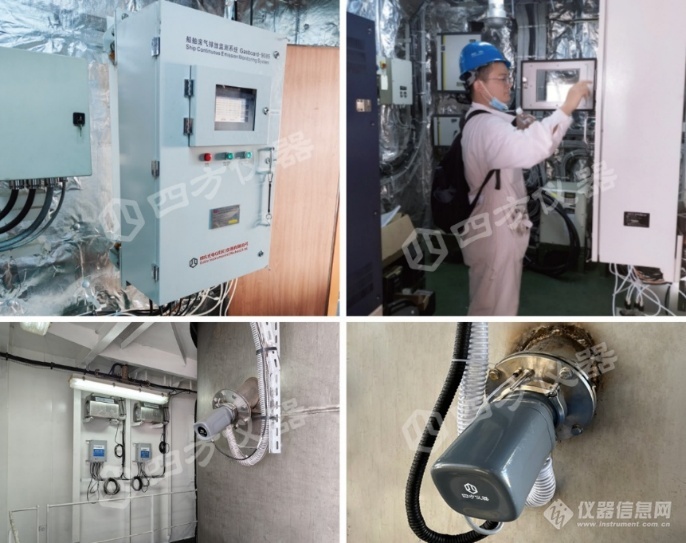
In response to the actual operating needs of the ship, Sifang Instruments deployed a ship exhaust carbon emission online monitoring system for it, which can simultaneously monitor CH₄, N₂O concentration and temperature and pressure flow parameters. The equipment has been designed with anti-corrosion and shock-proof structures based on the special working conditions of high vibration and high corrosion at sea to ensure stable and reliable long-term operation. The monitoring methods and performance meet the requirements of international conventions.
4. Conclusion
From routine pollutants to greenhouse gas monitoring, the shipping industry’s regulatory boundaries continue to widen. Relying on its own core gas sensor technology platform, complete ship gas monitoring product solutions and proven reliable performance, Sifang Instruments accurately adapts to global maritime regulations and low-carbon emission reduction trends, helping ship owners maintain the bottom line of compliance, reduce operating costs and increase profitability.
View More from This Booth
The "15th Five-Year Plan" for coalbed methane sets the tone: With the output target of 26 billion cubic meters, which monitoring links will face rigid demand?
Sifang Instruments laser Raman analyzer facilitates efficient analysis of CO2 electrocatalytic gas phase products

Sifang Instruments | A new generation of natural gas calorific value analyzer solves the problem of industrial energy measurement of multiple gas sources