
Being close to users continues from every meeting, Haineng goes to ARABLAB again
Company News
Oct 30, 2026

East-West Analysis · Edible Oil Testing
Whether a bottle of product labeled as "pure walnut oil" is consistent with the description on the package cannot just look at the color, smell, or just listen to the introduction in the live broadcast room.Fatty acid composition analysis is an important means to understand the composition characteristics of edible oils.Separating and measuring relevant components through gas chromatography, and then comparing them with standard requirements and samples from reliable sources, can help laboratories find abnormalities and provide a basis for further verification of product authenticity.
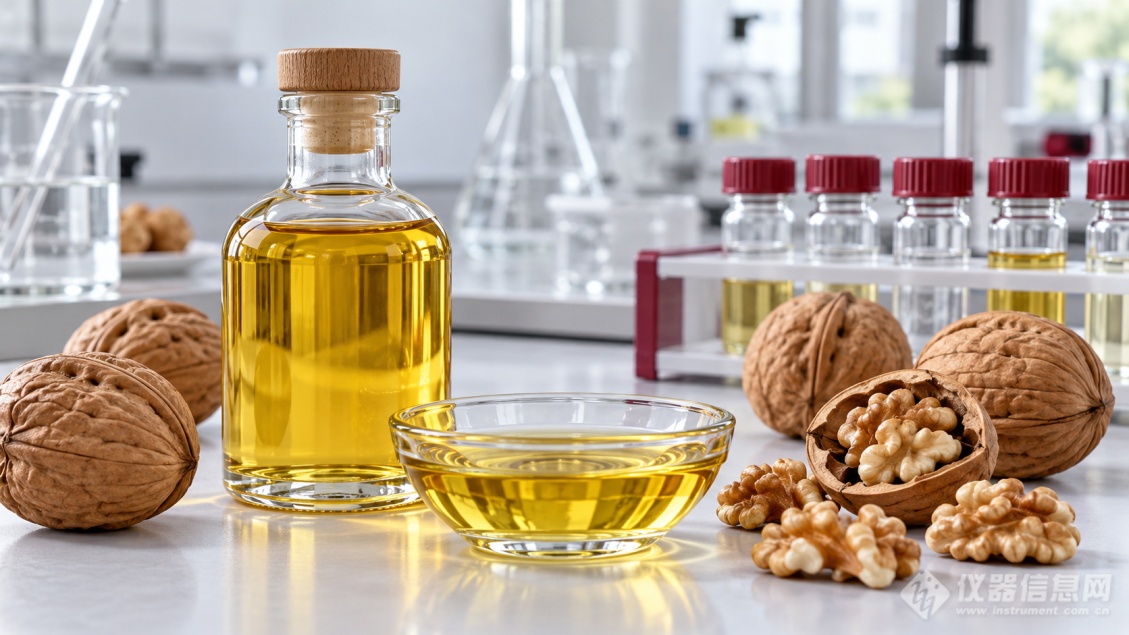
On September 27, 2026, CCTV's "Weekly Quality Report" exposed a case of selling counterfeit walnut oil in the name of "charity and helping farmers". Relevant reports show that regulatory sampling found that the proportion of palmitic acid in the products involved was 10.8%, exceeding the standard reference range of walnut oil quoted in the report. Subsequently, law enforcement officers traced the sales channels and discovered that ordinary soybean oil was being filled and passed off as walnut oil and other products at the production base.Ingredient testing revealed anomalies, and subsequent investigations revealed the facts of the fraud.
Palmitic acid is not unique to palm oil. Different vegetable oils often contain many of the same fatty acids, and the difference is mainly reflected in the proportions of each component. Therefore, we cannot determine which oil is adulterated in a product simply based on the high proportion of palmitic acid, let alone calculate the adulteration ratio based on this.To determine the composition of oil, it is necessary to comprehensively check the test results of palmitic acid, stearic acid, oleic acid, linoleic acid, linolenic acid and other components, and compare them with applicable standard requirements.
If necessary, you can also chooseTraceable, representative authentic walnut oil samplesAs a reference, combined with retesting, further check for abnormalities. However, spectral comparison does not necessarily mean that the oil looks similar. The source of the sample, pre-treatment conditions, separation effect and calculation method may all affect the results. Real samples can provide auxiliary basis, but the final judgment still needs to be based on standardized testing and sufficient evidence.
The analysis of fatty acids in oils usually requires pre-treatment according to applicable methods to convert the relevant fatty acids into fatty acid methyl esters suitable for gas chromatography analysis, and then separate and detect them through a capillary chromatography column.
During analysis, fatty acid methyl ester standards were used to assist in identifying each component, and the peak areas were processed according to the method regulations and the results were calculated. There is an area of confusion here:The fatty acid composition ratio and the fatty acid content per 100 grams of sample are different expressions of results and cannot be used interchangeably.For example, the normalized results in composition analysis cannot be directly regarded as the proportion of walnut oil in the mixed oil.Method reference: GB 5009.168-2016 "Determination of fatty acids in foods"
Experimenters are not only concerned about "whether there is a peak", but also whether the target component is fully separated, whether the peak identification is reliable, and whether the repeated measurement results are stable.What is measured by gas chromatography is composition data. How to interpret these data also needs to be combined with method conditions and other evidence.
The fatty acid analysis of edible oil involves multiple components and requires gas path control, column temperature control and injection repeatability.East-West Analysis GC-4200 Gas ChromatographIt can be used as a platform for laboratories to carry out such analysis. FID detectors, suitable capillary chromatographic columns and injection configurations can be selected according to project requirements, and method confirmation or verification can be completed.
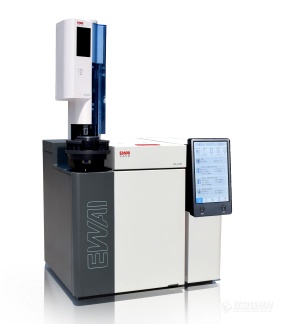
GC-4200 is equipped with an EPC electronic gas circuit control system that supports carrier gas control modes such as constant current and constant pressure. For laboratories that need to compare the composition of samples from different batches, keeping analytical conditions stable can help reduce operational fluctuations and facilitate comparison of test results between standards and samples.
The instrument adopts a high-precision temperature control system, and the column temperature box is designed with double rear doors, which can control temperature rise and fall. During actual analysis, the temperature program should be set based on the chromatographic column and target components, and focus on checking the separation of adjacent peaks. Analysis time can be optimized, but not at the expense of separation efficiency.
GC-4200 comes with a liquid autosampler installation platform, and the autosampler can be configured as needed; the 10-inch color touch screen facilitates parameter setting and status viewing, and the host computer communicates with the computer through the network port. For laboratories that continuously carry out raw material acceptance, production quality control and finished product testing, these configurations can help reduce repeated manual operations and facilitate the arrangement of batch analyses.
In the published solution "Determination of fatty acids and trans fatty acids in edible oil samples by gas chromatography", theGC-4200 gas chromatograph, the 37-component fatty acid methyl ester mixed standard and linseed oil samples were analyzed. The samples were subjected to chromatographic measurement after methyl esterification, and the sample results in the protocol were calculated using the area normalization method.
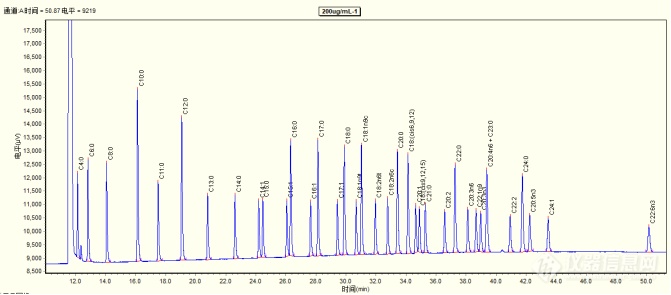
Figure 37 component fatty acid methyl ester mixed standard chromatogram
Mixed standards provide a reference for identifying relevant chromatographic peaks in samples. During actual analysis, it is necessary to combine the chromatographic conditions and the separation of adjacent peaks to confirm the peak assignment, and then perform integration and calculation.
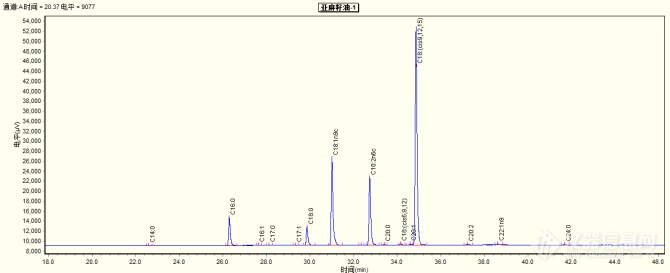 Figure Chromatogram of flaxseed oil sample
From standards to actual oil samples, spectra illustrate specific applications of fatty acid composition analysis. For the detection of walnut oil, it is necessary to complete the corresponding method confirmation or verification based on the sample characteristics and applicable standards.
The above spectrum is a reference for fatty acid analysis applications. The sample is not walnut oil and does not involve the detection or authenticity determination of the exposed product.
East-West Analysis will combine the sample types and testing tasks of the laboratory to provide applicable gas chromatography configuration and application support to serve edible oil quality testing.




When you visit any website, it may store or retrieve information on your browser, mostly in the form of cookies. This information might be about you, your preferences or your device and is mostly used to make the site work as you expect it to. The information does not usually directly identify you, but it can give you a more personalized web experience. Because we respect your right to privacy, you can choose not to allow some types of cookies. Click on the different category headings to find out more and change our default settings. However, blocking some types of cookies may impact your experience of the site and the services we are able to offer.